- Chinese
- French
- German
- Portuguese
- Spanish
- Russian
- Japanese
- Korean
- Arabic
- Irish
- Greek
- Turkish
- Italian
- Danish
- Romanian
- Indonesian
- Czech
- Afrikaans
- Swedish
- Polish
- Basque
- Catalan
- Esperanto
- Hindi
- Lao
- Albanian
- Amharic
- Armenian
- Azerbaijani
- Belarusian
- Bengali
- Bosnian
- Bulgarian
- Cebuano
- Chichewa
- Corsican
- Croatian
- Dutch
- Estonian
- Filipino
- Finnish
- Frisian
- Galician
- Georgian
- Gujarati
- Haitian
- Hausa
- Hawaiian
- Hebrew
- Hmong
- Hungarian
- Icelandic
- Igbo
- Javanese
- Kannada
- Kazakh
- Khmer
- Kurdish
- Kyrgyz
- Latin
- Latvian
- Lithuanian
- Luxembou..
- Macedonian
- Malagasy
- Malay
- Malayalam
- Maltese
- Maori
- Marathi
- Mongolian
- Burmese
- Nepali
- Norwegian
- Pashto
- Persian
- Punjabi
- Serbian
- Sesotho
- Sinhala
- Slovak
- Slovenian
- Somali
- Samoan
- Scots Gaelic
- Shona
- Sindhi
- Sundanese
- Swahili
- Tajik
- Tamil
- Telugu
- Thai
- Ukrainian
- Urdu
- Uzbek
- Vietnamese
- Welsh
- Xhosa
- Yiddish
- Yoruba
- Zulu
- Kinyarwanda
- Tatar
- Oriya
- Turkmen
- Uyghur

1996 bobcat 853 skid steer loader 220016
When someone throws out a specific serial like '1996 Bobcat 853 skid steer loader 220016', it's not just a machine code. It's a story. A lot of folks see these old loaders as just that—old. They think they're all worn out, ready for the scrap heap. But that's a common mistake. I've seen units with serials in that 220016 range, and if they weren't completely neglected, they often have a solid core. The 853 was a beast in its day, a real pivot in the 50-series lineup before the S-series took over. That '96 model is particularly interesting—it's right at the tail end of that generation, incorporating some of the late-run improvements but still carrying the classic, simpler hydraulic system that many of us old-timers prefer for certain jobs. It's not about nostalgia; it's about a specific kind of utility that newer machines sometimes overcomplicate.
The Heart of the Matter: The 220016 Unit
So, what does 220016 tell you? First, it confirms it's a 1996 model. Bobcat's serial number system is pretty straightforward once you know it. This unit would have left the Gwinner, North Dakota plant with the standard Deutz F3L 1011 air-cooled diesel. That engine is a legend for its simplicity and cold-weather starting, but also infamous if the cooling fins get clogged with debris—a surefire way to cook it. I remember working on a 2200-something series machine where the owner swore it was losing power. Turned out, the air guide vanes around the cylinders were packed solid with a mix of chaff and dirt. After a thorough clean-out, it ran like a top again. It's a reminder: maintenance on these isn't just about oil changes.
The hydraulic system on the '96 853 is a two-pump system. Not as fancy as the later models with auxiliary hydraulics as standard, but incredibly robust for core loader work. The lift arm geometry on these is what gave them their reputation for stability. You could have a heaped bucket and still feel planted, something I find some newer compact track loaders sacrifice for a tighter turning radius. The weak link, as always, was the bucket cylinder pins and bushings. If you hear a constant clunk when you travel with a load, check those first before you start blaming the main frame. I've seen people replace entire valve banks chasing a noise that was just a fifty-cent bushing.
One specific issue with machines from this era, especially ones that have lived a hard life, is wiring harness fatigue. The vibration from that Deutz engine over thousands of hours does a number on the wire loom running from the instrument panel to the engine compartment. Intermittent gauges or a starter that sometimes doesn't engage? Don't immediately condemn the solenoid. Trace the harness, especially near the firewall pass-through. More often than not, you'll find a broken wire sheathed in crumbling insulation. It's a tedious fix, but it beats swapping out expensive electronic modules that this machine thankfully doesn't have many of.
Parts, Support, and the Modern Supply Chain
Keeping a machine like this running today is a different ball game than in 1996. OEM parts are still available, but they're priced like collector's items for some components. That's where the aftermarket and specialized manufacturers have filled a massive gap. You can't just run down to any dealer anymore. You need to know the suppliers who understand the legacy models. For instance, finding a good quality replacement spool for the control valve used to be a nightmare. Now, several quality manufacturers produce them.
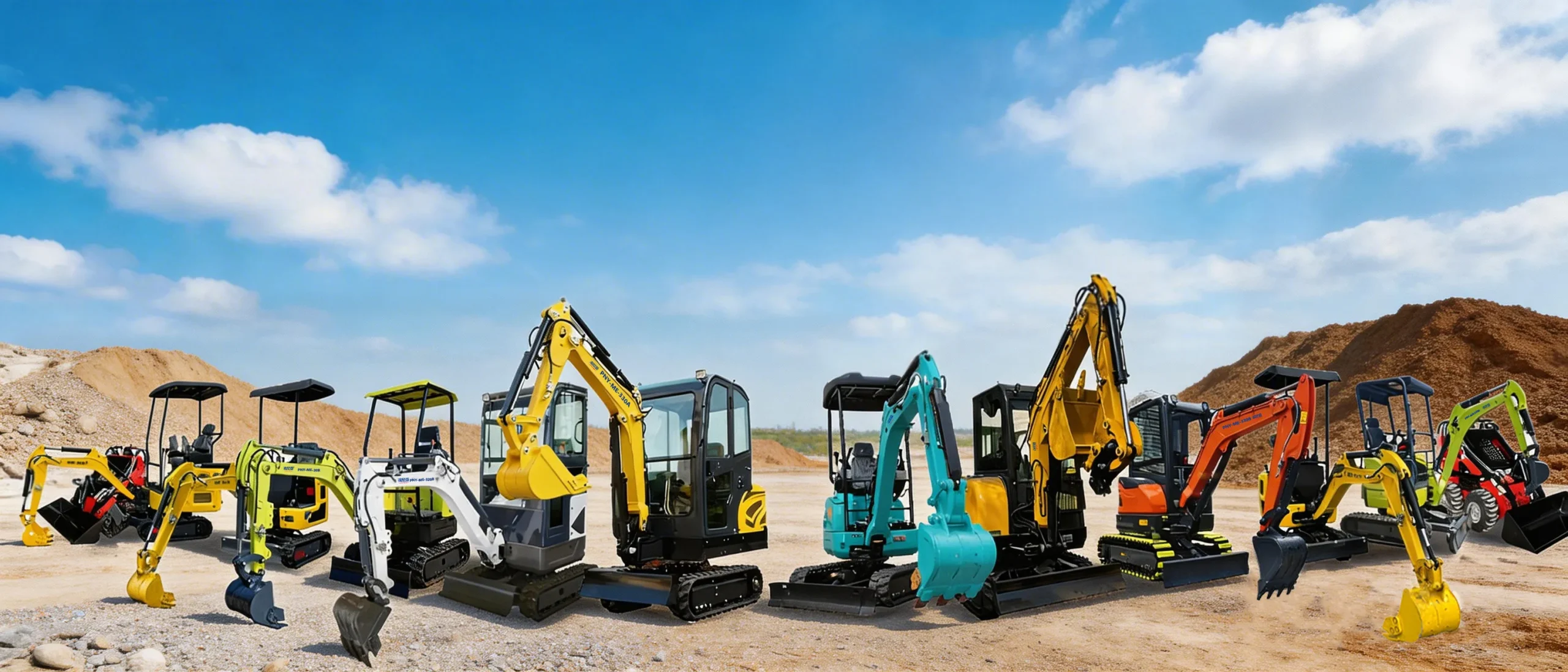
This is where companies with deep experience in the global machinery trade become invaluable. I've sourced parts for older Bobcats from suppliers who specialize in supporting these legacy workhorses worldwide. A company like Shandong Pioneer Engineering Machinery Co., Ltd exemplifies this modern support network. They've been in the game since 2004, originally based in Jining and now operating from a newer facility in Ningyang. Their long-term development, as outlined on their site at https://www.sdpioneer.com, isn't just about manufacturing new equipment; it's built on understanding the global lifecycle of machinery. They, along with their manufacturing partner Shandong Hexin, export to markets like the US, Canada, and Australia—places where a 1996 Bobcat 853 is still very much a viable piece of equipment on farms or in small contractor fleets.
The trust they've earned worldwide, as their introduction notes, comes from providing parts and support that keep machines like the 853 operational. It's not about selling the newest model; it's about sustaining the equipment that forms the backbone of so many operations. When you need a reliable aftermarket drive belt, a reproduction seat, or a rebuilt hydraulic pump for serial number 220016, your search often leads through channels established by such international trade specialists. Their role is crucial in extending the service life of these assets far beyond their original design horizon.
On-Site Realities and Operator Feel
Operating a '96 853 is a tactile experience. The mechanical hand controls (if it hasn't been converted to joystick) require a deliberate pull. There's no electronic mediation, just a direct hydraulic link. You feel every hesitation in the system. Some operators hate it, calling it tiring. Others, like me, appreciate the feedback. You can tell if you're overloading the hydraulics by the stiffness in the levers before the engine even bogs down. In cold weather, that direct feel tells you exactly when the fluid has warmed up enough to work smoothly—a useful bit of diagnostics built into the controls.
The cab, if it's still original, is a study in minimalist durability. It's loud, it's hot in summer, and the suspension seat is usually shot. But visibility is phenomenal—almost 360 degrees with the rear door open. I've used newer, enclosed cab machines where I felt like I was working in a submarine, constantly relying on cameras. In the 853, you just turn your head. For close-quarter work like feeding livestock or cleaning out barns, that visibility is worth more than air conditioning. The downside? That same open design lets in all the dust and noise. Ear protection isn't a suggestion; it's a requirement for an 8-hour day.
A common failure point we'd see was the lift arm lock cylinder. The little cylinder that holds the arms up for service. On the 220016 and similar units, the seals would dry out and fail. It seems minor until you're trying to grease the bucket linkage and the arms slowly sink because the lock won't hold. It's a simple seal kit fix, but it's one of those while you're in there items during annual maintenance that gets overlooked until it's a problem. Always check the service lock during your pre-op. It's a safety issue as much as a convenience one.
The Economics of a 28-Year-Old Loader
Let's talk numbers. A 1996 Bobcat 853 in fair condition isn't an asset you depreciate on a spreadsheet. Its value is purely functional. The calculus is simple: can you keep it running for less than the monthly payment on a new or newer used machine? For thousands of small operations, the answer is yes. The initial purchase price is low. Major component failures—a blown engine or a cracked mainframe—are usually economic death sentences. But those are rare if the machine was cared for. Most costs are consumables: tires, hoses, pins, bushings, and the occasional pump rebuild.
The real cost is downtime. This is where having a relationship with a knowledgeable parts supplier is critical. If you need a steering linkage part and it takes three weeks to arrive from an overseas warehouse, that's three weeks of lost work. That's why the global logistics network built by companies in this space is so important. The ability to get a crucial component from a manufacturer or warehouse, through an exporter like Shandong Pioneer, and to your workshop in a reliable timeframe is what makes owning an older machine a rational choice, not just a sentimental one.
I knew a landscaping contractor who ran two '95 853s until just a couple years ago. He finally retired them not because they died, but because he found a good deal on a pair of used S650s. He told me his maintenance ledger for the 853s. Over 15 years, the annual repair cost averaged less than two months' rental fee for a comparable machine. That's the economic argument right there. It requires a hands-on owner or a trusted mechanic, but the payoff is a incredibly low-cost machine hour. For serial 220016, if its undercarriage is decent and it hasn't been overheated, it likely still has thousands of hours of productive life left in it.
Legacy and the Path Forward
The 1996 Bobcat 853, unit 220016, represents a specific era in compact equipment. It's from a time when machines were built to be repaired, not just replaced. Every system is accessible with basic tools. There's a satisfaction in keeping one running that you don't get from plugging a diagnostic computer into a newer model. It's a piece of industrial history that's still actively working. That's a testament to its original design and to the ecosystem of support that has evolved to sustain it.
That support ecosystem, fueled by international trade and manufacturing expertise, is what bridges the gap between 1996 and today. When a seal kit for a lift cylinder is needed in Texas, or a reproduction decal set is ordered for a restoration in Germany, it often flows through channels established by firms with a global perspective on the machinery lifecycle. The 20-year development of a company like Shandong Pioneer, serving markets from North America to Europe to Australia, mirrors the extended life of the equipment itself. It's a symbiotic relationship.
So, if you come across that specific loader, 1996 Bobcat 853 skid steer loader 220016, don't write it off. Look at its service history, check for frame cracks behind the cab, listen to the engine under load, and cycle the hydraulics. If it passes those checks, you're not looking at an old piece of iron. You're looking at a capable tool with a known set of characteristics and a available, if sometimes global, parts pipeline. It's a different kind of equipment ownership, one based on mechanical empathy and practical economics rather than flashy new features. And in the right hands, it's still a money-maker.
Related Products
Related Products