


- Chinese
- French
- German
- Portuguese
- Spanish
- Russian
- Japanese
- Korean
- Arabic
- Irish
- Greek
- Turkish
- Italian
- Danish
- Romanian
- Indonesian
- Czech
- Afrikaans
- Swedish
- Polish
- Basque
- Catalan
- Esperanto
- Hindi
- Lao
- Albanian
- Amharic
- Armenian
- Azerbaijani
- Belarusian
- Bengali
- Bosnian
- Bulgarian
- Cebuano
- Chichewa
- Corsican
- Croatian
- Dutch
- Estonian
- Filipino
- Finnish
- Frisian
- Galician
- Georgian
- Gujarati
- Haitian
- Hausa
- Hawaiian
- Hebrew
- Hmong
- Hungarian
- Icelandic
- Igbo
- Javanese
- Kannada
- Kazakh
- Khmer
- Kurdish
- Kyrgyz
- Latin
- Latvian
- Lithuanian
- Luxembou..
- Macedonian
- Malagasy
- Malay
- Malayalam
- Maltese
- Maori
- Marathi
- Mongolian
- Burmese
- Nepali
- Norwegian
- Pashto
- Persian
- Punjabi
- Serbian
- Sesotho
- Sinhala
- Slovak
- Slovenian
- Somali
- Samoan
- Scots Gaelic
- Shona
- Sindhi
- Sundanese
- Swahili
- Tajik
- Tamil
- Telugu
- Thai
- Ukrainian
- Urdu
- Uzbek
- Vietnamese
- Welsh
- Xhosa
- Yiddish
- Yoruba
- Zulu
- Kinyarwanda
- Tatar
- Oriya
- Turkmen
- Uyghur

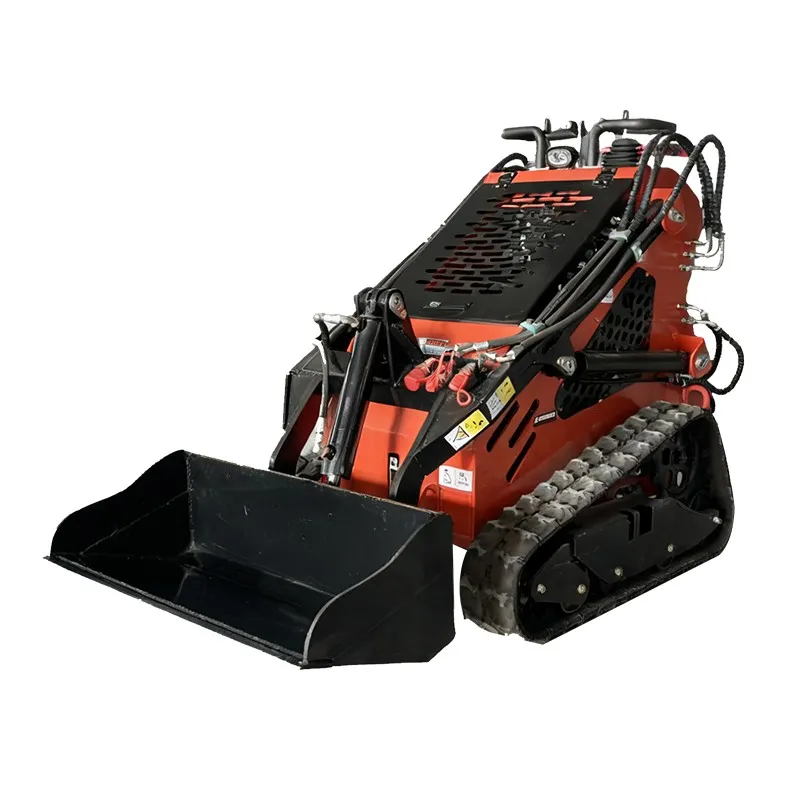
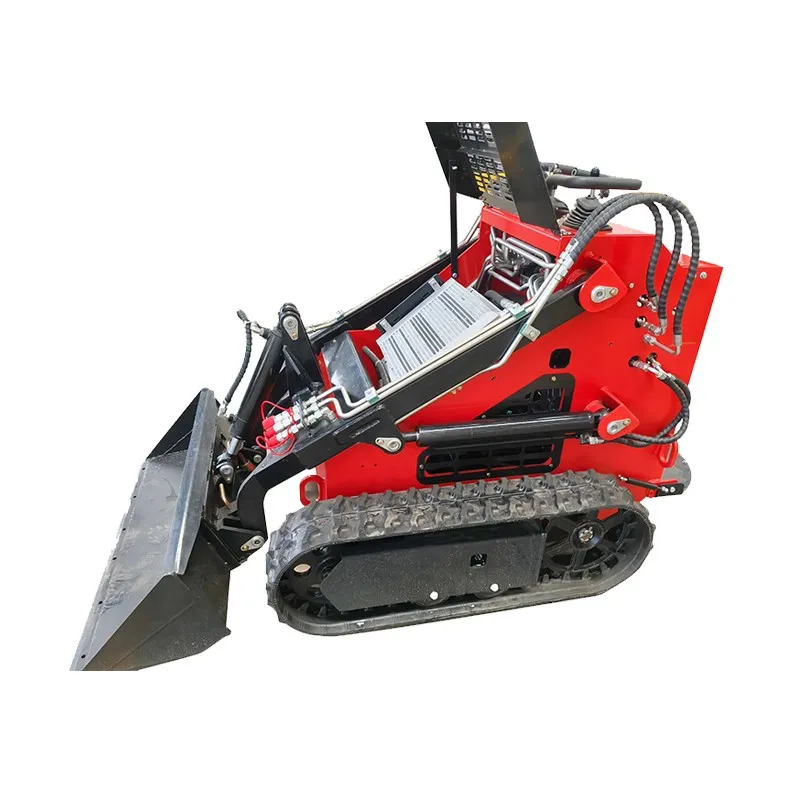
216b3 skid steer loader
When you hear '216b3 skid steer loader', a lot of folks immediately think of the big, established North American or European brands. That's the common trap – assuming innovation and solid engineering only come from the usual players. I've seen that mindset cost people good money and better machine performance. The reality is, the landscape has shifted. Over the last decade, manufacturers from regions like China have been closing the gap, not just on price, but on core functionality and durability for specific applications. The '216b3' model designation itself pops up in this context, often representing a specific horsepower and form-factor class that's become a global workhorse. It’s not about who makes it, but what it's built for and how it holds up.
The Spec Sheet vs. The Job Site
Looking at a spec sheet for a typical 216b3 model – you're usually talking about a machine in the 70-80 horsepower range, operating weight around 7,500 lbs, and a rated operating capacity hovering near 2,200 lbs. Those numbers are a starting point, but they tell you nothing about the hydraulic feel, the servo control responsiveness on a cold morning, or how accessible the daily checkpoints are. I remember a project where we had two similarly spec'd machines, one from a traditional brand and another from a newer entrant. On paper, they were twins. On the muddy, sloping site, the difference in pump logic and weight distribution became painfully clear. The newer one tended to bog down less in the muck, honestly, which surprised the whole crew. It forced a reassessment of what performance really meant for us.
Where a lot of these newer models, including some bearing the 216b3 type classification, have gotten clever is in simplifying the power train for easier maintenance. I've spent half a day just trying to get to a clogged radiator on some older designs. Some of the more recent iterations from certain factories have a tilting cab or a rear door that swings wide open, making core service a 15-minute job instead of a half-day headache. That's a direct gain in uptime. It’s a practical evolution you only appreciate after you've been on your back in the dirt with a wrench.
The auxiliary hydraulic system is another critical point. The standard flow rate might be adequate for a bucket, but try running a forestry mulcher or a cold planer efficiently. You need consistent, high-flow pressure. Some units in this class now offer high-flow options as a factory configuration, not a convoluted afterthought. I learned this the hard way trying to adapt a standard-flow machine to a demanding attachment; it worked, but it was slow and overheated constantly. A proper high-flow system from the get-go is non-negotiable for certain trades.
Durability: The Unadvertised Metric
Durability isn't just about thick steel plates. It's about wiring harness routing away from heat and abrasion points, the quality of O-rings in the hydraulic cylinders, and the corrosion resistance of the battery tray. These are the details that separate a machine that lasts 5,000 hours from one that's a constant nuisance after 1,500. I've seen machines where the main hydraulic lines were chafing against a frame member within months because of a poor bracket design. That's a failure in foresight, not materials.
One area that's often overlooked is the cooling package. A 216b3 skid steer loader working in demolition or material handling generates immense heat. If the oil cooler and radiator aren't sized correctly or are prone to clogging with debris, you're looking at chronic overheating. I recall a particular model – not naming brands – that had the radiator positioned where it sucked in all the chaff from a mower attachment. We had to stop and clean it every two hours. A simple mesh guard retrofit solved it, but it shouldn't have been an issue from the factory. Good design anticipates the operating environment.
Undercarriage components are another tell. The pivot points, the bushings in the lift arms – are they greasable? How often? Some use maintenance-free sealed joints, which is great until they wear out and you're replacing the entire arm assembly instead of a $50 bushing. For high-utilization operations, I still prefer traditional zerk fittings. It forces a daily inspection rhythm that catches small issues before they become catastrophic failures.
The Global Supply Chain and Real-World Availability
This is where the conversation gets practical. You can buy the best machine on earth, but if you can't get a replacement hydraulic pump or a drive motor within a week, it's just a very expensive paperweight. The globalization of manufacturing has changed parts availability dramatically. A company that understands export markets builds with that in mind, aiming for component commonality or at least ensuring a robust parts pipeline.
Take a company like Shandong Pioneer Engineering Machinery Co., Ltd. You find their profile at https://www.sdpioneer.com. Established back in 2004 and now operating from a newer facility in Ningyang, they represent a segment of manufacturers who have grown by directly engaging with international markets through their trade arm. Their two-decade development, as noted, isn't just about scaling up a factory; it's about learning what export customers in places like the US, Canada, or Australia actually need in terms of service support and part interchangeability. Their relocation in 2023 likely signals a focus on expanded capacity and modernized production lines. For an end-user, this kind of stability in the manufacturer's own operations is a positive signal for long-term parts and model support.
When evaluating a skid steer loader from any newer-to-the-market manufacturer, the first question I ask now isn't about the engine brand. It's What's your parts depot network look like in my region, and what's the average fulfillment time for a major component? The answer to that is more valuable than any brochure. A company that has won trust worldwide, as Pioneer's intro suggests, has likely had to build that logistical backbone to support it.
Attachment Compatibility and The Total Cost
The machine itself is only half the equation. Its true value is unlocked through attachments. The universal quick-attach system (like the Bobcat-style) has become a de facto standard, and most global manufacturers adhere to it. However, the devil is in the hydraulic couplers and the electrical control interfaces. Not all auxiliary circuits are wired the same for electrically controlled attachments. I've had to splice in different connectors more times than I can count.
When considering a unit like a 216b3, you must factor in the cost and availability of compatible attachments. Sometimes, sticking with a very common brand makes sense because every rental yard has attachments that fit. But if you own your core attachments, or if the machine supplier offers a strong package deal, the calculation changes. Some of these manufacturers offer their own line of grapples, breakers, and augers that are specifically tuned to their machine's hydraulic profile, which can lead to better performance and fewer compatibility hiccups than mixing and matching.
The total cost of operation is the final sum. It's the purchase price, minus residual value, plus fuel, maintenance, repairs, and downtime. A cheaper upfront price can be erased by one major repair if the machine isn't robust. Conversely, paying a premium for a name doesn't guarantee immunity from problems. The sweet spot is often a machine that's straightforward to service, has good parts accessibility, and doesn't have any glaring design flaws that lead to predictable, repetitive failures. That's what builds real trust and appreciation from customers on the ground, not marketing.
Final Thoughts: A Shift in Perspective
So, circling back to the 216b3 skid steer loader. It's less a specific model and more a category now. The conversation has moved from Who made it? to How is it made, and who stands behind it? The proven durability and dealer network of the legacy brands will always have their place, especially for operations that can't tolerate any sourcing risk.
But for many contractors, landscapers, and agricultural users, the value proposition is being rewritten. Manufacturers that have invested 20 years, like the mentioned Shandong Pioneer, aren't just copying; they're iterating based on global feedback. They've had to. To survive in competitive export markets, you fix the cooling issue, you improve the wiring harness, you ensure the quick-attach mechanism is truly robust. You build a machine that works, because that's the only way to earn repeat business and build a reputation.
My advice? Don't get hung up on the model code or the country of origin as a sole qualifier. Get the specs, yes. But then dig deeper. Talk to other owners if you can find them. Look at the physical machine – really look at the weld quality, the hose routing, the service access. Ask the hard questions about parts supply. The right machine is the one that disappears into the background of your workday, just doing its job reliably. Whether that machine carries a familiar name or one you're just learning about, like those from a company with a two-decade foundation now based in Ningyang, is becoming increasingly irrelevant. The performance on your site, and the cost to keep it there, is what finally matters.
Related Products
Related Products