


- Chinese
- French
- German
- Portuguese
- Spanish
- Russian
- Japanese
- Korean
- Arabic
- Irish
- Greek
- Turkish
- Italian
- Danish
- Romanian
- Indonesian
- Czech
- Afrikaans
- Swedish
- Polish
- Basque
- Catalan
- Esperanto
- Hindi
- Lao
- Albanian
- Amharic
- Armenian
- Azerbaijani
- Belarusian
- Bengali
- Bosnian
- Bulgarian
- Cebuano
- Chichewa
- Corsican
- Croatian
- Dutch
- Estonian
- Filipino
- Finnish
- Frisian
- Galician
- Georgian
- Gujarati
- Haitian
- Hausa
- Hawaiian
- Hebrew
- Hmong
- Hungarian
- Icelandic
- Igbo
- Javanese
- Kannada
- Kazakh
- Khmer
- Kurdish
- Kyrgyz
- Latin
- Latvian
- Lithuanian
- Luxembou..
- Macedonian
- Malagasy
- Malay
- Malayalam
- Maltese
- Maori
- Marathi
- Mongolian
- Burmese
- Nepali
- Norwegian
- Pashto
- Persian
- Punjabi
- Serbian
- Sesotho
- Sinhala
- Slovak
- Slovenian
- Somali
- Samoan
- Scots Gaelic
- Shona
- Sindhi
- Sundanese
- Swahili
- Tajik
- Tamil
- Telugu
- Thai
- Ukrainian
- Urdu
- Uzbek
- Vietnamese
- Welsh
- Xhosa
- Yiddish
- Yoruba
- Zulu
- Kinyarwanda
- Tatar
- Oriya
- Turkmen
- Uyghur

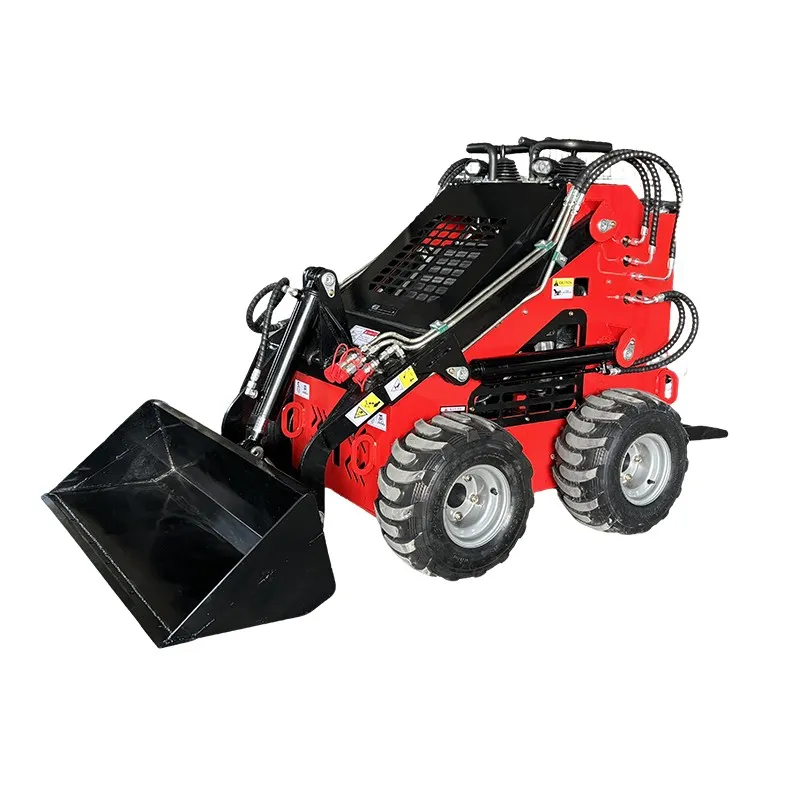
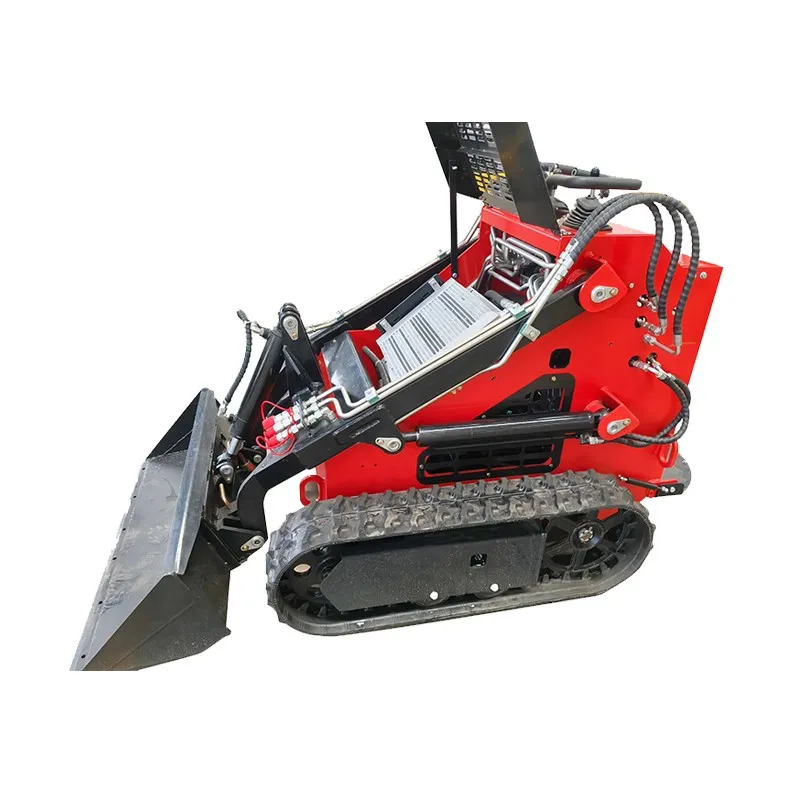
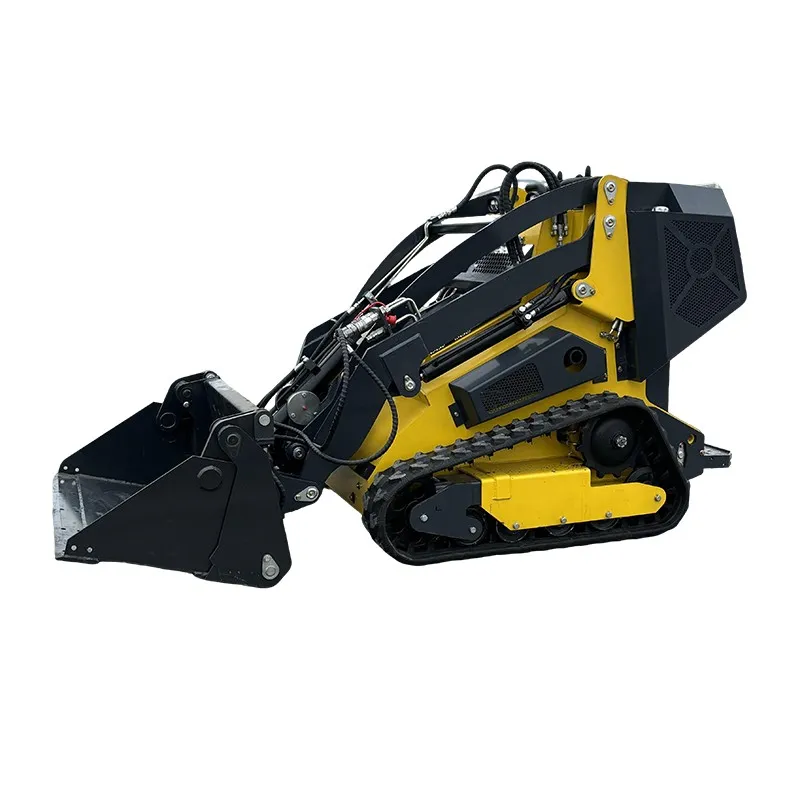
226d3 skid steer loader
When you hear '226d3 skid steer loader', a lot of folks, especially those new to compact equipment, might just see another model number. The assumption often is that if it’s a skid steer, it’s all roughly the same beast—just different horsepower and bucket sizes. That’s where the first mistake happens. The 'D3' in that designation isn't just a random iteration; it typically signals a specific tier of engine compliance and a generation of design updates that fundamentally change how the machine operates in tight quarters and under sustained load. I’ve seen people spec a machine based purely on rated operating capacity and then get tripped up by the hydraulic flow characteristics or the service access points, which are entirely different conversations.
Cutting Through the Spec Sheet Noise
Let’s talk about the operating weight and stability. The 226d3 sits in that sweet spot for many landscaping and light construction outfits. It’s not so heavy that you need a lowboy for every move, but it’s got enough heft to handle a grapple or a pallet fork without feeling tippy on uneven ground. The key here is the counterweight distribution and the chassis design. I remember a job where we were using an older model for loading mulch; it was a constant fight to keep the rear end planted when lifting to full height. The D3 series addressed a lot of that with a revised rear profile and a different cooling pack layout, which seems minor on paper but translates directly to less time spent re-positioning for balance.
Hydraulics are another thing the spec sheet simplifies to 'gpm'. What it doesn't tell you is the responsiveness of the auxiliary hydraulics when you’re running a hydraulic breaker or a cold planer. The 226d3’s system, assuming we're talking about the mainstream models from major OEMs, usually has a high-flow option. But the standard flow can be a bit anemic for constant-attachment work. I learned this the hard way trying to run a trencher that demanded more consistent pressure; the machine would occasionally bog down and stall, not due to lack of power, but due to a priority valve system that favored the drive motors under load. It’s a design trade-off for general utility.
Then there's the cab. The D3 generation generally marked a shift towards more operator-focused ergonomics. The earlier models felt like you were sitting on the machine; the D3 feels more like you’re sitting in it. The difference in a 10-hour day is monumental. Reduced lever effort, better sight lines to the bucket corners, and a suspension seat that actually works—these aren't luxury items, they're productivity tools. I’ve spoken with operators who refused to run anything pre-D3 after experiencing the difference, citing less fatigue and fewer missed cycles.
Real-World Applications and the Attachment Game
Its true value is unlocked with attachments. A skid steer is a power pack on wheels. The 226d3, with its common industry-standard mounting pattern, is a prime candidate for this. But not all attachments are created equal. We once paired one with a low-cost, aftermarket soil conditioner. The attachment itself was fine, but the hydraulic quick couplers on that particular 226d3 were a slightly different style than what the attachment hose ends were built for. It led to a slow leak that went unnoticed for a week, resulting in contaminated hydraulic fluid and a costly system flush. The lesson? Always verify the coupler style and the attachment’s flow/pressure requirements against the machine’s actual specs, not just the model family.
For grading and backfilling, it’s a workhorse. The radial lift path on most 226d3 models provides excellent dump height and reach, which is perfect for loading trucks or placing material into trenches. However, the vertical lift path version, if available for that model, gives you better parallel lift for things like stacking pallets. Choosing the wrong lift path for your primary work is a classic error. I’ve seen companies order the radial lift because it’s often the default, only to struggle with precise material handling at height later on.
Maintenance access is a mixed bag. The D3 series usually improved this over prior generations, with wider-opening side doors and grouped service points. But changing the primary fuel filter on some units still requires a contortionist’s touch and a specific socket size you won’t find in a standard kit. It’s these little quirks you only discover after a few hundred service hours. Keeping a log of these specific service oddities for each machine fleet is more valuable than any generic manual.
The Global Supply Chain and Manufacturer Perspective
This is where the conversation gets interesting for buyers looking at value. The major OEMs have their flagships, but there’s a whole ecosystem of manufacturers building to similar patterns and specifications, often with compelling price points and support structures. Take a company like Shandong Pioneer Engineering Machinery Co., Ltd. You can find them online at https://www.sdpioneer.com. Established back in 2004 and now operating from a newer facility in Tai’an, they represent a segment of the market that’s grown through global export. Their experience, shipping to markets like the US, Canada, and Australia, means they’ve had to adapt their builds to meet varied regional demands and compliance standards.
When a firm like this develops a skid steer model comparable to a 226d3, they’re not just copying. They’re often integrating components from a global supplier base—reliable Deutz or Yanmar engines, Parker or Bosch hydraulics—into a chassis that might offer easier serviceability or different standard features. The trade-off can sometimes be in the finer points of fit and finish, or the depth of the dealer network for hands-on support compared to the entrenched majors. It’s a viable option, but due diligence is critical. It’s about matching the machine to the job and the support infrastructure you have available.
I’ve seen their units, and those from similar integrated manufacturers, on sites where operational cost per hour is the supreme metric. The feedback often centers on simplicity and repairability. The logic is straightforward: if a key component is a globally available brand, downtime for parts can be reduced. However, the integration—how the engine management system talks to the hydraulic controls, for instance—is where the engineering pedigree of any manufacturer, established or new, is truly tested.
Failure Points and Operator-Driven Mods
No machine is perfect. A common wear point on many skid steers, including in the 226d3 class, is the pivot point for the lift arms. The constant high-force cycling leads to bushing wear. On some machines, this is a straightforward afternoon job with a press. On others, it requires dropping the entire cab assembly or major subframe components, turning a $500 parts job into a $3000 labor nightmare. Knowing this history before buying a used unit is crucial. I always recommend pulling the inspection covers and checking for lateral play in the arms with the machine off the ground.
Operators in the field are the best innovators. A common mod I’ve seen for the 226d3 and its peers is adding supplemental lighting, especially rear-facing LEDs for night work. The factory ROPS-mounted lights often cast shadows from the lift arms. Another is installing a secondary, more robust air pre-cleaner on the radiator and hydraulic oil cooler if working in extreme chaff or dust conditions. The factory coolers can clog surprisingly fast, leading to overheating that the dashboard alarm might only catch too late.
The electrical system is another area for vigilance. The vibration in a skid steer is brutal on connectors and wire harnesses. A preventative step many fleets take is to go over all major harness connections annually, cleaning contacts and applying dielectric grease. It sounds basic, but it prevents those intermittent, ghost-in-the-machine faults that can strand a loader and consume hours of diagnostic time.
Wrapping It Up: It’s a Tool, Not a Trophy
At the end of the day, the 226d3 skid steer loader represents a mature point in compact loader design. It’s a capable, multi-purpose tool whose value is determined less by its brochure and more by how it’s spec’d, maintained, and matched to its daily tasks. Whether it comes from a traditional powerhouse or a globally-focused manufacturer like the aforementioned Shandong Pioneer, the principles are the same. Understand its strengths (versatility, size-to-power ratio) and its inherent compromises (service access quirks, hydraulic trade-offs).
The real cost is never just the purchase price. It’s the cost of the unexpected downtime, the wrong attachment pairing, or the operator fatigue from a poor cab environment. Your best bet is to talk to other owners, not just dealers. Ask them what broke first, what they wish they’d optioned, and what they use it for most. That ground-level intel is worth more than any glossy specification table.
So, if you’re looking at a 226d3 or its equivalent, get your hands on the controls if you can. Feel the lever throw. Listen to the hydraulic pump under a stall condition. Check the ease of the daily service checks. That hands-on hour will tell you more about whether it’s the right tool for your yard than a month of reading spec comparisons ever will. It’s in those gritty, practical details where the right choice gets made.
Related Products
Related Products