- Chinese
- French
- German
- Portuguese
- Spanish
- Russian
- Japanese
- Korean
- Arabic
- Irish
- Greek
- Turkish
- Italian
- Danish
- Romanian
- Indonesian
- Czech
- Afrikaans
- Swedish
- Polish
- Basque
- Catalan
- Esperanto
- Hindi
- Lao
- Albanian
- Amharic
- Armenian
- Azerbaijani
- Belarusian
- Bengali
- Bosnian
- Bulgarian
- Cebuano
- Chichewa
- Corsican
- Croatian
- Dutch
- Estonian
- Filipino
- Finnish
- Frisian
- Galician
- Georgian
- Gujarati
- Haitian
- Hausa
- Hawaiian
- Hebrew
- Hmong
- Hungarian
- Icelandic
- Igbo
- Javanese
- Kannada
- Kazakh
- Khmer
- Kurdish
- Kyrgyz
- Latin
- Latvian
- Lithuanian
- Luxembou..
- Macedonian
- Malagasy
- Malay
- Malayalam
- Maltese
- Maori
- Marathi
- Mongolian
- Burmese
- Nepali
- Norwegian
- Pashto
- Persian
- Punjabi
- Serbian
- Sesotho
- Sinhala
- Slovak
- Slovenian
- Somali
- Samoan
- Scots Gaelic
- Shona
- Sindhi
- Sundanese
- Swahili
- Tajik
- Tamil
- Telugu
- Thai
- Ukrainian
- Urdu
- Uzbek
- Vietnamese
- Welsh
- Xhosa
- Yiddish
- Yoruba
- Zulu
- Kinyarwanda
- Tatar
- Oriya
- Turkmen
- Uyghur


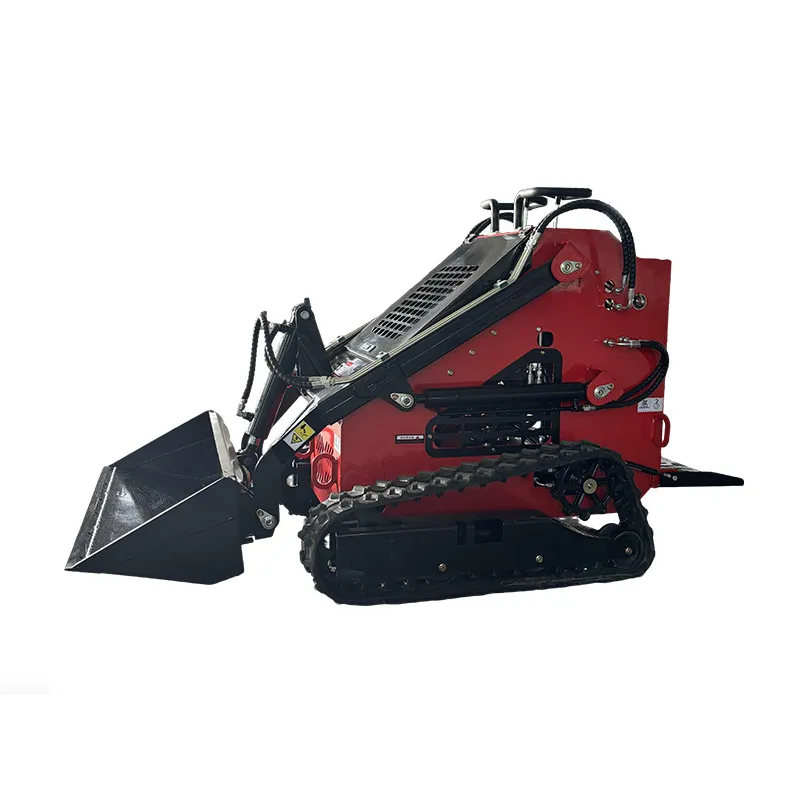
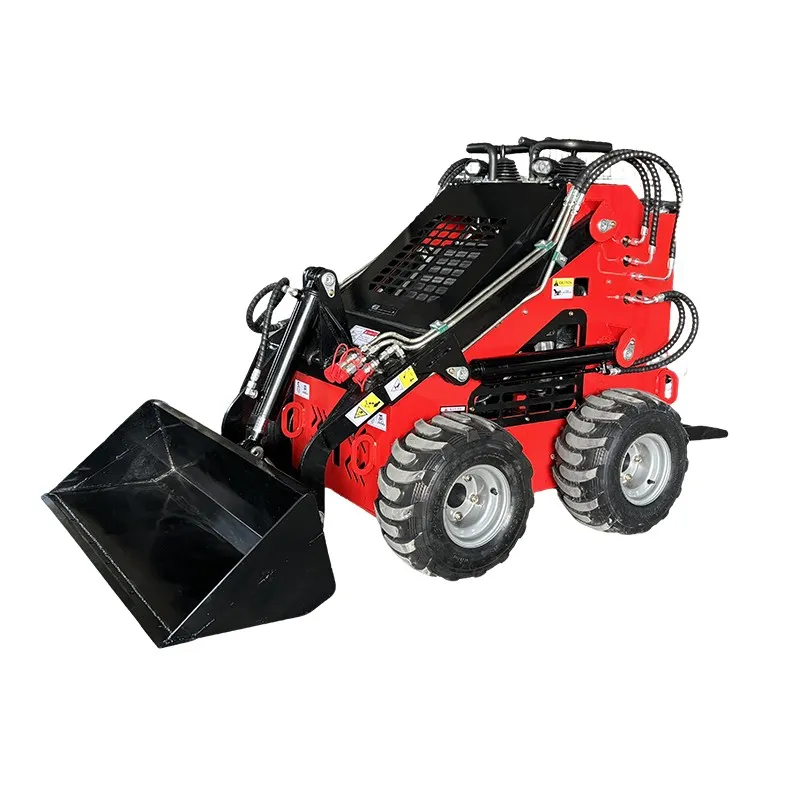
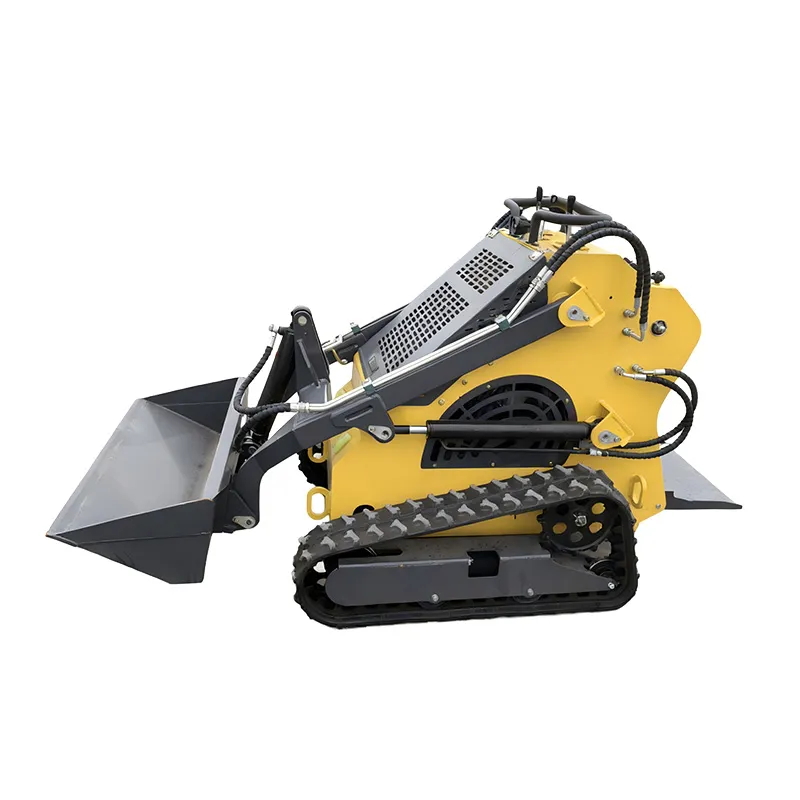
232d3 skid steer loader
When you hear '232d3 skid steer loader', most folks immediately jump to horsepower, lift capacity, and bucket size. That's the brochure talk. The real story, the one that matters on a muddy Monday morning when you're trying to get a job done before the rain sets in, is rarely in those neat columns of numbers. I've seen too many operators get hung up on the 'D3' designation, thinking it's some universal tier of performance. It's not. It's a model identifier, and its real meaning is only clear when you're in the seat, feeling how the hydraulics respond under a partial load or how the machine tracks on loose gravel. The 232d3 isn't just a product code; it's a set of compromises and capabilities that you learn through use, not through reading.
The Heart of the Matter: Power Train and Real-World Grunt
Let's talk about the engine. Many assume a skid steer is a skid steer, but the powertrain integration is where the wheat separates from the chaff. With a model like the 232d3, you're typically looking at a turbocharged diesel engine, but the critical part isn't just the horsepower rating—it's the torque curve and how it mates with the hydraulic system. I've run machines where the specs looked great on paper, but there was a noticeable lag when you went from digging to lifting, a hiccup in the hydraulic flow that makes precise work frustrating. A well-sorted machine, one where the engineers actually talked to operators, avoids that. The pump response should feel immediate, not jerky, but direct.
I recall a job site where we were using a competitor's machine in a similar class to what you'd expect from a 232d3. It had plenty of power for loading trucks, but the auxiliary hydraulic circuit for attachments was anemic. Running a cold planer or a brush cutter was a struggle; it just couldn't maintain consistent flow under varying loads. That's a design flaw you only discover through application. When you're evaluating, don't just listen to the engine roar at full throttle. Listen to it work at mid-range, under strain. That's where reliability is built or broken.
This is where manufacturers with real field experience stand out. A company like Shandong Pioneer Engineering Machinery Co., Ltd has been in the thick of it since 2004. You can check their trajectory on their site at https://www.sdpioneer.com. They started in Jining and recently moved to a new facility in Ningyang in 2023. That kind of growth and relocation often signals a serious investment in production and R&D, not just assembly. When a company's products, under brands like Shandong Hexin for manufacturing and Shandong Pioneer for trade, consistently reach markets as demanding as the United States, Canada, and Germany, it suggests they've had to solve these real-world powertrain and hydraulic integration issues. Their engineers are likely getting feedback from operators in Australia dealing with dust and heat or in Canada dealing with cold starts, and that feedback gets baked into later iterations of models like the 232d3 skid steer loader.
The Operator's Cage: Ergonomics and Control Nuances
The cab is your office. If it's a miserable place to spend eight hours, nothing else about the machine matters. The common mistake is focusing only on legroom or the seat. It's deeper than that. It's about the sight lines to the bucket corners and the lift arms. Can you see the tips of the forks without craning your neck? With a 232d3 frame size, visibility to the front attachments should be excellent, but some designs have obtrusive pillars or poorly placed control consoles that create blind spots.
The control pattern is another personal thing. I'm a two-hand joystick guy, but I've worked with seasoned operators who swear by the old foot-pedal controls for certain tasks. The key is consistency and feel. The joysticks should have a positive, mechanical resistance, not a vague, electronic numbness. I've had joysticks fail in a light drizzle because the seals were inadequate—a catastrophic failure on a demo day that cost a sale. The controls are the primary interface, and any hint of fragility is a deal-breaker.
Then there's the little stuff. The placement of the USB port for charging a phone (yes, it matters on a long day). The quality of the seal on the cab door to keep out dust. Whether the windshield wiper actually clears your field of view or just smears dirt around. These are the details you accumulate after thousands of hours. A manufacturer that pays attention to these, likely gained from global client feedback across different environments, is one that understands the machine is a tool for a person, not just a list of components. The fact that Shandong Pioneer exports worldwide means their design team has to consider the cab for an operator in the humidity of Southeast Asia and the dry chill of a German winter. That global perspective forces a level of detail that a purely domestic manufacturer might overlook.
Attachments and the Universal Language
The true value of a skid steer loader isn't the machine itself; it's the ecosystem of attachments. The 232d3, like any good model in its class, should have a robust and reliable auxiliary hydraulic system (standard flow vs. high-flow is a whole other discussion) and a quick-attach system that doesn't fight you. The industry has largely standardized on the universal skid steer coupler, but the tolerances and the wear on the locking mechanism vary wildly.
I've been on sites where switching from a bucket to a breaker took two people and a persuader bar because the coupler pins were misaligned or worn. A good system should allow one person to make the swap in under a minute, even on uneven ground. The hydraulic couplers should be easy to connect and disconnect without getting a bath of hydraulic fluid. This seems basic, but you'd be surprised how many models get it wrong, leading to downtime and frustration.
When you source from a company with a long export history, like the one behind https://www.sdpioneer.com, there's an advantage. They are compelled to ensure their machine's interface—the coupler, the hydraulic connections—is truly universal and durable. If their machines are working on farms in the U.S., demolition sites in Europe, and rental yards in Australia, the attachments being used are from a hundred different local suppliers. Their machine has to play nice with all of them. This forces a design that is forgiving, robust, and precise. For a model like the 232d3, this interoperability is as critical as engine horsepower.
Serviceability: The Make-or-Break After the Sale
This is where the rubber meets the road, long after the sales rep has driven away. How easy is it to perform daily checks and routine maintenance? On some machines, checking the engine oil is a contortionist's act involving removing panels with a dozen different fasteners. On a well-thought-out machine, the daily checkpoints—oil, coolant, hydraulic fluid, air filter—are all accessible from ground level or with a single latch-open panel.
I remember a particular model (not naming names) where replacing a primary fuel filter required partially disassembling the cab mount. It was a six-hour job for what should have been a thirty-minute swap. That's poor design, and it costs the owner a fortune in downtime and labor. A good design, one that's been refined over years and through different market demands, prioritizes these access points. The 20-year development history of a firm like Shandong Pioneer Engineering Machinery Co., Ltd suggests they've had ample time to learn these lessons. Their move to a new, larger production area in 2023 likely also reflects a modernized assembly process that can incorporate these service-friendly designs from the ground up, rather than as an afterthought.
Filter and fluid types matter too. Are they using common industry-standard filters available at any heavy equipment shop in North America or Europe, or are they proprietary? For a global exporter, using standard components is a necessity. It builds trust. If an operator in Canada can walk into a local store and get the right filter for his 232d3 skid steer loader imported from China, that machine just became a much more viable long-term asset. This logistical foresight is a hallmark of a mature international supplier.
The Bottom Line: Value Beyond the Price Tag
So, when you're looking at a 232d3 skid steer loader, you're not just buying a machine. You're buying into a design philosophy, a support network, and a history of iteration. The raw specs give you a starting point, but the real evaluation happens in the seat, on your type of ground, with your most-used attachment. Does it feel balanced? Do the controls become an extension of your intention? Can your local mechanic service it without a specialist manual?
The price is always a factor, but the cheapest machine is often the most expensive one over three years. Downtime, repair complexity, and poor fuel efficiency will eat any initial savings. The value proposition of a machine from an established exporter is the aggregation of global feedback. Problems that appear in the field in Germany get addressed in production for machines shipped to Australia. That collective problem-solving benefits every end-user.
In the end, a model number is just a label. The machine behind it is defined by the thousand small decisions made by its manufacturer. From the welding on the lift arms to the software governing the hydraulic priority, these decisions are shaped by experience—both the company's and the operators worldwide. When you see a company profile that mentions two decades of development, a recent factory upgrade, and a presence in demanding international markets, it tells you those decisions are being informed by real-world use, not just a lab. That’s what turns a product code like 232d3 from a catalog entry into a reliable piece of iron on your job site.
Related Products
Related Products