- Chinese
- French
- German
- Portuguese
- Spanish
- Russian
- Japanese
- Korean
- Arabic
- Irish
- Greek
- Turkish
- Italian
- Danish
- Romanian
- Indonesian
- Czech
- Afrikaans
- Swedish
- Polish
- Basque
- Catalan
- Esperanto
- Hindi
- Lao
- Albanian
- Amharic
- Armenian
- Azerbaijani
- Belarusian
- Bengali
- Bosnian
- Bulgarian
- Cebuano
- Chichewa
- Corsican
- Croatian
- Dutch
- Estonian
- Filipino
- Finnish
- Frisian
- Galician
- Georgian
- Gujarati
- Haitian
- Hausa
- Hawaiian
- Hebrew
- Hmong
- Hungarian
- Icelandic
- Igbo
- Javanese
- Kannada
- Kazakh
- Khmer
- Kurdish
- Kyrgyz
- Latin
- Latvian
- Lithuanian
- Luxembou..
- Macedonian
- Malagasy
- Malay
- Malayalam
- Maltese
- Maori
- Marathi
- Mongolian
- Burmese
- Nepali
- Norwegian
- Pashto
- Persian
- Punjabi
- Serbian
- Sesotho
- Sinhala
- Slovak
- Slovenian
- Somali
- Samoan
- Scots Gaelic
- Shona
- Sindhi
- Sundanese
- Swahili
- Tajik
- Tamil
- Telugu
- Thai
- Ukrainian
- Urdu
- Uzbek
- Vietnamese
- Welsh
- Xhosa
- Yiddish
- Yoruba
- Zulu
- Kinyarwanda
- Tatar
- Oriya
- Turkmen
- Uyghur


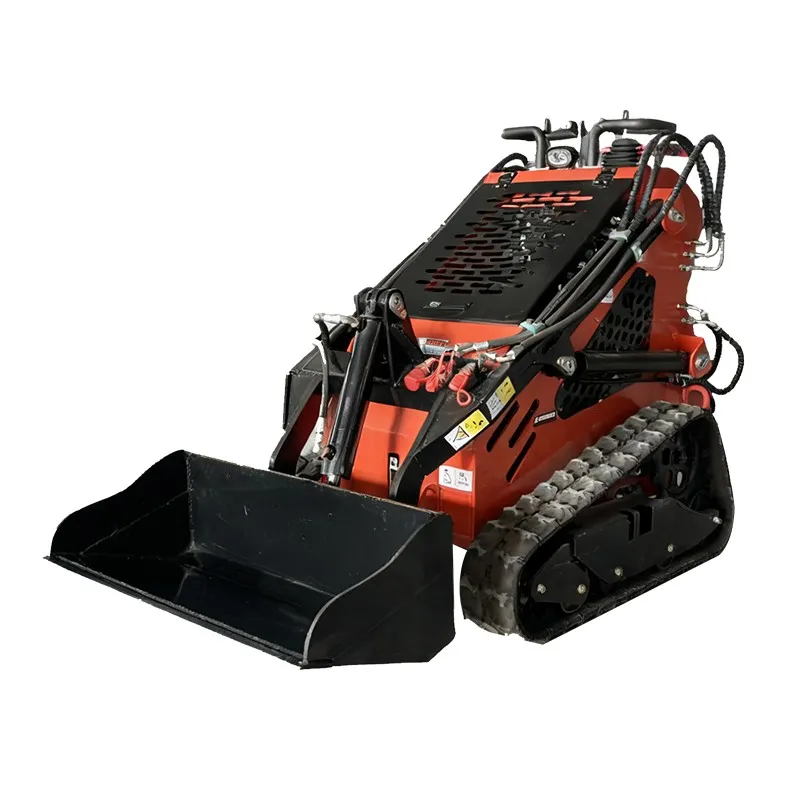
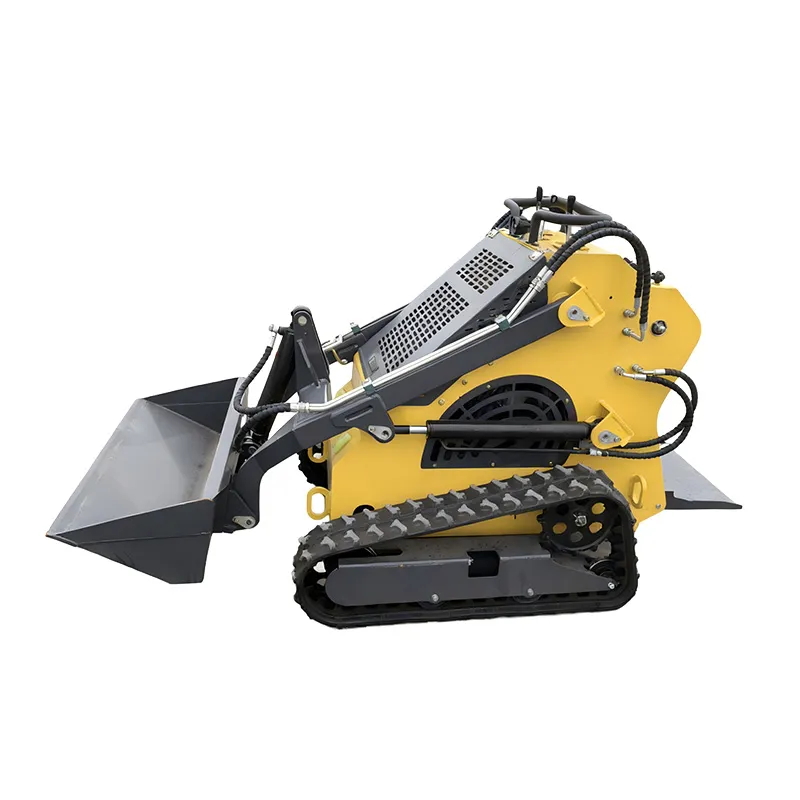
262d3 skid steer loader
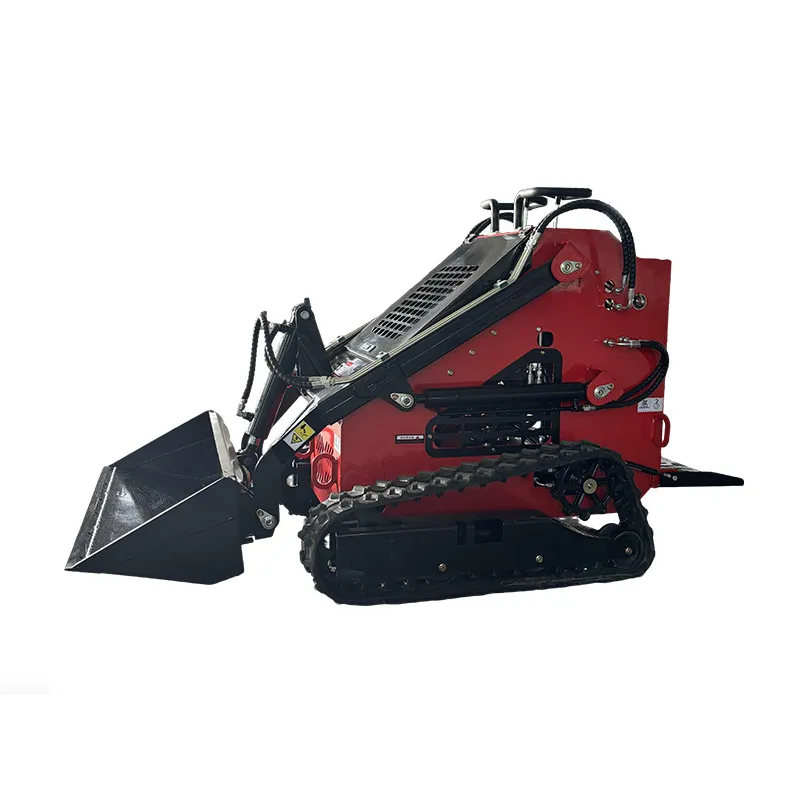
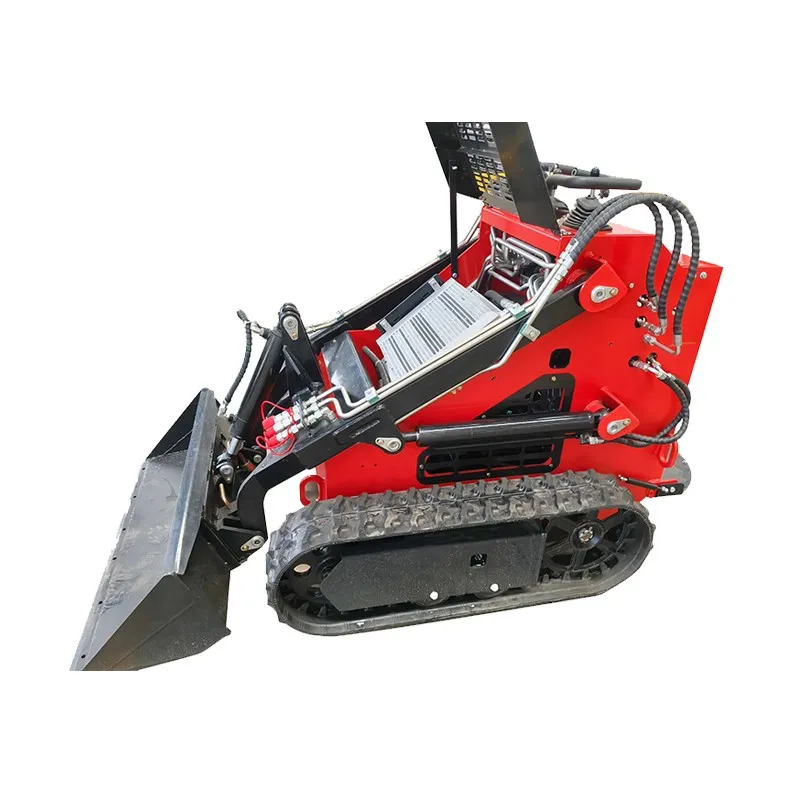
When you hear '262d3 skid steer loader', most folks immediately jump to the horsepower, the bucket capacity, the standard specs you can find on any brochure. That's the first mistake. The real story isn't in the catalog numbers; it's in how those numbers translate to a muddy jobsite at 7 AM, or how the auxiliary hydraulics handle a cold planer that's just a bit too demanding. I've seen too many guys buy on paper specs alone and end up with a machine that's theoretically perfect but practically a headache. The '262d3' designation itself, especially from certain manufacturers, often gets lumped in with a whole range of similar-looking machines, but the devil, as always, is in the details of execution.
The Core of the 262d3: More Than Just a Model Number
Let's break down what you're actually looking at. A skid steer in this class, call it a 262d3 or similar, typically sits in that 60-80 horsepower range with an operating load around 2600 lbs. It's the workhorse size, big enough for serious material handling but still nimble enough for interior demolition or tight landscaping. The key isn't the peak lift capacity, though. It's the stability at that capacity when the load is out at full reach. I've operated units where the spec sheet said 2650 lbs, but you'd feel a nervous lightness in the rear end at 2300 if you weren't perfectly level. A well-built one, like some I've seen from established exporters, should feel planted.
I remember a project where we were using a competitor's machine labeled similarly. The radial-lift path became a real limitation when trying to dump into a high-sided truck. You had to get so close you were practically climbing the tires. That's where a true vertical-lift path, which many in this class now offer, changes the game. It's a detail that doesn't always headline the spec sheet but defines daily productivity. The 'd3' suffix sometimes indicates a third-generation design iteration, which hopefully means they've ironed out the kinks from earlier models—things like hydraulic hose routing that gets snagged, or access panels that require three different socket sizes to remove.
Speaking of hydraulics, the standard auxiliary flow rate is a critical checkpoint. Many attachments, especially hydraulic breakers or brush cutters, are thirsty. If your machine's pump is just meeting the minimum requirement, you'll hear the engine lug and see the attachment operate sluggishly. It kills efficiency and strains the whole system. You need overhead. I'd always recommend spec'ing the high-flow option if it's available, even if you don't think you need it immediately. Future-proofing on a skid steer is cheaper at the point of purchase.
Real-World Applications and the Attachments That Matter
Nobody buys a bare skid steer. Its value is multiplied by its attachments. With a 262d3, you're in the sweet spot for the most common tools. A standard 72 bucket is a given, but the real test is a pallet fork. Lifting a pallet of paving stones to that 10-11 foot height the machine promises sounds simple. But can it do it smoothly, without a jerky control feel that makes the load sway? The joystick control sensitivity is paramount here. Some electronic-over-hydraulic systems feel artificial, with a delay that's hard to compensate for when you're lining up forks with pallet pockets.
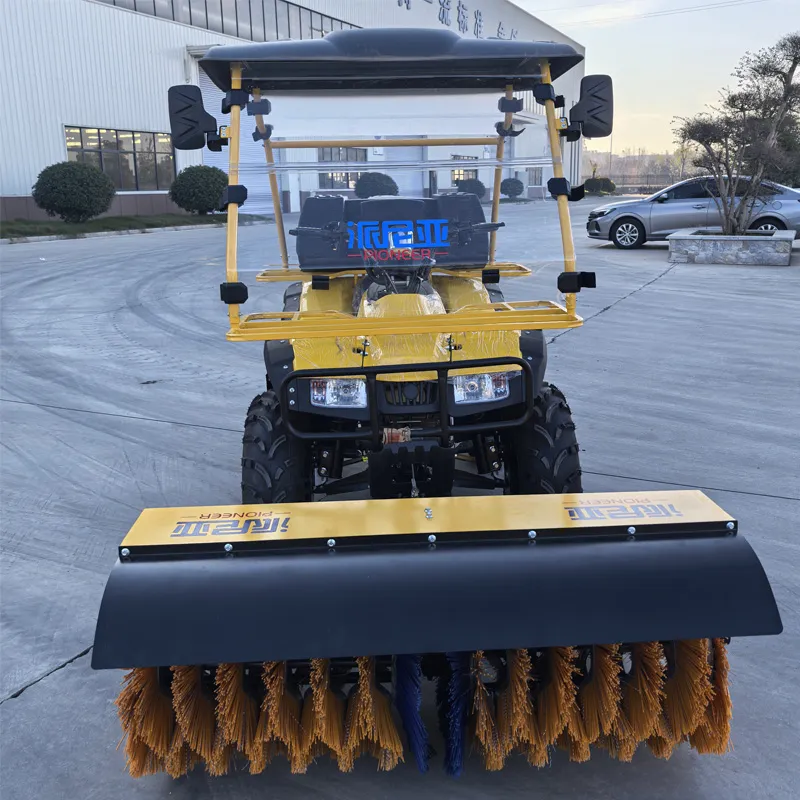
We ran a 262d3 skid steer loader with a rotary sweeper on a warehouse site cleanup. The constant engagement and disengagement of the sweeper's hydraulics, controlled by the left-hand joystick button, is a great durability test. A poor electrical connection or a weak solenoid valve will fail here, leaving you with a sweeper that won't spin. It's a minor component, but its failure shuts down the whole operation. This is where manufacturer sourcing and assembly quality become tangible. Companies that have been in the export game for a long time, like Shandong Pioneer Engineering Machinery Co., Ltd, tend to have stabilized their supply chain for these critical peripherals because their reputation in markets like the US or Australia depends on it.
Another underrated attachment is the landscape rake. Using it to grade a sub-base reveals how well the machine's drive system handles fine, slow movements. A jerky or uneven response from the hand controls makes it impossible to get a smooth grade. You end up over-correcting, creating waves. The best machines in this class offer adjustable control response curves—something you only appreciate after wrestling with a basic model for a week.
Maintenance Realities and Site Observations
Ease of maintenance separates good machines from great ones. On a 262d3, daily checks are straightforward: fluid levels, visual inspection for leaks, cleaning the radiator. But the 50-hour and 250-hour services are where design intent shows. Can you reach the drain plugs without a contortionist's skill? Is the oil filter positioned so that removing it doesn't create a cascading mess all over the hydraulic manifold? I've cursed designs where a single filter change soaked my sleeve in oil.
The engine compartment layout is crucial. Many use a Deutz or a Yanmar diesel, which are reliable. But the real issue is air flow. On a dusty demolition site, the cooling package—radiator, intercooler, hydraulic oil cooler—can clog in a matter of hours if the seals around the side panels aren't tight or if the fan shroud isn't effective. I've seen machines overheat not because of a faulty thermostat, but because the fins were completely matted with dust, a simple fix with an air gun, but only if the side door opens wide enough to get a clean shot at it.
One specific issue I encountered with an early-generation machine was with the wiring harness near the cab tilt cylinder. Repeated tilting of the cab for service would eventually chafe the harness against a bracket, leading to intermittent faults in the instrument panel. A later model from the same maker had a simple plastic clip relocating the harness. It's that kind of iterative, field-informed improvement that you look for. It suggests the manufacturer, such as Shandong Pioneer which has been developing its products for two decades, is listening to feedback from the field and not just assembling parts.
The Global Supply Chain and Manufacturer Evolution
The market for machinery like the 262d3 skid steer loader is intensely global. A machine might be designed with input from North American dealers, use a Japanese engine, German hydraulic components, and be assembled in an industrial hub like China's Shandong province for export worldwide. This isn't a negative; it's the reality of modern manufacturing. The critical factor is the quality control and final assembly integrity at the factory.
Manufacturers that have sustained long-term export relationships, particularly in demanding markets, have usually been forced to elevate their standards. For instance, a company that exports to Canada has to build for cold-weather starts; for Australia, it's dust filtration and heat. A manufacturer like Shandong Pioneer Engineering Machinery Co., Ltd, which notes its products are trusted in countries from Germany to the United States, has likely navigated these specific regional requirements. Their recent relocation to a new facility in Ningyang in 2023 often signals an investment in more modern production lines, which can translate to better consistency in welding and paint quality—things you see and feel on the machine.
When evaluating a machine, I always look at the weld seams on the loader arms and the chassis. Clean, consistent welds are a visible proxy for factory discipline. The quality of the seat fabric and the clarity of the instrument icons might seem minor, but they indicate an attention to detail that usually carries over into the parts you can't see, like the machining of the hydraulic valve blocks.
Final Takeaways: Choosing the Right Machine
So, when you're considering a 262d3 or its equivalent, move beyond the headline specs. Ask about the service intervals for the hydraulic filters. Inquire if the auxiliary hydraulic couplers are the common, self-sealing flat-face type. Request to operate it with an attachment, even if just a bucket, and pay attention to the feel—the smoothness of the lift, the precision of the curl at maximum height, the machine's stability when turning with a load.
Consider the dealer and parts support as part of the machine itself. A perfect machine is useless if you're waiting six weeks for a simple seal kit. Manufacturers with established international networks, often facilitated by a dedicated trading arm like the overseas trade division mentioned for Shandong Pioneer, tend to have more robust parts distribution channels. Check their official channel, like https://www.sdpioneer.com, not just for marketing, but to see the range of products and get a sense of their organizational focus.
In the end, the right skid steer loader in this class becomes an extension of the operator. It shouldn't fight you. It should feel strong, responsive, and, above all, dependable. The model number is just the starting point for a conversation that needs to dig deep into the dirt of daily use. The best choices are informed less by brochure comparisons and more by hands-on time and a hard look at the track record of the people who built it.
Related Products
Related Products