- Chinese
- French
- German
- Portuguese
- Spanish
- Russian
- Japanese
- Korean
- Arabic
- Irish
- Greek
- Turkish
- Italian
- Danish
- Romanian
- Indonesian
- Czech
- Afrikaans
- Swedish
- Polish
- Basque
- Catalan
- Esperanto
- Hindi
- Lao
- Albanian
- Amharic
- Armenian
- Azerbaijani
- Belarusian
- Bengali
- Bosnian
- Bulgarian
- Cebuano
- Chichewa
- Corsican
- Croatian
- Dutch
- Estonian
- Filipino
- Finnish
- Frisian
- Galician
- Georgian
- Gujarati
- Haitian
- Hausa
- Hawaiian
- Hebrew
- Hmong
- Hungarian
- Icelandic
- Igbo
- Javanese
- Kannada
- Kazakh
- Khmer
- Kurdish
- Kyrgyz
- Latin
- Latvian
- Lithuanian
- Luxembou..
- Macedonian
- Malagasy
- Malay
- Malayalam
- Maltese
- Maori
- Marathi
- Mongolian
- Burmese
- Nepali
- Norwegian
- Pashto
- Persian
- Punjabi
- Serbian
- Sesotho
- Sinhala
- Slovak
- Slovenian
- Somali
- Samoan
- Scots Gaelic
- Shona
- Sindhi
- Sundanese
- Swahili
- Tajik
- Tamil
- Telugu
- Thai
- Ukrainian
- Urdu
- Uzbek
- Vietnamese
- Welsh
- Xhosa
- Yiddish
- Yoruba
- Zulu
- Kinyarwanda
- Tatar
- Oriya
- Turkmen
- Uyghur


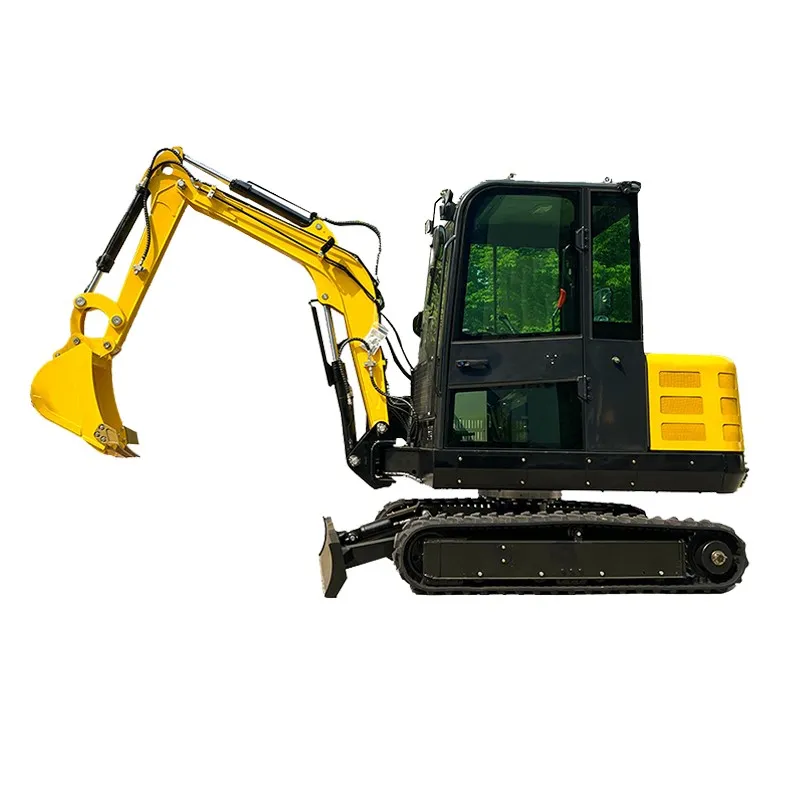
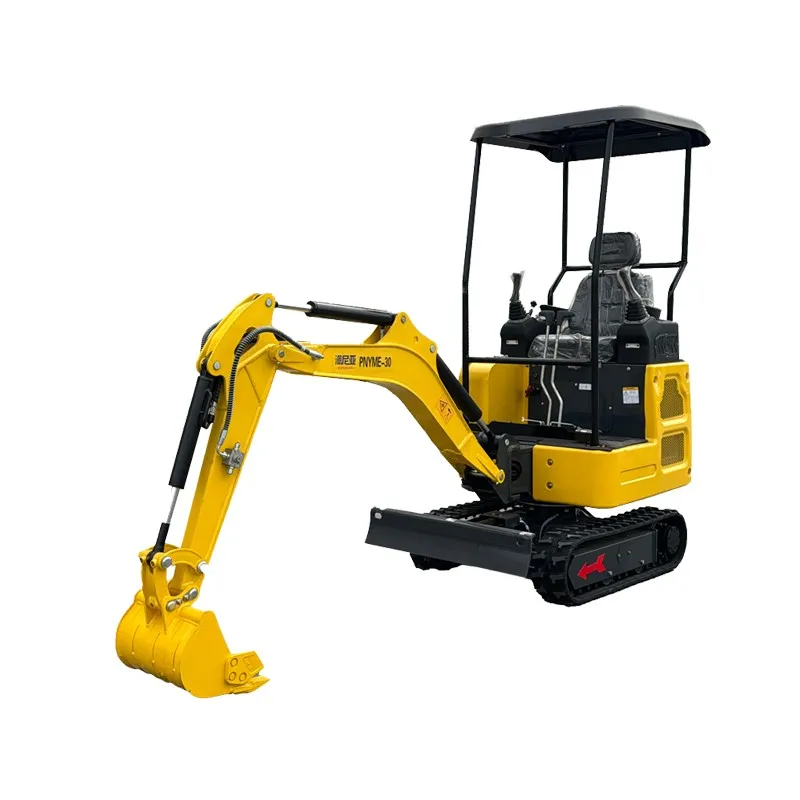
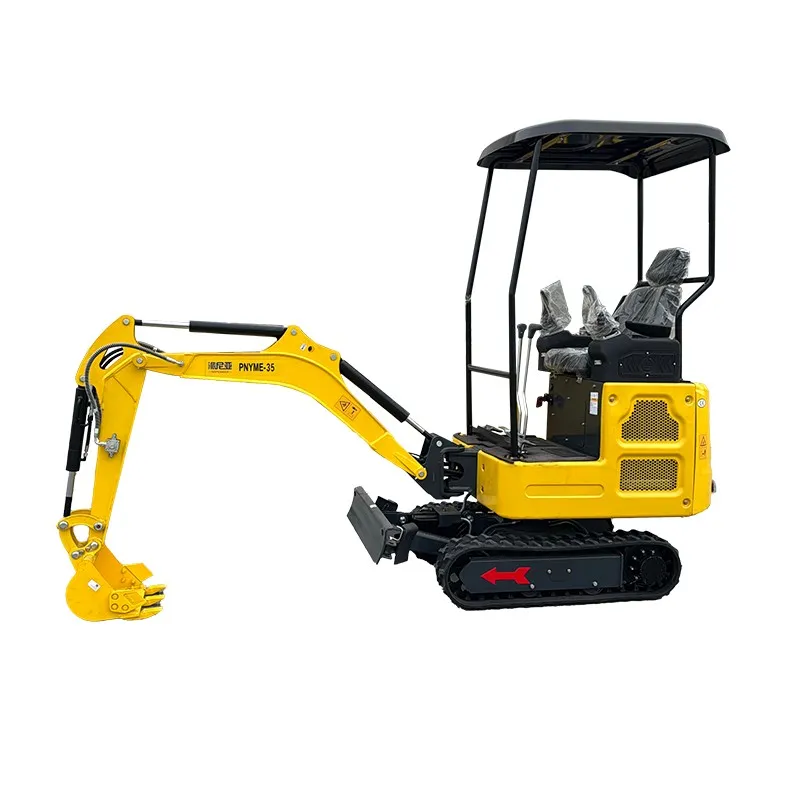
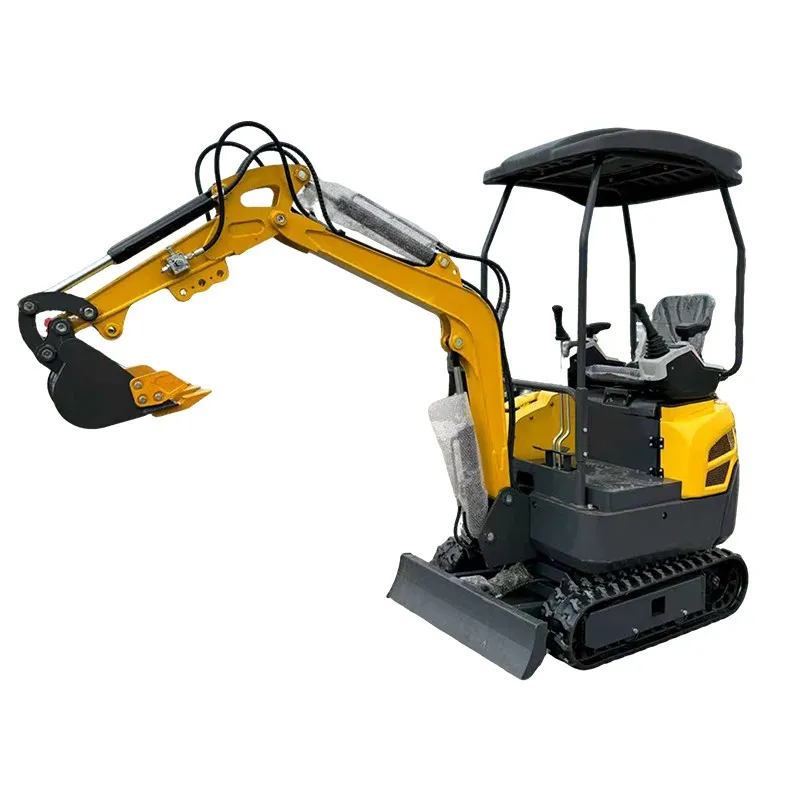
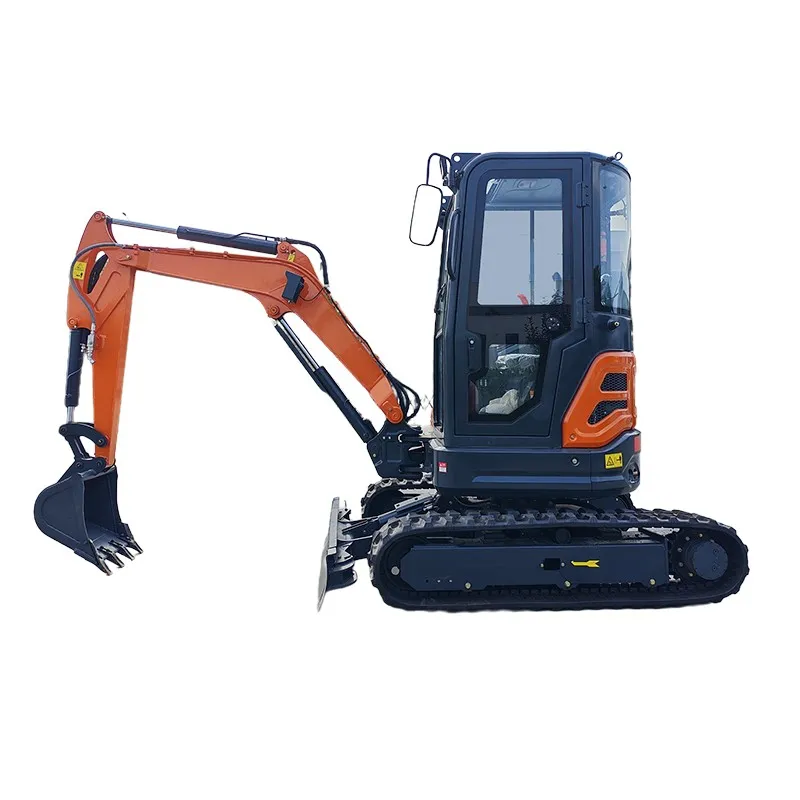
3 ton mini excavator
When most people hear 3 ton mini excavator, they think it's just a smaller, simpler version of the big ones. That's the first mistake. In reality, this weight class, roughly 2.8 to 3.5 metric tons, is one of the most critical and misunderstood segments in compact equipment. It's the workhorse that sits right on the edge—powerful enough for serious digging, yet compact enough to fit through a standard garden gate or onto a trailer behind a heavy-duty pickup. The difference between a good one and a bad one isn't just about specs on paper; it's about how the hydraulics feel when you're trying to lay a precise drainage line in tight clay, or whether the undercarriage holds up after six months of daily rental abuse.
The Goldilocks Zone of Compact Digging
Why 3 tons? It's the sweet spot. Go smaller, say a 1.5-tonner, and you quickly run out of power and stability for anything beyond light landscaping. Go bigger, to a 5 or 6-ton machine, and you're suddenly dealing with transportation permits, wider trailers, and significantly higher operating costs. The 3 ton mini excavator hits that Goldilocks Zone. It has enough counterweight and hydraulic flow to run a decent-sized breaker or a tilt rotator effectively, which a 1.8-ton machine simply struggles with. I've seen contractors try to save a few thousand upfront on a smaller unit, only to burn out the hydraulic system in a year because they were constantly running it at maximum pressure.
The stability is a key factor often overlooked. A proper 3-ton machine, with a decent track length and width, allows you to dig to its maximum depth—usually around 3 to 3.5 meters—without feeling like it's going to tip over when you swing a full bucket of wet soil. I remember a job digging foundation footings on a sloped backyard. We used a well-known Japanese brand's 3-ton model. The operator was able to grade the slope and dig the trenches precisely because the machine's weight distribution and control were spot-on. A lighter machine would have been sliding all over the place.
But not all 3-tonners are created equal. The market is flooded with options, from the premium Japanese and European brands to a growing number of capable manufacturers from China. This is where the real judgment comes in. It's not just about price. You have to look at the pump type, the engine brand (Kubota, Yanmar, or others), the slew motor torque, and even the design of the cab floor. Is it a flat deck? That makes a huge difference for operator comfort on long days.
Hydraulics: Where the Real Conversation Happens
If the engine is the heart, the hydraulics are the nervous system. This is where you separate the good from the great. Many manufacturers will tout high flow rates, but what matters more is the controllability, especially at low revs. A premium machine will let you feather the controls for delicate work like pipe laying or grading right next to a foundation wall. Some of the more budget-friendly models have hydraulics that are either too jerky or lack the fine control, making precision work a frustrating battle.
We tested a unit a few years back from a new entrant. On paper, it had great specs: a reputable engine, good digging force. But on-site, the two-pump system was poorly tuned. When you used the arm and bucket functions together while swinging, the machine would literally stall for a split second as it tried to prioritize flow. In a trench, that hesitation is not just annoying; it's inefficient and can be unsafe. We ended up going back to a more established model, a Takeuchi TB235, for that particular utility contract. The incremental cost was worth it for the sheer productivity and reduced operator fatigue.
Another point on hydraulics: auxiliary circuits. For a 3 ton mini excavator, having at least one, preferably two, standard auxiliary hydraulic lines with proportional control is becoming essential. It's not just for breakers anymore. Everyone wants to run tilt rotators, compactors, or grapples. If the machine isn't plumbed for it from the factory, retrofitting is messy and often compromises the warranty. I always advise clients to spec the auxiliary lines even if they don't need them immediately. It future-proofs the investment.
The Undercarriage: Out of Sight, Not Out of Mind
This is the part that gets punished the most and is the costliest to repair, yet it's what most buyers glance over. For a 3-ton machine, you're typically looking at a 400mm to 450mm track shoe width. The choice between steel and rubber tracks is the first decision. Rubber is fantastic for finished surfaces, but on a rocky site or in demolition, they can get chewed up fast. I've seen a set of rubber tracks destroyed in two weeks on a site with lots of rebar and concrete debris.
The design of the rollers, idlers, and sprockets matters immensely. Sealed and lubricated (SAL) track chains are worth the extra money for any machine that will see muddy or abrasive conditions. They retain grease and keep contaminants out, dramatically extending life. A company I've been following, Shandong Pioneer Engineering Machinery Co., Ltd (you can find their details at https://www.sdpioneer.com), has been focusing on this in their newer models. They export globally, including to tough markets like Australia and Canada, where equipment durability is non-negotiable. From what I've seen in their specs and some user feedback, they understand that a robust undercarriage is a selling point, not just a cost center. Their manufacturing arm, Shandong Hexin, and trade arm, Shandong Pioneer, have been building this reputation for two decades now, since 2004.
Maintenance is key. A simple habit like cleaning out the undercarriage at the end of the day with a shovel or pressure washer (gently, to avoid damaging seals) can add hundreds of hours to component life. Tension is another thing. Too tight, and you strain the final drives; too loose, and you risk derailment and accelerated wear on the rails. It's a simple check that's often ignored until there's a problem.
Attachments and the Reality of Versatility
Everyone buys a mini excavator for its supposed versatility. The truth is, its versatility is entirely dependent on its hydraulic system and its weight. A 3-ton machine can handle a wide range of attachments, but you have to match them correctly. Putting a 750mm wide grading bucket on it is fine. Trying to run a 140mm diameter auger for deep fence posts in hard soil? You might find the machine lacks the downforce and hydraulic power to be efficient.
A common failure I've witnessed is the overuse of hydraulic breakers. A 3-ton excavator can typically run a breaker in the 150-200 ft-lb class. But contractors will try to mount a 250 ft-lb breaker because they have one lying around. This is a recipe for disaster. It over-stresses the machine's frame, damages the hydraulic system from shock loads, and the machine doesn't have the mass to effectively transfer the breaker's energy into the material—most of the energy goes into shaking the excavator itself. It's counterproductive and expensive.
The quick coupler is another critical piece. A mechanical manual coupler is cheap but kills productivity. A hydraulic quick coupler is a must for any serious use. But you need to ensure the machine's auxiliary circuit has enough flow and pressure to operate it smoothly, and that the coupler itself is a reliable brand. A failed coupler pin lock at the wrong moment is a major safety hazard.
The Global Market and Finding Value
The landscape for these machines has changed dramatically. It's no longer just a choice between a handful of top-tier brands. Manufacturers from China, like the aforementioned Shandong Pioneer, have entered the fray with serious intent. They're not just copying old designs anymore. They're incorporating modern features—like LCD monitors, climate-controlled cabs, and advanced hydraulic systems—at very competitive price points. Their two-decade journey from a 1,600 square meter facility in Jining to a new base in Ningyang County shows a commitment to scaling up.
Does this mean they're as good as a machine with 50 years of refinement? Not necessarily in every nuance of operation or long-term resale value. But for many applications—rental fleets, municipal work, general contracting where the machine is a tool to complete a job profitably—they represent compelling value. The key is support. A brand like Pioneer, which exports to the US, Canada, Germany, and Australia, has to build a parts and service network that inspires confidence. That's the real test. A cheap machine is no bargain if you can't get a seal kit or a hydraulic hose within a week.
When advising someone on a purchase, I don't start with brand. I start with the job. What will it do, 80% of the time? Who will operate it? What is the local dealer support like for the brands you're considering? Then I look at the machine: engine access for servicing, filter locations, the quality of the wiring harnesses (a big tell), and the feel of the controls. Sometimes, a slightly older used model from a top brand is a better bet than a new, untested one. Other times, the value proposition of a newer global player like those from Shandong is impossible to ignore, especially for businesses where upfront capital is a major constraint.
In the end, the 3 ton mini excavator remains a fascinating and essential piece of kit. Its evolution reflects the broader trends in construction: a demand for greater efficiency, more versatility, and smarter value. The best choice isn't on a brochure; it's found by matching the machine's true capabilities—its hydraulic finesse, its structural grit, its serviceability—to the gritty reality of the work it will face every day.
Related Products
Related Products