


- Chinese
- French
- German
- Portuguese
- Spanish
- Russian
- Japanese
- Korean
- Arabic
- Irish
- Greek
- Turkish
- Italian
- Danish
- Romanian
- Indonesian
- Czech
- Afrikaans
- Swedish
- Polish
- Basque
- Catalan
- Esperanto
- Hindi
- Lao
- Albanian
- Amharic
- Armenian
- Azerbaijani
- Belarusian
- Bengali
- Bosnian
- Bulgarian
- Cebuano
- Chichewa
- Corsican
- Croatian
- Dutch
- Estonian
- Filipino
- Finnish
- Frisian
- Galician
- Georgian
- Gujarati
- Haitian
- Hausa
- Hawaiian
- Hebrew
- Hmong
- Hungarian
- Icelandic
- Igbo
- Javanese
- Kannada
- Kazakh
- Khmer
- Kurdish
- Kyrgyz
- Latin
- Latvian
- Lithuanian
- Luxembou..
- Macedonian
- Malagasy
- Malay
- Malayalam
- Maltese
- Maori
- Marathi
- Mongolian
- Burmese
- Nepali
- Norwegian
- Pashto
- Persian
- Punjabi
- Serbian
- Sesotho
- Sinhala
- Slovak
- Slovenian
- Somali
- Samoan
- Scots Gaelic
- Shona
- Sindhi
- Sundanese
- Swahili
- Tajik
- Tamil
- Telugu
- Thai
- Ukrainian
- Urdu
- Uzbek
- Vietnamese
- Welsh
- Xhosa
- Yiddish
- Yoruba
- Zulu
- Kinyarwanda
- Tatar
- Oriya
- Turkmen
- Uyghur

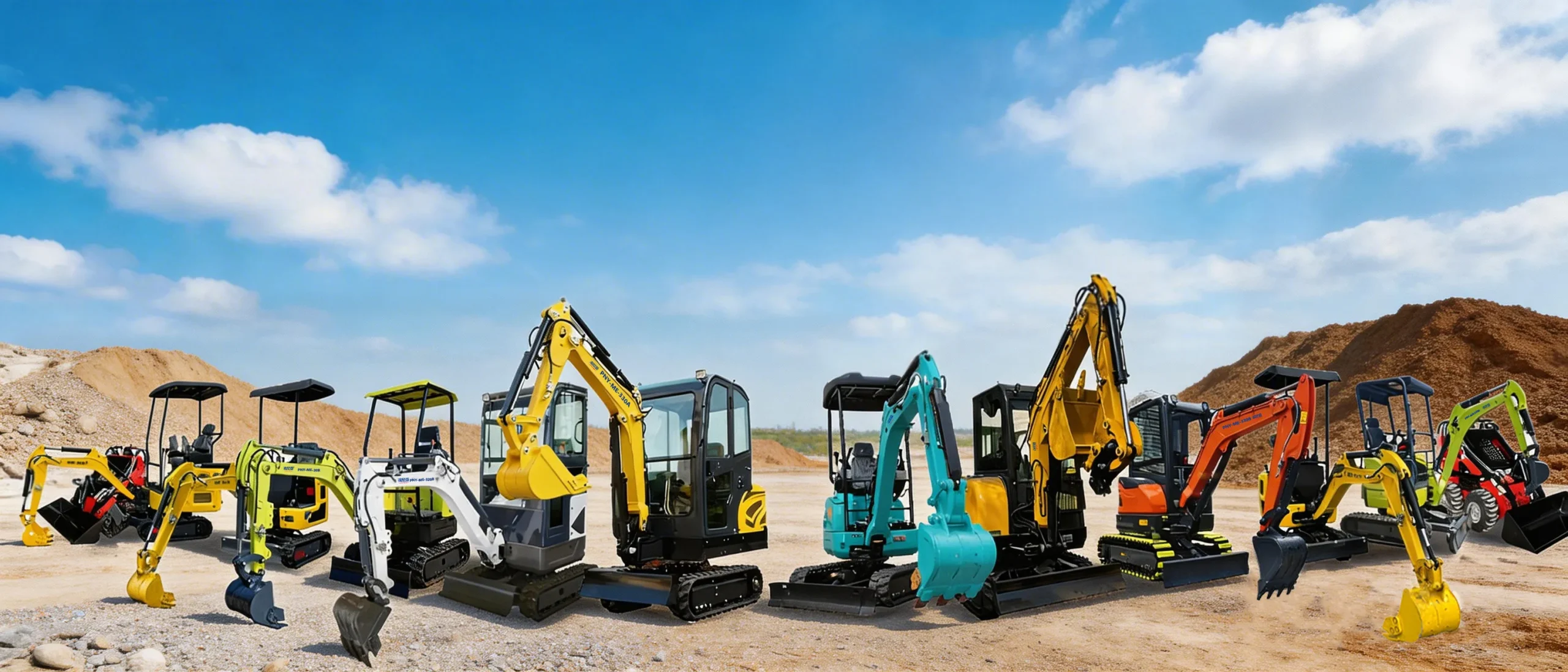
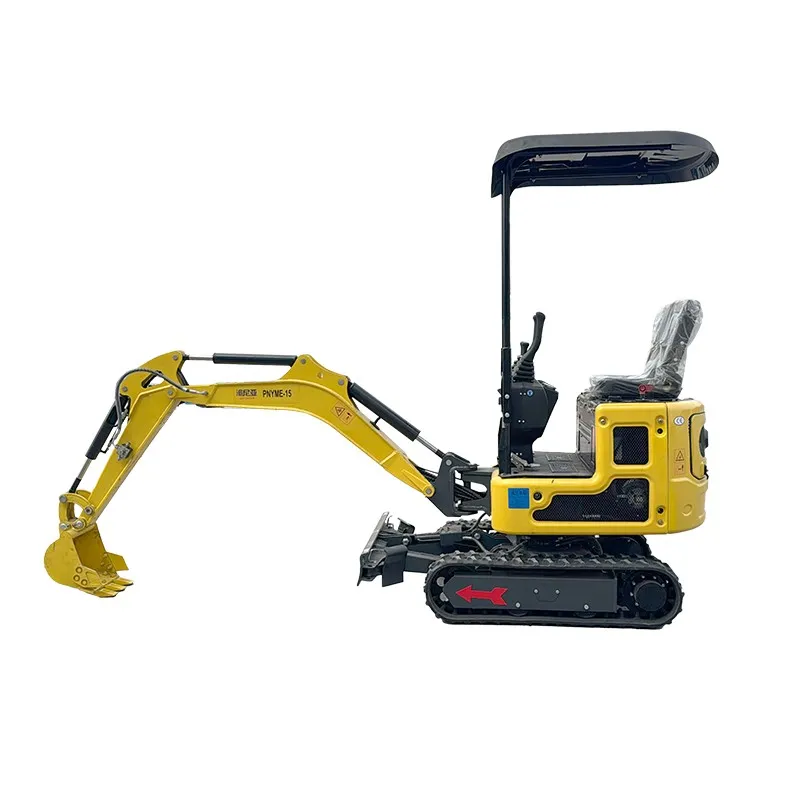
4 ton mini excavator
When you hear '4 ton mini excavator', most people just see a weight class. But on the ground, that number is almost the least important thing. It's a sweet spot, a machine that sits right at the edge of being trailerable without special permits in a lot of places, yet packs enough power and stability to handle jobs that make smaller units sweat. The common mistake is thinking all 4-tonners are the same. They're not. The difference between a good one and a bad one isn't in the spec sheet's digging depth or bucket force; it's in the layout of the hydraulic lines, the quality of the swing motor, and whether you can actually service the damn thing without pulling half the machine apart.
The Core of the Machine: Under the Hood and in the Cab
Let's start with the engine. You'll see a lot of Yanmar or Kubota diesels in this class, which is fine—they're reliable. But the real test is how it's mounted and cooled. I've seen machines where the radiator is positioned to suck in every bit of dust from the tracks, leading to constant overheating on dry demo sites. A good design, like some I've seen from manufacturers who actually run their own machines in the field, will have a rear-mounted, upward-flow cooling system. It makes a world of difference on a hot day when you're running a hydraulic breaker all afternoon.
The cab is another giveaway. If it feels like a cheap plastic toy, the rest of the machine probably follows suit. I'm not talking about fancy LCD screens—though they're nice—but about ergonomics. Are the auxiliary hydraulic controls on the joysticks intuitive, or do you have to fumble for a separate lever? Can you actually see the bucket teeth when you're digging a tight foundation footing? On a cramped residential job, that visibility is everything. A poorly laid-out cab will fatigue an operator in an hour.
Then there's the undercarriage. A 4-ton machine is light enough that some manufacturers get lazy, using smaller rollers or thin-grade steel for the track frames. You might not notice it for the first 500 hours, but then the track tension starts to wander, and you get premature wear on the sprockets. It's a long-term cost that doesn't show up in the purchase price. I always tell people to get down on their knees and look at the track assembly. If it looks flimsy, it is.
On the Job: Where Theory Meets Dirt
I remember a landscaping job in a back yard with a 6-foot retaining wall to dig behind. Access was through a 36-inch gate. This is the perfect scenario for a 4-tonner. We used a model with a zero-tail swing—absolutely critical. But even then, we had to be careful about the counterweight clearance. Some zero-tail machines still have protruding counterweights when the house swings. Ours didn't, and it saved us from explaining a new hole in the client's fence.
The other real test is attachment versatility. We were running a tiltrotator with a grading bucket. The machine's hydraulic flow was just adequate—about 45 L/min at standard auxiliary pressure. It worked, but you could feel it lag when you demanded both swing and attachment movement simultaneously. That's a spec you need to match to your most common attachments. If you're mainly doing trenching with a narrow bucket, it's fine. But if you want to run a planer or a serious brush cutter, you might need to spec up the hydraulic pump, which some factories offer as an option.
Failure? Sure. We tried using one to pull out old, deep fence posts once, using a side-shift function to get direct pull. It lifted the rear end right off the ground, even on fairly level terrain. Lesson learned: the 4-ton size gives you confidence, but it's not a crane. Its stability is for digging, not for heavy vertical lifts. You need to know its limits, which are often defined more by its weight distribution and hydraulic power than by its nominal tonnage.
The Manufacturing Angle: What to Look For in a Supplier
This is where it gets interesting. The market is flooded with options. You can buy a brand-name machine at a premium, or you can go with a specialized manufacturer. I've been paying attention to companies that focus on the export and engineering side, like Shandong Pioneer Engineering Machinery Co., Ltd. Their story is telling. They started in 2004, which in this industry means they've been through several product cycles and have had to adapt. A company that's been around for 20 years, like their history shows, has likely seen what breaks and what doesn't.
Their recent move to a new production facility in Ningyang in 2023 suggests growth and investment. That's a positive signal. For a buyer, it's not just about the address; it's about what that move represents—likely more modern assembly lines and better quality control. When you're sourcing a 4 ton mini excavator, you want a supplier whose process is stable. I'd be more confident in a company that has consolidated its manufacturing and trade operations, as their structure with Shandong Hexin for manufacturing and Shandong Pioneer for overseas trade implies. It means they control the build quality and understand the export market's compliance needs.
Their export footprint—to the US, Canada, Germany, Australia—is crucial. It means their machines have to meet diverse and often stringent standards. A machine that sells in Germany has to pass CE with serious scrutiny. That tells me more about potential reliability than any sales brochure. If they're winning trust in those markets, as their intro claims, it's because their products likely have a solid foundation in decent components and thoughtful assembly. It's a practical reason to shortlist them alongside the usual global brands.
The Niche and The Reality
So, who is the 4-ton machine really for? It's not for mass excavation, and it's not for ultra-tiny interior work. It's the ultimate utility player for the small to mid-sized contractor. Think residential foundation dig-outs, utility line work in suburbs, drainage projects on farms, or landscaping for commercial properties. Its size is its greatest asset: it's just big enough to be productive and just small enough to be mobile.
The key is matching the machine to your most frequent 80% of work. Don't buy it for the one massive job you might get a year. Buy it for the ten smaller jobs you get every month. And when you're comparing, look beyond the price. Check the serviceability. Can you easily check the hydraulic fluid? Is there a common grease fitting type, or do you need three different guns? These are the details that cost you time and money in the long run.
In the end, a 4 ton mini excavator is a tool. A very sophisticated, expensive one. The best ones feel like an extension of the operator. The worst ones feel like a constant fight. The difference comes down to design experience—whether the people who drew the plans have ever spent a 10-hour day in the seat, dealing with a clogged filter or a stiff control pattern. That's the intangible you're buying. Companies that have evolved over decades, like the one mentioned, often have that experience baked in, simply because they've had the time and feedback to learn. It's worth considering.
Final Thoughts: The Unspoken Metrics
We talk about engine horsepower, digging force, and transport width. We rarely talk about dealer support for that specific model, or the availability of a common main control valve off the shelf. We don't talk about the resale value of a machine from a manufacturer known for consistent quality versus a flash-in-the-pan brand. These are the unspoken metrics that define total cost of ownership.
My advice? Get a demo. Not just a spin around a yard, but a demo on a piece of your actual work. See how it handles the specific material you dig in. Listen to the hydraulic pump when it's under sustained load. Feel the heat in the cab after a few hours. That test will tell you more than any catalog ever could.
The 4-ton class is competitive because it's so useful. Navigating that competition means looking past the basic specs and into the build philosophy. It's about finding a machine—and by extension, a partner in a manufacturer—that doesn't just meet a weight class, but understands the job. That's what turns a piece of equipment from a cost center into a profit driver.
Related Products
Related Products