- Chinese
- French
- German
- Portuguese
- Spanish
- Russian
- Japanese
- Korean
- Arabic
- Irish
- Greek
- Turkish
- Italian
- Danish
- Romanian
- Indonesian
- Czech
- Afrikaans
- Swedish
- Polish
- Basque
- Catalan
- Esperanto
- Hindi
- Lao
- Albanian
- Amharic
- Armenian
- Azerbaijani
- Belarusian
- Bengali
- Bosnian
- Bulgarian
- Cebuano
- Chichewa
- Corsican
- Croatian
- Dutch
- Estonian
- Filipino
- Finnish
- Frisian
- Galician
- Georgian
- Gujarati
- Haitian
- Hausa
- Hawaiian
- Hebrew
- Hmong
- Hungarian
- Icelandic
- Igbo
- Javanese
- Kannada
- Kazakh
- Khmer
- Kurdish
- Kyrgyz
- Latin
- Latvian
- Lithuanian
- Luxembou..
- Macedonian
- Malagasy
- Malay
- Malayalam
- Maltese
- Maori
- Marathi
- Mongolian
- Burmese
- Nepali
- Norwegian
- Pashto
- Persian
- Punjabi
- Serbian
- Sesotho
- Sinhala
- Slovak
- Slovenian
- Somali
- Samoan
- Scots Gaelic
- Shona
- Sindhi
- Sundanese
- Swahili
- Tajik
- Tamil
- Telugu
- Thai
- Ukrainian
- Urdu
- Uzbek
- Vietnamese
- Welsh
- Xhosa
- Yiddish
- Yoruba
- Zulu
- Kinyarwanda
- Tatar
- Oriya
- Turkmen
- Uyghur


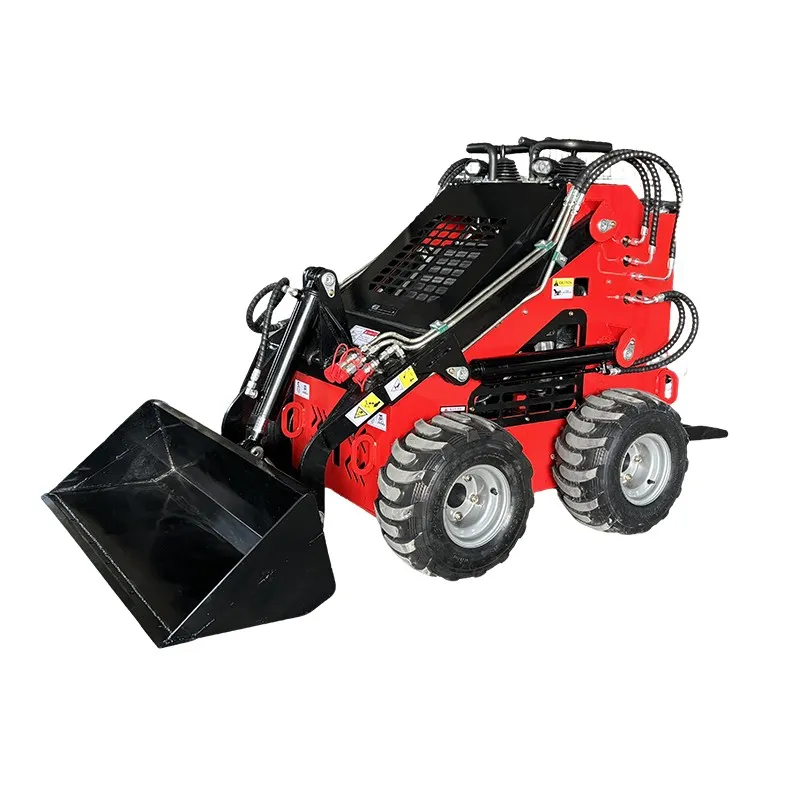
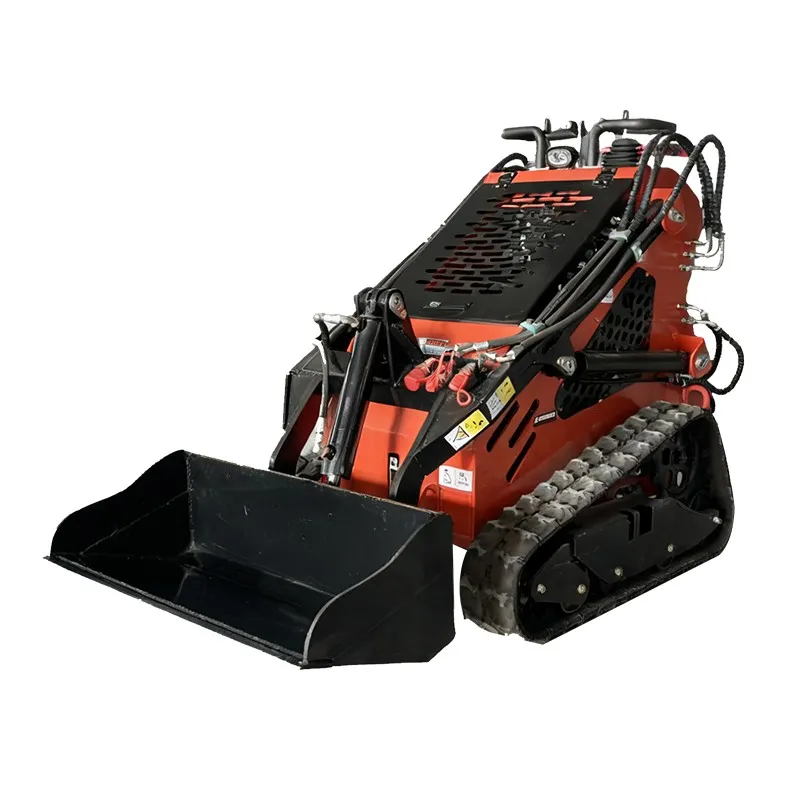
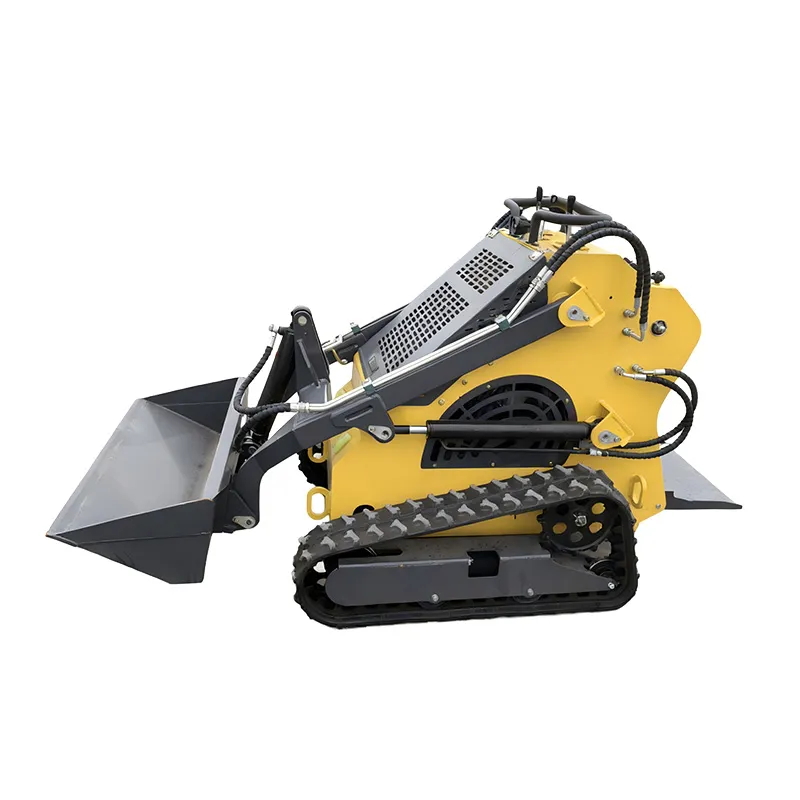
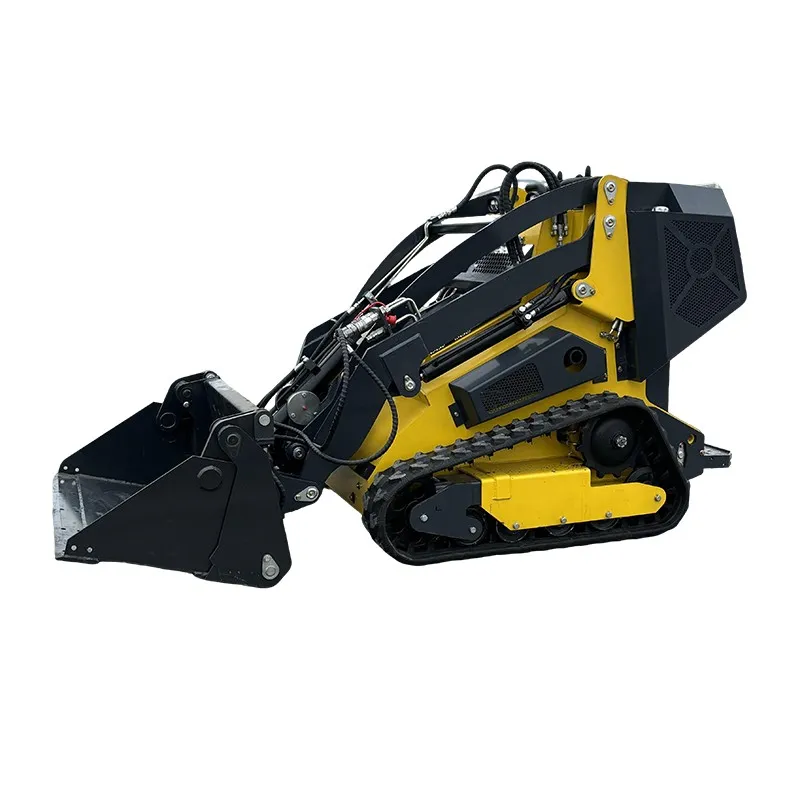
ace skid steer loader
When you hear 'ACE skid steer loader', a lot of folks immediately think of the big names—Bobcat, Caterpillar, John Deere. That's fair, they dominate the conversation. But there's a whole other layer to this market, especially when you're sourcing or operating on a tighter budget or for specific, less brutal applications. I'm talking about the value segment, often coming from manufacturers you might not know by heart. The ACE brand is a prime example here. It’s not trying to be a Cat 289D; it’s filling a different niche entirely, and that’s where the real user experience gets interesting, and frankly, where a lot of misconceptions start.
The Value Proposition: What You're Actually Getting
Let's cut to the chase. With a machine like an ACE skid steer, you're not buying for a 10,000-hour, mine-site duty cycle. You're buying for a rental fleet that needs decent uptime, a small farm operation, or a landscaping business where the machine won't be hammered 12 hours a day, 7 days a week. The initial cost is the main draw. I've seen operations where buying two ACE units for the price of one premium brand made logistical sense—having a backup on-site can be worth more than theoretical longevity.
The hydraulics are simpler. You won't get the silky-smooth, infinitely variable control of a pilot-operated system. It's more direct, sometimes a bit jerky until you get the feel for it. The auxiliary hydraulic flow might be lower, so running a fancy forestry mulcher or a high-flow cold planer is out of the question. But for a standard bucket, a grapple, or a pallet fork? It does the job. You learn its limits quickly. The engine is usually a reliable, well-known brand like Kubota or Yanmar—that's rarely the point of failure. The stress points are elsewhere: in the wiring harness quality, the durability of hydraulic hoses and fittings, and the robustness of the undercarriage components.
I remember a client who ran a few of these in a light demolition and cleanup business. Their main gripe wasn't power; it was the seat sensor and the safety interlocks. They were overly sensitive. A slightly worn connector would make the machine think the operator left the seat, killing the hydraulics mid-lift. Annoying? Absolutely. A deal-breaker? Not after we hardwired a couple of connections and showed the crew how to keep the contacts clean. It's that kind of hands-on, practical tweaking that comes with this territory.
Sourcing and the Supply Chain Reality
This is where companies like Shandong Pioneer Engineering Machinery Co., Ltd come into the picture. You find them when you're digging into the OEMs behind these value brands. Their website, https://www.sdpioneer.com, shows a typical profile: established in 2004, moved to a new facility in Ningyang in 2023. They represent a whole ecosystem of manufacturing and export. Shandong Hexin handles the manufacturing, and Shandong Pioneer handles the overseas trade. They're not consumer-facing; they're a link in the chain, exporting to the US, Canada, Germany, Australia.
Dealing with this layer requires a shift in mindset. You're not ordering a spec machine online. Communication is key—spec sheets can be translated, but nuances get lost. I've been involved in shipments where the requested quick-attach plate pattern was John Deere style, but what arrived was a slight variation that needed adapter brackets. It wasn't wrong, per se, just not the local standard. That's the hidden cost: the need for local dealer support or a mechanically inclined owner to handle these discrepancies.
The advantage, though, is modularity. Because these machines are often built on common, proven component bases (like those Kubota engines), parts aren't always a nightmare. The main structural components—the loader arms, the chassis—are the real unknowns. How do they handle fatigue over time? That's the question you can only answer with years in the field, not a data sheet.
Operational Nuances and the Feel
Jumping from a high-end skid steer into an ACE model is a reset. The controls might be mechanical hand levers instead of electronic joysticks. The cab noise is higher. The suspension seat is basic. It feels more like a tool and less like a cockpit. For an old-timer, it might even feel nostalgic. For a new operator used to modern comforts, it's a step down.
But here's the thing: for straightforward material handling—moving mulch, loading trucks with dirt, cleaning out barns—this simplicity is almost an advantage. Fewer electronic control modules (ECMs) to fail. When something goes wrong, a decent mechanic can trace it with a multimeter, not a proprietary diagnostic computer. I saw one used in a nursery, constantly in and out of poly tunnels. The low ceiling wasn't a problem, and when a branch punched through the front grill, the repair was a couple hundred bucks for a new radiator, not a thousand-plus for a complex, integrated cooling module.
The lift capacity and dump height on paper are usually competitive. The real-world test is in the stability when that bucket is at max height with a heavy, wet load. You feel the chassis flex more. The advice is always to take it easier, make two trips. Trying to operate it like a compact track loader with a fully loaded bucket at full reach is asking for trouble—a quick way to test the roll-over protection structure (ROPS) certification.
The Dealer and Support Equation
This is the absolute critical factor that decides success or failure for these machines in a market. An ACE skid steer loader sold through a website with no local support network is a ticking clock. The value proposition evaporates the first time you need a specific hydraulic valve bank and it's on a boat from China for eight weeks.
The successful models are those brought in by an importer or a regional dealer who stocks a container's worth of common wear parts: seals, hoses, filters, sprockets, and idlers for the track models (if offered). Companies like Shandong Pioneer succeed by partnering with these overseas entities who understand local needs. The trust they've won globally, as mentioned in their intro, isn't from end-users, but from these trade partners who've found the product reliable enough for certain market segments.
I've witnessed both sides. A small equipment rental company bought a couple through a broker with no support. They were cheap upfront but became yard art after the first major hydraulic pump issue. Conversely, a landscaping supply yard bought through a local dealer who also handled some other Chinese machinery lines. That dealer had the foresight to stock extra wheel motors and drive belts. Their machines are still running, because downtime was measured in hours, not months.
Final Take: Context is Everything
So, would I recommend an ACE skid steer loader? It's the wrong question. The right question is: for what, for whom, and with what support? If you're a owner-operator who understands basic mechanics, need a machine for seasonal or light-to-medium duty, and have a local source for parts and guidance, it can be a tremendously cost-effective asset. It gets you into a capable form factor without the massive debt.
If you're a large construction company needing maximum uptime, standardized fleets, and a service technician on call from a major brand, then look right past it. This machine exists in the gap between disposable and investment-grade. It's a tool for a specific job set and a specific business calculus.
Looking at the landscape, with firms like Shandong Pioneer Engineering Machinery Co., Ltd expanding their facilities, the product is evolving. The next generation might have better wiring looms, more standardized attachment interfaces, and improved sealing. But its core role will likely remain the same: offering functional access to the skid steer form factor. It's not about beating the giants. It's about offering an alternative path to getting the job done, with all the hands-on management that path requires. And for the right user, that's exactly what's needed.
Related Products
Related Products