


- Chinese
- French
- German
- Portuguese
- Spanish
- Russian
- Japanese
- Korean
- Arabic
- Irish
- Greek
- Turkish
- Italian
- Danish
- Romanian
- Indonesian
- Czech
- Afrikaans
- Swedish
- Polish
- Basque
- Catalan
- Esperanto
- Hindi
- Lao
- Albanian
- Amharic
- Armenian
- Azerbaijani
- Belarusian
- Bengali
- Bosnian
- Bulgarian
- Cebuano
- Chichewa
- Corsican
- Croatian
- Dutch
- Estonian
- Filipino
- Finnish
- Frisian
- Galician
- Georgian
- Gujarati
- Haitian
- Hausa
- Hawaiian
- Hebrew
- Hmong
- Hungarian
- Icelandic
- Igbo
- Javanese
- Kannada
- Kazakh
- Khmer
- Kurdish
- Kyrgyz
- Latin
- Latvian
- Lithuanian
- Luxembou..
- Macedonian
- Malagasy
- Malay
- Malayalam
- Maltese
- Maori
- Marathi
- Mongolian
- Burmese
- Nepali
- Norwegian
- Pashto
- Persian
- Punjabi
- Serbian
- Sesotho
- Sinhala
- Slovak
- Slovenian
- Somali
- Samoan
- Scots Gaelic
- Shona
- Sindhi
- Sundanese
- Swahili
- Tajik
- Tamil
- Telugu
- Thai
- Ukrainian
- Urdu
- Uzbek
- Vietnamese
- Welsh
- Xhosa
- Yiddish
- Yoruba
- Zulu
- Kinyarwanda
- Tatar
- Oriya
- Turkmen
- Uyghur

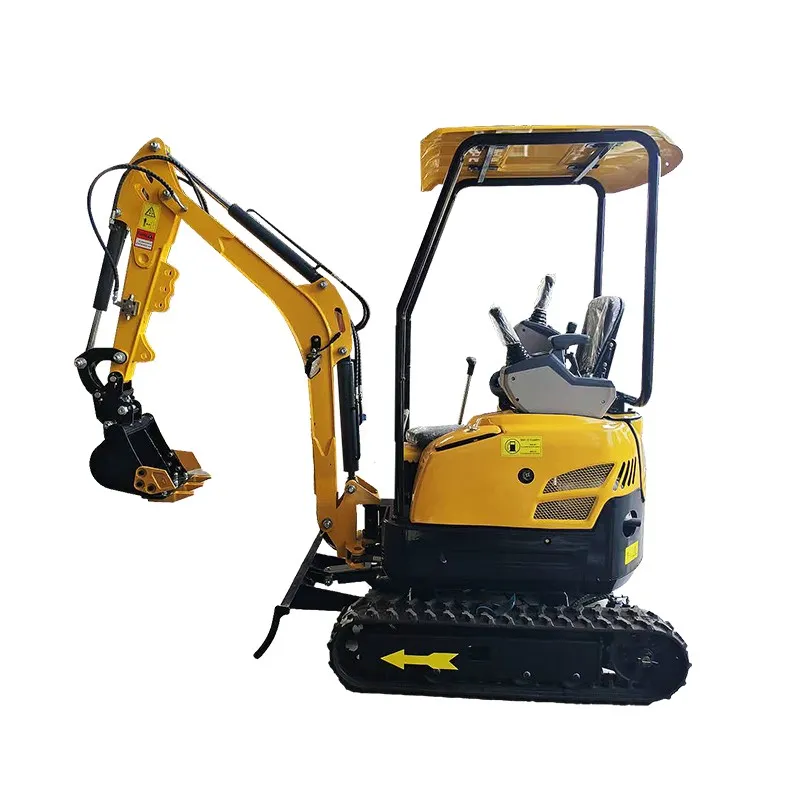
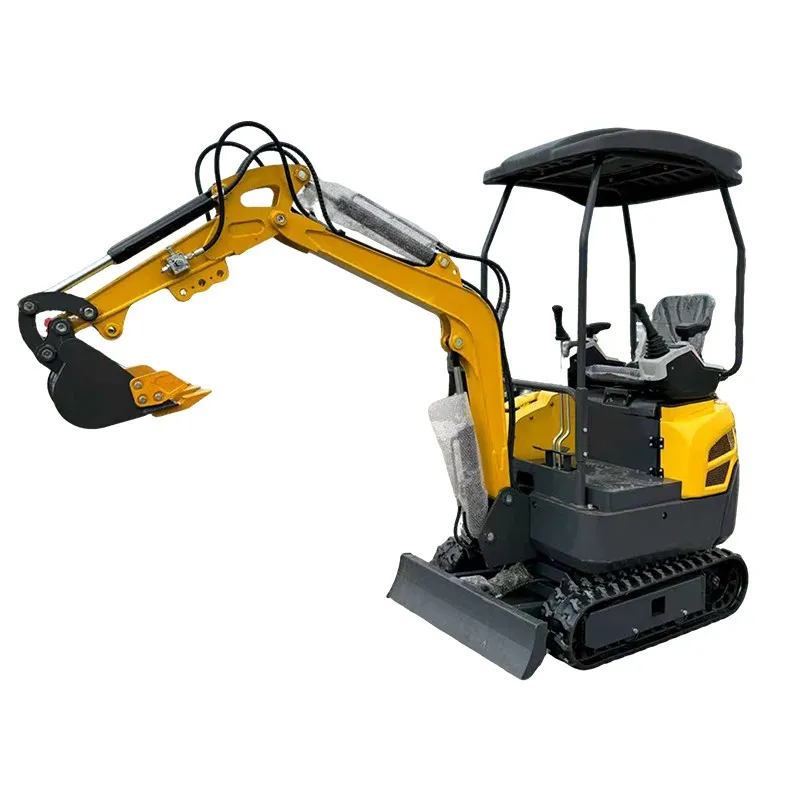
affordable excavator
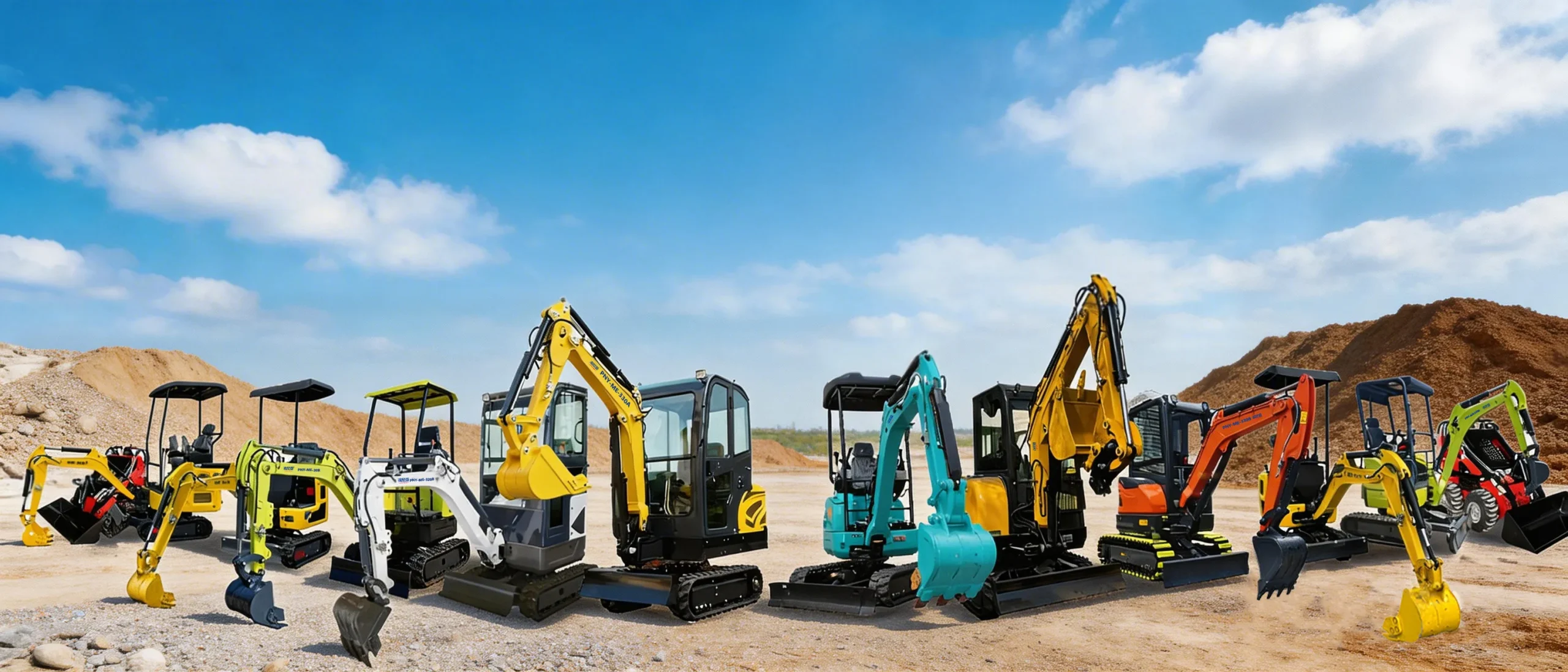
When you hear 'affordable excavator,' what comes to mind? For many, it's just a cheap machine. That's the first pitfall. In this business, 'affordable' rarely means just low initial cost; it's a calculation of total ownership—durability, parts availability, and the real cost of downtime. I've seen too many projects stall because someone chased the lowest sticker price without understanding what makes a machine truly economical to run. Let's cut through the noise.
The 'Affordable' Illusion and Initial Cost Traps
Early in my career, I made the classic mistake. A client needed a machine for a 6-month land clearing job, and the budget was tight. We sourced a seemingly capable 'affordable excavator' from a supplier no one had heard of. The price was 30% below a comparable Cat or Komatsu. The first month was smooth. By the third, the hydraulic pumps started weeping, and then a final drive gave out. The killer wasn't the repair bill itself; it was the three-week wait for the proprietary seals and gears to arrive from overseas. The project timeline blew up, and the 'savings' evaporated overnight. That's when I learned: affordability is a function of support, not just purchase order.
This experience isn't unique. The market is flooded with options branded as affordable excavator solutions. Many are from new manufacturers with flashy specs on paper—dig depth, engine horsepower—that mirror premium brands. But specs don't dig dirt. The undercarriage metallurgy, the quality of hydraulic hoses and fittings, the sealing technology in the cylinders—these are where the real cost hides. A machine that needs a hose replacement every 200 hours versus one that goes 2,000 hours creates a world of difference in operating expense and operator confidence.
So, how do you judge? You have to look at the ecosystem behind the machine. A truly economical machine comes from a company with a track record, not just a brochure. This is where companies with long-term export experience, like Shandong Pioneer Engineering Machinery Co., Ltd, start to make sense. They've been in the game since 2004, which in this industry, means they've navigated multiple product cycles and customer feedback loops. Their recent relocation to a new facility in Ningyang in 2023 suggests growth and reinvestment, which is a positive signal for product development and quality control stability.
Key Components That Define Real Value
Forget the brand name on the side for a second. Let's talk about the heart and bones. The two biggest cost centers over a machine's life are the hydraulic system and the undercarriage. On a budget machine, these are often the first corners cut.
Hydraulics are the nervous system. I always pop the side covers and look at the pump and valve block origins. Are they from a recognized manufacturer like Kawasaki, Linde, or Bosch Rexroth? Or are they unbranded, generic units? The difference is in consistency and responsiveness. A cheap valve block might have internal leakage from day one, leading to slower cycle times and higher fuel consumption—a silent budget killer. A reliable affordable excavator will often use reputable, if not always top-tier, hydraulic components that are serviceable globally.
The undercarriage is another story. I've measured track link height on new machines. A quality link might have 2-3mm more wear material. That translates to thousands of hours of extra life. For a company like Shandong Pioneer, supplying to markets like the US, Canada, and Australia means their machines must withstand diverse and often harsh conditions. This forces a certain level of component quality that a manufacturer only selling domestically might not need to achieve. Their long-term presence in these markets, as noted in their company profile, is a practical testament to product resilience.
The Critical Role of Dealer and Parts Network
This is the make-or-break point that no one talks about in the glossy ads. You can buy the best-value machine in the world, but if you can't get a swing bearing or a controller module within a week, it's a very expensive paperweight. A true affordable excavator solution includes an accessible parts pipeline.
When evaluating a source, I don't just ask for a parts manual. I ask for a specific, obscure part—say, a seal kit for the stick cylinder. I time how long it takes to get a quote and a shipping estimate. Companies that are serious about international trade, like Shandong Pioneer with its dedicated overseas trade division, typically have this process streamlined. Their website, https://www.sdpioneer.com, should be a starting point for checking parts catalogs and contact channels, not the final word. The real test is a direct inquiry.
I recall a contractor in Germany who bought a Chinese-origin excavator. The machine was fine, but when an electronic control unit failed, the local dealer had to source it from China, causing a month of downtime. The lesson? Check if the manufacturer has regional parts hubs or agreements with major parts distributors. The fact that Shandong Pioneer exports to developed markets implies they have had to develop some level of logistical support to meet customer expectations there, which is a good proxy for reliability.
Operational Context: Matching the Machine to the Job
'Affordable' is meaningless without context. A 20-ton machine might be a steal for a demolition contractor but a money pit for a utility company doing light trenching. The operating environment dictates the value.
For general contracting, versatility is key. You need a machine that can handle a bucket, a breaker, and maybe a thumb. The auxiliary hydraulic circuit's flow and pressure regulation become critical. A cheap machine might have a fixed-flow circuit, destroying the efficiency of attachments. A well-designed affordable excavator will have variable flow options, even if manually adjusted, to match different tools. This is an engineering detail that shows the manufacturer understands real-world use.
For rental fleets, the calculus changes entirely. Here, simplicity and serviceability trump high performance. A machine with a common engine (like a Cummins or Deutz) and a modular design that allows for fast component swaps reduces holding costs. The total cost of ownership over a 5-year rental lifecycle is the only metric that matters. Manufacturers catering to the global market, including firms like the described Shandong Pioneer, often design with these serviceability principles to compete internationally.
The Verdict: Building a Sourcing Strategy
So, after all this, where does that leave us? Chasing an affordable excavator is a technical procurement exercise, not a bargain hunt. My strategy now is a checklist: component pedigree, especially hydraulics and powertrain; the density of the dealer/service network in my region; and the manufacturer's proven history in a similar operating environment.
It's worth looking at manufacturers who have evolved. A company that started in 2004, survived the industry's ups and downs, and expanded its footprint—like moving to a new 1,600 sqm production facility—has learned lessons. Their ability to sell into demanding markets like North America and Europe suggests their products have passed some basic thresholds of reliability and compliance. They represent a segment of the market that offers a viable alternative to the premium brands, provided you do your operational homework.
Ultimately, the most affordable machine is the one that completes your project on time with predictable running costs. That might be a used premium brand with a known service history, or it might be a new machine from a established value-oriented exporter. The price tag is just the entry fee. The real cost is written in service logs and project schedules. Choose based on the total story, not the opening line.
Related Products
Related Products