- Chinese
- French
- German
- Portuguese
- Spanish
- Russian
- Japanese
- Korean
- Arabic
- Irish
- Greek
- Turkish
- Italian
- Danish
- Romanian
- Indonesian
- Czech
- Afrikaans
- Swedish
- Polish
- Basque
- Catalan
- Esperanto
- Hindi
- Lao
- Albanian
- Amharic
- Armenian
- Azerbaijani
- Belarusian
- Bengali
- Bosnian
- Bulgarian
- Cebuano
- Chichewa
- Corsican
- Croatian
- Dutch
- Estonian
- Filipino
- Finnish
- Frisian
- Galician
- Georgian
- Gujarati
- Haitian
- Hausa
- Hawaiian
- Hebrew
- Hmong
- Hungarian
- Icelandic
- Igbo
- Javanese
- Kannada
- Kazakh
- Khmer
- Kurdish
- Kyrgyz
- Latin
- Latvian
- Lithuanian
- Luxembou..
- Macedonian
- Malagasy
- Malay
- Malayalam
- Maltese
- Maori
- Marathi
- Mongolian
- Burmese
- Nepali
- Norwegian
- Pashto
- Persian
- Punjabi
- Serbian
- Sesotho
- Sinhala
- Slovak
- Slovenian
- Somali
- Samoan
- Scots Gaelic
- Shona
- Sindhi
- Sundanese
- Swahili
- Tajik
- Tamil
- Telugu
- Thai
- Ukrainian
- Urdu
- Uzbek
- Vietnamese
- Welsh
- Xhosa
- Yiddish
- Yoruba
- Zulu
- Kinyarwanda
- Tatar
- Oriya
- Turkmen
- Uyghur


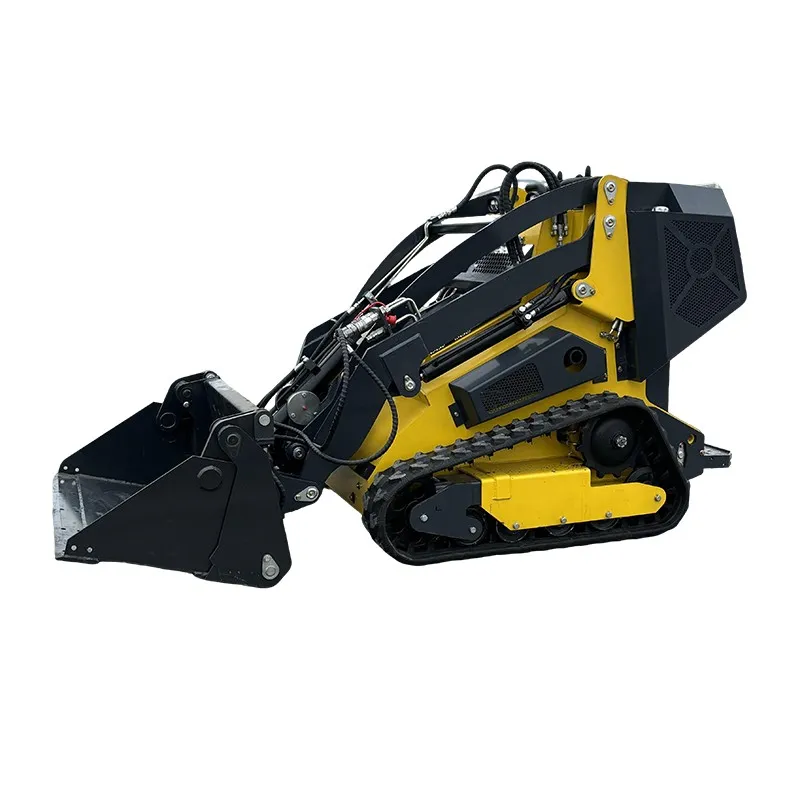
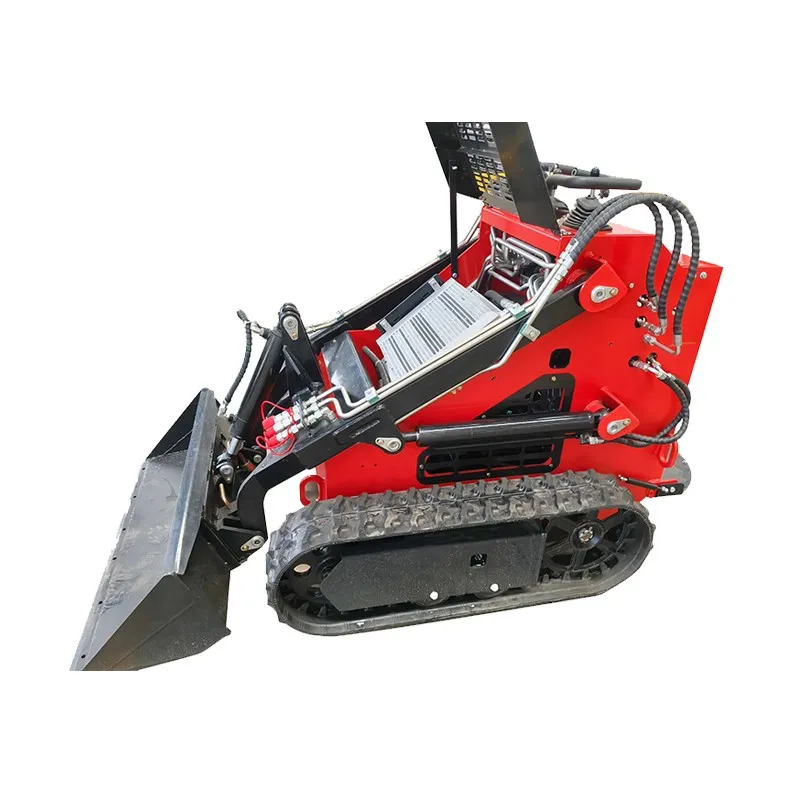
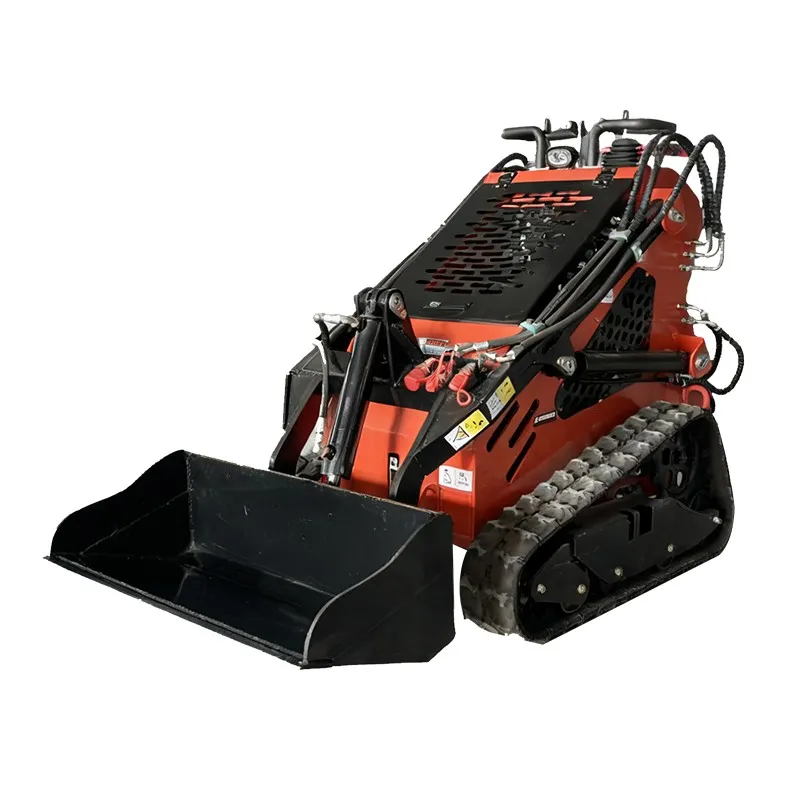
affordable skid steer loader
When most folks search for an 'affordable skid steer loader', they're usually just looking at the sticker price. That's the first mistake. In this business, 'affordable' isn't just about the initial purchase cost; it's a calculation of total ownership—durability, parts availability, and how much downtime you can realistically afford. I've seen too many contractors get burned by a cheap machine that looked great on paper but spent more time in the shop than on the job site.
The 'Affordable' Illusion and Ground Truth
Let's be clear: there are deals out there, and then there are traps. A new machine from a major brand might run you $40k and up, easy. So when you see something labeled 'affordable' at half that, your first question shouldn't be What's the horsepower? but What's the catch?. Is it a grey-market import with no local dealer support? Are the hydraulic pumps a proprietary design you can't source parts for? I learned this the hard way early on, buying a seemingly solid used machine only to find its control valve was obsolete. The loader was cheap; the three weeks of downtime and custom machining job were not.
This is where companies that have built a supply chain actually matter. I've been tracking outfits that focus on manufacturing for export, like Shandong Pioneer Engineering Machinery Co., Ltd. They've been around since 2004, which in this industry means they've likely cycled through several product generations and ironed out major flaws. Their recent move to a new facility in Ningyang in 2023 suggests scaling up. For a buyer, that history can signal more consistent quality control than a brand-new factory. Their model, with Shandong Hexin handling manufacturing and Pioneer handling overseas trade, is a common one for getting affordable skid steer loader options to markets like the US, Canada, and Australia.
The key takeaway? Don't just look at the company's website. Look at where their machines are actually working. If a company like the one mentioned exports to Germany and Australia—markets with strict standards—it's a decent, though not foolproof, indicator that their base product can meet certain operational expectations. It doesn't mean it's as refined as a Bobcat, but it might mean the core structure is sound.
Where the Real Costs Hide
Everyone talks about engine reliability, and they should. But for true affordability, you need to pop the hood and look at the peripherals. The alternator, the hydraulic hoses and fittings, the seat switches—these are the components that fail first and grind your project to a halt. A truly cost-effective machine uses components that are either standard across brands or at least widely available. I once spent two days driving across three states to find a compatible solenoid for a budget loader. That machine was never 'affordable' again.
Another hidden sinkhole is attachment compatibility. Many lower-cost loaders, especially those from dedicated export manufacturers, use a proprietary quick-attach system or a less common pattern. This locks you into their often limited and expensive attachment lineup. Before you buy, physically check if your existing buckets, augers, or trenchers will fit. The savings on the machine can evaporate instantly if you need to spend thousands adapting or replacing all your attachments.
Fluid capacity and service intervals are another quiet budget killer. Some machines have tiny hydraulic reservoirs that overheat quickly under sustained use, degrading fluid and seals. Others require specialized fluids you can't just pick up at the local NAPA. A machine that needs an oil change every 100 hours might be cheaper than one rated for 500 hours, but the labor and material costs add up fast. Always factor in the maintenance manual's recommended schedule against your expected annual usage.
The Used Market vs. New 'Affordable' Models
This is the eternal debate. A 10-year-old machine from a top-tier brand with 3,000 hours versus a brand-new 'affordable' model. The used machine will likely have better component quality—think Parker hydraulics versus no-name equivalents—but it's entering its high-maintenance phase. The new machine offers a warranty, but will the distributor honor it promptly? I've had good experiences and bad here.
For instance, a colleague opted for a new, value-priced loader from an importer. The first year was smooth. In the second year, a hydraulic cylinder started weeping. The part was under warranty, but it had to be shipped from overseas. The machine was down for a month. The total cost of the downtime far exceeded the cost of the cylinder. The lesson was about supply chain depth, not just warranty length.
This is where a company's logistical footprint matters. A manufacturer with a long-term trade history, like the 20-year background of Shandong Pioneer, often has established parts depots or distributor agreements in key export countries. It's worth asking a dealer not just Is there a warranty? but Where are the common wear parts stocked, and what's the usual turnaround? If the answer is We ship from China as needed, you need to build that potential 4-6 week delay into your cost/benefit analysis.
Practical Evaluation on the Lot
Never, ever buy a skid steer, especially an affordable one, sight unseen. When you get on the lot, ignore the salesman and do your own checks. Cycle all the functions—lift, tilt, auxiliary hydraulics. Listen for whining pumps or chattering valves. Feel for jerky movement; it often points to poor valve spool machining. Check for oil leaks at every cylinder rod and hose connection. Look at the wear on the bucket linkage pins after just a few dozen hours; excessive play can indicate soft metal.
Get in the cab. Is the control pattern intuitive? Do the pedals or hand controls have a smooth, consistent feel, or are they sticky or vague? Operator fatigue is a real productivity killer. Check sight lines. Can you actually see the bucket corners easily? I've rejected machines because the cab pillar was right in the critical sightline for precision work.
Finally, ask to see the service points. Can you easily check the engine oil, coolant, and hydraulic fluid? Is the grease bank centralized, or do you have to crawl under the machine to hit 20 fittings? A design that considers easy maintenance usually reflects a design that considers the end-user's total cost, not just the factory's assembly cost.
The Long Game: Defining Value Over Time
So, what makes a skid steer loader genuinely affordable? It's the one that has the lowest total cost per operating hour over its life with you. That's a function of purchase price, reliability, repair cost and speed, and finally, resale value. A machine that holds 50% of its value after three years of hard work is often more 'affordable' than one that depreciates to 20% but required constant investment to keep running.
Brands that build for the global export market, aiming for customer trust worldwide, as Shandong Pioneer notes in its profile, are inherently incentivized to improve these long-term metrics. Their business depends on repeat orders and referrals, not one-off sales. This doesn't automatically make their machine the best choice for your specific application, but it aligns the manufacturer's goals with your need for durability. You can find more on their approach at their site, https://www.sdpioneer.com.
In the end, my advice is to redefine 'affordable' in your own terms. List your non-negotiables: maybe it's a universal quick-attach, maybe it's local dealer support within 50 miles, maybe it's a proven engine model. Then, see which affordable skid steer loader options meet that list. The right machine isn't the absolute cheapest. It's the one that disappears into your workflow, doing its job day after day without becoming a financial headache or a project bottleneck. That's the only affordability that counts on a real job site.
Related Products
Related Products