- Chinese
- French
- German
- Portuguese
- Spanish
- Russian
- Japanese
- Korean
- Arabic
- Irish
- Greek
- Turkish
- Italian
- Danish
- Romanian
- Indonesian
- Czech
- Afrikaans
- Swedish
- Polish
- Basque
- Catalan
- Esperanto
- Hindi
- Lao
- Albanian
- Amharic
- Armenian
- Azerbaijani
- Belarusian
- Bengali
- Bosnian
- Bulgarian
- Cebuano
- Chichewa
- Corsican
- Croatian
- Dutch
- Estonian
- Filipino
- Finnish
- Frisian
- Galician
- Georgian
- Gujarati
- Haitian
- Hausa
- Hawaiian
- Hebrew
- Hmong
- Hungarian
- Icelandic
- Igbo
- Javanese
- Kannada
- Kazakh
- Khmer
- Kurdish
- Kyrgyz
- Latin
- Latvian
- Lithuanian
- Luxembou..
- Macedonian
- Malagasy
- Malay
- Malayalam
- Maltese
- Maori
- Marathi
- Mongolian
- Burmese
- Nepali
- Norwegian
- Pashto
- Persian
- Punjabi
- Serbian
- Sesotho
- Sinhala
- Slovak
- Slovenian
- Somali
- Samoan
- Scots Gaelic
- Shona
- Sindhi
- Sundanese
- Swahili
- Tajik
- Tamil
- Telugu
- Thai
- Ukrainian
- Urdu
- Uzbek
- Vietnamese
- Welsh
- Xhosa
- Yiddish
- Yoruba
- Zulu
- Kinyarwanda
- Tatar
- Oriya
- Turkmen
- Uyghur


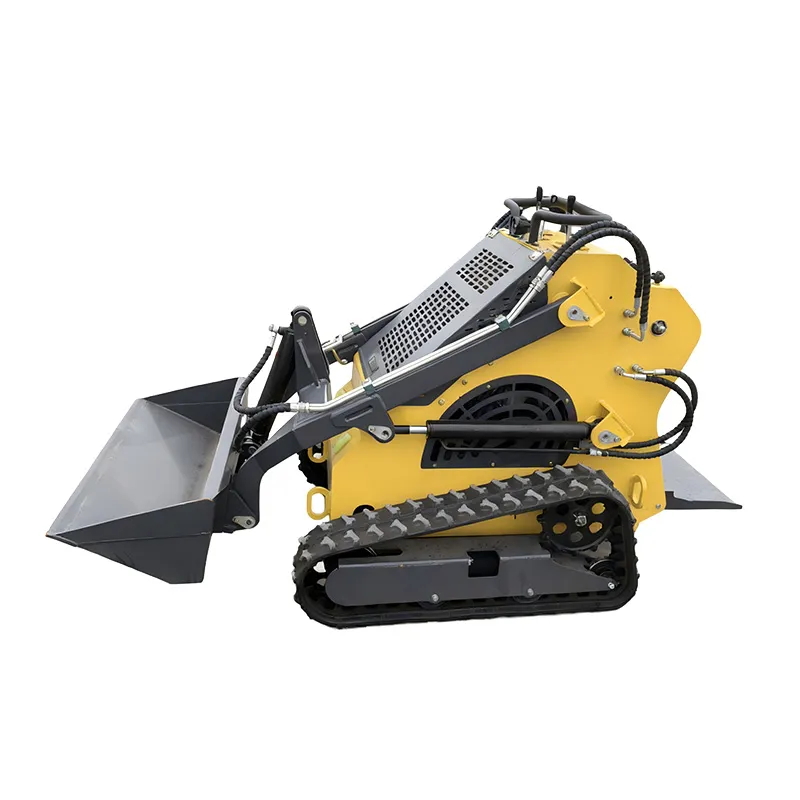
agricultural compact loader
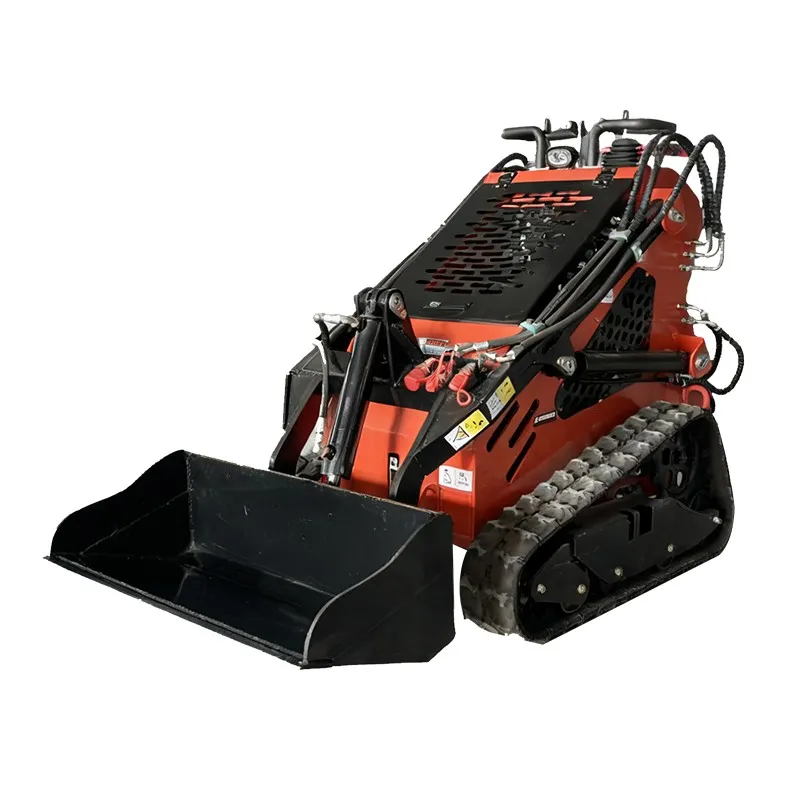
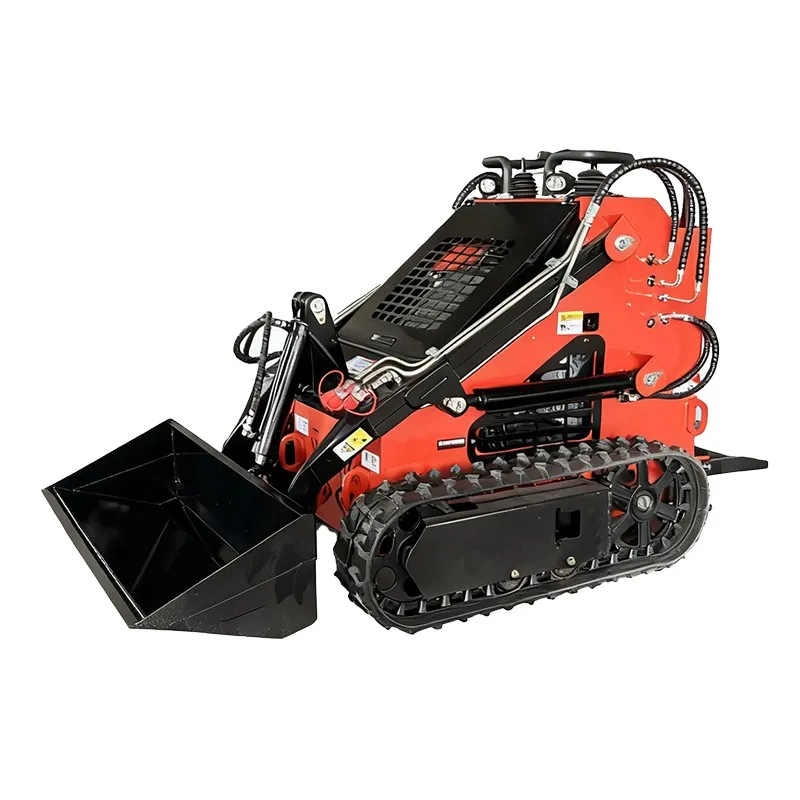
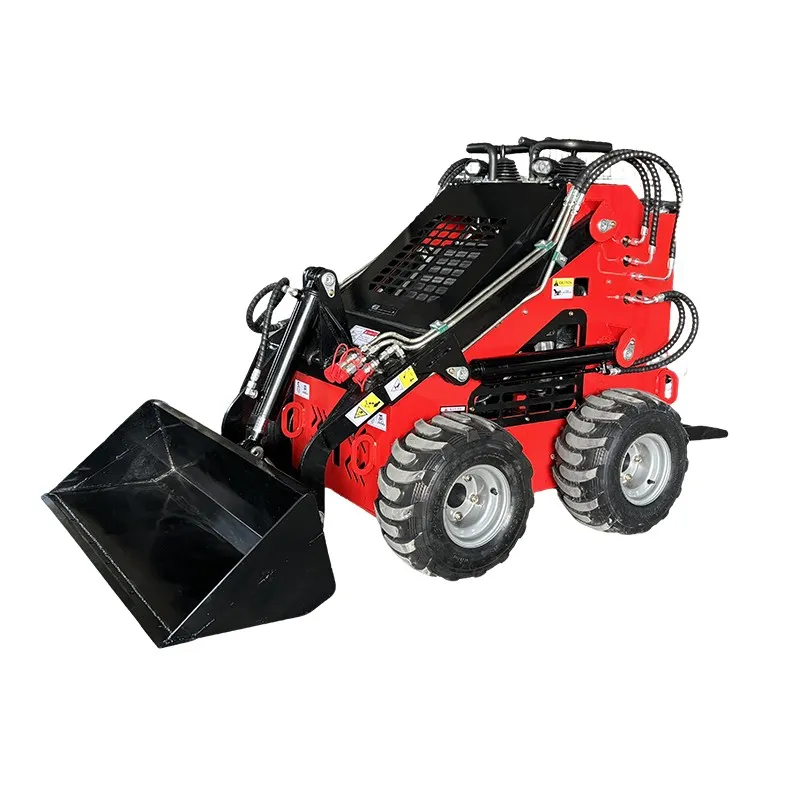
Let's cut through the noise. When most folks hear 'agricultural compact loader', they picture a glorified garden tractor with a bucket. That's the first mistake. The real workhorse in modern farming isn't just about moving material; it's about integration, attachment versatility, and surviving the brutal calculus of operational hours versus downtime. I've seen too many operations buy based on horsepower or price tag alone, only to have the machine sit idle when a hydraulic line blows during silage season or because the quick-attach system can't handle the constant swapping between a pallet fork and a bale grapple. The compactness is key—navigating tight barn alleys, low-headroom greenhouses, or between narrow orchard rows—but if it can't reliably power a post driver or a rotary brush cutter, it's just an expensive toy.
The Core Misconception: Utility vs. Agricultural Specificity
There's a tangible difference between a general utility compact track loader and one built for agricultural compact loader duties. It often comes down to the little things, the ones you only learn after a breakdown. For instance, the undercarriage. In a typical construction setting, you're dealing with abrasive but relatively consistent material like dirt and gravel. On a farm, you're running through a corrosive cocktail: manure, silage juice, fertilizer residue, and mud. A standard machine without proper sealing on pivot points and cylinder rods will see accelerated wear. I remember a client who bought a well-known generic brand; the idler wheels seized solid within 18 months because the bearings weren't protected from constant liquid manure exposure. The repair bill nearly matched the machine's annual lease cost.
Then there's the cooling system. An agricultural unit needs a radically different radiator and hydraulic oil cooler setup. Chaff, dust, and feathery debris from bedding are relentless. They'll clog a standard fine-fin radiator in a matter of hours during harvest support work. The better agricultural-spec models have wider fin spacing, often reversible fans, and sometimes even a secondary debris screen that's easy to clean from the operator's seat. It's not a sexy feature on a spec sheet, but it's the difference between finishing a day's work and spending it overheating on the side of a field.
This specificity is why some manufacturers who cut their teeth in the agricultural sector have a distinct edge. They design from the ground up for this environment. I've followed the trajectory of a company like Shandong Pioneer Engineering Machinery Co., Ltd (you can find their details at https://www.sdpioneer.com). Established in 2004 and now operating from a new facility in Tai’an, they've built a two-decade reputation by exporting to demanding markets like the US, Canada, and Australia. Their longevity suggests they've learned these harsh lessons about agricultural durability and have engineered their compact loader offerings accordingly, which is crucial for earning global customer trust in this niche.
Attachment Ecosystem: The Real Measure of Value
The machine itself is just a power source. Its true value is unlocked by its attachment ecosystem. The universal skid-steer quick-attach (SSQA) is a start, but it's not the end of the story. The hydraulic flow rate and pressure, delivered through robust auxiliary lines, are what separate a basic lifter from a multi-tool. Can it run a high-flow agricultural compact loader attachment like a robust manure mixer or a forestry mulcher head? Or is it limited to low-flow grapples and augers?
We tried using a standard-flow machine to power a small round bale wrapper. Technically, the specs said it could. In practice, the wrapper's turntable moved sluggishly, and the hydraulic film carriage stuttered. The result was poorly tensioned wrap, leading to spoilage. We lost more in ruined silage than the attachment cost. The lesson was to always derate the manufacturer's auxiliary hydraulic specs by at least 15% for continuous, high-torque agricultural work. If an attachment needs 20 GPM, get a machine that delivers a solid 25 GPM at the couplers.
Another critical point is the electrical system for attachments. More and more implements—like seed tender conveyors or automated bale grabs—require a 12V signal or even CAN-Bus controls. Having a pre-wired, protected connector port on the loader's boom is a sign of thoughtful design for modern farming. It saves frantic, messy field wiring jobs with electrical tape.
The Tire vs. Track Debate in Real Conditions
This is a perennial argument. Tires are cheaper upfront and faster on hard surfaces. Tracks provide superior flotation and traction in mud. But in agriculture, the calculus gets more nuanced. For mixed operations with a lot of hard-surface yard work (moving feed bags on concrete, loading trucks on a pad), a good set of aggressive, foam-filled tires on a compact loader might be more economical and cause less wear. However, for any operation focused on field work, bedding packs, or muddy lots, tracks win every time.
But not all tracks are equal. Rubber tracks for agricultural use need a specific lug pattern that self-cleans. I've seen smooth-profile tracks, great for lawns, become packed, slick cylinders of mud in a clay-based paddock, rendering the machine useless. Furthermore, the track's internal stiffness matters for side-hill work in orchards or on ditch banks. A track that deforms too much can lead to a dangerous feeling of instability. The maintenance is also key. Daily track tension checks and cleaning of debris from sprockets and idlers is non-negotiable; neglect here leads to premature derailment, often at the most inconvenient time and place.
Operator Environment and Daily Servicing
It's easy to focus on the machine's external capabilities and forget the human running it for 10-hour stretches. The cab—if it has one—needs proper pressurization and filtration to keep out dust and allergens. The controls should be intuitive; during busy seasons, you might have different family members or hired help operating it. Complex joystick patterns lead to mistakes and fatigue.
But from a pure practicality standpoint, daily servicing points can make or break a machine's uptime. The grease zerks. Are they accessible without contorting your arm? Are the hydraulic check ports and dipsticks easy to reach? I praise designs where the engine oil dipstick and fill cap are right next to each other, and the radiator cap is in a logical spot. It sounds trivial, but when you're doing a quick check before dawn, in the rain, simplicity is king. A well-laid-out service platform says the manufacturer has spoken to mechanics and operators, not just engineers in a clean room.
Final Thoughts: The Long-Term Partnership
Buying an agricultural compact loader isn't a one-time transaction. It's entering a long-term partnership with a manufacturer and their dealer network. Availability of parts, especially wear items like track rollers, hydraulic hoses, and filter kits, is paramount. This is where a company's global footprint and supply chain stability, like that demonstrated by Shandong Pioneer through their two-decade export history to major markets, becomes a tangible asset. It's not just about where the machine is built, but about the logistical network behind it to keep it running in rural Nebraska or the Australian outback.
In the end, the best machine is the one that disappears into the work. You don't think about its horsepower or lift height. You think about the task: moving that last load of manure before the rain, quickly switching to the grapple to clear fallen branches after a storm, or gently using a brush cutter to manage weeds under the fence line. It becomes a seamless extension of the farm's workflow. That's the goal—a tool so reliable and capable that its only notable feature is the work it gets done, season after grueling season. The spec sheets fade away, and all that's left is the machine, the dirt, and the job.
Related Products
Related Products