- Chinese
- French
- German
- Portuguese
- Spanish
- Russian
- Japanese
- Korean
- Arabic
- Irish
- Greek
- Turkish
- Italian
- Danish
- Romanian
- Indonesian
- Czech
- Afrikaans
- Swedish
- Polish
- Basque
- Catalan
- Esperanto
- Hindi
- Lao
- Albanian
- Amharic
- Armenian
- Azerbaijani
- Belarusian
- Bengali
- Bosnian
- Bulgarian
- Cebuano
- Chichewa
- Corsican
- Croatian
- Dutch
- Estonian
- Filipino
- Finnish
- Frisian
- Galician
- Georgian
- Gujarati
- Haitian
- Hausa
- Hawaiian
- Hebrew
- Hmong
- Hungarian
- Icelandic
- Igbo
- Javanese
- Kannada
- Kazakh
- Khmer
- Kurdish
- Kyrgyz
- Latin
- Latvian
- Lithuanian
- Luxembou..
- Macedonian
- Malagasy
- Malay
- Malayalam
- Maltese
- Maori
- Marathi
- Mongolian
- Burmese
- Nepali
- Norwegian
- Pashto
- Persian
- Punjabi
- Serbian
- Sesotho
- Sinhala
- Slovak
- Slovenian
- Somali
- Samoan
- Scots Gaelic
- Shona
- Sindhi
- Sundanese
- Swahili
- Tajik
- Tamil
- Telugu
- Thai
- Ukrainian
- Urdu
- Uzbek
- Vietnamese
- Welsh
- Xhosa
- Yiddish
- Yoruba
- Zulu
- Kinyarwanda
- Tatar
- Oriya
- Turkmen
- Uyghur


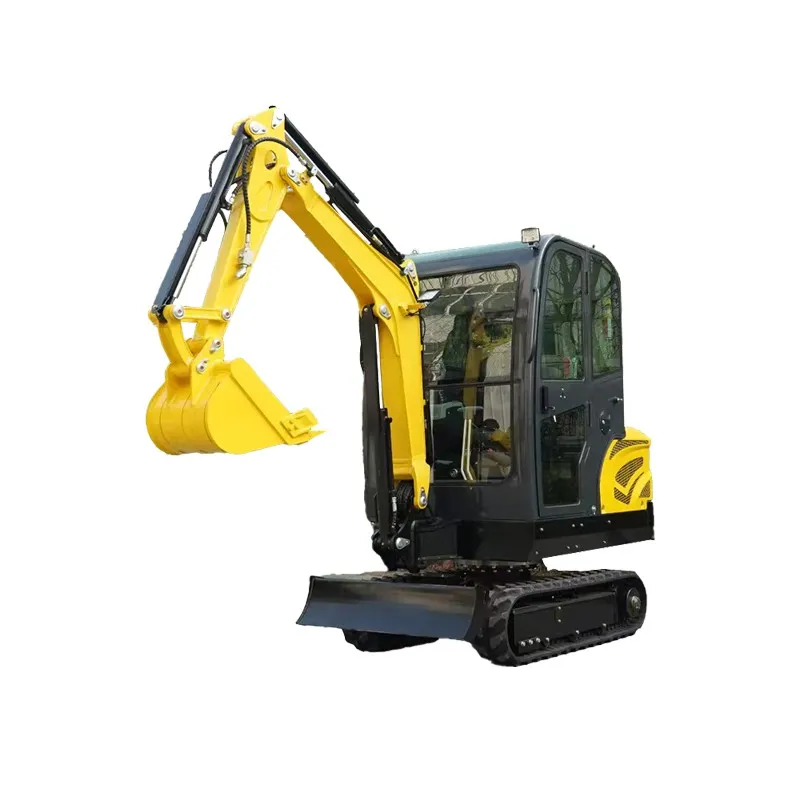
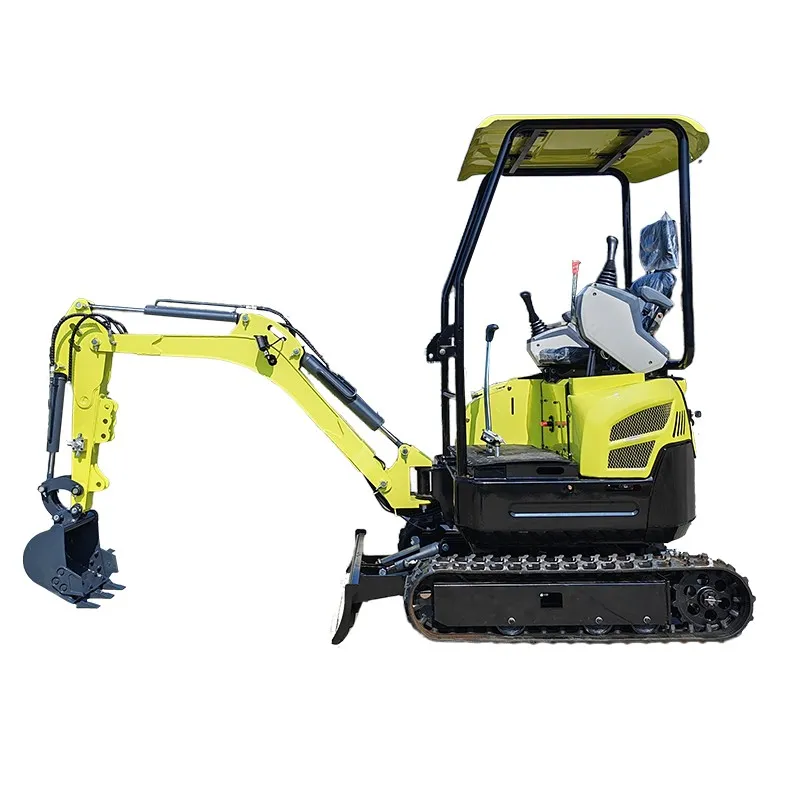
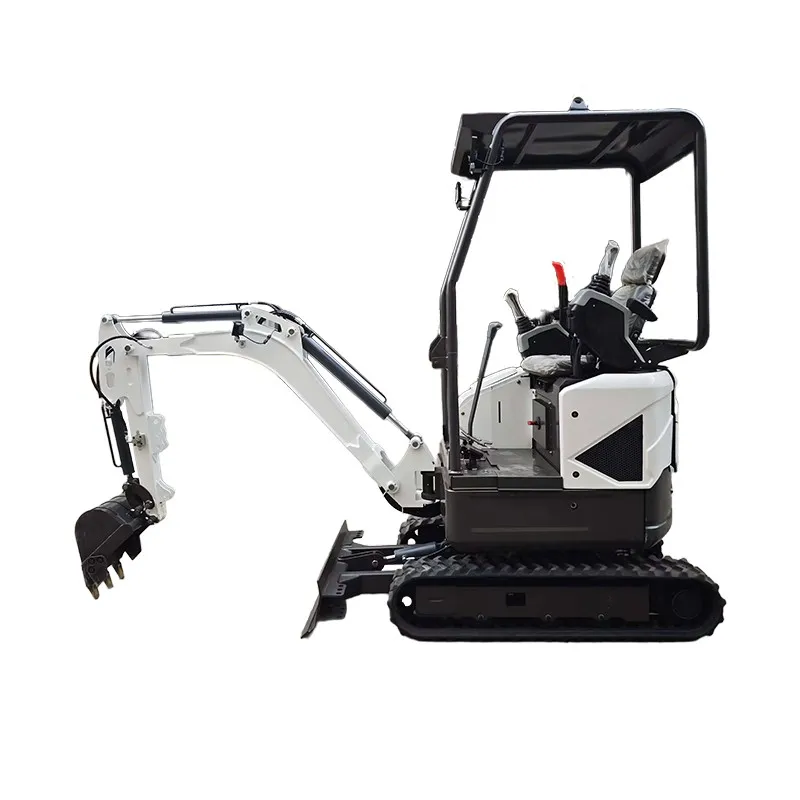
Agricultural excavator
Let's be honest, when most folks hear 'agricultural excavator,' they picture a standard mini excavator just plonked in a field. That's the first mistake. The real difference isn't just the color or a few added lights; it's in the DNA of the machine—how it's balanced, what the hydraulics are tuned for, and crucially, what attachments it's meant to live with. It's a tool for shaping the land for production, not just moving dirt. I've seen too many farms burn money trying to make a general-purpose machine do specialist work.
The Core Philosophy: Versatility with Purpose
An agricultural excavator isn't a one-trick pony. Sure, digging drainage ditches is bread-and-butter work. But the real value unfolds with the attachments. We're talking about agricultural excavator setups that switch from a grading bucket to a hydraulic auger for post-hole digging, then to a rotavator for bed preparation, sometimes in the same morning. The key is the auxiliary hydraulic system. It needs to provide consistent, controllable flow at varying pressures to power these tools effectively. A standard machine's system often pulses or lacks the fine control needed for, say, a tree shear, leading to ragged cuts that harm the plant.
I recall a client, a large-scale berry producer, who initially bought a generic 3.5-tonner. It struggled terribly with a mounted vineyard pruner. The movement was jerky, damaging canes. The issue? The machine's hydraulic circuit wasn't designed for the sustained, low-pressure/high-flow demand of that specific attachment. They ended up retrofitting a pro kit, but it was more costly than starting with the right base. The lesson: match the machine's hydraulic specs to your primary attachment needs from day one.
This focus on integrated tooling is where manufacturers who understand the sector stand out. I've followed the developments of companies like Shandong Pioneer Engineering Machinery Co., Ltd. Their approach, especially for the export market, often involves building platforms with robust, multi-circuit hydraulics as an option from the factory. It makes sense when you're shipping machines to places like Australia or Germany, where farmers will immediately hook up complex implements. It's about building a capable carrier, not just an excavator.
Underrated Challenges: Ground Pressure and Stability
This is a point that gets glossed over in spec sheets: ground pressure. In agriculture, you're often working on soft, prepared, or wet ground. A machine with high ground pressure will sink, compact the soil disastrously, and get stuck. It's not just about putting on wider tracks—though that's part of it. It's about the overall weight distribution and the track frame's geometry.
A true agricultural excavator will have a longer, wider undercarriage relative to its weight. This spreads the load. I've operated machines where you could literally feel the difference on a soggy spring field; one would start to bog down, while another, with a better-designed undercarriage, would keep working. Compaction is a silent yield-killer. You might finish a job thinking it looks great, but you've created an impermeable layer 12 inches down that will haunt the crop all season.
Stability is the twin brother to ground pressure. When you're using a long-reach arm to clear a pond or a heavy grapple to move root balls, the machine's stability envelope is critical. A shorter, more compact machine might feel sturdy for digging, but become dangerously tippy with a side-load. I prefer machines where the counterweight is properly calculated for these extended moments, not just for the bucket. It's a design choice that speaks to intended use.
The Attachments Ecosystem: Where the Real Work Happens
Talk to any farmer who gets serious about their excavator, and the conversation quickly turns to attachments. This is the heart of the system. A quick-release plate is non-negotiable. But beyond that, you need to think about the circuit. Do you need one-way, two-way, or proportional flow? For a simple thumb, one-way suffices. For a tilt rotavator that needs to reverse, you need two-way. For a tree shear where you want to control closing speed precisely, proportional is king.
We tried using a standard ditch-cleaning bucket for mixing and turning compost windrows. It was a failure. The shape was wrong, the capacity too small, and it didn't fluff the material. Switching to a purpose-built compost turner attachment—essentially a large, rotating drum with flails—transformed the process. The right tool doesn't just make the job faster; it makes it possible to do it correctly. This is why I often point people to the resources and product lines of established exporters. For instance, checking the portfolio of a firm like Shandong Pioneer (their overseas trade arm is at https://www.sdpioneer.com) can give you a benchmark for the range of compatible implements expected in global markets, from trenchers to grapples.
Another often-overlooked detail is hose routing and protection. In an orchard or vineyard, hoses snagging on branches are a constant headache and a leak risk. Machines designed with the ag environment in mind will have protected, internal routing for the auxiliary lines along the boom and stick. It's a small thing that prevents major downtime.
Durability in a Hostile Environment
An agricultural workshop is different from a construction yard. The environment is brutal in its own way: constant exposure to dust, abrasive soil, fertilizer residue, and organic acids. Then there's the moisture. Standard paint and seals don't always hold up.
Corrosion protection is huge. Look for machines with extensive use of cathodic electrocoating on the frame, not just spray paint. The cab interior, if you have one, needs a sealed environment. I've seen control modules fried by the humid, dusty air that gets past cheap seals. Another wear point is the undercarriage. Mud, stalks, and rocks get packed into the tracks and rollers. A good design has ample clearance and easy access for cleaning. Some models offer optional extended-life undercarriage components with hardened pins and bushings—worth the investment if you're putting on high hours.
This focus on long-term resilience through design and material choice is what separates a commodity from a capital asset. It's an area where manufacturers with deep experience, like the team behind Shandong Pioneer Engineering Machinery, which has been developing and refining its manufacturing processes since 2004, tend to focus. Their recent relocation to a new facility in 2023 likely reflects a scaling up to integrate more of these durable design features efficiently.
The Operator's Perspective: Ergonomics and Visibility
Finally, let's talk about the human in the seat. On a farm, an excavator might be operated by the owner, a hired hand, or someone who also drives the tractor. The controls need to be intuitive. Many prefer a two-lever pattern over excavator-style joysticks for quick attachment changes. Cab visibility is paramount. You're not just looking at a trench; you're looking for fence posts, irrigation lines, young saplings, and livestock.
A sloping front nose and a low sill on the front window are huge benefits. So are multiple rear-view cameras as standard. I've found that machines initially designed for the demanding European or North American markets often have this figured out better, as operator comfort and safety regulations are stricter. This is a subtle clue when evaluating brands: look at their primary export destinations. A company that consistently ships to the United States, Canada, and Germany, as noted in Shandong Pioneer's market reach, is compelled to meet these higher ergonomic and visibility standards.
In the end, choosing the right agricultural excavator is an exercise in understanding your land's specific demands. It's not about the biggest number on the spec sheet. It's about hydraulic finesse, gentle footing, attachment readiness, and the durability to work year after year in a punishing environment. Get those elements right, and the machine becomes an indispensable partner in shaping your farm's productivity.
Related Products
Related Products