- Chinese
- French
- German
- Portuguese
- Spanish
- Russian
- Japanese
- Korean
- Arabic
- Irish
- Greek
- Turkish
- Italian
- Danish
- Romanian
- Indonesian
- Czech
- Afrikaans
- Swedish
- Polish
- Basque
- Catalan
- Esperanto
- Hindi
- Lao
- Albanian
- Amharic
- Armenian
- Azerbaijani
- Belarusian
- Bengali
- Bosnian
- Bulgarian
- Cebuano
- Chichewa
- Corsican
- Croatian
- Dutch
- Estonian
- Filipino
- Finnish
- Frisian
- Galician
- Georgian
- Gujarati
- Haitian
- Hausa
- Hawaiian
- Hebrew
- Hmong
- Hungarian
- Icelandic
- Igbo
- Javanese
- Kannada
- Kazakh
- Khmer
- Kurdish
- Kyrgyz
- Latin
- Latvian
- Lithuanian
- Luxembou..
- Macedonian
- Malagasy
- Malay
- Malayalam
- Maltese
- Maori
- Marathi
- Mongolian
- Burmese
- Nepali
- Norwegian
- Pashto
- Persian
- Punjabi
- Serbian
- Sesotho
- Sinhala
- Slovak
- Slovenian
- Somali
- Samoan
- Scots Gaelic
- Shona
- Sindhi
- Sundanese
- Swahili
- Tajik
- Tamil
- Telugu
- Thai
- Ukrainian
- Urdu
- Uzbek
- Vietnamese
- Welsh
- Xhosa
- Yiddish
- Yoruba
- Zulu
- Kinyarwanda
- Tatar
- Oriya
- Turkmen
- Uyghur


agrotk h12 mini excavator
When you hear 'Agrotk H12 mini excavator', the first thing that comes to mind for a lot of guys is just another cheap Chinese mini digger. That's a common trap. Having run a few different units over the years, including the H12, I've found the reality is more nuanced. It's not about being the absolute best or the worst; it's about understanding where it fits, what it's genuinely built for, and where the compromises actually lie. The brand name itself doesn't have decades of legacy like some Japanese models, which immediately sets a certain expectation on price and, frankly, on perceived reliability. But dismissing it outright means missing the point of this entire segment of the market.
First Impressions and Physical Build
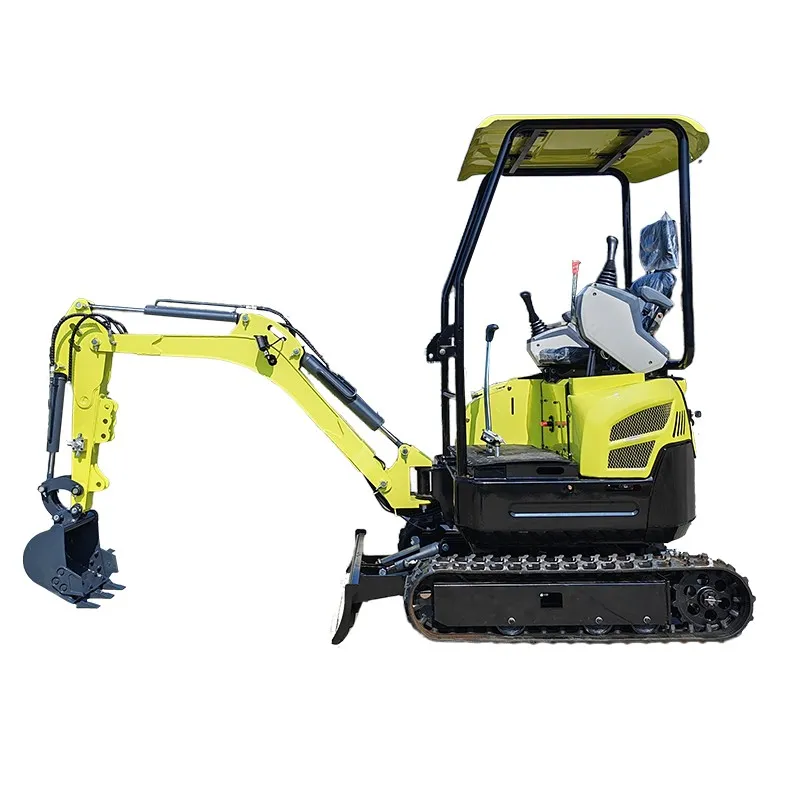
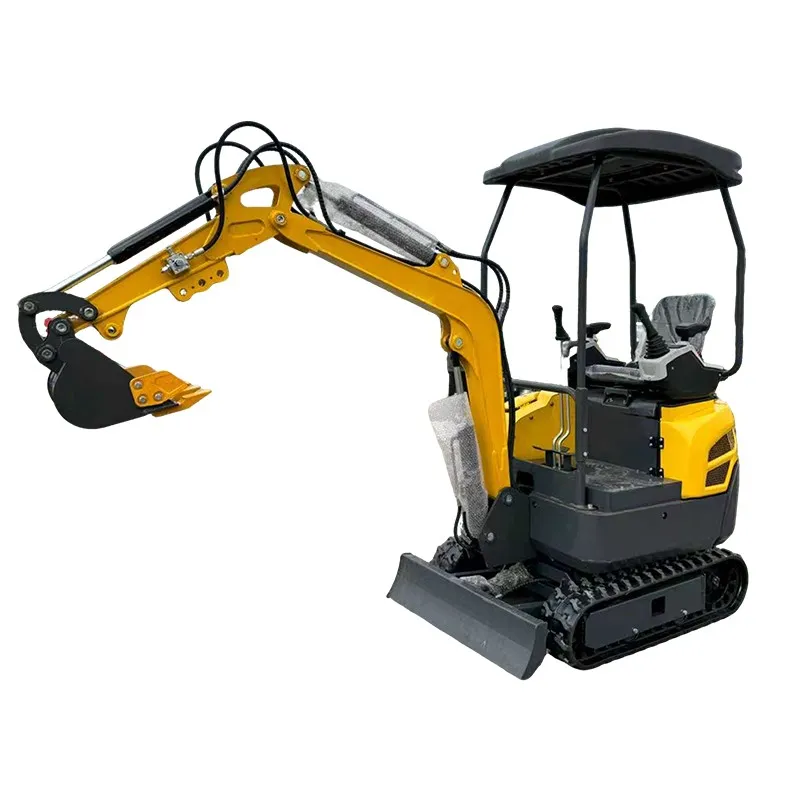
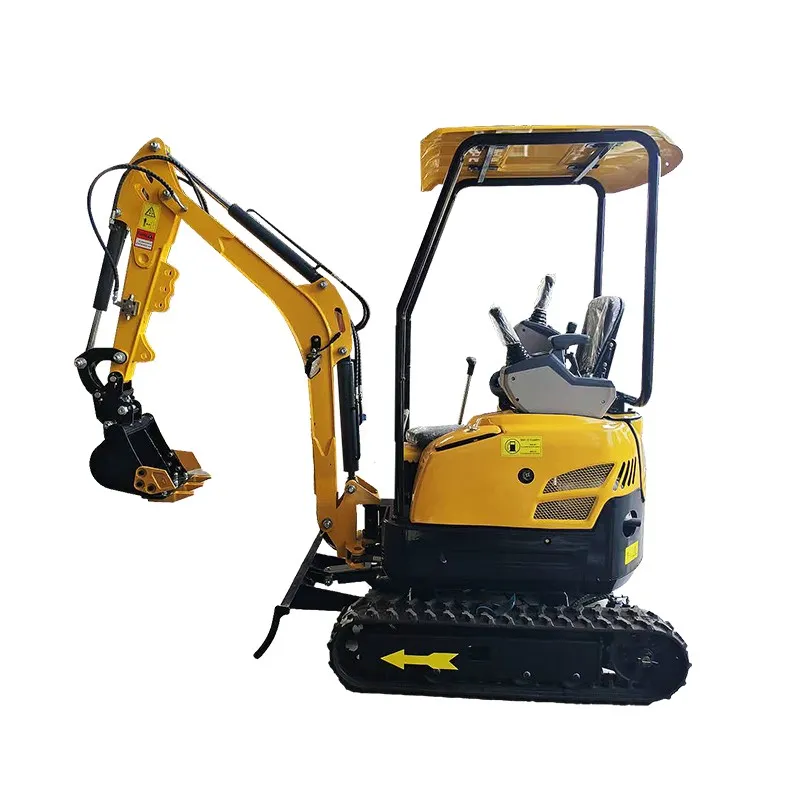
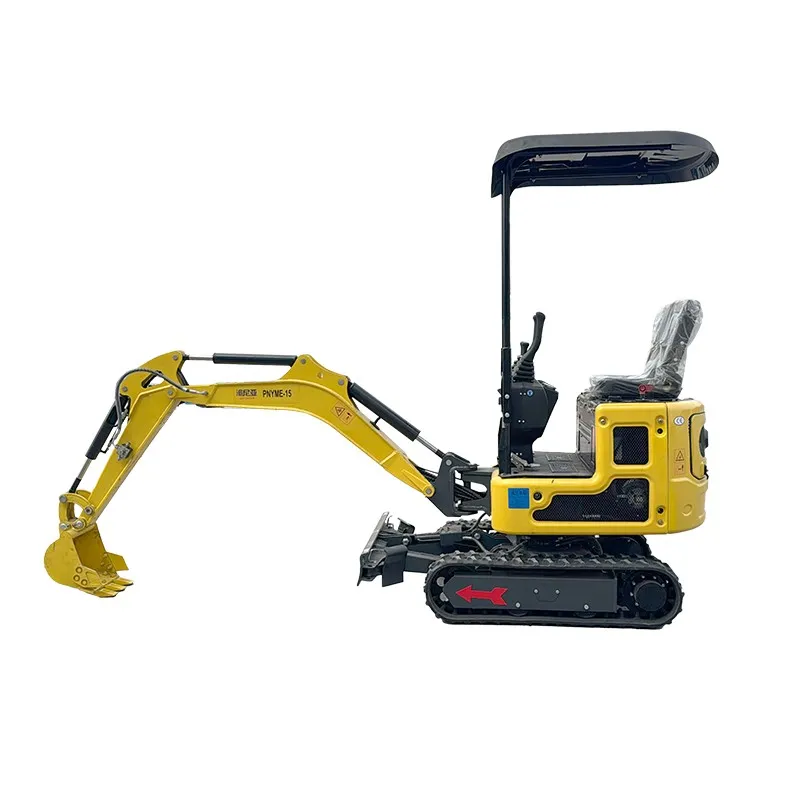
Uncrating the H12, the immediate observation is its compact footprint. We're talking about a true one-tonne class machine. The fit and finish? It's utilitarian. You won't find laser-perfect panel gaps or showroom paint. The welding on the main frame and boom is visibly robust, though—heavy beads that suggest they didn't skimp on structure. The sheet metal for the side panels and engine cover feels thin, a common cost-saving move, but it's not a deal-breaker. The layout is straightforward: the Yanmar 3TNV80 engine is right there in the back, accessible. All daily checkpoints—dipsticks, radiator cap, battery—are within easy reach without contortions, a practical touch I appreciate.
The controls follow a standard pattern. Pilot-operated joysticks in an open cab configuration. The feel is a bit lighter, maybe even looser, compared to a Kubota U10-5, lacking that hydraulic notchiness that experienced operators associate with precision. But for a new operator or for general trenching, it's perfectly serviceable. The rubber-mounted pedals for travel and the swing lever are where you really feel the price point. The action isn't as crisp, there's a bit more play. It works, but it communicates its tier through these details.
One detail that stood out, and not in a great way initially, was the hydraulic hose routing near the boom foot. It seemed vulnerable, just a bit too exposed for my liking when working near rubble or stumps. I've seen similar setups on other economy models, and it's often a point of failure. It made me question the long-term durability in rough conditions. This isn't a machine you'd want to send into a demolition site without some added protection, which is something you might consider fabricating if you buy one.
Performance in Real-World Tasks
We primarily used the Agrotk H12 for residential utility work—digging footings for small additions, trenching for irrigation and French drains, and some light landscaping. With a standard 300mm bucket, it's competent in soil. Digging force is adequate. It won't rip through heavy clay as aggressively as a Takeuchi TB01, but it gets the job done with patience and proper technique. The hydraulic system is where you notice the difference. It feels slightly underpowered when you try to crowd the bucket and lift simultaneously; the system bogs down faster. You learn to operate it more sequentially—dig, then lift, then swing—rather than demanding combined movements.
Where it surprised me was in its fuel efficiency. That Yanmar engine, while not the most powerful, sips diesel. On a full day of intermittent trenching (maybe 5-6 hours of actual engine runtime), we'd use barely 10 liters. That's a significant running cost advantage over older, second-hand machines we've had. The trade-off is peak power, but for most small contractors or farmers, that trade-off makes economic sense.
We did have a failure. Not a major one, but instructive. After about 120 hours, one of the auxiliary hydraulic lines for the thumb (a third-party attachment we fitted) developed a persistent leak at a quick-coupler. The culprit wasn't the line itself, but the OEM-provided coupler. The tolerances seemed off, and it never sealed perfectly. We replaced it with a better-quality German coupler, and the problem vanished. It's a classic example of where these machines save money: in peripheral components, not necessarily in the core drivetrain. You need to budget for potentially upgrading a few fittings or hoses.
The Manufacturer Context: Shandong Pioneer
Understanding the machine means looking at who builds it. The Agrotk H12 is exported by Shandong Pioneer Engineering Machinery Co., Ltd. They've been around since 2004, which in China's manufacturing landscape is a decent track record. Their model, as I understand it, involves manufacturing under Shandong Hexin and trading overseas through Shandong Pioneer. They ship to a lot of places—the US, Canada, Germany, Australia. That global reach tells you they've found a market niche.
Their relocation in 2023 to a larger facility in Ningyang suggests growth and, hopefully, an investment in better QC. In my dealings, their technical support was responsive for parts diagrams, but actual troubleshooting required clear, simple communication. They aren't Caterpillar with a field service network; you are the field service. Spares are generally available but require lead time. This isn't a critique, just the reality of the supply chain for these value-oriented machines. You buy it knowing you need to be more self-reliant or have a good local mechanic.
Their website, sdpioneer.com, lists the H12 among their products. The specs align with what we received. What you don't get from the spec sheet is the on-ground feel. The company's 20-year development, as mentioned in their intro, speaks to evolution. The H12 feels like a product of that—it's not their first attempt. It's refined in core aspects but still makes clear compromises to hit a price point that appeals to markets where upfront cost is a primary driver.
Where It Fits and Who It's For
So, who is the Agrotk H12 mini excavator actually for? It's not for a heavy civil contractor running three shifts. It's ideal for the small landscaping business owner, the farmer needing a versatile tool for drainage and pond work, or a municipal department with a tight budget for park maintenance. It's a capital asset that gets you into a capable, new machine for the price of a used, high-hour brand-name unit. The calculus is about depreciation versus repair costs on a used machine.
I'd also consider it for a rental fleet aimed at DIY homeowners or small builders. Its simplicity is an advantage here. Fewer electronic components mean fewer things for an inexperienced operator to confuse or break. The open structure makes basic maintenance checks easy for fleet managers. Just be prepared for more frequent wear-item replacements—pins, bushings, maybe hoses—compared to a premium machine if it's worked hard.
The biggest mistake is buying it expecting Tier-1 performance. If you go in with the right expectations—that it's a capable, basic tool that requires a more hands-on ownership approach—you'll likely be satisfied. If you need flawless hydraulics, surgical precision, and a dealer at your beck and call, save your money and look at a Kubota or Yanmar. This machine exists in the space between good enough and affordable, and for many, that's exactly what's needed.
Final Takeaways and Operational Advice
Living with the H12 for several months changed my initial skepticism. It's a tool. Treat it well, and it works. My main advice for anyone considering one: conduct a rigorous pre-delivery inspection. Check every hydraulic fitting for tightness. Grease every zerk on delivery—don't assume the factory did it thoroughly. Consider an immediate fluid and filter change after the first 50 hours to flush out any initial break-in debris, even if the manual says otherwise. This proactive step has saved us headaches with other machinery.
Attachments are key. The machine's value multiplies with a hydraulic thumb, a breaker, or a grading bucket. Ensure your auxiliary hydraulic circuit is up to spec and consider upgrading the factory couplers if you plan on frequent attachment swaps. The machine's light weight is a double-edged sword: great for transport on a light trailer, but it means you lack the mass for serious pry work. You learn to use the geometry of the boom more than raw force.
In the end, the Agrotk H12 represents a specific choice in the mini excavator market. It's a product of a globalized supply chain and targeted engineering from companies like Shandong Pioneer. It won't win awards for innovation, but it puts a functional, fuel-efficient digging tool within reach. Your satisfaction will depend entirely on how well your expectations align with its reality. For the right job and the right owner, it's not just a cheap Chinese digger—it's a pragmatic business decision.
Related Products
Related Products