- Chinese
- French
- German
- Portuguese
- Spanish
- Russian
- Japanese
- Korean
- Arabic
- Irish
- Greek
- Turkish
- Italian
- Danish
- Romanian
- Indonesian
- Czech
- Afrikaans
- Swedish
- Polish
- Basque
- Catalan
- Esperanto
- Hindi
- Lao
- Albanian
- Amharic
- Armenian
- Azerbaijani
- Belarusian
- Bengali
- Bosnian
- Bulgarian
- Cebuano
- Chichewa
- Corsican
- Croatian
- Dutch
- Estonian
- Filipino
- Finnish
- Frisian
- Galician
- Georgian
- Gujarati
- Haitian
- Hausa
- Hawaiian
- Hebrew
- Hmong
- Hungarian
- Icelandic
- Igbo
- Javanese
- Kannada
- Kazakh
- Khmer
- Kurdish
- Kyrgyz
- Latin
- Latvian
- Lithuanian
- Luxembou..
- Macedonian
- Malagasy
- Malay
- Malayalam
- Maltese
- Maori
- Marathi
- Mongolian
- Burmese
- Nepali
- Norwegian
- Pashto
- Persian
- Punjabi
- Serbian
- Sesotho
- Sinhala
- Slovak
- Slovenian
- Somali
- Samoan
- Scots Gaelic
- Shona
- Sindhi
- Sundanese
- Swahili
- Tajik
- Tamil
- Telugu
- Thai
- Ukrainian
- Urdu
- Uzbek
- Vietnamese
- Welsh
- Xhosa
- Yiddish
- Yoruba
- Zulu
- Kinyarwanda
- Tatar
- Oriya
- Turkmen
- Uyghur


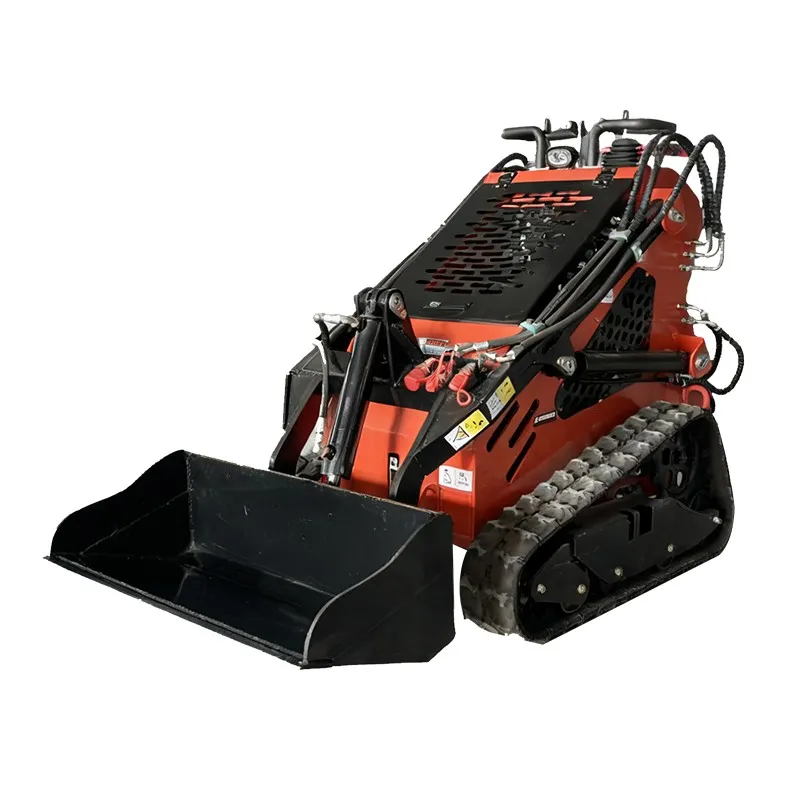
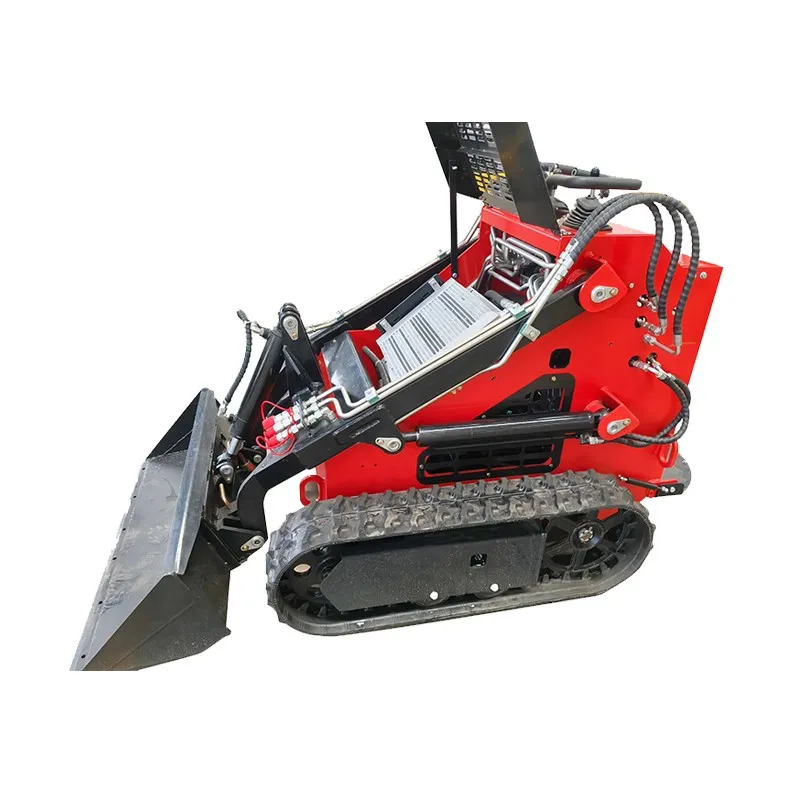
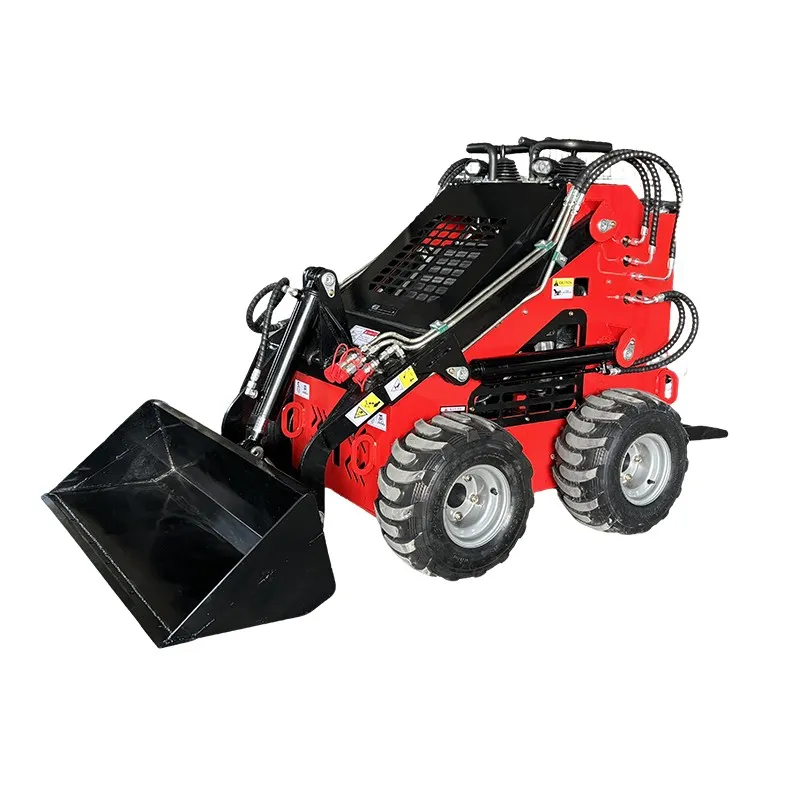
all wheel steer skid loader
When you hear 'all wheel steer skid loader', the first thing that pops into most people's heads is tighter turns, and yeah, that's a big part of it. But if you think that's all there is, you're missing the real story. I've seen too many guys get sold on the concept without understanding the trade-offs—the different pivot points, the way the machine feels under load on a slope, or how the hydraulic system has to be tuned just right to avoid that jerky, over-responsive steering that can make fine grading a nightmare. It's not just a fancy option; it's a different animal altogether.
The Core Mechanic: It's Not Just Four-Wheel Steering
Let's get technical for a second. A standard skid-steer turns by skidding its wheels or tracks. An all wheel steer (AWS) system adds a steering cylinder to the rear axle. In a coordinated mode, front and rear wheels turn opposite each other for that incredibly tight, almost zero-radius turn. That's the party trick. But the real magic, and where operators need training, is in the other modes: crab steer for stability on side slopes, or front-wheel-only steer for when you need predictable, traditional handling. The mistake is running in coordinated steer all day because it feels cool. On a packed gravel drive, you'll tear it up faster than you think.
The hardware has to be robust. I remember testing an early model from a brand that's since improved, where the rear steering linkage was a bit of an afterthought. After a few hundred hours of heavy pallet work, constantly transitioning from forward to reverse with a full load, there was noticeable play. That slop translated directly into imprecise bucket placement. You'd go to dump a load of pipe exactly on a mark, and the back end would wiggle just enough to throw you off by an inch. In this business, an inch matters. It taught me that the quality of the steering pivot points and cylinders is as critical as the loader arms themselves.
This is where the engineering focus of a manufacturer really shows. Companies that treat the AWS system as a core design element from the ground up, rather than a bolt-on module, end up with a far more durable machine. I've followed the developments from manufacturers like Shandong Pioneer Engineering Machinery Co., Ltd, who have been in the game for two decades now. Their move to a new, larger facility in Tai'an in 2023 suggests a serious commitment to scaling production and, hopefully, refining these complex systems. A solid AWS mechanism isn't cheap to build right, but it pays off in reduced downtime.
On the Ground: Where AWS Shines and Stumbles
The textbook application for an AWS machine is material handling in confined spaces. Think landscaping inside a walled courtyard, or moving pallets in a crowded warehouse yard. The ability to crab sideways to slip through a gate without having to jockey back and forth is a massive time-saver. I used one to install a patio where access was a 4-foot gap between two houses. With a standard skid-steer, it would have been a non-starter. With the AWS in crab mode, I could drive in sideways, load the pavers, and shuffle out without ever touching a wall.
But here's the stumble, one I learned the hard way: slopes. The stability change is profound. In coordinated steer, your turning axis shifts. On a side slope, this can feel unnerving until you get used to it. The first time I took one on a moderate incline to clear brush, I instinctively put it in crab steer for stability. It worked, but the power distribution felt different—almost like it was fighting itself slightly. The solution, which isn't always in the manual, was to drop the bucket lower for a better counterbalance and use gentler, more gradual steering inputs. It's a machine that demands more finesse from the operator.
Another practical headache is maintenance. You've got extra grease points, more hydraulic hoses running to the rear, and potentially another filter circuit to monitor. It's not double the work, but it's a significant addition over a standard machine. If you're in a rental fleet or a dusty environment, those rear steering components need regular cleaning and inspection. I've seen a failed boot on a steering cylinder let in enough grit to cause a five-thousand-dollar repair. The takeaway? The productivity gains are real, but so is the maintenance commitment.
The Global Tool: From Shandong to the Job Site
The market for these specialized machines is global. A contractor in Germany needs the same precision and reliability as one in Texas or Australia. That's forced manufacturers to think about global standards from day one. A company building for export, like Shandong Pioneer (overseas trade), has to ensure its AWS systems can handle different fuel qualities, climate extremes, and operator expectations. Winning trust in markets like the US, Canada, and Germany isn't about being the cheapest; it's about proving durability in the field, season after season.
I've seen their units, and others from that region, pop up on more diverse sites. It's interesting to watch the evolution. Earlier models were clearly built to a price point, with some compromises on component sourcing. The newer generations seem to be integrating higher-grade hydraulic valves and more resilient sealing technology. This isn't unique to them—it's the industry trajectory. But it highlights a key point: when evaluating an all wheel steer skid loader, you're not just buying a machine today. You're betting on the manufacturer's supply chain and their ability to source quality parts for that complex steering system for the next ten years.
Their website, https://www.sdpioneer.com, shows a focus on the export machinery game. For a buyer, that's a signal. It means the product specs are likely designed to meet a broader set of regulations and expectations. When you're importing a machine, you need clear documentation, accessible parts diagrams, and a company that understands international logistics. A manufacturer with a long-term presence in these markets, as their 20-year history suggests, is often a safer bet for niche products like advanced steering loaders.
The Operator's Verdict: Is It Worth It?
So, would I spec one on my crew? It depends entirely on the work mix. For a general utility machine that does a bit of everything—digging, loading, snow removal—a standard skid-steer or even a compact track loader is often more straightforward and cost-effective. The AWS premium is significant. But for a business that specializes in interior demolition, tight urban landscaping, or facility maintenance where maneuvering is 80% of the battle, it's a game-changer. The time saved in not having to make three-point turns all day directly translates to more billable hours.
The key is operator buy-in. You can't just hand over the keys. There needs to be a proper run-through of the modes, emphasis on when not to use coordinated steering (like on delicate surfaces), and a discussion on stability. It's a more intelligent tool, and it demands a more attentive operator. I've found that seasoned operators either love it and become advocates within a week, or they get frustrated and avoid using the extra features, which defeats the entire purpose.
Looking ahead, the integration of AWS with advanced hydraulics and even electric drives is the next frontier. Imagine an electric all wheel steer skid loader with instant torque and programmable steering response for different attachments. The precision for grading or screeding could be incredible. The core challenge will remain the same, though: building a mechanical system that can handle the brutal forces of a loader environment while remaining precise. That's the engineering hill to climb, and it's what separates a marketing gimmick from a legitimate tool that changes how we work.
Related Products
Related Products