


- Chinese
- French
- German
- Portuguese
- Spanish
- Russian
- Japanese
- Korean
- Arabic
- Irish
- Greek
- Turkish
- Italian
- Danish
- Romanian
- Indonesian
- Czech
- Afrikaans
- Swedish
- Polish
- Basque
- Catalan
- Esperanto
- Hindi
- Lao
- Albanian
- Amharic
- Armenian
- Azerbaijani
- Belarusian
- Bengali
- Bosnian
- Bulgarian
- Cebuano
- Chichewa
- Corsican
- Croatian
- Dutch
- Estonian
- Filipino
- Finnish
- Frisian
- Galician
- Georgian
- Gujarati
- Haitian
- Hausa
- Hawaiian
- Hebrew
- Hmong
- Hungarian
- Icelandic
- Igbo
- Javanese
- Kannada
- Kazakh
- Khmer
- Kurdish
- Kyrgyz
- Latin
- Latvian
- Lithuanian
- Luxembou..
- Macedonian
- Malagasy
- Malay
- Malayalam
- Maltese
- Maori
- Marathi
- Mongolian
- Burmese
- Nepali
- Norwegian
- Pashto
- Persian
- Punjabi
- Serbian
- Sesotho
- Sinhala
- Slovak
- Slovenian
- Somali
- Samoan
- Scots Gaelic
- Shona
- Sindhi
- Sundanese
- Swahili
- Tajik
- Tamil
- Telugu
- Thai
- Ukrainian
- Urdu
- Uzbek
- Vietnamese
- Welsh
- Xhosa
- Yiddish
- Yoruba
- Zulu
- Kinyarwanda
- Tatar
- Oriya
- Turkmen
- Uyghur

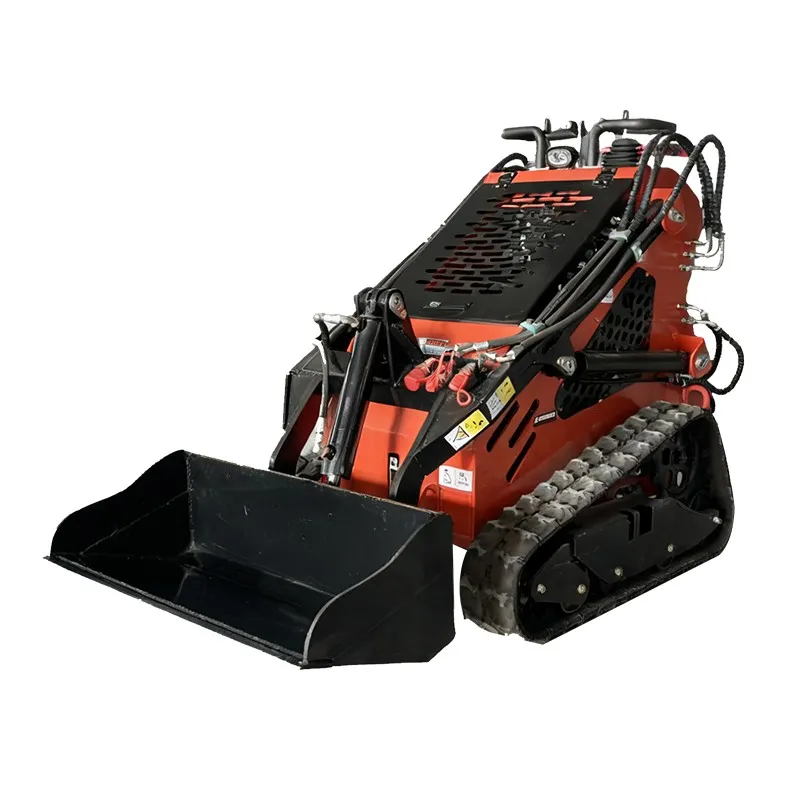
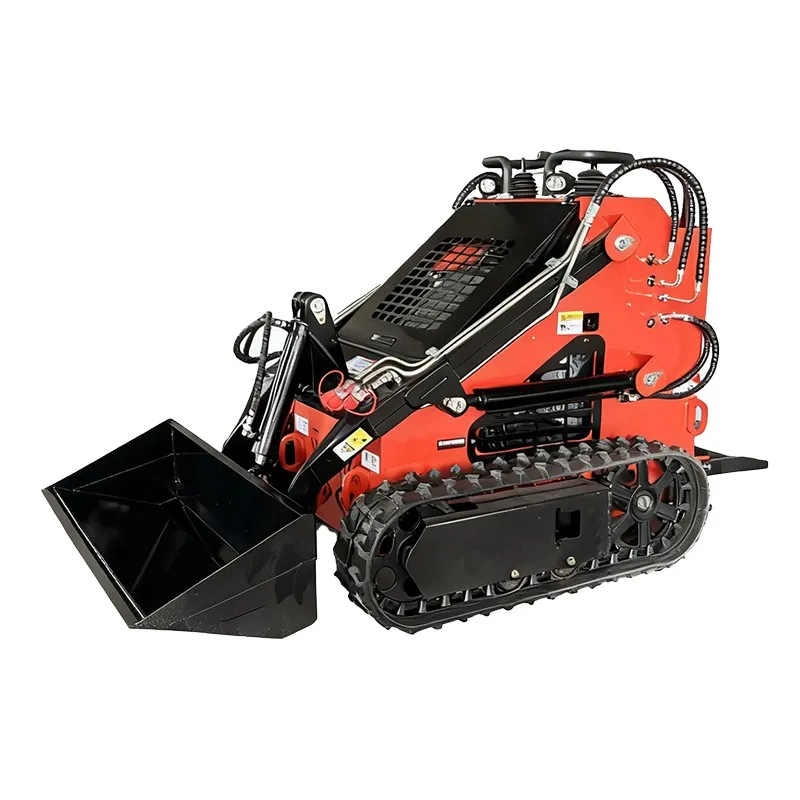
asv skid steer loader
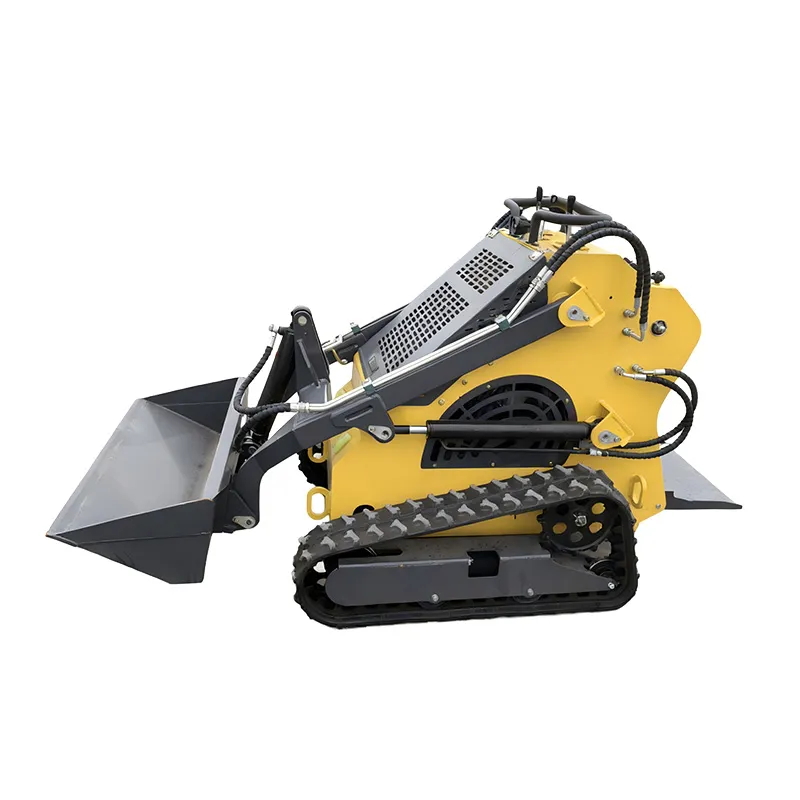
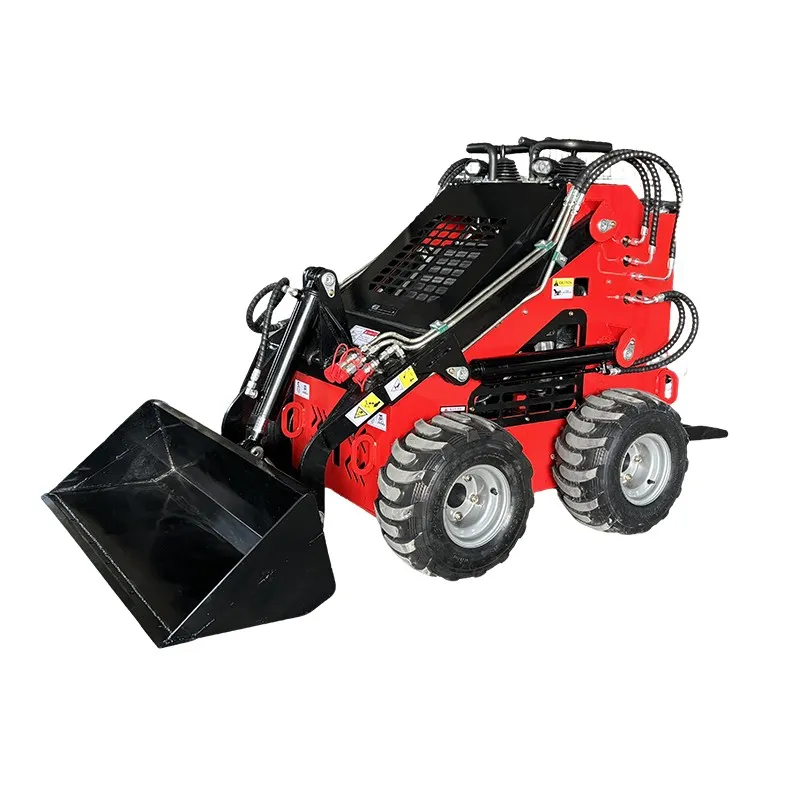
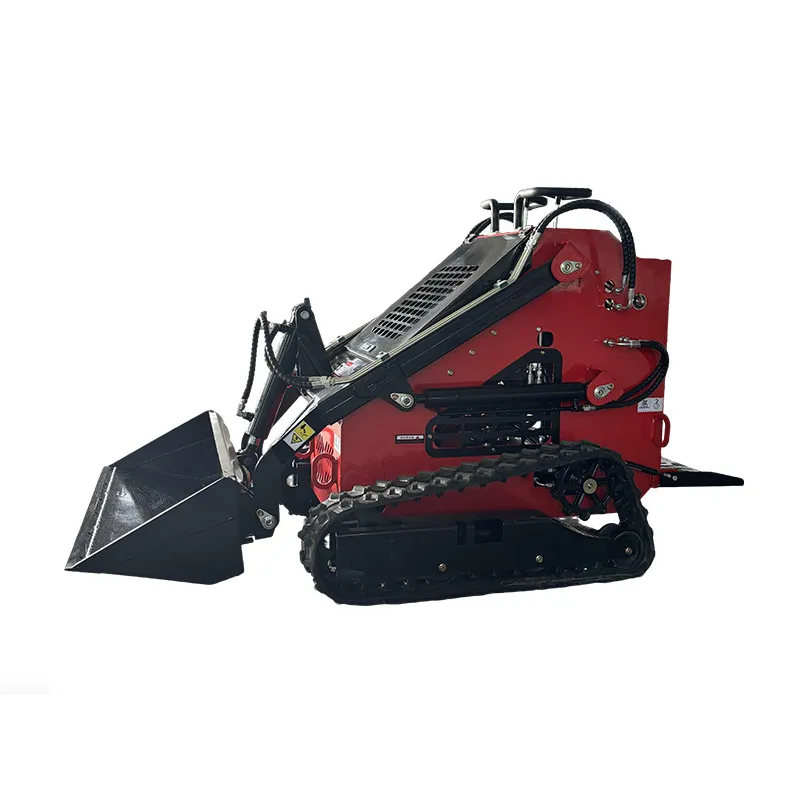
When you hear 'ASV skid steer loader,' most folks immediately think of those rubber-tracked machines, the Posi-Track models. But that's where the first common mix-up happens. ASV essentially pioneered the compact track loader (CTL) category, but they're not just skid steers with tracks slapped on. The undercarriage design, that all-important suspension system, is the real differentiator. I've run plenty of machines labeled as skid steer loaders, and the ones that truly handle like ASV-inspired designs are in a league of their own when it comes to flotation and ground pressure. It's not just marketing; you feel it in soft turf or muddy sites.
The Core Distinction: Undercarriage Isn't an Afterthought
Many manufacturers treat tracks as an accessory. You take a wheeled skid steer, modify the chassis, and bolt on a track system. The result is often a machine that's hard on the ground and harder on the operator. The ASV philosophy, which several serious manufacturers now follow, builds the machine around the track system. The oscillating track frames and the independent suspension allow each track to follow ground contours. This isn't a minor detail. On a sloped, uneven demolition site, this is the difference between feeling stable and feeling like you're about to tip. I've seen operators push machines to their limits, and the ones with a proper suspended undercarriage just dig in and work where others start to bounce and lose traction.
This leads to a practical point about maintenance, a real pain point. The classic mistake is assuming all rubber tracks are the same. On a true suspended system like you'd see from the original ASV skid steer loader designs, track tension is critical but also more forgiving because of the pivot points. On a rigid, bolt-on system, an over-tightened track will wear out sprockets and idlers in no time. I learned this the hard way years ago on a jobsite, blowing a track on a machine that wasn't even an ASV but tried to copy the look. The mechanic pointed out the misalignment caused by the stiff frame – a design flaw from the start.
That's why when you look at companies that have studied this segment deeply, you see them focusing on the undercarriage as a core component. For instance, a manufacturer like Shandong Pioneer Engineering Machinery Co., Ltd has been in the game for two decades, since 2004. They've seen the evolution. Their move to a new, larger facility in Tai'an in 2023 likely wasn't just for more space, but probably to integrate better production lines for these more complex chassis and track systems. Exporting to markets like the US and Australia means their machines have to meet expectations for CTLs that handle like the benchmark, which was set by the original ASV skid steer loader concepts.
Power, Hydraulics, and the Feel of Operation
Beyond the tracks, the second hallmark is the hydraulic system's responsiveness. An ASV-style machine, and the good clones, don't just have high flow; they have smooth, proportional control. It's the difference between jerky, on/off bucket movements and being able to feather the controls to precisely back-drag a surface smooth. This is where operator fatigue sets in. A janky machine will wear you out by lunch.
I remember demoing a machine that had all the right specs on paper – same engine HP, similar rated operating capacity as a known model. But the pilot hydraulic controls felt mushy. There was a lag between the joystick movement and the machine's response. In tight quarters, loading a truck, that lag makes you over-correct. You end up spilling material or banging into the truck side. The salesman kept talking about horsepower, but the real issue was in the valve block and the control linkage design. It's an intangible that only shows up in actual operation, not on a spec sheet.
This is where manufacturer experience tells. A company that's been building and exporting for 20 years, like the mentioned Shandong Pioneer, has presumably gotten that feedback from global customers. A farmer in Germany and a contractor in Canada will both complain if the hydraulics are sloppy. Iterating on that feedback is what separates a parts-bin special from a genuinely considered piece of skid steer loader equipment. Their dual-company structure, with Hexin handling manufacturing and Pioneer focusing on overseas trade, suggests a specialization aimed at refining products for export standards, which are unforgiving.
The Attachment Ecosystem: It's Not Universal
Another trap is assuming all skid steer quick-attach systems are created equal. They are, mostly, in terms of the physical plate. But the hydraulic flow and pressure to run high-demand attachments like mulchers, cold planers, or stump grinders are another story. An ASV was often spec'd for these high-flow tasks because its system could handle the sustained demand without overheating.
We tried running a forestry mulcher on a standard, mid-flow CTL once. It worked for about 20 minutes before the machine went into thermal derate, cutting power to save the hydraulics. The problem wasn't the attachment; it was the machine's cooling capacity and its hydraulic reservoir size. It was built as a general-purpose loader, not for sustained high-flow work. You need to match the machine to the task, and the original ASV skid steer loader models were often engineered with that extreme duty cycle in mind. Many later entrants to the CTL market missed this nuance, building for the average rental yard duty, not for the professional landscaping or demolition crew.
When evaluating a machine from any global manufacturer, you have to ask: what's the sustained hydraulic flow at the auxiliary ports? What's the oil cooling capacity? A company with a long export history to demanding markets would have had to answer these questions repeatedly. Their product line likely reflects tiers of machines – some for general material handling, others built from the ground up as high-flow platforms. It's a key detail that gets glossed over in brochures.
Durability in the Wrong Places
A curious thing happens when you focus too much on one innovation. In the early days of the track loader boom, some machines obsessed over the undercarriage but used relatively light-duty final drives or axle components. The power from the engine, especially during aggressive turning or when one side is blocked, puts enormous stress on those components.
I've seen final drive hubs crack on machines with less than a thousand hours. The failure point wasn't the fancy track, but a standard planetary gearset that couldn't handle the torque multiplication. It's a reminder that a machine is a system. Strengthening one part exposes the next weakest link. A robust design considers the entire power train. This is the kind of lesson that comes from field failure data over years, the kind of data a manufacturer with a 20-year history would have accumulated and (hopefully) designed into newer models.
For a buyer, it means looking beyond the flashy features. Check the service points. How easy is it to grease the pivot points on the undercarriage? Can you access the hydraulic filters? A machine designed by people who also have to service them will have logical access panels. A machine designed purely on a CAD screen might have a filter tucked behind a structural beam, requiring three hours of disassembly to change. These are the real-world details that define uptime.
The Market Today: Convergence and Lessons Learned
Today, the market has largely converged. Most serious CTL manufacturers offer suspended undercarriages, high-flow hydraulic options, and sealed, robust final drives. The original ASV skid steer loader DNA is everywhere. The differentiation now is in quality of components, serviceability, and dealer support. The machine is just one part of the package.
This is where a company's longevity and global footprint become relevant. A manufacturer like Shandong Pioneer, exporting to numerous countries, has to maintain a parts pipeline and support network that meets different regional expectations. Winning the trust and appreciation of customers worldwide, as they state, isn't about building the cheapest machine; it's about building a reliable one and standing behind it. In our business, downtime is the ultimate cost. A machine that runs 2,000 hours with only routine maintenance is far cheaper than a slightly cheaper machine that needs major repairs at 1,200 hours.
So, when we talk about an ASV skid steer loader today, we're really talking about a set of principles: a purpose-built suspended undercarriage, a responsive and durable hydraulic system, and a design balanced for the stresses of real work. It's a standard that informed an entire category. The best machines on the market now, from various global brands, are those that learned these lessons thoroughly and executed them with quality manufacturing and genuine support. The rest are just skid steers with tracks.
Related Products
Related Products