- Chinese
- French
- German
- Portuguese
- Spanish
- Russian
- Japanese
- Korean
- Arabic
- Irish
- Greek
- Turkish
- Italian
- Danish
- Romanian
- Indonesian
- Czech
- Afrikaans
- Swedish
- Polish
- Basque
- Catalan
- Esperanto
- Hindi
- Lao
- Albanian
- Amharic
- Armenian
- Azerbaijani
- Belarusian
- Bengali
- Bosnian
- Bulgarian
- Cebuano
- Chichewa
- Corsican
- Croatian
- Dutch
- Estonian
- Filipino
- Finnish
- Frisian
- Galician
- Georgian
- Gujarati
- Haitian
- Hausa
- Hawaiian
- Hebrew
- Hmong
- Hungarian
- Icelandic
- Igbo
- Javanese
- Kannada
- Kazakh
- Khmer
- Kurdish
- Kyrgyz
- Latin
- Latvian
- Lithuanian
- Luxembou..
- Macedonian
- Malagasy
- Malay
- Malayalam
- Maltese
- Maori
- Marathi
- Mongolian
- Burmese
- Nepali
- Norwegian
- Pashto
- Persian
- Punjabi
- Serbian
- Sesotho
- Sinhala
- Slovak
- Slovenian
- Somali
- Samoan
- Scots Gaelic
- Shona
- Sindhi
- Sundanese
- Swahili
- Tajik
- Tamil
- Telugu
- Thai
- Ukrainian
- Urdu
- Uzbek
- Vietnamese
- Welsh
- Xhosa
- Yiddish
- Yoruba
- Zulu
- Kinyarwanda
- Tatar
- Oriya
- Turkmen
- Uyghur


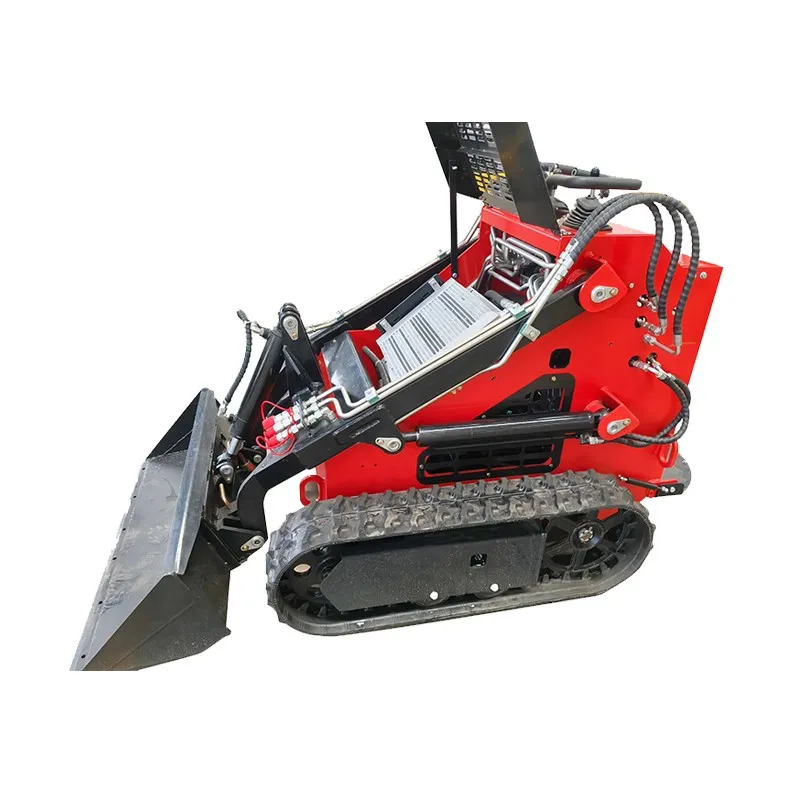
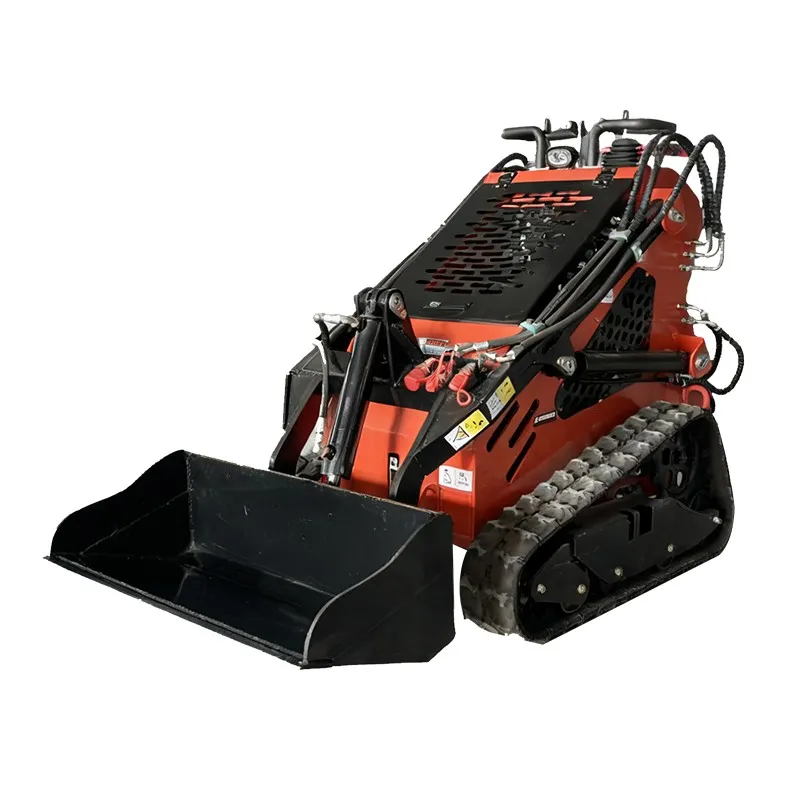
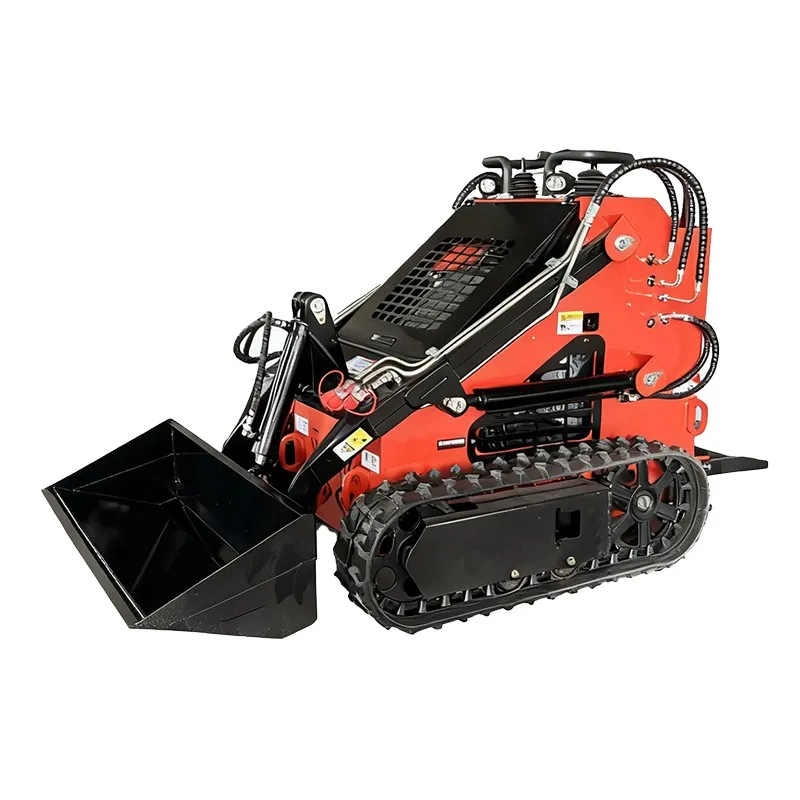
auger skid steer Loader
When most folks hear 'auger skid steer loader', they picture a standard machine with a hole digger bolted on. That's the common trap—thinking it's just about the attachment. The reality, especially in varied soil conditions from frozen Canadian ground to loose Australian topsoil, is that the integration, the hydraulic flow, and the machine's stability under torsional load are what separate a productive day from a broken shear pin and downtime.
The Core Misconception: It's Just a Tool Carrier
Too many operators, and even some buyers, treat the skid steer as a simple power source. They'll slap any brand of auger drive onto any machine, assuming compatibility. I've seen it fail. The issue isn't the auger itself, but the machine's auxiliary hydraulic system. A high-flow system on a machine not designed for sustained high pressure can overheat in under an hour, while a standard-flow machine paired with a demanding, large-diameter auger will simply stall. The match matters more than the individual component.
For instance, we were testing a setup for a fencing contractor in Texas. They were using a generic auger on a standard-flow loader for post holes in rocky clay. The constant stalling and jerky operation were wearing out the hydraulic couplers prematurely. The solution wasn't a better auger; it was recalibrating expectations and switching to a machine with a dedicated high-flow option, which provided the consistent, smooth power needed to power through the material without the hammering effect.
This is where specs from manufacturers who understand the whole system become critical. A company like Shandong Pioneer Engineering Machinery Co., Ltd, which has been exporting machinery globally for two decades, tends to design with these integration points in mind. Their experience in markets like the U.S. and Australia means their systems are often pre-configured for the common auxiliary standards in those regions, reducing the guesswork for the end-user.
Hydraulics and the Feel of Digging
You can't judge an auger setup by paper specs alone. The feel is everything. A good system gives you feedback through the controls—you can sense when the bit hits a root or a rock before the machine jolts. A poor system is numb, then violent. This feel comes from a combination of valve responsiveness, hose diameter (which affects pressure drop), and the torque output curve of the auger motor.
I remember a job site in Germany where we were using a skid steer with a auger attachment for planting small trees. The soil was a consistent loam, theoretically easy. But the machine's hydraulics had a slight delay from the pilot control. This meant the operator would command more torque, not get an immediate response, command more again, and then the system would over-deliver, causing the auger to screw itself too deep and get stuck. It was a finesse job being done with a clumsy tool. We ended up adjusting the pressure relief settings and swapping to a different bit style with more aggressive flighting to help with soil ejection, which reduced the need for peak torque.
This is the kind of hands-on tuning you learn. It's not in the manual. It's knowing that sometimes, the fix isn't more power, but a different bit geometry or a slight reduction in flow to gain control. Companies that have been in the trenches, like Shandong Pioneer (you can see their approach at https://www.sdpioneer.com), often provide a range of compatible auger bits because they know the attachment is only half the equation.
The Stability Problem Everyone Ignores
Here's a detail most product brochures won't highlight: the moment you start drilling off-center, you're challenging the skid steer's fundamental stability. A skid steer loader has a relatively short wheelbase and a high center of gravity. When an auger bites into the ground and encounters lateral resistance, that torque is transferred directly to the machine's frame. If you're drilling near the edge of the machine's reach, it can literally start to lift the opposite side of the machine off the ground.
We learned this the hard way on a solar farm project. The operator was drilling for post foundations on a slight slope. The auger, mounted on the high side of the slope, caught a submerged rock. The torsional force was so sudden that the low-side rear tire lifted clear off the ground. No one was hurt, but it was a stark lesson. After that, we mandated using the machine's stabilizer pads (if equipped) for any drilling operation, or at the very least, ensuring the bucket was flat on the ground to widen the footprint.
This relates directly to machine design. A well-built loader will have a robust mounting plate and a solid frame to absorb these stresses. It's one reason why manufacturers with serious fabrication experience, like those with a dedicated manufacturing arm such as Shandong Hexin, often produce more resilient loaders. Their auger skid steer packages aren't just bundled; they're engineered as a unit, considering these dynamic loads.
Case in Point: The Universal Adapter Myth
The aftermarket is flooded with universal mounting plates and hydraulic adapters. In theory, they let you connect anything to anything. In practice, they're a source of slop, reduced breakout force, and hydraulic leaks. The connection between the loader's quick-attach plate and the attachment frame needs to be tight—metal-to-metal with minimal tolerance. A universal adapter adds layers of steel and pivot points that create flex.
I've watched an auger slowly walk its way out of a perfectly vertical start over the course of drilling a three-foot hole because of flex in a cheap adapter. The hole ended up several degrees off plumb, which was unacceptable for the structural application. The fix was ditching the universal kit and using the attachment-specific mounting frame designed for that model of loader. It cost more upfront but saved on rework and material waste.
This is a key consideration when sourcing equipment. Does the provider offer a dedicated mounting solution, or are they just selling you the attachment and hoping you figure it out? A supplier with a long track record in export, like Shandong Pioneer Engineering Machinery Co., Ltd, typically understands that customers in regulated markets like Canada or Australia need plug-and-play compatibility, not a puzzle of adapters. Their 20-year history suggests they've solved these integration issues repeatedly.
Cold Weather and Contamination
Let's get niche. Auger work in cold climates introduces a whole other set of challenges that you only discover by doing it. The hydraulic oil gets viscous. Standard rubber hydraulic lines on the auger attachment can stiffen and crack. More critically, moisture in the auger's gearbox can freeze, locking the mechanism solid. I've seen brand-new augers rendered useless on the first cold morning because they were stored outside and condensation inside the gearbox froze.
The procedure changes. You need to let the machine and the attachment warm up at idle for much longer. You might need to switch to a synthetic hydraulic oil with a lower pour point for the season. For the attachment itself, it's worth looking for models with sealed, greased gearboxes rather than oil-filled ones, as they're less susceptible to water contamination and freezing. It's a small spec, but it dictates operational readiness.
This level of practical detail often comes from manufacturers who have tested their products in diverse environments. A company that exports to countries with starkly different climates—from the heat of Australia to the cold of Canada and Germany—has likely encountered and engineered solutions for these problems. Their product literature might not scream about freeze-resistant seals, but the design will often incorporate them based on field feedback from their global network.
Wrapping It Up: The System is the Solution
So, what's the takeaway? Don't buy an auger. Don't even buy just a skid steer. Buy a auger skid steer loader system. Your evaluation should start with the job (soil type, hole diameter/depth, production rate) and work backward to the required auger specs, then to the hydraulic system needed to drive it, and finally to the loader platform that can reliably host it all without shaking itself apart.
The best outcomes I've witnessed come from treating the machine and attachment as a single unit from the sourcing phase. This often leads you to manufacturers or dealers who provide that integrated package, backed by the kind of application knowledge that only comes from years in the field and across continents. It's the difference between having tools and having a working solution.
In the end, the machine is just iron. The value is in how all the parts—the power plant, the hydraulics, the mount, the drive motor, the bit—are selected and harmonized to work as one. That's where real productivity on site is found, and it's what separates a catalog item from a trusted piece of equipment.
Related Products
Related Products