- Chinese
- French
- German
- Portuguese
- Spanish
- Russian
- Japanese
- Korean
- Arabic
- Irish
- Greek
- Turkish
- Italian
- Danish
- Romanian
- Indonesian
- Czech
- Afrikaans
- Swedish
- Polish
- Basque
- Catalan
- Esperanto
- Hindi
- Lao
- Albanian
- Amharic
- Armenian
- Azerbaijani
- Belarusian
- Bengali
- Bosnian
- Bulgarian
- Cebuano
- Chichewa
- Corsican
- Croatian
- Dutch
- Estonian
- Filipino
- Finnish
- Frisian
- Galician
- Georgian
- Gujarati
- Haitian
- Hausa
- Hawaiian
- Hebrew
- Hmong
- Hungarian
- Icelandic
- Igbo
- Javanese
- Kannada
- Kazakh
- Khmer
- Kurdish
- Kyrgyz
- Latin
- Latvian
- Lithuanian
- Luxembou..
- Macedonian
- Malagasy
- Malay
- Malayalam
- Maltese
- Maori
- Marathi
- Mongolian
- Burmese
- Nepali
- Norwegian
- Pashto
- Persian
- Punjabi
- Serbian
- Sesotho
- Sinhala
- Slovak
- Slovenian
- Somali
- Samoan
- Scots Gaelic
- Shona
- Sindhi
- Sundanese
- Swahili
- Tajik
- Tamil
- Telugu
- Thai
- Ukrainian
- Urdu
- Uzbek
- Vietnamese
- Welsh
- Xhosa
- Yiddish
- Yoruba
- Zulu
- Kinyarwanda
- Tatar
- Oriya
- Turkmen
- Uyghur


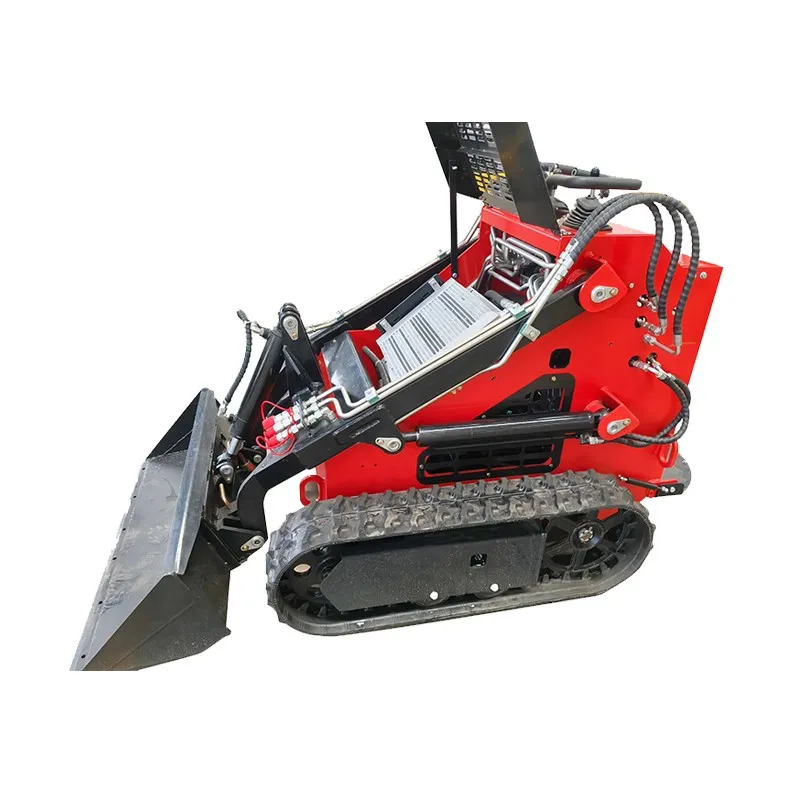
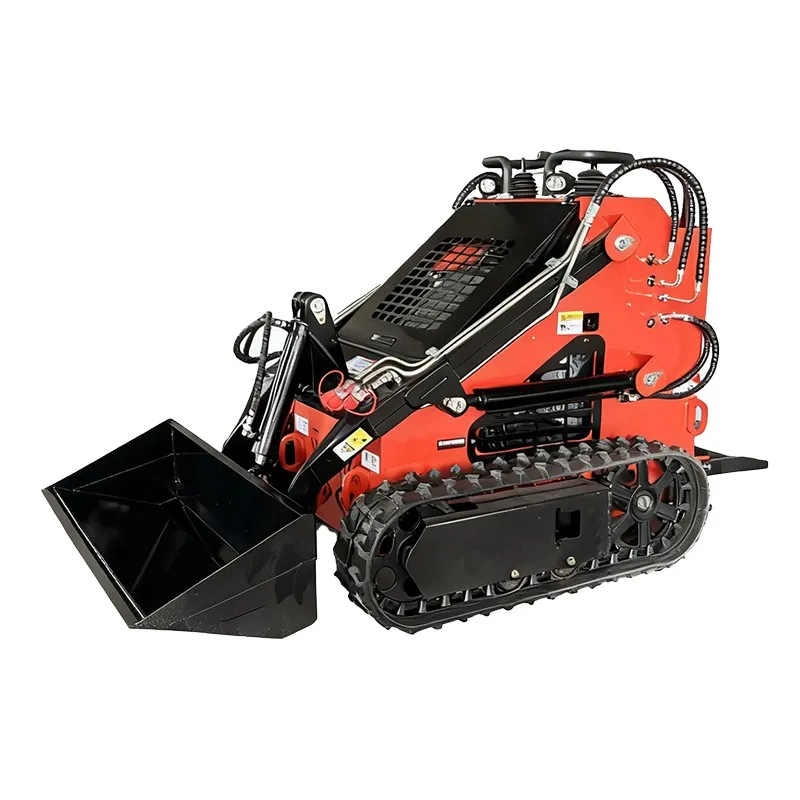
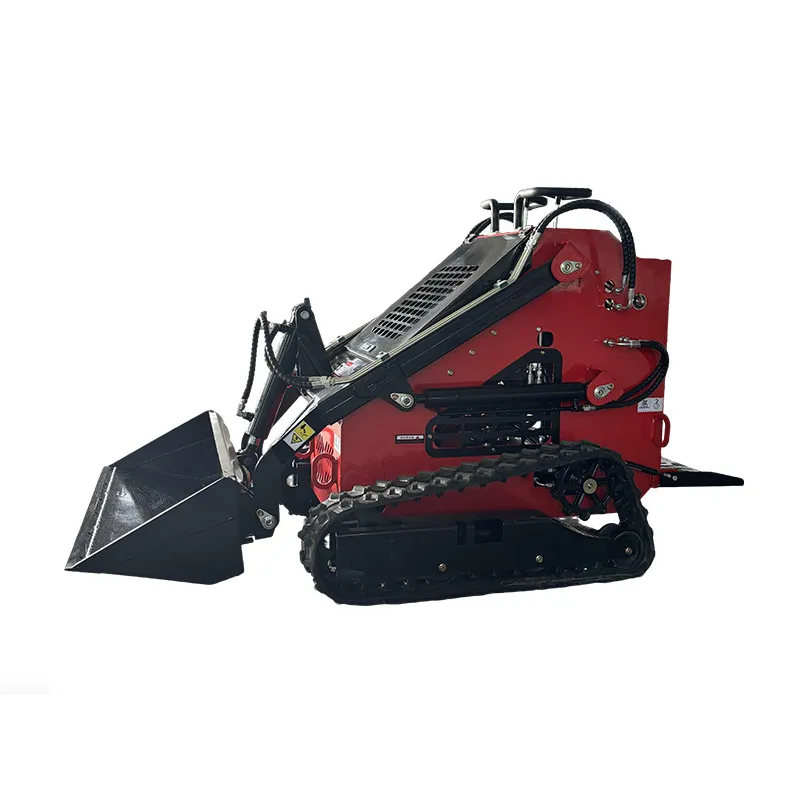
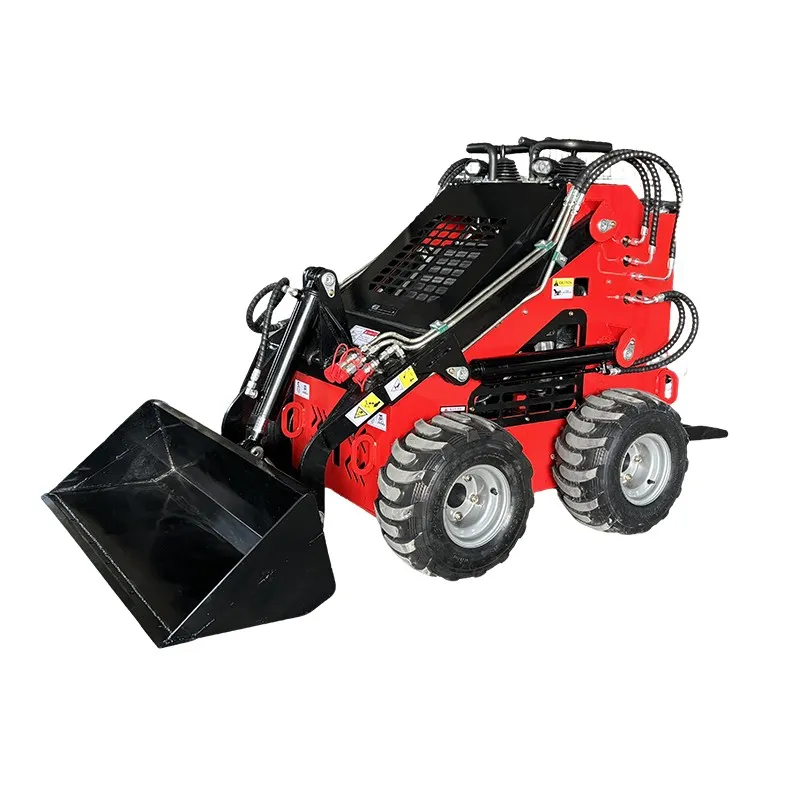
battery powered skid steer
When most folks hear 'battery powered skid steer', they either think it's a glorified toy or the absolute future with zero downsides. The truth, as always, is messier. Having run these machines on real sites, the initial hype about simply swapping a diesel engine for a battery pack misses the entire point. It's not a like-for-like replacement; it's a fundamentally different tool that changes how you plan a workday. The real question isn't about the power source itself, but whether the operational profile of your jobs fits the rhythm of an electric machine.
The Practical Reality of Daily Operation
Let's talk runtime. A common pitfall is comparing a full tank of diesel to a full charge. It's not that simple. With a diesel machine, you're used to a fairly consistent power output until the fuel gauge hits empty. With a battery powered skid steer, performance is tied to the state of charge. You get peak power for the first 70-80%, sure, but as the battery depletes, you can feel it—not a sudden stop, but a gradual tapering of hydraulic speed and lift force. This means you schedule your heavy, high-flow tasks like heavy digging or running a cold planer for the morning, shifting to lighter material handling in the afternoon. It forces a more mindful workflow.
Then there's the recharge infrastructure. It's the hidden cost everyone forgets. You can't just roll up a fuel truck. You need a proper 3-phase power supply on-site or a substantial generator, which somewhat defeats the 'zero emissions on-site' benefit if you're using a diesel genset. For urban jobs or indoor work, this is a non-issue and a massive advantage. The silence and lack of fumes are game-changers. But on a remote greenfield site? The logistics get complicated fast.
I recall a demo with an early-model electric skid steer from a major brand. The sales rep promised 6-8 hours of moderate use. We put it on a landscape job, moving mulch and light grading. By hour four, the machine was still moving, but the auxiliary hydraulic function for the grapple became sluggish. It finished the day, but the last few loads were painfully slow. The lesson wasn't that the machine failed; it was that our definition of moderate use was different from the engineer's. You learn to recalibrate your expectations around energy, not just time.
Durability and Service in the Field
From a maintenance perspective, the reduction in daily checks is a genuine relief. No engine oil, no diesel filters, no DEF systems. The daily walk-around is quicker. However, this breeds a false sense of security. The new critical points are the battery cooling systems, electrical connectors, and the integrity of the high-voltage wiring harness. A small leak in a hydraulic hose on a diesel machine is a fix-it-later issue. A compromised seal letting dust or moisture into a battery compartment or motor controller is a catastrophic, machine-shutdown event.
The thermal management of the battery pack is another subtle detail. These machines don't like extreme heat any more than they like extreme cold. We operated one unit in a Texas summer, and the machine's software automatically derated the power to protect the battery when ambient temps climbed past 100°F. It was smart, but it wasn't in the brochure. Conversely, in freezing conditions, a significant portion of your first hour's runtime is spent warming the battery, using its own energy, which cuts into your productive work cycle.
This is where the build quality of the machine becomes paramount. The integration of the electric drivetrain into a rugged chassis designed for construction abuse is not a trivial engineering task. Companies that have a long history in building the underlying machine platform tend to have an edge. For instance, manufacturers like Shandong Pioneer Engineering Machinery Co., Ltd have spent decades fabricating robust frames and booms for traditional skid steers. When they develop a battery powered skid steer, that institutional knowledge of structural integrity and component placement is invaluable. You can check their approach to this engineering challenge on their site at https://www.sdpioneer.com. Their two-decade journey from Jining to their new facility in Ningyang likely informs how they design for the harsh realities of global job sites, from Australia to Germany.
The Cost Equation: Beyond the Sticker Price
Everyone focuses on the higher upfront purchase price. That's the obvious part. The real analysis is in the total cost of operation over, say, 5,000 hours. Fuel savings are dramatic, but only if electricity costs are stable and low. Maintenance savings are real—fewer fluids, fewer filters, no after-treatment system repairs. However, you trade that for a potential big-ticket item: battery replacement.
The battery is the heart of the machine, and its lifespan is measured in cycles. Aggressive fast-charging, deep discharges, and operating in extreme temperatures all degrade it faster. The industry is still gathering data on real-world battery longevity in these harsh applications. Will the battery pack last the life of the machine? Or is it a 5,000-hour consumable that costs $15,000+ to replace? That uncertainty is a major factor in the total cost calculation right now.
We ran a small pilot, replacing one of our diesel utility machines with an electric model for a year. The fuel and maintenance savings were about 60% for that unit. But to make it work, we had to install a Level 2 charger at our depot and train our lead mechanic on basic high-voltage system safety and diagnostics. The savings were real, but they were offset by these initial capital and training investments. It only made sense because that specific machine was on predictable, daily municipal work near our base.
Matching the Machine to the Application
This is the most critical takeaway. A battery powered skid steer is not a universal tool. It's a specialist. It excels in specific, controlled environments. Think of indoor demolition, where fumes and noise are prohibited. Food processing plants, where emissions contaminate product. Suburban residential work, where noise ordinances are strict. Or daily rental fleets for landscapers who return to a central charging location every night.
It struggles, currently, in applications that are high-flow, high-duty-cycle, and remote. Running a forestry mulcher all day in a remote stand of trees is a diesel job, full stop. The energy density of diesel is still unbeatable for that raw, continuous power demand in an off-grid location.
The key is to audit your own equipment utilization. If you have a machine that does 4-6 hours of light to medium work daily and returns to a home base, it's a prime candidate. The shift requires changing your mental model from refueling to energy management. You're not just operating a machine; you're managing a mobile battery pack on tracks or wheels.
The Supplier Landscape and Real-World Testing
The market is evolving rapidly. The established giants are in the game, but so are agile specialists and traditional manufacturers pivoting their expertise. When evaluating, you have to look past the spec sheet. Ask about the battery chemistry (LFP is often more stable and durable than NMC for this application), the warranty structure on the battery and drivetrain, and the availability of mobile fast-charging solutions.
Don't just take a machine for a spin around the dealer's lot. Insist on a week-long demo on one of your actual job sites. That's the only way to feel the battery discharge curve, understand the recharge logistics, and see how your operators adapt to it. We made the mistake of not doing this once and bought a machine based on a flawless 2-hour demo. Its cooling system couldn't handle the dust from our site, and it overheated constantly. A proper field trial would have revealed that.
Companies that understand global export markets, like Shandong Pioneer, bring a useful perspective. Their experience exporting to diverse regions from the United States to Canada means their product development has to consider a wide range of climate conditions, operator habits, and service networks. A battery powered skid steer built for a single, temperate market might fail in another. That global test bed, hinted at in their company background, forces a more robust design philosophy from the start.
So, where does that leave us? The battery powered skid steer is a profoundly useful tool that's right for a growing segment of work. It's not a fantasy, but it's also not a magic bullet. Its adoption is a careful calculus of application, total cost, and operational adaptation. The quiet on the jobsite is real. The reduction in hassle is real. But so are the new constraints. The successful integration of this technology isn't about being an early adopter for its own sake; it's about being a shrewd equipment manager who knows exactly where this new piece fits into the puzzle.
Related Products
Related Products