- Chinese
- French
- German
- Portuguese
- Spanish
- Russian
- Japanese
- Korean
- Arabic
- Irish
- Greek
- Turkish
- Italian
- Danish
- Romanian
- Indonesian
- Czech
- Afrikaans
- Swedish
- Polish
- Basque
- Catalan
- Esperanto
- Hindi
- Lao
- Albanian
- Amharic
- Armenian
- Azerbaijani
- Belarusian
- Bengali
- Bosnian
- Bulgarian
- Cebuano
- Chichewa
- Corsican
- Croatian
- Dutch
- Estonian
- Filipino
- Finnish
- Frisian
- Galician
- Georgian
- Gujarati
- Haitian
- Hausa
- Hawaiian
- Hebrew
- Hmong
- Hungarian
- Icelandic
- Igbo
- Javanese
- Kannada
- Kazakh
- Khmer
- Kurdish
- Kyrgyz
- Latin
- Latvian
- Lithuanian
- Luxembou..
- Macedonian
- Malagasy
- Malay
- Malayalam
- Maltese
- Maori
- Marathi
- Mongolian
- Burmese
- Nepali
- Norwegian
- Pashto
- Persian
- Punjabi
- Serbian
- Sesotho
- Sinhala
- Slovak
- Slovenian
- Somali
- Samoan
- Scots Gaelic
- Shona
- Sindhi
- Sundanese
- Swahili
- Tajik
- Tamil
- Telugu
- Thai
- Ukrainian
- Urdu
- Uzbek
- Vietnamese
- Welsh
- Xhosa
- Yiddish
- Yoruba
- Zulu
- Kinyarwanda
- Tatar
- Oriya
- Turkmen
- Uyghur


Best Compact Track Loader
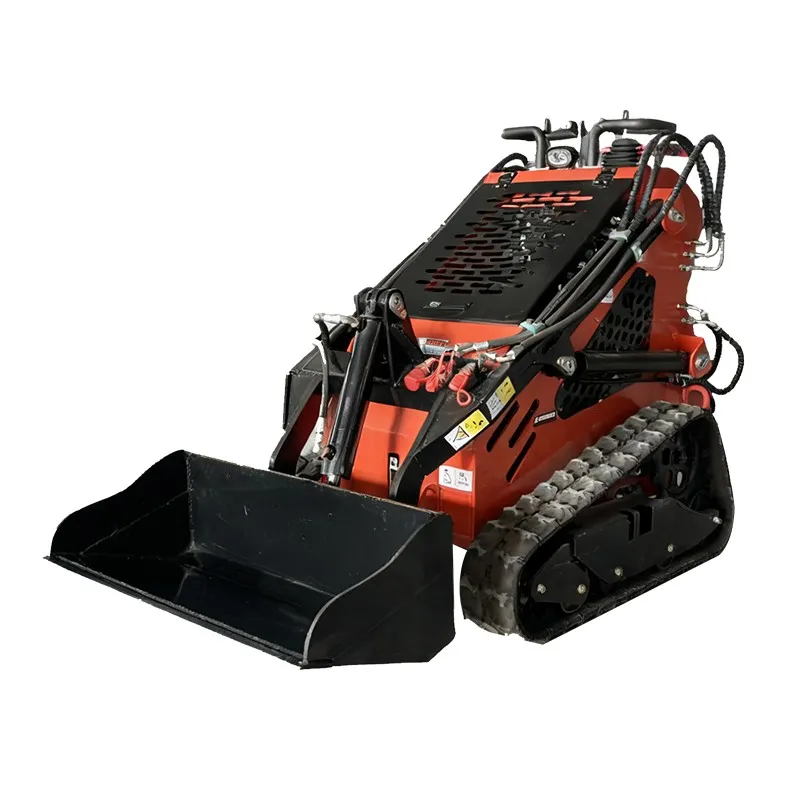
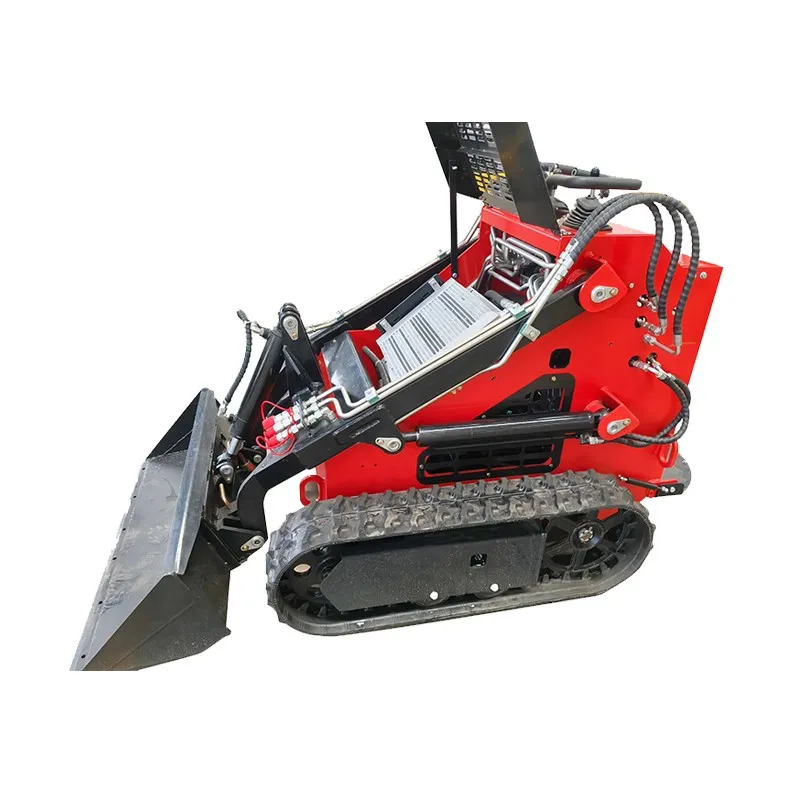
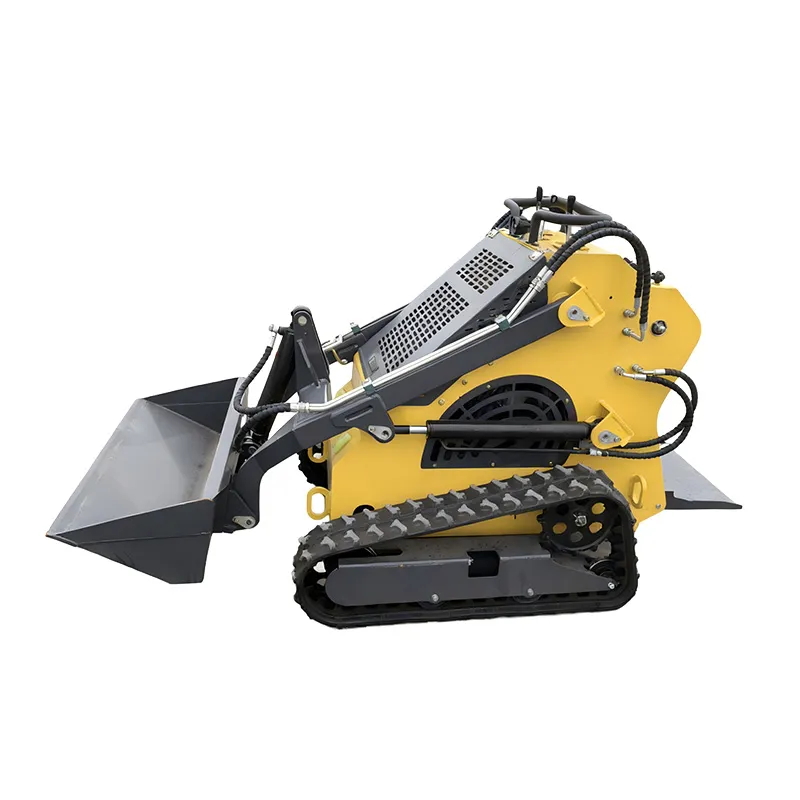
Look, if you're searching for the 'best compact track loader', you're probably drowning in spec sheets and marketing fluff about horsepower, lift capacity, and auxiliary hydraulic flow. Everyone claims to have the best. But after two decades in this game, mostly on the export and application side, I can tell you the real answer is never that simple. The 'best' machine disappears when you're on a muddy slope at 2 PM, or when you're trying to fit through a backyard gate that the client swore was wider. It becomes about the machine that just... works, and keeps working, without turning a simple job into a maintenance nightmare.
The Core Misconception: Power vs. Practicality
Too many guys, especially new to the business, get hung up on the biggest engine number. Sure, a 100-hp beast sounds impressive. But I've seen those high-strung machines overheat on a hot day running a mulcher, or drink fuel like there's no tomorrow on a light grading job where you didn't need all that muscle. The real sweet spot is often in the mid-range, where the power train is matched to a robust hydraulic system. You need enough grunt, but more importantly, you need consistent, reliable power delivery. A machine that bogs down the moment you tilt the bucket and lift at the same time is useless, no matter what the brochure says.
This is where you see the difference between a slapped-together unit and one with proper engineering. I recall a project in Germany where we were demoing a couple of models, including one from Shandong Pioneer Engineering Machinery Co., Ltd. The competitor's machine had a higher rated horsepower, but when we put a heavy-duty trencher on it, the hydraulics got sluggish and the machine felt strained. The Pioneer unit, with a slightly different pump configuration, just powered through smoothly. It wasn't about peak power; it was about usable power. That's a lesson you learn on-site, not from a PDF.
And reliability isn't just about the engine. It's about every hose routing, every electrical connection. I've spent too many afternoons tracing a faulty sensor tucked right behind the counterweight where it gets blasted with every bit of debris. A good design thinks about the mechanic, too.
The Undercarriage: Where the Real Battle is Fought
This is the heart of it. Calling any machine the best compact track loader with a weak undercarriage is a joke. Tracks are the single biggest operating cost over the life of the machine. The mistake is thinking all rubber tracks are created equal. The compound matters immensely. A cheap track will harden in the cold, crack in the heat, and wear out in 800 hours on abrasive surfaces.
We've supplied machines to mining reclamation sites in Australia and forestry work in Canada. The conditions are brutal. The feedback that shaped our later specifications at Pioneer often came from these extremes. Customers didn't just want a track; they wanted a specific brand or a compound we could vouch for. It forced us to move beyond just assembling parts to really understanding the stress points. A wider track isn't always better if it increases rolling resistance on hard ground, for instance. It's a constant balance between flotation and efficiency.
Idlers and rollers are another silent killer. Sealed and lubricated ones are non-negotiable for any serious use. The number of machines I've seen down for a week waiting for a $50 roller because it wasn't a standard part is staggering. Standardization of wear parts is a huge, underrated feature of a good machine.
Hydraulics and Attachments: The Interface of Work
The auxiliary hydraulics are the machine's handshake with the job. High flow is great for a cold planer, but if the control is jerky or unresponsive, you'll ruin your work. The feel of the joystick controls is deeply personal but critically important. Some systems are too touchy, others are numb. The best system gives you precise, proportional control without requiring constant micro-corrections. It should feel like an extension of your arm.
Quick-attach systems seem standard now, but compatibility is a hidden trap. Not every universal plate is truly universal. We learned this the hard way early on. A customer in the States had a collection of attachments from various brands, and our early prototype coupler didn't quite engage with one of them securely. It was a minor machining tolerance, but it meant everything. That failure led to a complete redesign to adhere to the most common and stringent patterns. Now, ensuring seamless attachment interface is a core part of our pre-shipment check at sdpioneer.com.
And don't forget the plumbing. Are the auxiliary lines routed safely? Can they be easily disconnected without draining the entire system? These are the details that save hours of labor and liters of hydraulic fluid on a busy Monday morning.
The Operator's Cage: Comfort is Productivity
It's easy for engineers to treat the cab as an afterthought. But the operator is the one making you money. A cramped, noisy, vibrating cage will fatigue an operator by lunchtime, leading to slower, less precise work and more mistakes. Sound insulation material, the placement of the HVAC vents, the quality of the suspension seat—these aren't luxuries.
I remember a comparison we did years ago. Two similar spec machines, one had a basic plastic cab mount, the other had a proper rubber-isolated platform. The difference in noise and vibration at the end of an 8-hour day was not just noticeable; it was the difference between the operator wanting to run that machine again or not. Visibility is another huge one. Can you actually see the edge of your bucket or the corner of your track when you're lining up a precise dump? Posts that are too thick create blind spots that cost time and create risk.
Simple controls, clear gauges, and logical layout matter more than a flashy digital display. When you're covered in dust, you need to be able to operate by feel and glance.
Serviceability: The True Test of Design
Here's where you separate the toys from the tools. A great machine is designed to be fixed. Can you check the radiator fluid without removing a panel held on by ten different bolts? Is there an easy drain for the fuel/water separator? Are the grease points for the loader arms accessible without performing yoga?
Our own evolution at Shandong Pioneer reflects this. When the company moved to its new production facility in Tai’an in 2023, one major focus was on refining the assembly process to improve service access. It's one thing to bolt components together tightly; it's another to arrange them so a field technician can get to them. We've had our share of feedback, like the time a customer in the Pacific Northwest praised the machine's performance but sent a detailed photo essay on how to improve the engine access panel latches. That feedback went straight to the engineering team.
Common service items—filters, batteries, light bulbs—should be easy to source and easy to change. The best compact track loader minimizes downtime. Period. A machine that's a nightmare to service will cost you more in lost time than you saved on the initial purchase price, guaranteed.
The Intangible: Dealer and Parts Support
This might be the most important factor, and it's completely absent from a spec sheet. You can buy the most brilliantly engineered machine in the world, but if you can't get a hydraulic hose or a track roller within a reasonable time, it's a very expensive paperweight. This is the ecosystem around the machine.
For a manufacturer like us, with products exported to markets from the United States to Germany, building this network is the long game. It's not just about selling a unit; it's about ensuring there's a pipeline for genuine parts and local technical knowledge. The trust we've earned over 20 years comes from responding, not just selling. Sometimes that means air-freighting a critical part at our cost to keep a customer's project moving. That cost is a marketing investment you can't quantify on a balance sheet but is written into every repeat order.
So when you're evaluating, ask about the dealer. How long have they been around? What's their workshop like? Do they carry common wear parts in stock? The machine is only half of the equation.
Wrapping It Up: There's No Universal Best
So, circling back to the original search term. The best compact track loader for a landscaping company doing delicate residential work might be a terrible choice for a demolition contractor. The first needs finesse, quiet operation, and minimal ground pressure. The second needs brute strength, extreme durability, and maybe a canopy instead of a cab.
The key is to match the machine's inherent design strengths to your specific type of work. Look past the headline specs. Get in the cab. Operate it with your most common attachment. Ask about the track compound. Open the service doors. And critically, research the support network behind the brand.
It's a complex purchase, more like choosing a business partner than a tool. The goal isn't to find a mythical best machine, but to find the best machine for you—one that becomes a reliable, predictable asset on your job site, day in and day out. That's the only review that really matters in the end.
Related Products
Related Products