


- Chinese
- French
- German
- Portuguese
- Spanish
- Russian
- Japanese
- Korean
- Arabic
- Irish
- Greek
- Turkish
- Italian
- Danish
- Romanian
- Indonesian
- Czech
- Afrikaans
- Swedish
- Polish
- Basque
- Catalan
- Esperanto
- Hindi
- Lao
- Albanian
- Amharic
- Armenian
- Azerbaijani
- Belarusian
- Bengali
- Bosnian
- Bulgarian
- Cebuano
- Chichewa
- Corsican
- Croatian
- Dutch
- Estonian
- Filipino
- Finnish
- Frisian
- Galician
- Georgian
- Gujarati
- Haitian
- Hausa
- Hawaiian
- Hebrew
- Hmong
- Hungarian
- Icelandic
- Igbo
- Javanese
- Kannada
- Kazakh
- Khmer
- Kurdish
- Kyrgyz
- Latin
- Latvian
- Lithuanian
- Luxembou..
- Macedonian
- Malagasy
- Malay
- Malayalam
- Maltese
- Maori
- Marathi
- Mongolian
- Burmese
- Nepali
- Norwegian
- Pashto
- Persian
- Punjabi
- Serbian
- Sesotho
- Sinhala
- Slovak
- Slovenian
- Somali
- Samoan
- Scots Gaelic
- Shona
- Sindhi
- Sundanese
- Swahili
- Tajik
- Tamil
- Telugu
- Thai
- Ukrainian
- Urdu
- Uzbek
- Vietnamese
- Welsh
- Xhosa
- Yiddish
- Yoruba
- Zulu
- Kinyarwanda
- Tatar
- Oriya
- Turkmen
- Uyghur

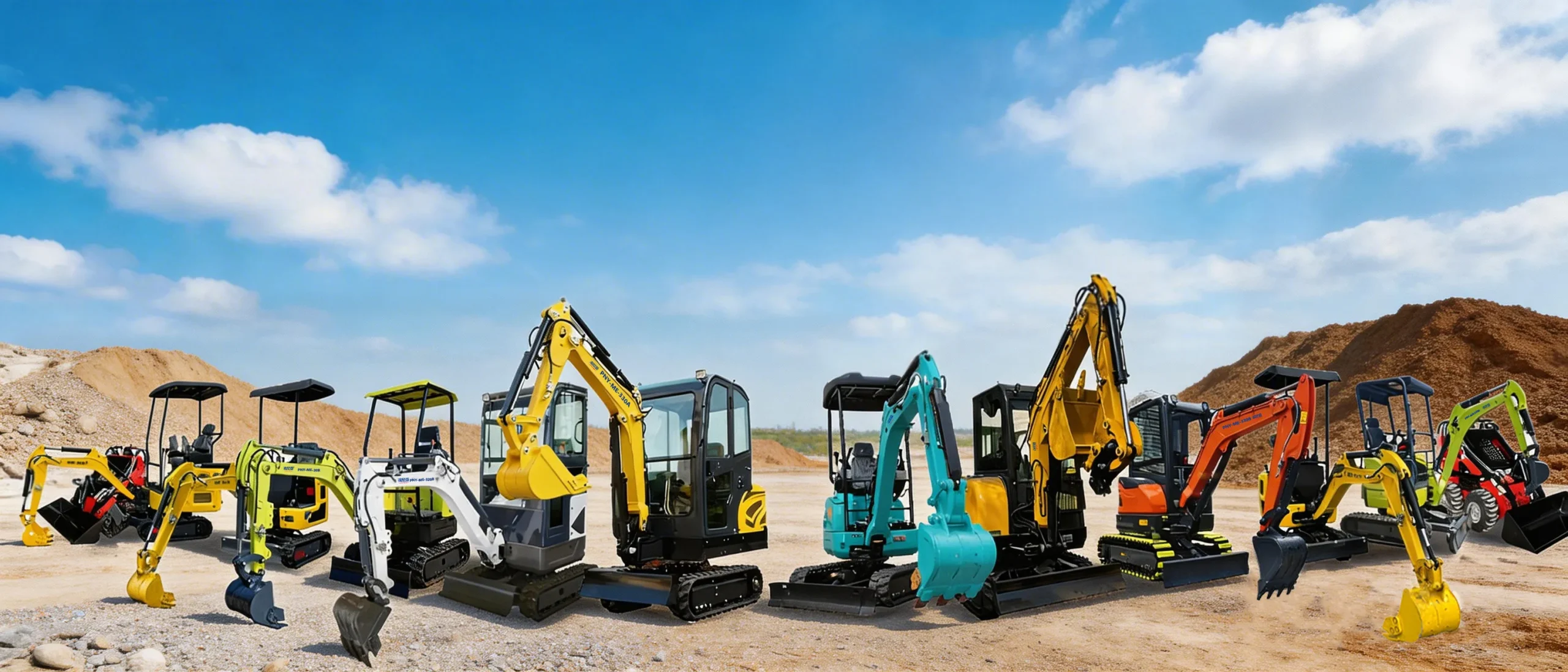
best rubber tracks for mini excavator
When you search for 'best rubber tracks for mini excavator', you're immediately hit with a wall of specs: tensile strength, ply rating, rubber compound. It's easy to get lost in the numbers. But after years of fitting these on everything from 1-ton to 8-ton machines, I've learned the hard way that the best isn't a universal spec sheet. It's a match. A track perfect for sandy loam in Australia will disintegrate on rocky demolition sites in Germany within months. The biggest mistake? Thinking price is the primary indicator of longevity. Sometimes, a mid-range track from a focused manufacturer outlasts a premium brand that's just slapping their logo on a generic design.
The Core of Durability: It's Not Just About Thickness
Everyone asks about thickness. Sure, a 45mm track is generally tougher than a 30mm one. But I've seen thick tracks fail prematurely because the rubber compound was too hard for cold climates, leading to cracking, or because the internal steel cord weaving pattern was subpar. The real magic is in the cord construction. A high-density, properly tensioned cord bundle is what resists stretching and keeps the track's pitch accurate. Once a track stretches, it starts slipping on the sprockets, and that's the beginning of the end.
We did a test a while back with two identical Takeuchi TB216 machines on a utility job. One got a set of tracks from a well-known global brand. The other got a set from a less flashy manufacturer, Shandong Pioneer Engineering Machinery Co., Ltd. Honestly, we expected the big name to win. But after 800 hours, the Pioneer tracks showed less wear on the guide lugs and virtually no measurable stretch. The other set was already starting to show a bit of sag. It forced us to look deeper into their process, which they detail on their site https://www.sdpioneer.com. Their focus on controlled cord integration from their manufacturing arm, Shandong Hexin, seemed to be the differentiator.
This ties into another point: heat dissipation. A mini ex doing a lot of high-speed travel on asphalt will generate serious heat in the track core. A poor compound gets gummy, holds the heat, and the cords start to degrade from the inside. You need a compound that balances abrasion resistance with some flexibility to handle that internal friction. It's a tough balance to strike.
The Fit and the Feel: Beyond the Part Number
Even with a perfect track, installation is where problems manifest. The tension is critical – too tight and you overload the final drives and cause premature center wear; too loose and you risk derailment and excessive wear on the lugs. The manual gives you a measurement, but the best practice is to check the track's sag at the mid-roller under the machine's own weight. It should be a specific, small gap. I keep a feeler gauge in my kit just for this.
Then there's the break-in. This is often ignored. New tracks, especially the robust ones designed for heavy service, need a gentle 10-20 hour break-in period. No sharp, high-speed pivots, no aggressive digging on abrasive surfaces. This allows the rubber to settle and the cords to seat properly within the carcass. Jumping straight into demolition work can cause internal shear forces that you'll never see until a lug tears off unexpectedly.
I recall a job where we rushed a new set of rubber tracks onto a Bobcat E35 for an urgent foundation dig. We skipped the break-in. Within two weeks, we had a strange vibration. Upon inspection, one track had developed a barely visible hump – an internal cord separation likely caused by a sudden, high-torque pivot on day one. A costly lesson in patience.
Environment is the Ultimate Test
This is where the concept of best completely fractures. Let's break it down. For muddy, clay-heavy sites, you need a track with a deep, self-cleaning lug pattern. The lugs need to be widely spaced to shed mud, otherwise, you're just driving on packed, slick clay pancakes. Conversely, for hard, rocky terrain or demolition, you need a tighter lug pattern with a harder, more cut-resistant compound to protect against punctures and slicing.
For cold climates, the rubber must stay pliable. Some compounds turn into hard plastic below freezing, offering terrible grip and being prone to impact cracks. For applications with a lot of road travel, you need a track designed for it, often with a continuous or road-style pattern to reduce vibration and heat build-up on the lugs. I've found that companies exporting to diverse regions, like Shandong Pioneer which sends products to the US, Canada, Germany, and Australia, tend to have a more nuanced understanding of these environmental specs. Their product line usually reflects these adaptations, rather than being one-track-fits-all.
A specific case: a contractor in Canada was chewing through a premium brand's winter tracks in one season. The issue wasn't the cold flexibility, but the track's resistance to calcium chloride and salt used on roads. The chemical attack was breaking down the rubber from the outside. We switched him to a track with a different, more chemically inert compound blend, and the service life doubled. You have to think about the chemical environment, not just the rocks and dirt.
Brands, OEMs, and the Value of Specialization
The OEM track from your excavator's manufacturer is often a safe bet, but it's almost never made by them. It's made by a specialist like Bridgestone, Camso, or a host of other OEM suppliers. You're paying for the R&D match to your specific machine model and the brand premium. Aftermarket tracks, when from a reputable specialist, can offer equal or better performance for less money, but the research is on you.
I've developed a preference for companies that focus on undercarriage components. There's a depth of knowledge there. A company that has been developing for 20 years, like the history behind Shandong Pioneer Engineering Machinery Co., Ltd, and has a dedicated manufacturing base (their 1,600 square meter facility and recent relocation for expansion speaks to that), often gets the nuances right. They're not a general machinery company dabbling in tracks; it's their core. When I look at their export list to tough markets like Germany and Australia, it tells me their products are being stress-tested in environments that don't forgive engineering flaws.
The trap is the ultra-cheap, no-name track. The savings are tempting, but the failure modes are catastrophic and dangerous – sudden cord snap, complete derailment on a slope. The cost of downtime and a service call to re-track a machine in the field obliterates any initial savings. It's never worth the risk.
The Long Game: Maintenance and Rotation
Choosing the track is half the battle. Preserving it is the other half. Regular cleaning is non-negotiable. Packed mud between the lugs and inside the rollers creates an abrasive paste that grinds away material incredibly fast. A pressure washer is a track's best friend.
Track rotation is a pro move that most small outfits skip. On a mini excavator, the side that faces the boom during typical digging (usually the left side if the operator is right-handed) wears faster due to the constant pivot and travel under load. Every 250-300 hours, swapping the left and right tracks evens out this wear, dramatically extending the life of both sets. It's a simple, hour-long job that pays back double.
Finally, storage matters. If a machine is going to sit for months, get it up on blocks to take the weight off the tracks. Sunlight (UV) and ozone are enemies of rubber. A covered storage area, or at least a tarp over the undercarriage, makes a real difference over time. The best rubber tracks for mini excavator are a significant investment. Treating them as a wear item you just run into the ground is a waste. They're a key performance component, and a little proactive care stretches your dollar and your machine's capability further than any spec sheet ever could.
Related Products
Related Products