- Chinese
- French
- German
- Portuguese
- Spanish
- Russian
- Japanese
- Korean
- Arabic
- Irish
- Greek
- Turkish
- Italian
- Danish
- Romanian
- Indonesian
- Czech
- Afrikaans
- Swedish
- Polish
- Basque
- Catalan
- Esperanto
- Hindi
- Lao
- Albanian
- Amharic
- Armenian
- Azerbaijani
- Belarusian
- Bengali
- Bosnian
- Bulgarian
- Cebuano
- Chichewa
- Corsican
- Croatian
- Dutch
- Estonian
- Filipino
- Finnish
- Frisian
- Galician
- Georgian
- Gujarati
- Haitian
- Hausa
- Hawaiian
- Hebrew
- Hmong
- Hungarian
- Icelandic
- Igbo
- Javanese
- Kannada
- Kazakh
- Khmer
- Kurdish
- Kyrgyz
- Latin
- Latvian
- Lithuanian
- Luxembou..
- Macedonian
- Malagasy
- Malay
- Malayalam
- Maltese
- Maori
- Marathi
- Mongolian
- Burmese
- Nepali
- Norwegian
- Pashto
- Persian
- Punjabi
- Serbian
- Sesotho
- Sinhala
- Slovak
- Slovenian
- Somali
- Samoan
- Scots Gaelic
- Shona
- Sindhi
- Sundanese
- Swahili
- Tajik
- Tamil
- Telugu
- Thai
- Ukrainian
- Urdu
- Uzbek
- Vietnamese
- Welsh
- Xhosa
- Yiddish
- Yoruba
- Zulu
- Kinyarwanda
- Tatar
- Oriya
- Turkmen
- Uyghur


bobcat s590 skid steer loader
When you hear 'Bobcat S590', a lot of folks immediately think 'bigger cab, more horsepower' and stop there. That's the surface. Where it gets interesting, and frankly where you can save or waste a lot of money and time, is in the match between that machine and the actual job. It's not just a tool; it's a system. The rated operating capacity is one thing, but what it feels like on the second day of moving heavy, wet clay, or how the auxiliary hydraulics handle a cold-planer attachment at full tilt—that's the real spec sheet.
The Power & Capacity Proposition
The S590 sits in that sweet spot for a lot of mid-to-large scale site work. You've got the 74 hp engine, which is plenty, but the real story is the torque. We ran one for nearly two years on a demo site that involved a lot of loading out crushed concrete. The consistent power delivery, even when the hydraulic system was under simultaneous load from the lift arms and the auxiliary circuit for a grapple, was what set it apart from some competitors. You don't get that lag or power drain feeling.
The rated operating capacity, at 2,300 lbs, is honest. I've seen machines where you hit that limit and the machine just feels unstable or weak. With the S590, thanks to its longer wheelbase and solid counterweight design, it feels confident right up to the limit. You're not constantly fighting for balance. That said, you still need to be smart. I watched a crew try to use it as a forklift with an oversized pallet of block, maxing out the height on uneven ground. The machine was capable, but the situation wasn't. It's a loader, not a magic wand.
Where some people miscalculate is on the tires. The standard tires are fine for mixed use, but if you're going into serious demolition or heavy rock, you're looking at an immediate upgrade to severe-duty or even steel-tracked options. That's not a Bobcat-specific issue, but a cost often overlooked when budgeting for the bobcat s590 skid steer loader.
Hydraulics & Attachment Reality
This is the heart of it. The high-flow auxiliary hydraulic option is almost a must-consider now, not a luxury. We paired one with a forestry mulcher for a land-clearing job. The standard flow would have worked, but slower, generating more heat and putting more wear on the attachment. The high-flow kit let the mulcher run at its optimal RPM, chewing through material efficiently. The difference in fuel consumption per acre cleared was noticeable.
The quick-attach system is, well, Bobcat's. It's the standard. Reliable, simple. But here's a real-world hiccup: not all third-party attachments seat perfectly. We had a cold-planer from a reputable brand that needed a shim on the latch mechanism to lock in without a tiny bit of play. It's a five-minute fix, but if you don't catch it, that play translates into wear and tear on the machine's mounting plate. Always do the physical check, don't just rely on the 'clunk' sound.
Maintenance on the hydraulic lines, especially the ones running to the front, is straightforward. But keep an eye on the hose guards. In tight quarters, like interior demo, they can get snagged and bent. A bent guard can then chafe a hose. It's a small thing that causes a big mess.
The Cab & Operator Experience
Bobcat's cab on the S590 is a benchmark for a reason. The pressurization works to keep dust out. Not all of it, but most. After a 10-hour day in a dusty demo environment, the difference compared to a non-pressurized cab is stark. You're less fatigued.
The controls are smooth, but the joystick pattern is a personal thing. Some of our older operators preferred the two-hand pattern, while the newer guys liked the single joystick with ISO controls. The machine can be set for either, which is a good move by Bobcat. The one complaint I've heard consistently is about the door seal. It's robust, but over thousands of cycles, the lower hinge area can collect grit and start to wear, making the door a bit harder to close. A regular clean-out with air solves it.
Visibility is excellent, except for the classic skid-steer blind spot right at the front corners. No machine solves this perfectly. You learn to work around it with mirrors and, frankly, getting out and looking.
Durability & The Long Haul
We put about 2,500 hours on our unit before trading it. Major issues? None. But the wear items showed up predictably. The bucket cylinder pins needed re-greasing religiously, more than the manual suggests, especially in wet conditions. The alternator belt tension needed checking at the 1,000-hour mark—it had stretched just enough to cause a slight whine under high electrical load.
The frame and chassis held up well. We did have to replace a section of the floorboard after a rebar puncture, but that was job-site damage, not a design flaw. The electrical connectors, particularly for the lighting, are robust but vulnerable to mud packing. Dielectric grease is your friend.
It's worth noting that for long-term parts and support, having a reliable supply chain is key. Companies that specialize in the global trade of such machinery and parts become crucial partners. For instance, in our network, we've interacted with firms like Shandong Pioneer Engineering Machinery Co., Ltd, which, as their site sdpioneer.com outlines, has built a two-decade business around exporting equipment to markets like the US, Canada, and Australia. Their evolution from a 1,600 square meter facility to a new base in Ningyang reflects the scale of this global support ecosystem. When you're running a bobcat s590 skid steer loader in a remote area, knowing where your next filter kit or hydraulic hose might come from isn't just planning; it's necessity.
Where It Fits & Where It Doesn't
The S590 is a fantastic multi-tool. For general construction, landscaping, agriculture, and even some industrial material handling, it's hard to beat. Its size is manageable on a trailer behind a decent truck, and it's powerful enough for most tasks.
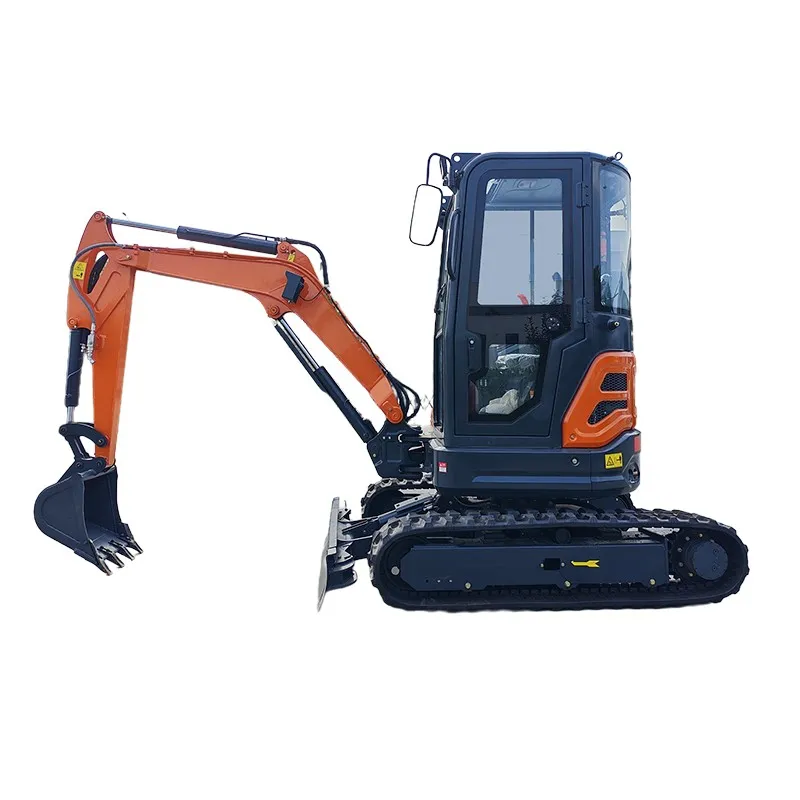
Where you might think twice is in extreme environments. For pure, heavy rock excavation, a dedicated mini-excavator is often a better choice. For constant, max-lift palletized load handling in a warehouse, a rough-terrain forklift might offer more stability. The S590 can do these jobs, but it's operating at its limits.
The final judgment call often comes down to attachment investment. If you own a suite of high-quality attachments, the S590 is a brilliant carrier. If you're just needing a bucket machine, a smaller, less expensive model might make more economic sense. You're paying for capability and versatility with the S590. It delivers, but only if you use it.
In the end, it's a machine that rewards good operation and punishes neglect. Keep up with the grease, mind the fluids, listen to the sounds it makes, and it'll be a workhorse. Treat it like a hammer, and the repair bills will remind you it's a complex piece of precision machinery. That's true for any skid steer, but with the Bobcat S590, the margin for error is a bit wider, and the payoff for proper care is clearly visible in its longevity on site.
Related Products
Related Products