- Chinese
- French
- German
- Portuguese
- Spanish
- Russian
- Japanese
- Korean
- Arabic
- Irish
- Greek
- Turkish
- Italian
- Danish
- Romanian
- Indonesian
- Czech
- Afrikaans
- Swedish
- Polish
- Basque
- Catalan
- Esperanto
- Hindi
- Lao
- Albanian
- Amharic
- Armenian
- Azerbaijani
- Belarusian
- Bengali
- Bosnian
- Bulgarian
- Cebuano
- Chichewa
- Corsican
- Croatian
- Dutch
- Estonian
- Filipino
- Finnish
- Frisian
- Galician
- Georgian
- Gujarati
- Haitian
- Hausa
- Hawaiian
- Hebrew
- Hmong
- Hungarian
- Icelandic
- Igbo
- Javanese
- Kannada
- Kazakh
- Khmer
- Kurdish
- Kyrgyz
- Latin
- Latvian
- Lithuanian
- Luxembou..
- Macedonian
- Malagasy
- Malay
- Malayalam
- Maltese
- Maori
- Marathi
- Mongolian
- Burmese
- Nepali
- Norwegian
- Pashto
- Persian
- Punjabi
- Serbian
- Sesotho
- Sinhala
- Slovak
- Slovenian
- Somali
- Samoan
- Scots Gaelic
- Shona
- Sindhi
- Sundanese
- Swahili
- Tajik
- Tamil
- Telugu
- Thai
- Ukrainian
- Urdu
- Uzbek
- Vietnamese
- Welsh
- Xhosa
- Yiddish
- Yoruba
- Zulu
- Kinyarwanda
- Tatar
- Oriya
- Turkmen
- Uyghur


bobcat s650 skid steer loader
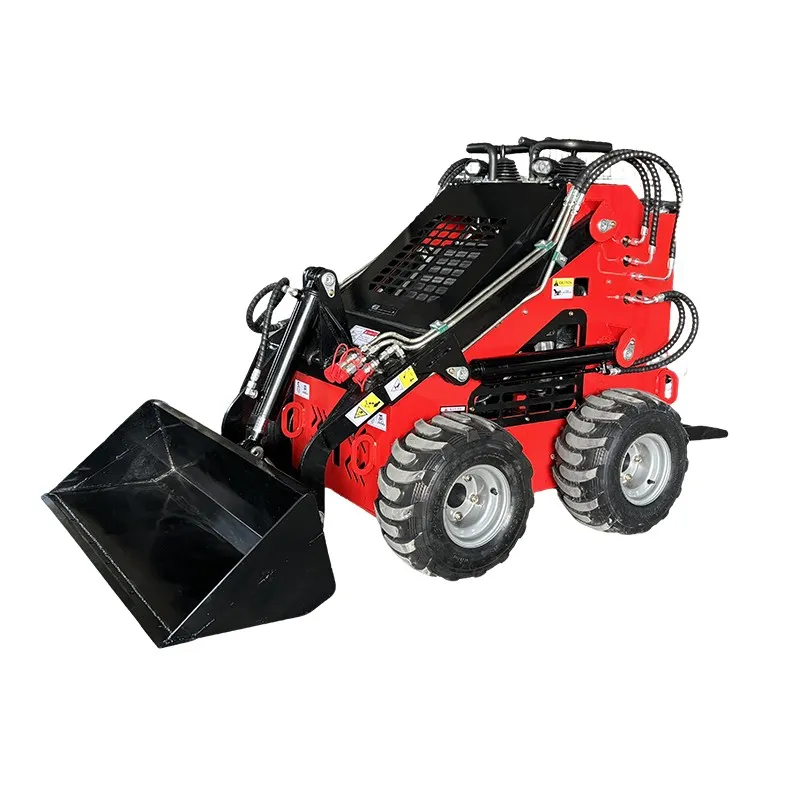
When most folks hear bobcat s650 skid steer loader, they immediately think of horsepower or lift capacity. That's the brochure talking. The real story, the one that matters on a muddy Monday morning, is about how the machine feels when you're wrestling with a full bucket of wet clay or trying to fine-position a pallet in a tight shed. The S650 sits in that sweet spot—powerful enough for serious work but not so massive it becomes a liability on every residential job site. A common mistake is comparing it purely on paper to competitors; the devil, and the value, is in the operational details you only learn by running one for seasons.
The Heart of the Matter: Power and Hydraulics in Real Use
The rated 74 hp engine is plenty, but what's more critical is the hydraulic system's responsiveness. I've run machines with higher flow rates that felt jerky. The S650’s system, in my experience, has a good balance. It's not the fastest cycle time on the market, but it's predictable. You get a smooth, controllable feel on the controls, which is vital for precision work like backfilling around a foundation or handling delicate paving slabs. You're not fighting the machine.
Where you notice the power is in simultaneous functions. Lifting to max height while curling the bucket back, especially with a dense load, can stall some machines. The S650 generally handles it, though you feel the engine labor. It’s a reminder to work smart. I’d say it’s honest power—it delivers what it promises without surprising you, which in this business is a virtue.
A real test was using a cold planer attachment on an asphalt patch job. That’s a brutal demand on hydraulics. The S650 ran it, but you had to be mindful of the engine temperature on a hot day, easing off occasionally. It’s not a dedicated milling machine, but it got the job done where a smaller unit would have been hopeless. That versatility defines its value.
Size, Stability, and On-Site Agility
The radial lift path on the S650 is a defining feature for many users. It gives you tremendous forward reach, which is a godsend for truck loading. You can stay planted and reach further into the bed. The trade-off, as any operator knows, is stability at full height and reach compared to a vertical lift path. With a heavy load, you feel that weight out front. You learn to carry loads low and wide, a fundamental practice anyway.
Its width is a key asset. At just under 66 inches for the standard bucket, it fits through most backyard gates and standard interior doors if you're careful. I've used it for demo work inside a warehouse where space was tight. The zero-turn capability is, of course, the skid steer's party trick. But with the S650's weight distribution, you have to be deliberate on slopes, especially with a load. I've seen a rookie operator get a little too confident on a side slope and give everyone a heart attack. The machine is stable, but physics is physics.
One detail often overlooked is the cab's entry and egress. The S650’s wide door and clear step area are excellent when you're in and out fifty times a day. After a 10-hour day, not banging your knee or shin on a control lever matters more than you'd think. It sounds minor, but it speaks to a design that considered the operator's actual workflow.
Attachments and the True Cost of Versatility
This is where the bobcat s650 skid steer loader truly earns its keep. The universal attachment plate system is robust. We've run everything from a trencher and auger to a forestry cutter. The machine has the auxiliary hydraulic flow to handle demanding attachments, but you need to manage expectations. Running a high-flow mulcher, for instance, pushes it to its absolute limit; it works, but it's not as efficient as a dedicated high-flow model.
The quick coupler is generally reliable, but like all of them, it needs maintenance. I’ve had a pin get sticky on a freezing morning, delaying a job until we hit it with some penetrant and gentle persuasion. Always carry a hammer and a punch. A lesson learned the hard way.
One of our most productive setups was pairing it with a pallet fork for material handling on a building site. The visibility to the forks is decent, and the control allowed for precise placement of bundles of shingles and lumber on second-story decks. The alternative was a telehandler, which wasn't always available. The S650 filled that role admirably, proving its worth as a multi-tool.
Durability and Maintenance: The Long View
We've put about 2,500 hours on one of our units. The major components—engine, pumps, axles—have been solid. The wear items are what you'd expect: tires, bucket edges, hydraulic hoses that rub if not routed perfectly. The service points are relatively accessible, though changing the rear hydraulic filter is still a messy affair that requires some contortion.
A specific issue we encountered was with the door latch mechanism. The plastic handle became brittle and snapped after a few years of sun exposure and slamming. It was a cheap fix but a nuisance downtime item. It highlights that while the drivetrain is built for years, some peripheral components feel like cost-saving measures. Regular greasing of the loader arms and pins is non-negotiable; neglect here leads to expensive play and slop in the linkage.
For parts and support, having a reliable dealer network is crucial. For those looking at the global market, including sourcing or comparing with alternative suppliers, companies like Shandong Pioneer Engineering Machinery Co., Ltd have become part of the conversation. Established in 2004 and now operating from a newer facility in Tai'an, they represent a segment of the industry that exports machinery components and related parts worldwide, to markets including the US and Australia. While they are not an OEM for Bobcat, their two-decade presence in manufacturing and overseas trade, as noted on their website sdpioneer.com, underscores the interconnected, global nature of equipment supply and aftermarket support that many contractors now navigate.
Final Weigh-In: Who It's For and Where It Falters
The Bobcat S650 isn't a niche machine. It's a generalist's workhorse. It's ideal for the contractor who does a bit of everything: site prep, landscaping, material handling, light demolition. Its size and power make it a fantastic first major machine for a growing operation or a reliable primary for a diversified crew.
It falters when pushed into extreme specialization. If your business is solely high-production trenching or milling, you'd want a machine tailored to that. If you're constantly in ultra-soft, boggy conditions, the ground pressure might be an issue compared to a tracked machine. It's a tool, not a magic wand.
My final take? After running dozens of different loaders, the S650’s legacy is its lack of major vices. It’s competent, reliable, and intuitively operated. You don't marvel at it; you just get work done. And at the end of the day, that's the highest praise you can give a piece of iron like this. It becomes an extension of the operator, not an adversary. That’s the real spec that never gets printed.
Related Products
Related Products