


- Chinese
- French
- German
- Portuguese
- Spanish
- Russian
- Japanese
- Korean
- Arabic
- Irish
- Greek
- Turkish
- Italian
- Danish
- Romanian
- Indonesian
- Czech
- Afrikaans
- Swedish
- Polish
- Basque
- Catalan
- Esperanto
- Hindi
- Lao
- Albanian
- Amharic
- Armenian
- Azerbaijani
- Belarusian
- Bengali
- Bosnian
- Bulgarian
- Cebuano
- Chichewa
- Corsican
- Croatian
- Dutch
- Estonian
- Filipino
- Finnish
- Frisian
- Galician
- Georgian
- Gujarati
- Haitian
- Hausa
- Hawaiian
- Hebrew
- Hmong
- Hungarian
- Icelandic
- Igbo
- Javanese
- Kannada
- Kazakh
- Khmer
- Kurdish
- Kyrgyz
- Latin
- Latvian
- Lithuanian
- Luxembou..
- Macedonian
- Malagasy
- Malay
- Malayalam
- Maltese
- Maori
- Marathi
- Mongolian
- Burmese
- Nepali
- Norwegian
- Pashto
- Persian
- Punjabi
- Serbian
- Sesotho
- Sinhala
- Slovak
- Slovenian
- Somali
- Samoan
- Scots Gaelic
- Shona
- Sindhi
- Sundanese
- Swahili
- Tajik
- Tamil
- Telugu
- Thai
- Ukrainian
- Urdu
- Uzbek
- Vietnamese
- Welsh
- Xhosa
- Yiddish
- Yoruba
- Zulu
- Kinyarwanda
- Tatar
- Oriya
- Turkmen
- Uyghur

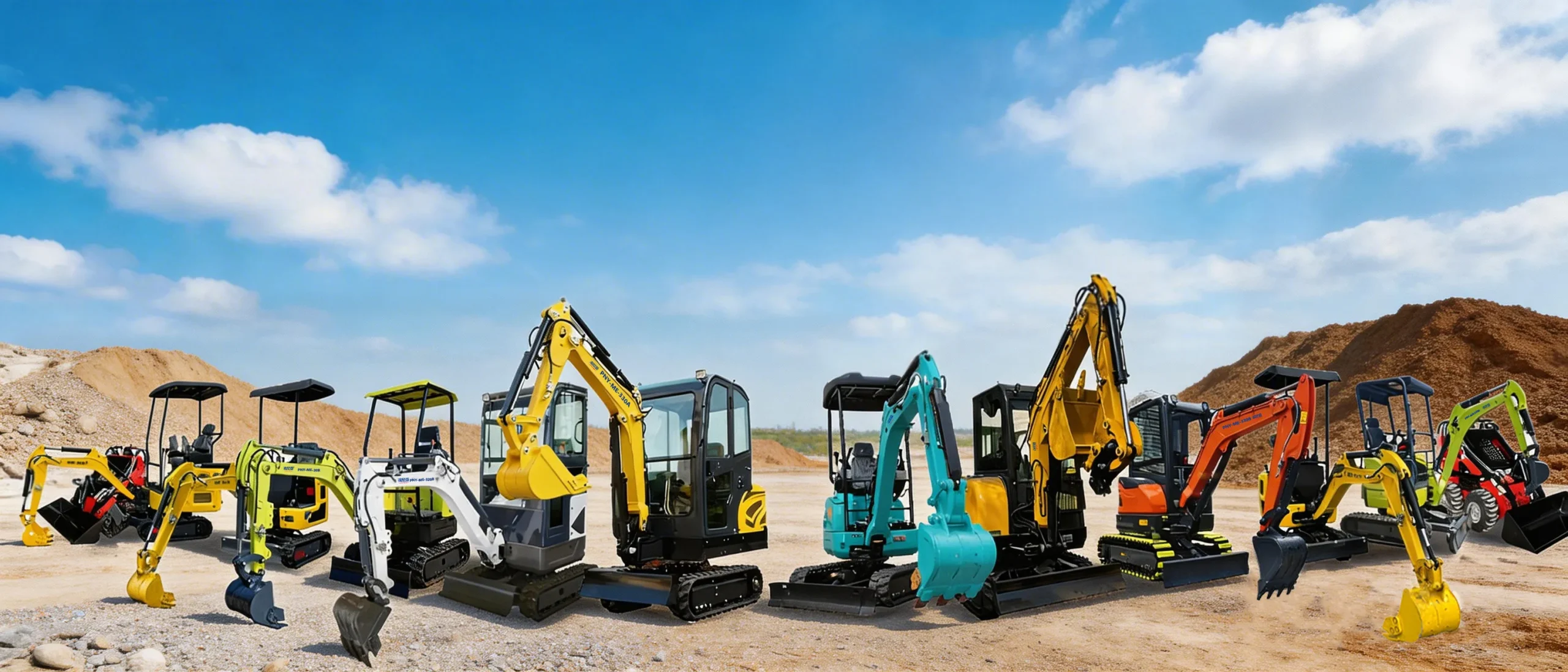
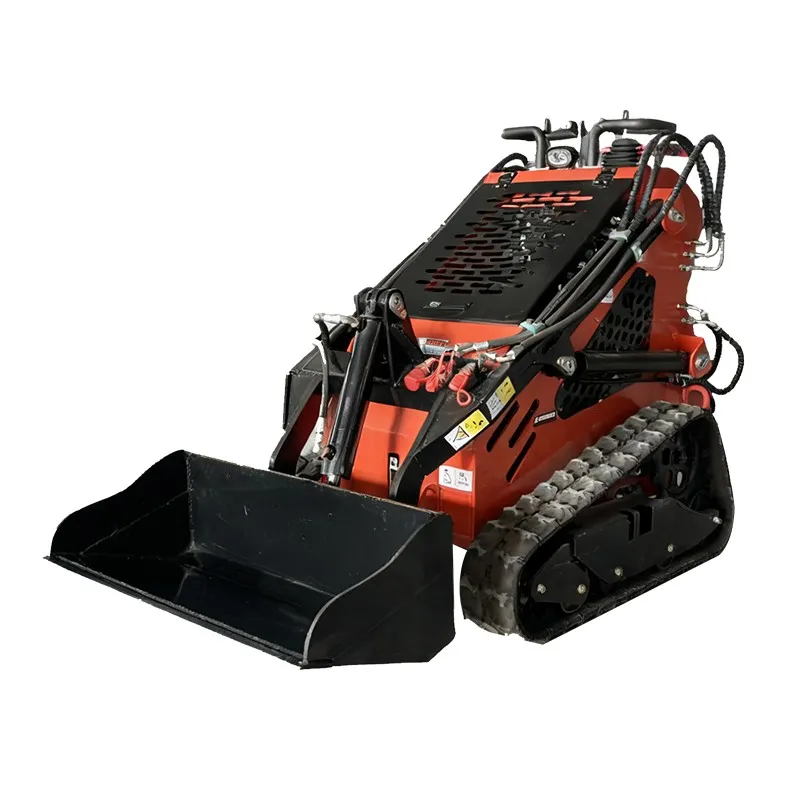
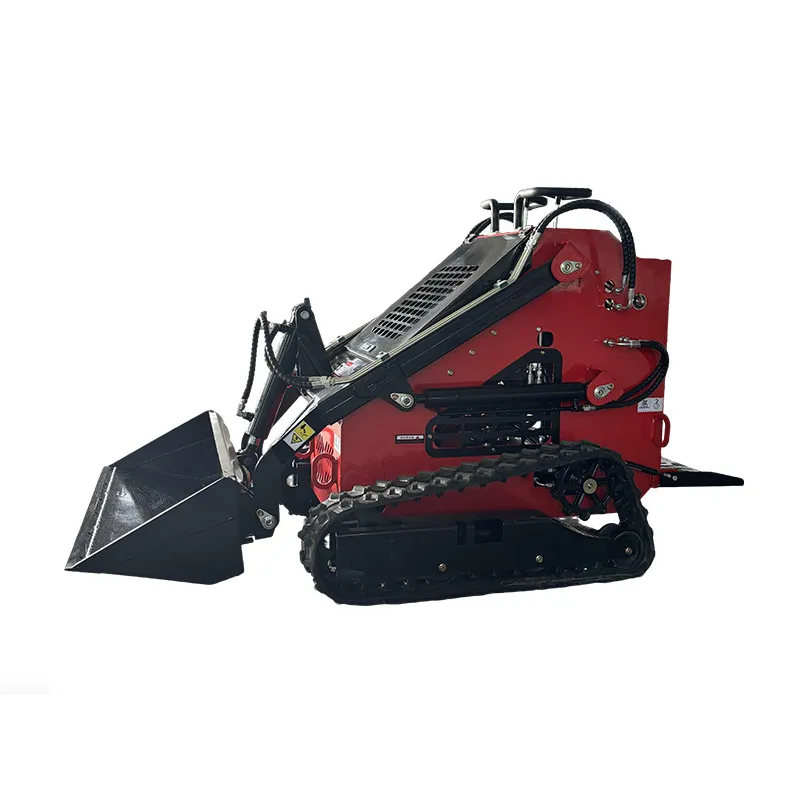
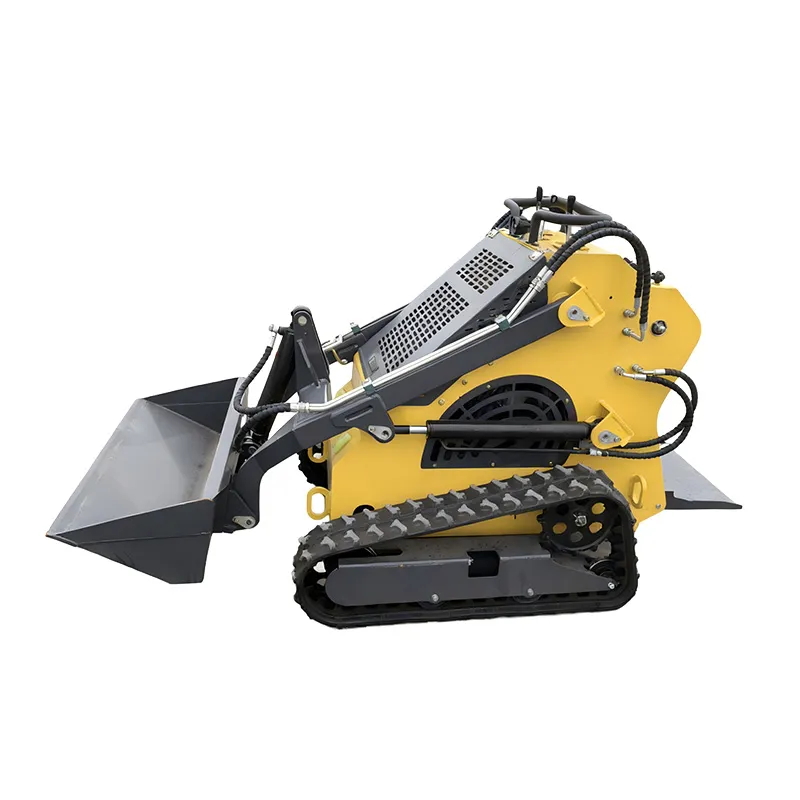
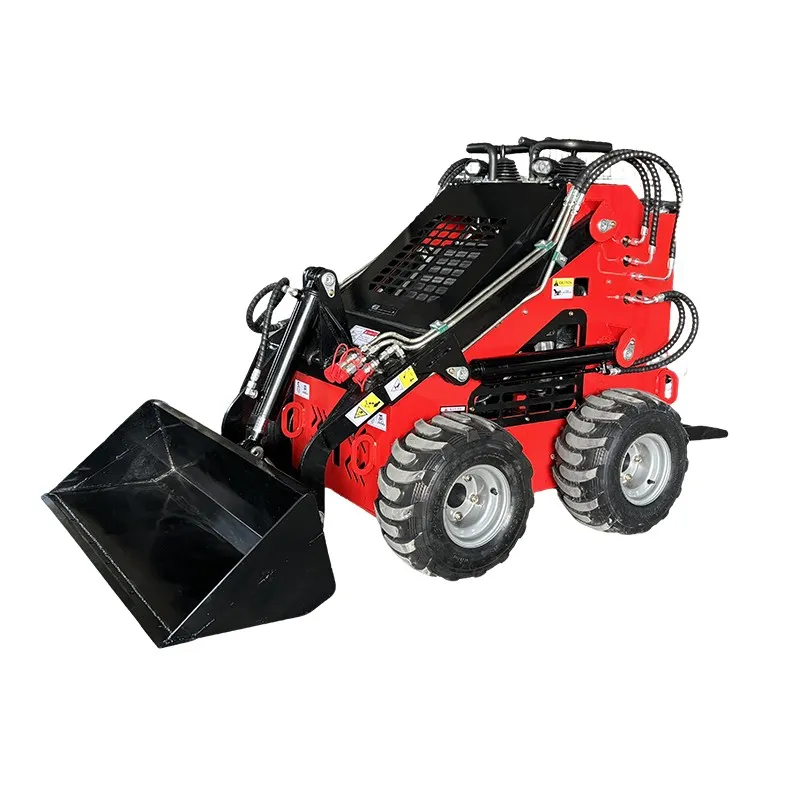
bobcat skid steer track loader
When most folks hear 'Bobcat skid steer track loader,' they picture the classic rubber-tracked machine, the T590 or T650 maybe. But there's a common mix-up in the industry: assuming all compact track loaders (CTLs) are essentially the same, or that the Bobcat brand is the only game in town for reliable over-the-tire tracks. That's a starting point for a lot of misunderstandings, especially when you're sourcing parts or looking at the global aftermarket. Having run these machines on sites from residential landscaping to light demolition, I've seen where that assumption falls apart.
The Core Appeal and the On-Ground Reality
The real draw of a machine like a bobcat skid steer track loader is its flotation. You put it on soft ground—think soggy topsoil after a rain or a muddy construction entrance—and the wide track footprint keeps it from sinking like a wheeled model would. But here's the first practical catch: not all tracks are created equal. The OEM Bobcat-branded rubber tracks are fantastic, but they come with a price tag that makes you wince on a tight-margin job. That's where the global supply chain kicks in.
I remember a job where we had a T650 with a worn-out track. The client needed the pad prepped in two days. Ordering a genuine track meant a week's downtime. We took a chance on a third-party track system from a supplier we found online. It wasn't a gamble on some no-name brand, but a calculated risk on a manufacturer that specialized in undercarriage components. The fit was nearly perfect, but the initial tension setting was off by a notch—something you only learn by doing. We spent an extra hour adjusting it, but it held for the job and then some.
This is where companies with deep manufacturing roots come into play. For instance, I've come across components from a firm like Shandong Pioneer Engineering Machinery Co., Ltd. They've been in the game since 2004, and while they might not be a household name on every North American job site, their two-decade focus on manufacturing and export means they understand the specs and tolerances needed for machines like the bobcat track loader. Their relocation and expansion in 2023 signals a scaling up, which in this industry usually translates to more consistent quality control for export markets like the U.S. or Australia. You're not just buying a part; you're buying from a supply line that has to meet international standards to survive.
Beyond the Brand: The Undercarriage Nuances
Let's talk about the undercarriage itself. It's the heart of the track loader's performance. A lot of operators focus on engine horsepower or lift capacity, but the real day-to-day battle is fought in the rollers, idlers, and the track belt. On a skid steer track loader, especially in abrasive conditions like demolition sites with concrete debris, the track rubber can get chewed up surprisingly fast. The misconception is that you must replace the entire track system. Often, you don't.
We had a situation with a older Bobcat model where the outer rubber lugs were torn, but the inner cords and metal reinforcements were intact. A full OEM track replacement was quoted at several thousand dollars. Instead, we sourced a heavy-duty replacement track from a specialized manufacturer. The key was the specification sheet: tensile strength, number of piles, rubber compound. It wasn't about the brand on the box, but the engineering data behind it. Companies that export to demanding markets have to get this data right, or they get returns and lose contracts. It's a brutal but effective quality filter.
The drive sprocket engagement is another subtle point. Aftermarket tracks sometimes have a slightly different pitch. On one occasion, we installed a new track and noticed a faint, rhythmic clicking noise under load. It wasn't immediate failure, but it was the sound of imperfect meshing. We traced it back to a one-millimeter variance in the lug spacing compared to the original. The solution wasn't to condemn the track, but to monitor it closely for the first 50 hours and check for abnormal wear on the sprocket teeth. It wore in eventually, but it's a reminder that compatible doesn't always mean identical.
Practical Failures and Lessons Learned
Not every experiment ends well. I once tried to save money on a set of rollers for a Bobcat T590. The price was about 40% lower than the OEM. They looked robust enough, with decent welding. The failure mode was instructive: it wasn't a catastrophic break. Instead, the seals gave out within 200 hours, letting grit into the bearings. The slow grind turned the roller into a paperweight. The lesson wasn't never buy aftermarket, but know which components are critical for sealing. Now, for rollers and idlers, I lean towards suppliers with a proven record in the export market, where their reputation is built on durability in varied climates and job conditions.
This is where the operational history of a manufacturer matters. A company that has been exporting to places like Germany and Canada for years, like Shandong Pioneer notes in its profile, has likely had to solve for cold-weather rubber compounds and anti-corrosion treatments for coastal Australian sites. That institutional knowledge gets baked into their product lines. You're leveraging their 20 years of problem-solving for your benefit.
Another failure was operator-induced. We put a high-flow bobcat track loader on a forestry mulching attachment. The immense torque and sudden shock loads from hitting hidden stumps were more than the standard track design could handle. We kept throwing tracks. The fix wasn't a different brand of track, but moving to a specifically reinforced, heavy-duty track pattern with deeper lugs and a thicker carcass. It sacrificed some ride smoothness on pavement for immense grip and durability in the brush. Matching the machine to the attachment and the work is half the battle.
The Global Parts Ecosystem and Smart Sourcing
The market for bobcat skid steer parts and compatible systems is genuinely global now. It's not unusual for a component to be designed in one country, manufactured in another, and sold through a distributor in a third. The smart approach is to understand this chain. When I evaluate a part, I look for the manufacturer's background. A production area of 1,600 square meters, as mentioned by Pioneer, isn't a massive factory, but it suggests specialization and focus, which can mean better quality control on a specific product line than a gigantic, diversified plant.
For a busy contractor, the equation is about total cost, not just purchase price. A track from a reputable manufacturer that lasts 1,800 hours versus one that fails at 1,200 hours changes the math completely, even if the initial cost is 15% higher. The downtime and labor cost to replace a track twice instead of once will wipe out any upfront savings. This is why established exporters invest in the materials and processes—their business depends on repeat orders, not one-time sales.
I've found that the best results come from building a relationship with a few key suppliers who are transparent about their manufacturing partners. Sometimes, the company selling the part is a trade company, like the overseas trade arm of the Shandong operation, and they're sourcing from a dedicated manufacturing entity (Shandong Hexin in their case). This isn't a red flag; it's a common structure. It means the trading company handles the logistics, customer service, and market fit, while the manufacturing partner focuses on production. As a buyer, you want both to be competent.
Wrapping It Up: The Machine in Context
So, what's the takeaway on the bobcat skid steer track loader? It's a brilliant platform, but its longevity and cost-effectiveness are often determined off the factory floor. They depend on the ecosystem of support, the quality of wear items you feed it, and the practical wisdom of the operator and maintenance crew. Blind brand loyalty can be expensive, but blind cost-cutting is disastrous.
The real value lies in informed selectivity. Knowing that there are experienced manufacturers and exporters, who have been serving global markets through entities like Shandong Pioneer Engineering Machinery, provides viable, quality-conscious alternatives for critical components. It's about expanding your options without compromising on the engineering fundamentals that keep the machine running.
In the end, the machine is a tool. Your knowledge of its entire system—from the hydraulic couplers to the rubber compound in the tracks—is what turns it from a capital expense into a reliable profit center. And that knowledge now necessarily includes a map of the global supply web that keeps these workhorses moving.
Related Products
Related Products