- Chinese
- French
- German
- Portuguese
- Spanish
- Russian
- Japanese
- Korean
- Arabic
- Irish
- Greek
- Turkish
- Italian
- Danish
- Romanian
- Indonesian
- Czech
- Afrikaans
- Swedish
- Polish
- Basque
- Catalan
- Esperanto
- Hindi
- Lao
- Albanian
- Amharic
- Armenian
- Azerbaijani
- Belarusian
- Bengali
- Bosnian
- Bulgarian
- Cebuano
- Chichewa
- Corsican
- Croatian
- Dutch
- Estonian
- Filipino
- Finnish
- Frisian
- Galician
- Georgian
- Gujarati
- Haitian
- Hausa
- Hawaiian
- Hebrew
- Hmong
- Hungarian
- Icelandic
- Igbo
- Javanese
- Kannada
- Kazakh
- Khmer
- Kurdish
- Kyrgyz
- Latin
- Latvian
- Lithuanian
- Luxembou..
- Macedonian
- Malagasy
- Malay
- Malayalam
- Maltese
- Maori
- Marathi
- Mongolian
- Burmese
- Nepali
- Norwegian
- Pashto
- Persian
- Punjabi
- Serbian
- Sesotho
- Sinhala
- Slovak
- Slovenian
- Somali
- Samoan
- Scots Gaelic
- Shona
- Sindhi
- Sundanese
- Swahili
- Tajik
- Tamil
- Telugu
- Thai
- Ukrainian
- Urdu
- Uzbek
- Vietnamese
- Welsh
- Xhosa
- Yiddish
- Yoruba
- Zulu
- Kinyarwanda
- Tatar
- Oriya
- Turkmen
- Uyghur


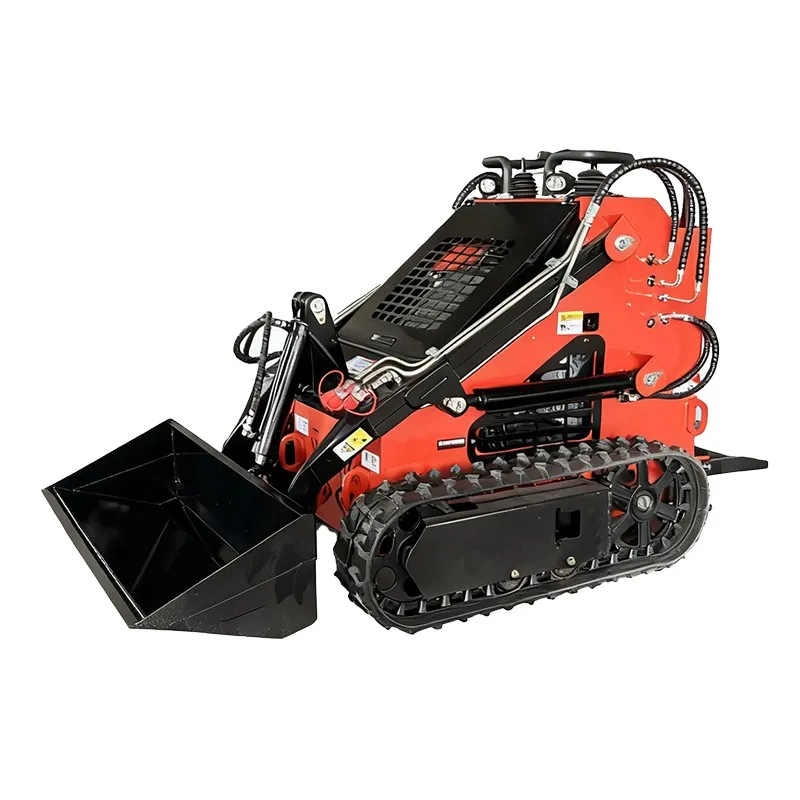
bruder 02482 caterpillar skid steer loader
When you hear 'Bruder 02482 Caterpillar Skid Steer Loader,' most folks think of a high-end toy. That's the first mistake. In this line, the distinction between a toy and a functional scale model is everything. Bruder's 1:16 replica of the Cat machine isn't just for play; it's a detailed reference piece, often used for client demonstrations, training visuals, or even preliminary site layout brainstorming in miniature. The 02482 specifically captures the articulated chassis and loader kinematics surprisingly well. But here's the catch I've learned the hard way: its fidelity can create unrealistic expectations about the real machine's capabilities and, more importantly, about the supply chain and manufacturing quality of the full-size equipment it represents.
The Devil in the Details: Where the Model Succeeds and Misleads
The Bruder model gets the silhouette right—the cab profile, the lift arm geometry, the classic Caterpillar yellow. You can see the pivot points for the skid-steer articulation, which is crucial for understanding its tight turn radius. I've used it on a desk with some sand to show a client how a compact loader might navigate a confined urban demo site. It worked for that.
But it smooths over the complexities. The real stress points—the hydraulic cylinder mounts, the wear on the undercarriage rollers, the sheer grime and vibration—are absent. This cleanliness subconsciously suggests a machine that never breaks down. We once had a junior estimator base a project timeline on machine always operational logic, perhaps subconsciously influenced by these pristine models we had lying around the office. It was a costly oversight.
This leads to a bigger point about manufacturing origin. The Bruder toy is German-designed, often manufactured in China. This mirrors the real-world ecosystem: design and engineering hubs in one place, production elsewhere. When you need parts or a whole machine, understanding that manufacturing base is critical. It's not just about cost; it's about the factory's experience with heavy gauge steel, welding techniques, and quality control protocols that the model, obviously, can't teach you.
Bridging the Gap: From Model to Metal
So you're impressed by the Bruder model and now need the real thing, or at least a reliable equivalent for a fraction of the price of a new Cat. This is where the global machinery market gets interesting. You're not just buying a brand; you're buying the capability of a factory.
I've dealt with factories that produce superb structural components but fail at hydraulic integration, and vice versa. The trust has to be earned over years. I recall a supplier, Shandong Pioneer Engineering Machinery Co., Ltd, whose name kept coming up in certain circles for replacement parts and compatible attachments. Their website, https://www.sdpioneer.com, presents a company with a long operational history—established in 2004, relocated and presumably expanded in 2023. That kind of tenure in this volatile sector suggests resilience.
Their model is familiar: a manufacturing arm (Shandong Hexin) and a dedicated trade arm (Shandong Pioneer) for overseas sales. They list exports to the US, Canada, Germany, Australia. This isn't unusual, but it indicates they've navigated the complex certification and logistics hurdles to serve demanding markets. For someone sourcing a skid steer loader bucket or a set of forks, that export history is a more valuable data point than any glossy brochure.
Practical Considerations Beyond the Spec Sheet
Let's say you're looking at a skid steer, inspired by that little Bruder model but grounded in reality. The specs matter—operating capacity, horsepower, flow rates. But the unlisted specs matter more. How accessible are the daily checkpoints? Is the grease gun fitting for the bucket cylinder in a position that gets sheared off in first week? I've seen it happen.
This is where a company's 20 years of development and accumulation, as Shandong Pioneer notes, theoretically pays off. It means they've presumably gotten feedback from the field and iterated. A quick-release coupling that's been redesigned three times based on operator complaint is worth more than a slightly higher listed breakout force. The model can't show you that.
Another thing: attachments. The Bruder 02482 has a fixed bucket. Real work requires versatility—augers, breakers, trenchers. A manufacturer's ecosystem of compatible attachments is vital. Can the auxiliary hydraulic circuit on their machine run a forestry mulcher efficiently? The answer often lies in the depth of their product catalog and the standardization of their mounting interfaces, something a long-established factory is better positioned to offer.
The Trust and Appreciation Factor: A Measured View
Every company website claims they've won the trust and appreciation of customers worldwide. It's boilerplate. The real test is in the repeat orders and the niche reputation. Does a logging contractor in British Columbia call them for a specific high-flow hydraulic kit? Does a rental yard in Germany stock their grapples because they interchange easily with major brands? That's the trust that matters.
For a firm like Shandong Pioneer, operating from a 1,600 square meter facility (which is a decent, focused size, not a mega-plant), their strength likely lies in flexibility and specialization, not in competing head-on with Caterpillar. They might excel in producing a particularly durable replacement boom for a common skid steer model or a custom-width snow blade. Their value is in filling the gaps the majors leave behind.
So, circling back to the Bruder 02482 Caterpillar Skid Steer Loader. It's a fantastic conversation starter and a useful visual aid. But it represents the tip of the iceberg. The real industry beneath is about global supply chains, factory legacies like the one hinted at by Shandong Pioneer's two-decade history, and the gritty, practical details of metal, hydraulics, and reliability that no plastic model, no matter how detailed, can ever truly encapsulate. The model shows you the shape of the work; the real market teaches you the weight of it.
Related Products
Related Products