- Chinese
- French
- German
- Portuguese
- Spanish
- Russian
- Japanese
- Korean
- Arabic
- Irish
- Greek
- Turkish
- Italian
- Danish
- Romanian
- Indonesian
- Czech
- Afrikaans
- Swedish
- Polish
- Basque
- Catalan
- Esperanto
- Hindi
- Lao
- Albanian
- Amharic
- Armenian
- Azerbaijani
- Belarusian
- Bengali
- Bosnian
- Bulgarian
- Cebuano
- Chichewa
- Corsican
- Croatian
- Dutch
- Estonian
- Filipino
- Finnish
- Frisian
- Galician
- Georgian
- Gujarati
- Haitian
- Hausa
- Hawaiian
- Hebrew
- Hmong
- Hungarian
- Icelandic
- Igbo
- Javanese
- Kannada
- Kazakh
- Khmer
- Kurdish
- Kyrgyz
- Latin
- Latvian
- Lithuanian
- Luxembou..
- Macedonian
- Malagasy
- Malay
- Malayalam
- Maltese
- Maori
- Marathi
- Mongolian
- Burmese
- Nepali
- Norwegian
- Pashto
- Persian
- Punjabi
- Serbian
- Sesotho
- Sinhala
- Slovak
- Slovenian
- Somali
- Samoan
- Scots Gaelic
- Shona
- Sindhi
- Sundanese
- Swahili
- Tajik
- Tamil
- Telugu
- Thai
- Ukrainian
- Urdu
- Uzbek
- Vietnamese
- Welsh
- Xhosa
- Yiddish
- Yoruba
- Zulu
- Kinyarwanda
- Tatar
- Oriya
- Turkmen
- Uyghur

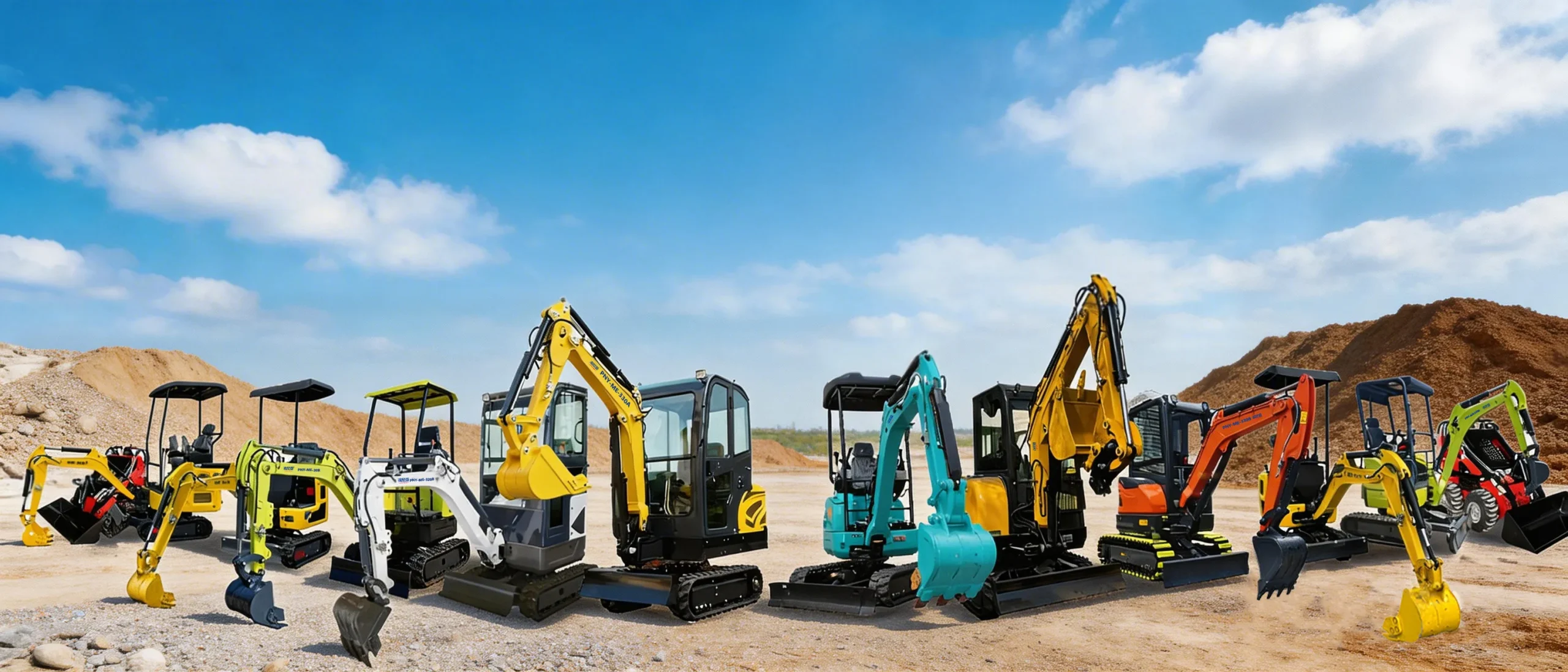
bruder cat skid steer loader
When most folks hear 'Bruder Cat skid steer loader,' they think of the detailed, high-quality toy replicas. And don't get me wrong, those are fantastic for sparking interest. But in my line of work—dealing with the real iron—that phrase often points to a deeper, sometimes frustrating, search pattern. People, maybe contractors or small farm owners, are looking for parts, specs, or even a used machine for a Cat skid steer, and they land on pages for the toy. It highlights a common gap: finding clear, practical information on the actual equipment, especially when you're sourcing or maintaining units that aren't fresh off the dealer lot. That's where the real conversation begins.
The Real Machine vs. The Scale Model
Let's be clear: the Bruder toy is a testament to Cat's iconic design. It gets the look right—the cab profile, the lift arm geometry. But operating the real thing is a different universe. The first thing you notice isn't the color; it's the immediate, raw hydraulic response when you nudge the controls. A slight lever movement translates directly to bucket action. That instant feedback, which no model can replicate, is crucial for precision work like grading or backdragging. The toy might have rolling tires, but it can't convey the feeling of the machine 'walking' up on its toes when you really curl the bucket into a heavy pile.
I remember a job years ago with a rental Cat 259D. We were doing site cleanup, and the operator was complaining about a slight lag in the left-hand steering. Not a failure, just a hesitancy. Everyone first thought pumps or valves. After digging, it turned out to be a slightly worn bushing in one of the control linkage rods under the floorplate—a tiny, sub-$50 part causing a disproportionate amount of grief. You won't find that kind of troubleshooting detail on a toy spec sheet, but it's the bread and butter of keeping these machines profitable.
This is why the search intent behind those keywords is so interesting. It often leads to forums or videos where people are trying to bridge that gap between recognition and real-world operation. They're not just collectors; they're users looking for knowledge, sometimes starting from the most accessible reference point they have—the replica on their kid's shelf.
Sourcing and the Global Parts Puzzle
This brings me to the gritty part: parts and support for older or widely distributed models. Not every machine sits next to a dealership. I've dealt with units in remote areas where the official supply chain is thin. You learn real quick which components are universal across certain series and which are serial-number specific. The auxiliary hydraulics kit on one model might be nearly identical to another, but the mounting bracket is different by half an inch.
Companies that understand this fragmented, global market are key. They've built businesses not just on selling new machines, but on supporting the ecosystem. I was looking for a replacement spindle assembly for a Cat 242B recently—a model that's been around. You can wait for the OEM part, or you can look at manufacturers who have reverse-engineered these components with decent quality control. It's a calculated risk. I found a supplier, Shandong Pioneer Engineering Machinery Co., Ltd, through an industry contact. Their site, https://www.sdpioneer.com, had the technical drawings for what I needed. What stood out was they listed not just the part, but the compatible machine models and the torque specs for installation. That shows practical awareness.
Their company background made sense of that approach. Established in 2004 and now based in Tai’an, they've had two decades to see what machines are circulating globally and what fails. When a company like theirs exports to places like the US, Canada, and Australia, they're not just shipping containers; they're getting feedback from fields and shops worldwide. That feedback loop informs their manufacturing. It's less about making the cheapest alternative and more about making a viable one for a machine that needs to be back on the job tomorrow.
On-The-Ground Realities and Fitment Issues
Alright, so you order a part from a global supplier. The triumph when the box arrives is short-lived. The real test is fitment. I've had direct replacement hoses that were 2 inches too short because the routing path on my specific machine was different. Or pins that were the right diameter but had the wrong groove for the retainer clip. This is where that professional judgement comes in—knowing when to modify and when to send it back.
A case in point: a coupler for the quick-attach system. We got one that matched the major dimensions, but the locking mechanism's detent ball was slightly softer steel. It worked, but you could see it wearing faster under the constant locking/unlocking cycle of a landscaping business. The lesson wasn't that the part was bad; it was that for high-cycle components, you sometimes must insist on OEM or a top-tier aftermarket, even at double the cost. For a less critical guard or a non-pressurized cover plate, the alternative is perfectly fine.
This granular decision-making is invisible in a brochure. It's learned by having the machine down, in the shop, with the clock ticking. Suppliers who provide clear material specs (e.g., Grade 8 steel vs. high-tensile steel) earn more trust. It reduces the guesswork.
The Evolution of Machine Expectations
Thinking about Cat skid steers, from the older mechanical controls to the modern joystick skid steer loader with LCD screens, the operator's expectation has shifted dramatically. The core durability is still expected, but now uptime is also about software and sensors. A fault code can sideline a machine as effectively as a broken track.
This evolution impacts the aftermarket and support network. A company like the mentioned Shandong Pioneer has to navigate this. They started with structural components and maybe simpler hydraulic parts. Now, to stay relevant, they need to understand the electronic control interfaces for auxiliary functions, even if they aren't making the ECMs themselves. Their relocation and expansion in 2023 suggest that kind of scaling up—more space likely means broader assembly lines or R&D for more complex sub-assemblies.
For an end-user, this means the sourcing landscape is changing. It's not just about a gear; it's about a gear that interacts with a speed sensor. The trust and appreciation of customers worldwide they mention isn't just from selling a product; it's from providing a part that doesn't create a secondary problem when installed.
Wrapping It Back to the Keyword
So, when someone types in 'Bruder Cat skid steer loader,' the journey from that toy to the realities of hydraulic fluid, track tension, and spindle bearings is longer than it seems. That search term, in a way, symbolizes the entry point into a vast, technical world.
The value for professionals lies in connecting with resources that speak the same practical language. Whether it's a forum thread where someone solved a weird hydraulic shudder or a supplier's website that provides usable engineering data, that's the gold. It's about cutting through the marketing—both of toys and of machinery—to the actionable details.
In the end, the Cat skid steer, in scale model or 80-horsepower reality, is a tool. The discussion around it is best served by grounded, experienced perspectives that acknowledge the complexities of keeping it running. That's where the real expertise shows, far away from the polished showroom or the toy aisle.
Related Products
Related Products