


- Chinese
- French
- German
- Portuguese
- Spanish
- Russian
- Japanese
- Korean
- Arabic
- Irish
- Greek
- Turkish
- Italian
- Danish
- Romanian
- Indonesian
- Czech
- Afrikaans
- Swedish
- Polish
- Basque
- Catalan
- Esperanto
- Hindi
- Lao
- Albanian
- Amharic
- Armenian
- Azerbaijani
- Belarusian
- Bengali
- Bosnian
- Bulgarian
- Cebuano
- Chichewa
- Corsican
- Croatian
- Dutch
- Estonian
- Filipino
- Finnish
- Frisian
- Galician
- Georgian
- Gujarati
- Haitian
- Hausa
- Hawaiian
- Hebrew
- Hmong
- Hungarian
- Icelandic
- Igbo
- Javanese
- Kannada
- Kazakh
- Khmer
- Kurdish
- Kyrgyz
- Latin
- Latvian
- Lithuanian
- Luxembou..
- Macedonian
- Malagasy
- Malay
- Malayalam
- Maltese
- Maori
- Marathi
- Mongolian
- Burmese
- Nepali
- Norwegian
- Pashto
- Persian
- Punjabi
- Serbian
- Sesotho
- Sinhala
- Slovak
- Slovenian
- Somali
- Samoan
- Scots Gaelic
- Shona
- Sindhi
- Sundanese
- Swahili
- Tajik
- Tamil
- Telugu
- Thai
- Ukrainian
- Urdu
- Uzbek
- Vietnamese
- Welsh
- Xhosa
- Yiddish
- Yoruba
- Zulu
- Kinyarwanda
- Tatar
- Oriya
- Turkmen
- Uyghur

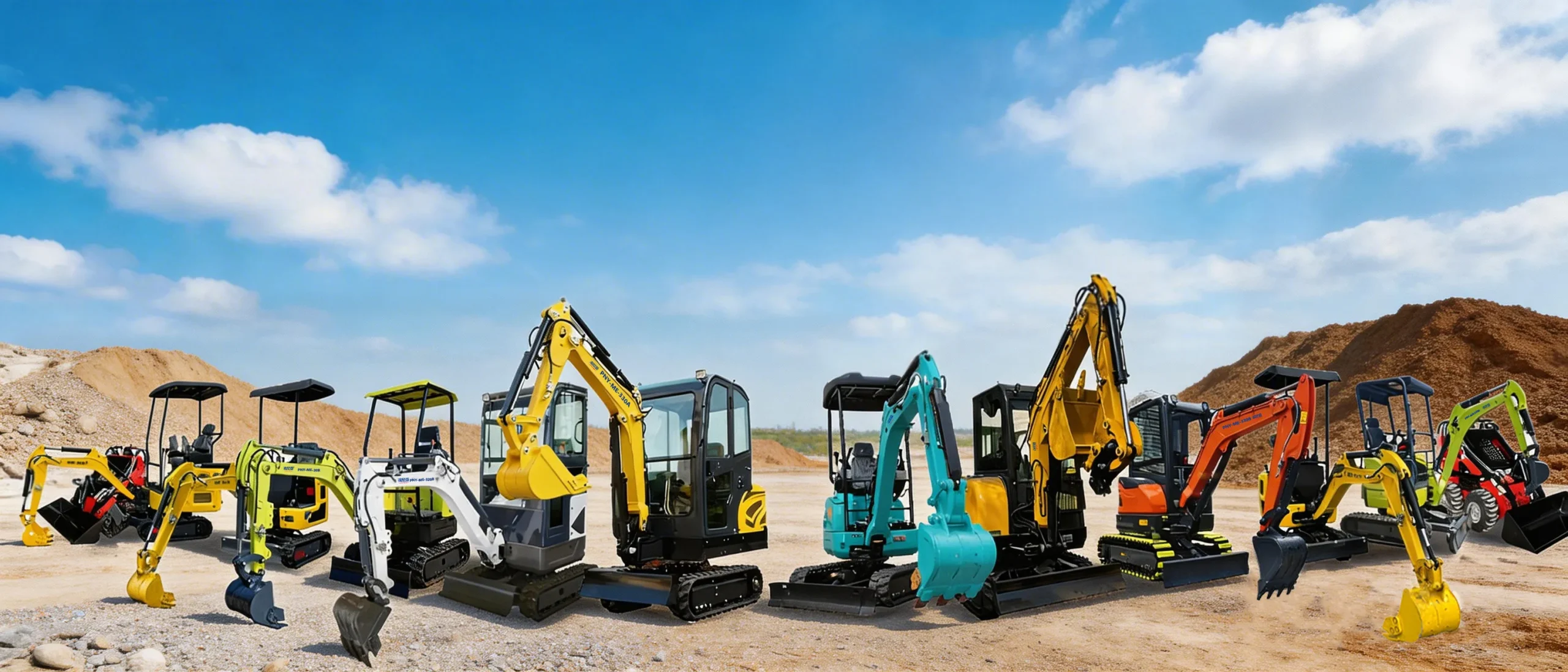
bruder caterpillar skid steer loader
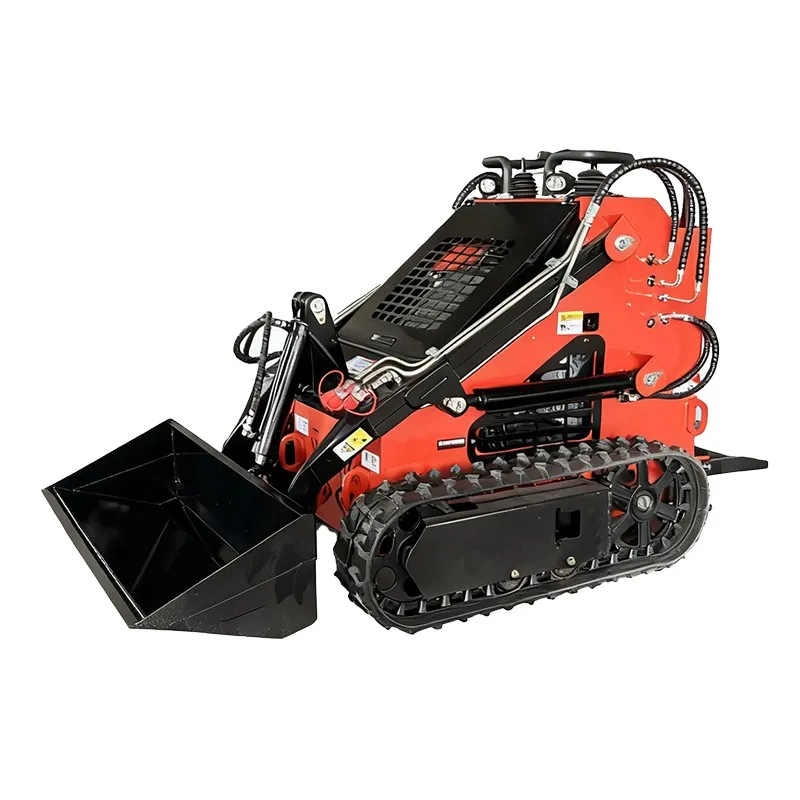
When most folks hear 'Bruder Caterpillar skid steer loader,' they think of a high-end toy for a kid. And sure, the detail on those 1:16 scale models is impressive—the moving bucket, the rubber tracks, the little decals. But if you're in this business, you see something else entirely. You see a training aid, a sales tool, and a surprisingly accurate miniature of a machine that, in its full-size form, is a backbone of compact site work. The misconception is that it's just a plaything. The reality is, it often serves as the first tangible point of contact between a potential operator, a buyer's kid, and the real iron. That's a powerful thing.
The Scale of Realism and Its Practical Echo
Bruder gets the proportions right, which is more than I can say for some actual equipment manuals. The way the arms pivot, the stance of the machine—it mirrors the real Cat skid steers, like the 259D or 279D models, close enough that you can use it to walk someone through basic load-handling concepts without firing up a diesel. I've seen site foremen keep one on their desk for quick visual explanations. It bridges a gap. The skid steer loader design, with its zero-radius turn, is perfectly captured, and that's crucial because understanding the pivot point is fundamental to safe operation.
Where the model diverges, of course, is in the feel. No hydraulic whine, no bucket feedback, no sense of the machine's true balance when you've got a heaped load. That's where the toy ends and the real world hits. I remember a training session where a guy was over-confident because he'd 'mastered' the concept with his son's Bruder model. Put him in a real 299D XHP, and the first time he tried to lift and turn with a full bucket, he nearly tipped it. The model teaches the 'what,' but never the 'how much' or the 'how hard.' The weight, the power, the fluid dynamics—that's irreplaceable.
This realism makes it a silent ambassador for Caterpillar's engineering. For companies moving these real machines globally, that brand recognition starts early. A firm like Shandong Pioneer Engineering Machinery Co., Ltd (https://www.sdpioneer.com), which exports machinery worldwide, understands that the brand's ecosystem—from toys to 20-ton excavators—creates a cohesive market presence. Their two-decade journey from a 1,600-square-meter facility to a new base in Ningyang speaks to growth built on understanding these market layers, from manufacturing to overseas trade.
On the Ground: Where Model Meets Metal
Let's talk about tracks versus wheels. Bruder offers both on their Cat models, and that's a direct nod to real-world applications. Rubber tracks for low ground pressure on turf or finished surfaces; wheels for sheer speed and hard ground. I've been on sites, like a residential utility install, where switching from a wheeled to a tracked skid steer loader mid-job saved days of remediation on soggy lawns. The model can spark that conversation: Why does this one have tracks, Dad? That question leads to a discussion on ground compaction, flotation, and application-specific choices.
The attachments are another clever touch. The fact that you can get a grapple or a breaker attachment for the toy is genius. It introduces the modularity of the real system. In practice, the quick-coupler system is what makes these machines monsters of versatility. But the failure point is often in the auxiliary hydraulics. I've seen lines burst because someone hooked up a forestry mulcher without checking the flow rate and pressure specs against the machine's capability. The toy doesn't teach that lesson, but it does plant the seed that one machine can do many jobs, for better or worse.
Durability comparison is inevitable. The Bruder toy is tough for what it is, but it's plastic. The real Caterpillar skid steer is built for abuse. The undercarriage on a tracked model, for instance, needs constant vigilance—track tension, idler wear, sprocket teeth. I recall a machine we had on a demo, a 289D, that a client ran over rebar. It chewed up a track pad and damaged the bogie wheels. The downtime and cost were significant. The toy sits pristine on a shelf; the real machine lives a hard life. Companies that support that hard life, like those with the export and service reach of Shandong Pioneer, become critical partners, ensuring machines in places like Germany or Australia keep running long after the toy is forgotten in an attic.
The Business of Perception and Parts
There's a supply chain parallel here that's often overlooked. Bruder models are sold through toy channels, but they rely on the authentic branding and design licensed from Caterpillar. Similarly, the global trade of the actual machinery depends on a robust network of manufacturers and distributors. The Shandong Hexin (manufacturing) and Shandong Pioneer (overseas trade) structure is a classic example of this modern model. They manufacture and then funnel products out to diverse, demanding markets. It's not just about selling a machine; it's about supporting the brand's reputation for reliability across continents.
Parts interoperability is a hidden headache the toy avoids. With the real Caterpillar equipment, you're largely locked into Cat parts for core components to maintain warranty and performance. But for wear items like buckets or teeth, a whole aftermarket ecosystem exists. Sourcing quality, compatible parts in remote locations is where a trader's mettle is tested. A company that has won the trust of customers worldwide, as noted in Pioneer's brief, has likely done so by navigating these logistics nightmares—getting the right seal kit to a mine in Australia or a hydraulic hose assembly to a winter worksite in Canada.
This brings me to a failure point I've witnessed: assuming global specs are uniform. A skid steer configured for North American emissions standards might have different software and components than one for Europe. I've seen a machine ordered for a project in Eastern Europe get held up at customs because the documentation didn't align. The lesson? The machine itself, the loader in the dirt, is just one piece. The paperwork, the compliance, the logistics—that's the other 50% of the deal. Successful exporters bake this understanding into their process from day one.
Final Run: Utility Over Everything
At the end of the day, whether it's a detailed plastic model or a 90-horsepower workhorse, utility is the core value. The Bruder model's utility is education and engagement. The real Caterpillar skid steer's utility is measured in cubic yards moved per hour, downtime percentages, and total cost of ownership. The connection is more profound than it seems. One fosters familiarity and aspiration; the other delivers brute-force productivity.
Having run these machines and having seen the business from the factory floor to the dealer lot, the cycle is clear. A kid plays with a Bruder, develops a fascination. That kid might become an operator, a site manager, or a procurement officer. When they specify a compact track loader for a job, that early, positive association with the Cat silhouette carries weight. It's not a decision-maker, but it's a nudge.
So, next time you see that Bruder Caterpillar skid steer loader in a store, don't just see a toy. See a tiny, perfectly scaled piece of a vast global industry. It represents engineering principles, application debates, and a supply chain that stretches from manufacturing hubs in places like Shandong to job sites across the globe. It's a reminder that in our line of work, the smallest model can point to the biggest realities.
Related Products
Related Products