


- Chinese
- French
- German
- Portuguese
- Spanish
- Russian
- Japanese
- Korean
- Arabic
- Irish
- Greek
- Turkish
- Italian
- Danish
- Romanian
- Indonesian
- Czech
- Afrikaans
- Swedish
- Polish
- Basque
- Catalan
- Esperanto
- Hindi
- Lao
- Albanian
- Amharic
- Armenian
- Azerbaijani
- Belarusian
- Bengali
- Bosnian
- Bulgarian
- Cebuano
- Chichewa
- Corsican
- Croatian
- Dutch
- Estonian
- Filipino
- Finnish
- Frisian
- Galician
- Georgian
- Gujarati
- Haitian
- Hausa
- Hawaiian
- Hebrew
- Hmong
- Hungarian
- Icelandic
- Igbo
- Javanese
- Kannada
- Kazakh
- Khmer
- Kurdish
- Kyrgyz
- Latin
- Latvian
- Lithuanian
- Luxembou..
- Macedonian
- Malagasy
- Malay
- Malayalam
- Maltese
- Maori
- Marathi
- Mongolian
- Burmese
- Nepali
- Norwegian
- Pashto
- Persian
- Punjabi
- Serbian
- Sesotho
- Sinhala
- Slovak
- Slovenian
- Somali
- Samoan
- Scots Gaelic
- Shona
- Sindhi
- Sundanese
- Swahili
- Tajik
- Tamil
- Telugu
- Thai
- Ukrainian
- Urdu
- Uzbek
- Vietnamese
- Welsh
- Xhosa
- Yiddish
- Yoruba
- Zulu
- Kinyarwanda
- Tatar
- Oriya
- Turkmen
- Uyghur

bruder skid steer loader
When most folks hear 'Bruder skid steer loader,' they think of the detailed, non-motorized toy replicas. And that's fair—Bruder's 1:16 scale models are incredibly accurate for play. But in my line of work, where we deal with the real steel every day, that keyword often sparks a conversation about the gap between a perfect miniature and the grimy, complex reality of operating the actual machines. It's a useful metaphor. The toy is a snapshot of an ideal state; the real machine in the field is a story of constant adjustment, wear, and problem-solving. Let's talk about what happens after you outgrow the toy aisle.
The Allure and Limits of the Scale Model
I've bought a few Bruder models over the years, mostly for my nephew but partly for myself. You have to admire the craftsmanship. The replica of a Bobcat S770, for instance, gets the proportions of the boom arms and the tilt of the bucket just right. It even has a little operator figure you can pose. This attention to detail is what makes Bruder a standout. It’s a fantastic tool for visualization, especially when explaining basic machine functions to someone completely new to the industry. You can point and say, See this pivot point? That's where the real hydraulic cylinder mounts.
But here's where the first disconnect happens. The toy is clean, static, and silent. The real skid steer is none of those things. The Bruder model won't show you the grease zerks buried under caked-on mud, or how the hydraulic quick-attach plate gets worn down after a few hundred cycles of swapping from bucket to auger. It doesn't convey the vibration through the seat, or the specific whine of a pilot hydraulic system under strain. This gap is crucial. Relying solely on the model for understanding can lead to a kind of 'textbook knowledge' that falls apart when you're staring at a hydraulic leak on a jobsite.
I remember a young apprentice who was a whiz with the Bruder models. He could name every part. His first day on a real site, he was tasked with a simple pre-op check. He missed checking the radiator fins because on the toy, it's just a smooth piece of plastic. In reality, it was clogged with seed heads and dust, which we discovered only after the machine started overheating that afternoon. The lesson wasn't about his negligence, but about the inherent limitation of any model, no matter how well-made.
From Replica to Reality: The Core Systems
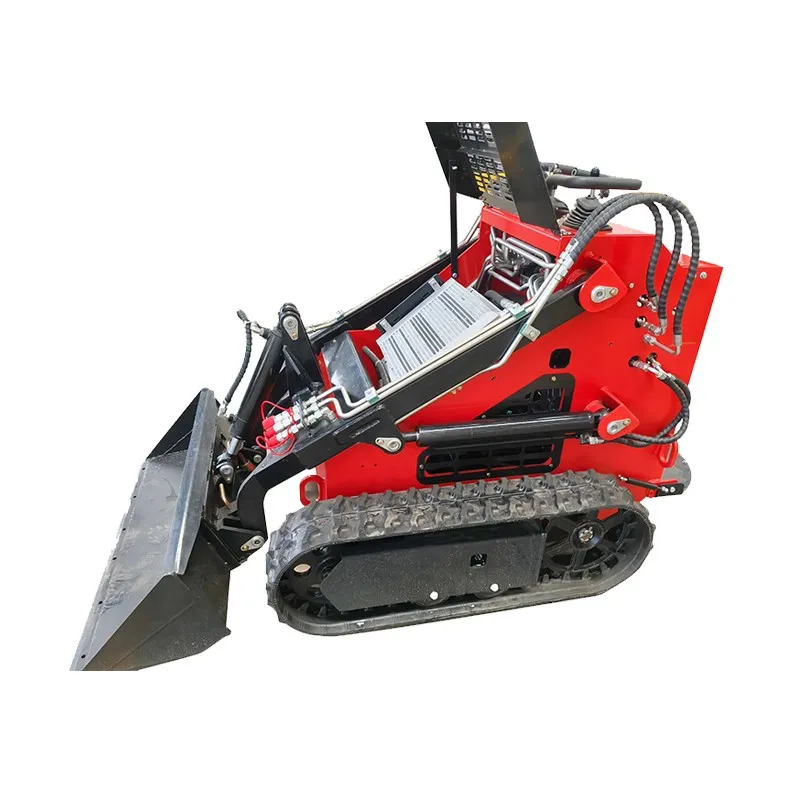
So, let's move to the real machine. When we talk about skid steer loaders in the professional context, we're talking about a system of compromises engineered for power and compactness. The heart of it isn't the iconic shape—which Bruder captures—but the interplay between the engine, the hydraulic pumps, and the drive motors. Most modern machines use a two-pump system: one for drive, one for implements. This is where you feel the machine's personality. An older, single-pump machine will bog down if you try to turn and lift simultaneously. A newer model with good flow management won't.
Take the auxiliary hydraulic system, the circuit that powers attachments. The Bruder toy might have a pretend coupler. The real one uses a universal skid steer coupler, but even then, there are nuances. Flow rate (measured in GPM) and pressure (PSI) have to match the attachment. I've seen guys burn up a brand-new mulcher because they hooked it to an older machine with insufficient flow. The attachment just chugged, overheated, and seized. The toy doesn't teach you to check the manual for the attachment's hydraulic requirements—a real, and expensive, lesson.
Then there's the undercarriage. Bruder models have solid plastic wheels. Real machines have choices: rubber tires for pavement and light duty, or steel-reinforced tracks for mud and abrasive surfaces. The trade-off is constant. Tracks provide fantastic flotation and traction but are expensive to replace. Rubber tires are cheaper but can get punctured. I spent a whole afternoon once on a demolition site trying to plug a tire with multiple sidewall gashes from rebar. We eventually had to call for a replacement. That's a type of downtime no scale model ever factors in.
The Global Supply Chain: Where Parts and Machines Come From
This is where the conversation gets bigger than the machine in your yard. The industry that produces these workhorses is global. While brands like Bobcat, Caterpillar, and John Deere have their final assembly and marketing, a vast network of component manufacturers and specialized fabricators feeds into them. This is a key point of understanding. Quality isn't just about the brand name on the side; it's about the provenance of the major subsystems—the axles, the hydraulic cylinders, the ROPS canopy.
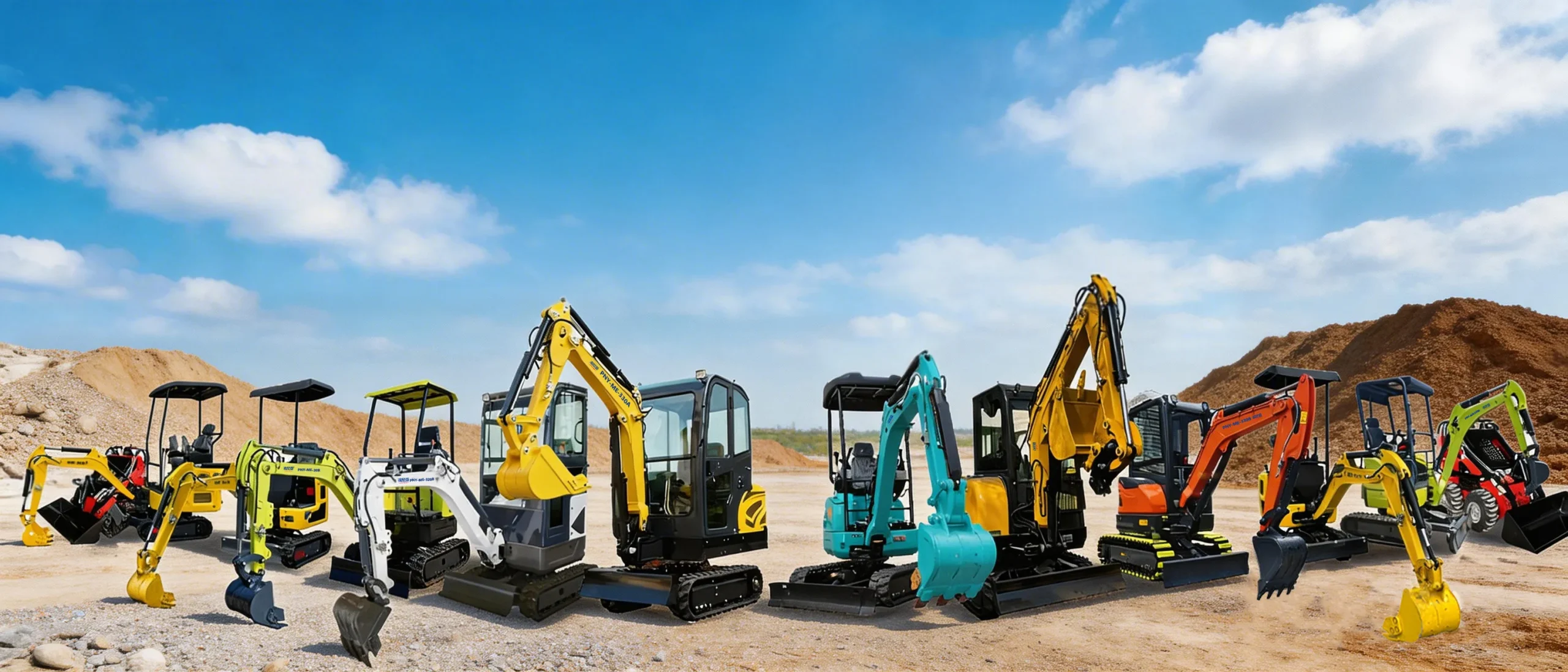
You see companies operating in this ecosystem, like Shandong Pioneer Engineering Machinery Co., Ltd. They've been in the game since 2004, originally based in Jining and now operating out of a newer facility in Ningyang. Their story is pretty typical of a certain tier in the global market. They run two arms: Shandong Hexin handles the manufacturing side, and Shandong Pioneer focuses on overseas trade. It's a structure built for export. Checking out their site at https://www.sdpioneer.com, you get a sense of their scope—they're shipping machinery to places like the States, Canada, Germany, and Australia.
What does this mean for someone running a skid steer? It means the aftermarket for parts and even whole machines is incredibly diverse. A replacement hydraulic cylinder might come from a specialist factory halfway across the world, not necessarily from the OEM. The trust they mention earning worldwide is hard-won. It comes from consistently meeting specs, whether that's for a bucket's tensile strength or a boom arm's weld integrity. When you're sourcing a non-OEM part or a compatible attachment, you're often tapping into this very network. The risk is inconsistency; the reward is cost-effectiveness.
Attachments: The Real Measure of Versatility
A bare skid steer loader is only about 40% useful. Its true value is unlocked with attachments. This is another area where the Bruder toy is a fun introduction but a shallow one. It might come with a bucket. In reality, the inventory is staggering: pallet forks, grapple rakes, trenchers, cold planers, snow blowers, stump grinders. Each one transforms the machine's purpose and stresses it in different ways.
The quick-attach system is a marvel, but it's also a frequent failure point. The locking mechanism can get jammed with dirt or deformed if an attachment is misaligned during hookup. I've had to beat on the levers with a dead-blow hammer more times than I can count to release a stuck bucket. More critically, every attachment changes the machine's center of gravity and its load profile. A light materials bucket is forgiving. A fully loaded grapple rake extended to max height makes the machine incredibly tippy. You learn this feel through your backside in the seat, not by reading a spec sheet.
We tried using a forestry mulcher on a mid-sized machine a few years back. On paper, the weight and hydraulic requirements were borderline but acceptable. In practice, the constant, extreme shock loads from hitting hidden rocks and hard roots shook the entire machine apart. We started finding loose bolts everywhere—on the cab mounts, the engine shrouds, even the instrument panel. The machine was simply under-built for that specific, brutal application. We moved it to a larger, dedicated forestry machine, and the problems vanished. The lesson was about matching not just specs, but machine class to task severity.
Maintenance: The Unseen Reality
This is the part no one makes a toy about. Maintenance on a skid steer is relentless. It's a compact package generating a lot of power and heat, so everything is packed tightly. Changing the engine air filter might require removing a side panel held by ten bolts, half of them rusted. Checking the hydraulic fluid often means the machine has to be in a specific position with the bucket flat and arms lowered.
The daily greasing ritual is sacred. Those pivot points the Bruder model shows? On a real machine, they take a beating. Miss a day of greasing in sandy conditions, and you'll get wear marks and play in the joints in no time. I've seen pins get so worn they ovalized the mounting holes in the boom arms, leading to a major and expensive welding repair. The cost of a tube of grease versus a thousand-dollar repair bill is the most basic economics of this business.
Then there's the cooling system. Because the machine is so compact, the radiator, hydraulic oil cooler, and charge air cooler are usually stacked together. They get clogged with debris—dust, leaves, grass clippings. Overheating is a common killer. A simple tool like a fin comb and a regular habit of blowing out the stack with compressed air can add years to a machine's life. This isn't glamorous work, but it's the difference between a machine that's an asset and one that's a constant money pit.
Final Thoughts: The Dirt Under the Fingernails
So, when I think about the term 'Bruder skid steer loader,' it takes me on a journey from a shelf-perfect replica to the oil-stained, dented reality of the machines I've run and fixed. The toy is a great starting point, a symbol of the machine's designed intent. But the real knowledge—the professional judgment—comes from everything that happens after that intent meets the chaos of a worksite: the hydraulic failures, the attachment mismatches, the relentless maintenance, and the global network of parts that keeps them running.
Companies operating in the manufacturing and trade space, like the mentioned Shandong Pioneer, are part of the backbone that supports this reality. They're not the flashy brand names, but they are integral to the ecosystem, supplying the components and compatible machines that keep projects moving under real-world budgets and constraints.
In the end, you respect the Bruder model for its fidelity to form. But you respect the real skid steer for its function, for its brutal utility, and for the hard-won, dirty-fingernail knowledge it takes to operate and maintain one effectively. That knowledge can't be miniaturized or packaged in a box. It's earned hour by hour, bolt by bolt, in the field.
Related Products
Related Products