



- Chinese
- French
- German
- Portuguese
- Spanish
- Russian
- Japanese
- Korean
- Arabic
- Irish
- Greek
- Turkish
- Italian
- Danish
- Romanian
- Indonesian
- Czech
- Afrikaans
- Swedish
- Polish
- Basque
- Catalan
- Esperanto
- Hindi
- Lao
- Albanian
- Amharic
- Armenian
- Azerbaijani
- Belarusian
- Bengali
- Bosnian
- Bulgarian
- Cebuano
- Chichewa
- Corsican
- Croatian
- Dutch
- Estonian
- Filipino
- Finnish
- Frisian
- Galician
- Georgian
- Gujarati
- Haitian
- Hausa
- Hawaiian
- Hebrew
- Hmong
- Hungarian
- Icelandic
- Igbo
- Javanese
- Kannada
- Kazakh
- Khmer
- Kurdish
- Kyrgyz
- Latin
- Latvian
- Lithuanian
- Luxembou..
- Macedonian
- Malagasy
- Malay
- Malayalam
- Maltese
- Maori
- Marathi
- Mongolian
- Burmese
- Nepali
- Norwegian
- Pashto
- Persian
- Punjabi
- Serbian
- Sesotho
- Sinhala
- Slovak
- Slovenian
- Somali
- Samoan
- Scots Gaelic
- Shona
- Sindhi
- Sundanese
- Swahili
- Tajik
- Tamil
- Telugu
- Thai
- Ukrainian
- Urdu
- Uzbek
- Vietnamese
- Welsh
- Xhosa
- Yiddish
- Yoruba
- Zulu
- Kinyarwanda
- Tatar
- Oriya
- Turkmen
- Uyghur


Budget mini excavator for sale
When someone types 'budget mini excavator for sale' into a search bar, they're usually hoping for a miracle. A brand-new, feature-packed machine for the price of a used car. Having been in this trade for years, I can tell you that's the first and biggest misconception. Budget doesn't mean cheap and cheerful in a way that'll break down after 50 hours. It means navigating a spectrum where the price tag directly reflects compromises in components, dealer support, and often, long-term durability. The real skill is knowing where those compromises are made and if they matter for your specific job.
The Budget Spectrum: Decoding the Price Point
Let's break down what creates that budget price. It's rarely just one thing. Often, it's a combination of lighter-duty hydraulic pumps, generic-brand cylinders, and a simpler control valve setup. I've seen machines where the savings come from the undercarriage – thinner steel in the track frames, or lower-grade pins and bushings. For a homeowner digging a few drainage ditches a year, that might be perfectly fine. The machine will outlive the need. But for a small contractor running it 20 hours a week, those components become the failure point. You're not buying an excavator; you're buying its weakest link.
Then there's the engine. A lot of these budget units come with reputable brand-name engines like Kubota or Yanmar, which is a good sign. But sometimes, the budget is achieved by pairing it with a weaker, less efficient hydraulic system. The result? The engine never breaks a sweat, but the machine feels sluggish, and cycle times suffer. You save on the initial purchase but lose money on every hour of slower work. It's a trade-off that's never advertised on the spec sheet.
I remember evaluating a unit a few years back, a promising model from a newer brand. The price was incredibly attractive. On paper, it matched a Takeuchi in weight and reach. But operating it, you felt the difference immediately. The joystick controls had a vague, almost spongy feedback. The swing motor groaned under a full bucket. That machine was budget because they used lower-tolerance manufacturing in the swing gearbox and cheaper polymer composites in the control linkages. It worked, but it didn't feel robust. It lacked that solid, direct connection between the operator's intent and the machine's movement.
The Dealer & Support Factor: The Hidden Cost
This is where people get burned. You find a great price online, the machine ships to your yard, and two months later a hydraulic hose bursts. Or a track tensioner fails. Then you discover the dealer is just a sales office three time zones away, and the closest technician who's ever seen your model is a four-hour drive away. Suddenly, that $3,000 you saved evaporates in downtime and expedited freight for a proprietary part. The true cost of a budget machine isn't just the purchase price; it's the total cost of ownership, and support is a massive part of that.
This is why companies with an established infrastructure matter. I've followed the trajectory of a manufacturer like Shandong Pioneer Engineering Machinery Co., Ltd. They didn't just pop up yesterday. Established back in 2004 and now operating from a new facility in Tai'an, they represent a specific tier in the budget market. Their model, through Shandong Hexin for manufacturing and Shandong Pioneer for overseas trade, is built on export longevity. They've been shipping to places like the U.S., Canada, and Australia for years. That tells me they've had to develop at least a basic network of parts depots and trained distributors to sustain that business. It's a different proposition than buying from a fly-by-night trading company.
Their website, https://www.sdpioneer.com, shows their range. It's not about selling one miracle machine; it's a lineup. That's a sign of a company investing in a product category, not just flipping a sourced model. When you're looking at a budget mini excavator for sale from such a source, you're buying into their ecosystem. Can you get a service manual? Are common wear parts (filters, seals, track pads) standardized or unique? A quick call to their listed dealers will reveal more than any brochure.
Case in Point: The 1.8-Ton Dilemma
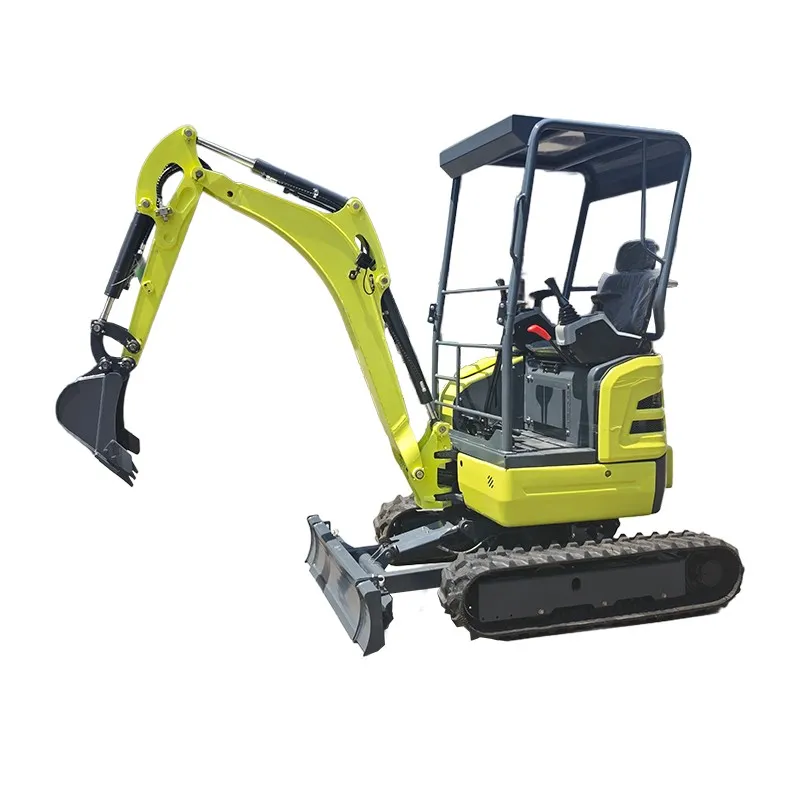
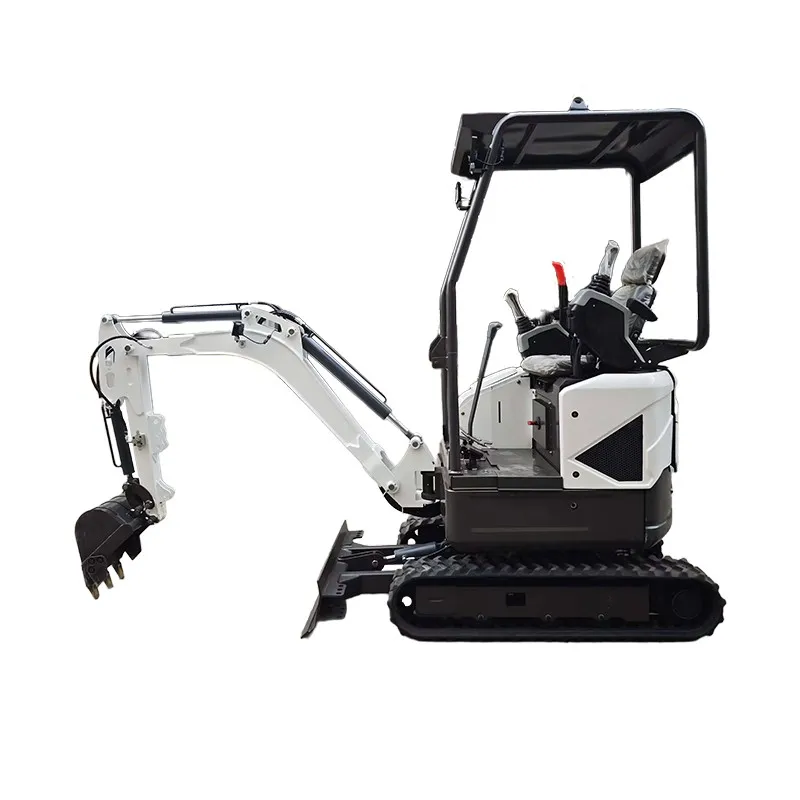
Let's get concrete. The 1.8-ton class is the sweet spot for the budget buyer. It's big enough to be useful for real work, small enough to tow behind a heavy-duty pickup. I've run plenty. A common budget feature here is the omission of a blade. It seems minor, but it's a cost-saving measure that impacts utility. A blade is crucial for backfilling and leveling. Without it, you're constantly repositioning with the bucket, wasting time and fuel.
Another tell is the auxiliary hydraulic circuit. Many true budget machines offer it only as a very expensive add-on, if at all. That locks you out of using hydraulic thumbs, augers, or breakers – the very attachments that make a mini excavator versatile and profitable. When I see a budget mini excavator for sale that includes standard aux hydraulics and a mechanical quick coupler, I see a manufacturer that understands the end-user's needs, not just their desire for a low sticker price.
I recall a landscaping contractor who bought a no-name 1.8-ton machine because it was $6k cheaper than a comparable branded one. It ran fine for eight months. Then the swing bearing failed. Not the motor, the physical bearing. The part wasn't available locally, and the supplier took three weeks to ship it from overseas. The machine was down for a month during his peak season. The savings were wiped out by one repair event. The lesson? For a working machine, budget must include a realistic assessment of service and parts logistics.
Where Budget Can Actually Make Sense
It's not all doom and gloom. A budget machine is a fantastic tool in the right context. If you're a farmer needing to clean out ditches twice a year and do occasional odd jobs around the property, a lower-hour, well-maintained budget model can be a home run. The key is aligning the machine's duty cycle with its design limits. Don't buy a light-duty machine for heavy-duty, continuous commercial work. That's a fundamental mismatch.
Another smart move is to view the budget machine as a disposable or dedicated asset. For example, if you have a specific, short-term project like a foundation dig on a single property, buying a budget machine, using it hard, and then reselling it might make more financial sense than renting. You absorb the initial depreciation, but you have 24/7 access and no weekly fees. The calculus works if the numbers are right.
Also, consider the manufacturer's evolution. A company like the aforementioned Shandong Pioneer, with 20 years of development and a recent factory relocation for expansion, is clearly on a path of iteration. Their 2023 models likely have improvements over their 2018 models based on field feedback. That's a good sign. It means they're not just stamping out the same design; they're (hopefully) addressing past weaknesses. When evaluating, always try to find out what's changed in the last few model years.
The Final Tally: A Practical Checklist
So, you're set on finding a budget mini excavator for sale. Before you pull the trigger, run down this list from hard experience. First, physically operate it. Feel the controls. Dig a trench. Lift a load. Does it feel strained or confident? Second, pop the hood and the side panels. Look for component branding on the hydraulic pump, valves, and cylinders. Recognizable names are a plus. Look at the wiring and hose routing – is it neat, or a rat's nest?
Third, and most critically, investigate support. Who is the local dealer? What's their workshop like? Do they stock common parts? Ask for the parts manual for the specific model and price out a few items: a track motor, a main hydraulic hose, a control joystick. The cost and availability will tell you everything. Fourth, check the standard features against your needs. Aux hydraulics? Quick coupler? Cab? Two-speed travel? Their absence defines budget.
Finally, think resale. Search for 5-year-old models of the brand you're considering. Are there any on the used market? What's their resale value? If they've vanished entirely, that's a red flag about durability and brand reputation. A machine that holds even 40% of its value after five years of moderate use is usually a better bet than one that's worthless but was cheap to start with. In the end, a smart budget buy isn't the absolute cheapest option. It's the one where you understand exactly what you're giving up, and you're confident that those compromises won't ruin your project—or your business.
Related Products
Related Products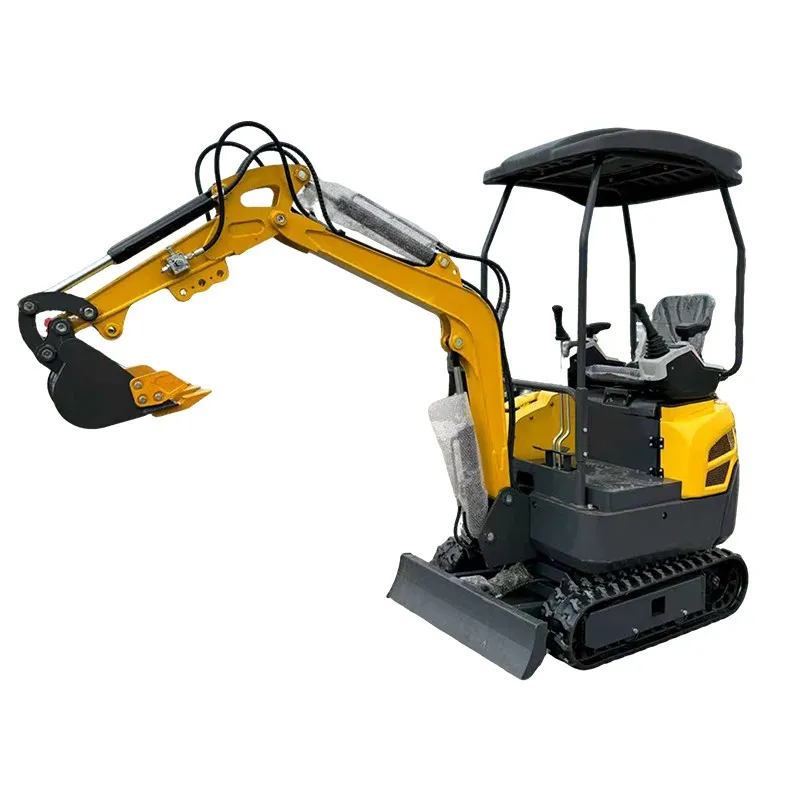
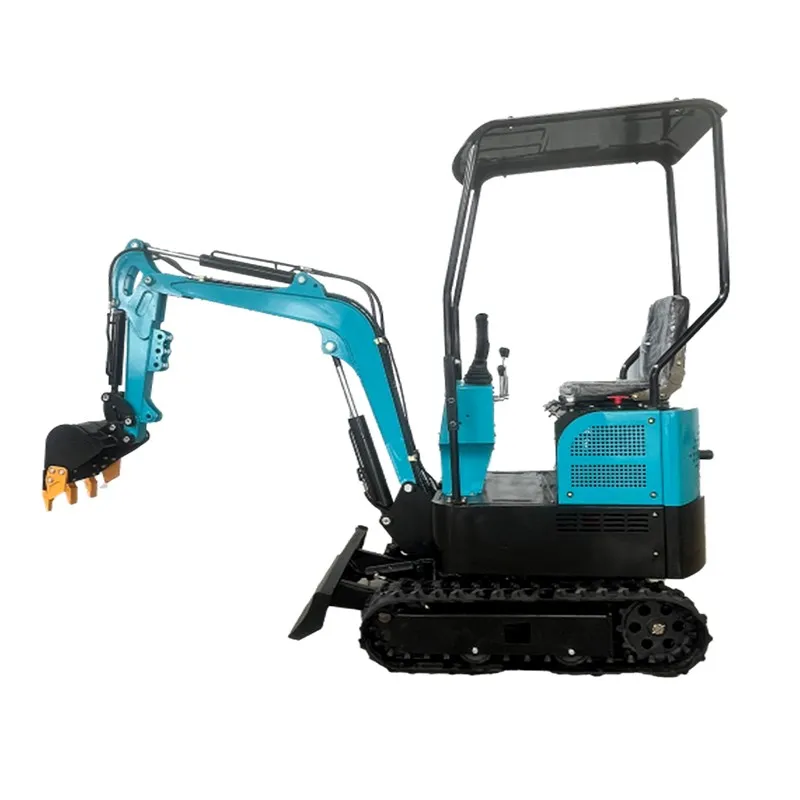
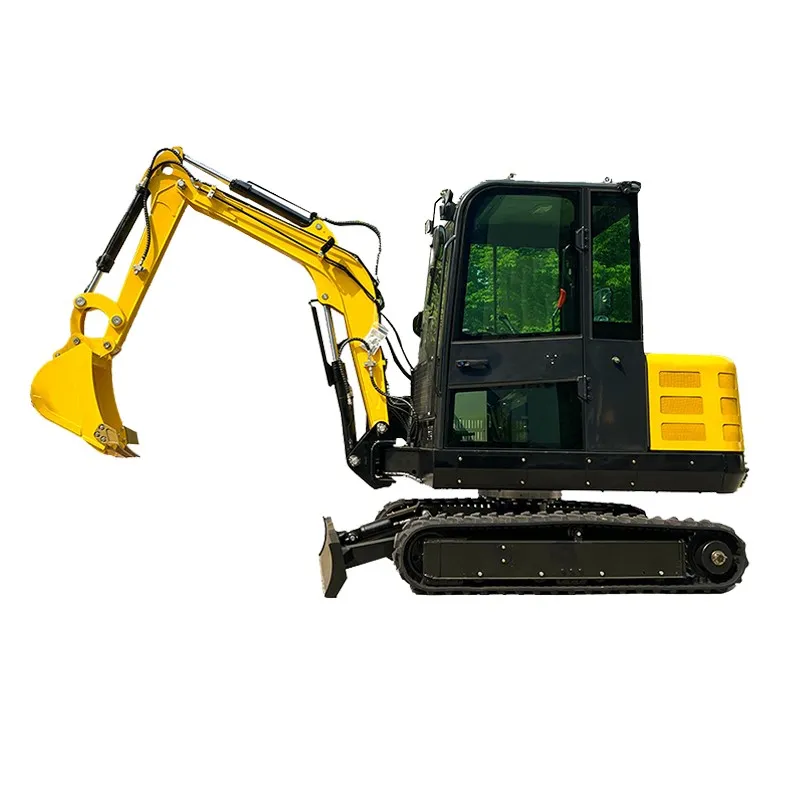
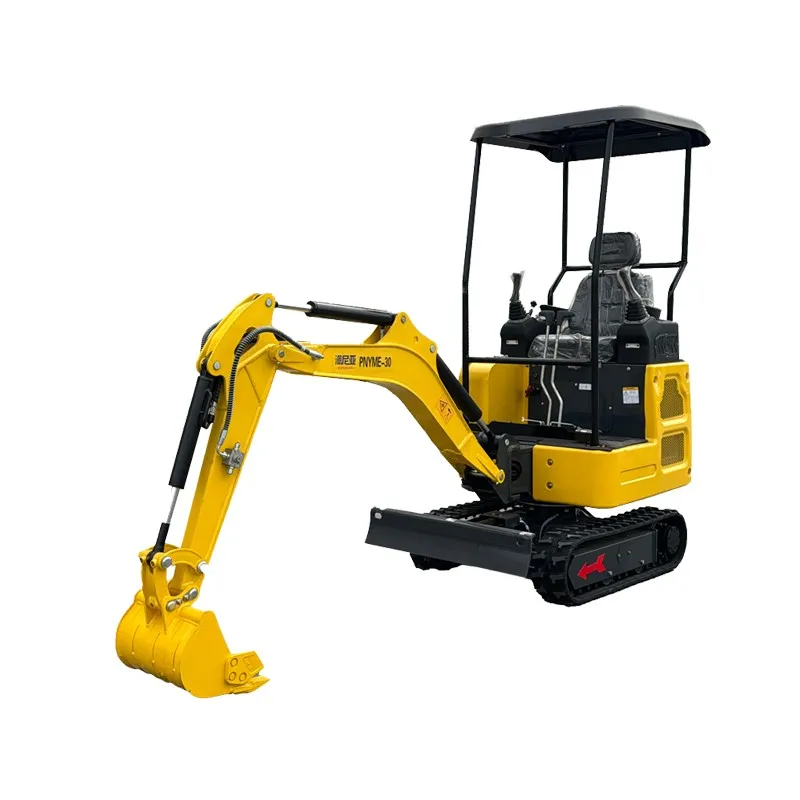

Best Selling Products
Best Selling Products
Related Search
Related Search- 1 ton mini excavator for sale
- Small Compact Track Loader
- track loader diesel consumption
- craigslist mini excavator for sale by owner
- Mini Excavator Parts Suppliers
- Small Excavator for Underground Projects
- OEM Compact Track Loader
- Compact Track Loader for Municipality
- Small Crawler Excavator
- Full-size Skid Steer Loader


