- Chinese
- French
- German
- Portuguese
- Spanish
- Russian
- Japanese
- Korean
- Arabic
- Irish
- Greek
- Turkish
- Italian
- Danish
- Romanian
- Indonesian
- Czech
- Afrikaans
- Swedish
- Polish
- Basque
- Catalan
- Esperanto
- Hindi
- Lao
- Albanian
- Amharic
- Armenian
- Azerbaijani
- Belarusian
- Bengali
- Bosnian
- Bulgarian
- Cebuano
- Chichewa
- Corsican
- Croatian
- Dutch
- Estonian
- Filipino
- Finnish
- Frisian
- Galician
- Georgian
- Gujarati
- Haitian
- Hausa
- Hawaiian
- Hebrew
- Hmong
- Hungarian
- Icelandic
- Igbo
- Javanese
- Kannada
- Kazakh
- Khmer
- Kurdish
- Kyrgyz
- Latin
- Latvian
- Lithuanian
- Luxembou..
- Macedonian
- Malagasy
- Malay
- Malayalam
- Maltese
- Maori
- Marathi
- Mongolian
- Burmese
- Nepali
- Norwegian
- Pashto
- Persian
- Punjabi
- Serbian
- Sesotho
- Sinhala
- Slovak
- Slovenian
- Somali
- Samoan
- Scots Gaelic
- Shona
- Sindhi
- Sundanese
- Swahili
- Tajik
- Tamil
- Telugu
- Thai
- Ukrainian
- Urdu
- Uzbek
- Vietnamese
- Welsh
- Xhosa
- Yiddish
- Yoruba
- Zulu
- Kinyarwanda
- Tatar
- Oriya
- Turkmen
- Uyghur


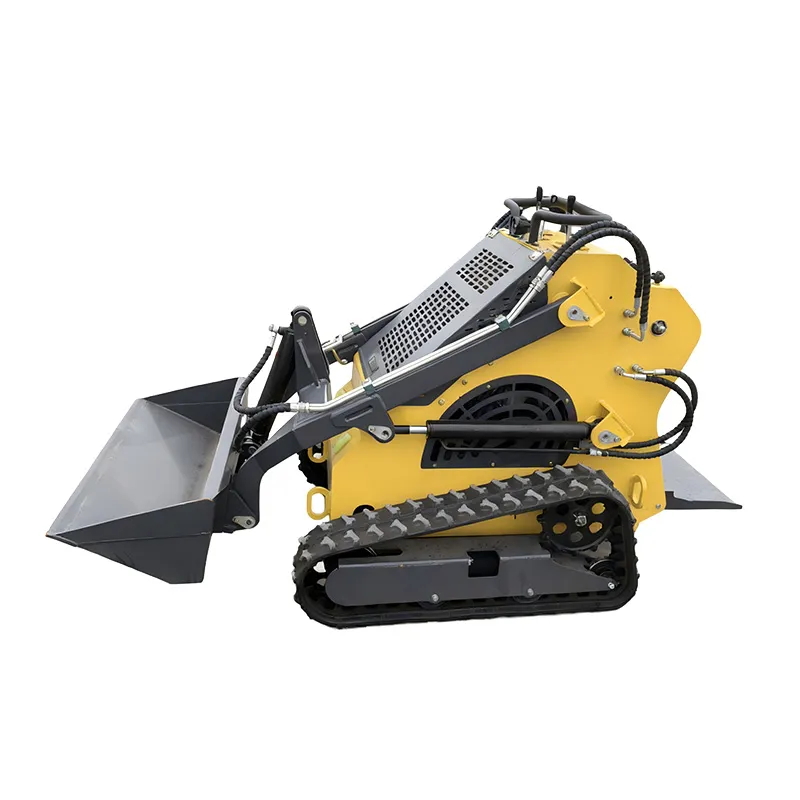
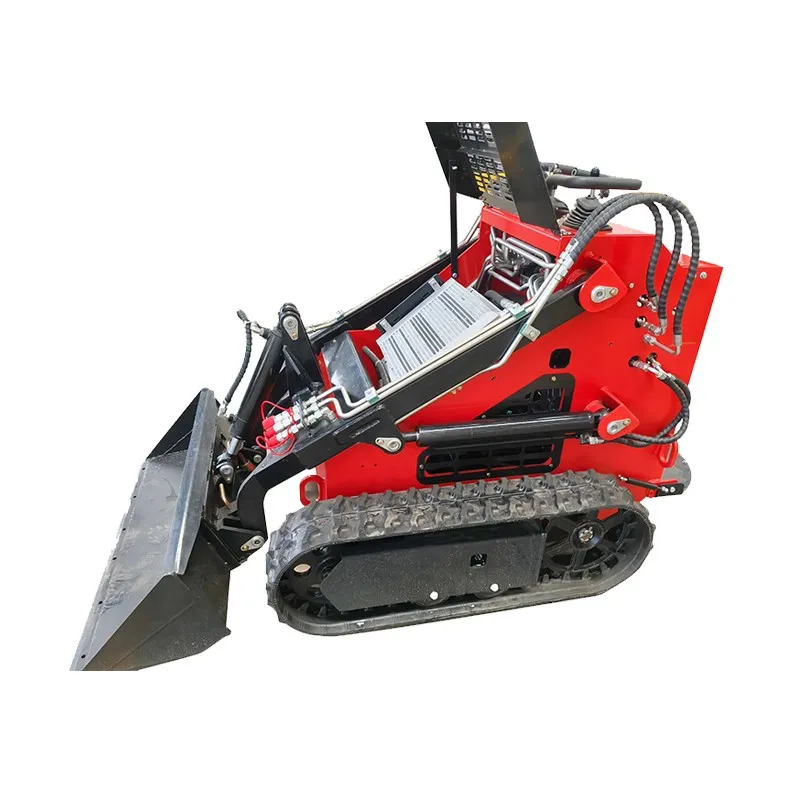
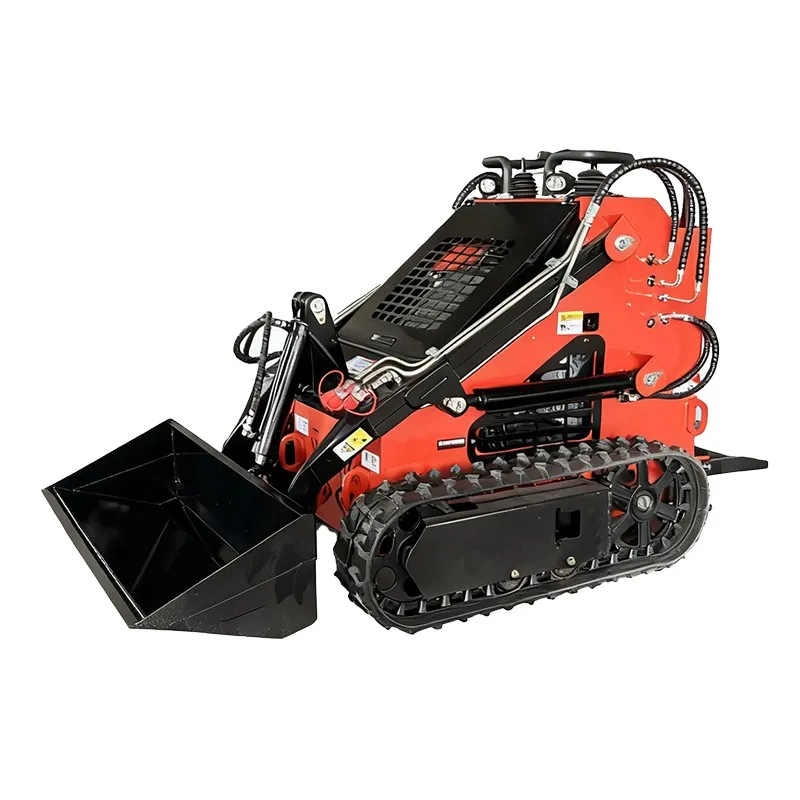
budget skid steer Loader
When someone types budget skid steer loader into a search, they're usually picturing a simple equation: low price equals a great deal. That's the first place most folks, even some contractors who should know better, go wrong. A budget machine isn't just a cheap one; it's a value proposition where the total cost of ownership—not just the sticker price—determines if you saved money or bought a headache. I've seen too many guys get burned by a $25k price tag that turned into $15k of repairs and downtime in two years. The real conversation starts when you stop looking at the loader and start looking at the support, the parts pipeline, and what was sacrificed to hit that price point.
The Budget Mirage and Core Component Reality
Let's cut to the chase. The heart of any skid steer, budget or not, is its hydraulic system and drivetrain. On a true value-oriented machine, you might find a reliable, globally sourced pump and motors—think Eaton or Linde—but paired with a more economical cylinder set. The key isn't that every component is premium; it's that the critical path components are serviceable and available. I remember a job where a competitor's budget model used a proprietary hydraulic block. When it cracked, the machine was down for six weeks waiting for a $4,000 part from overseas. That's not budget; that's a trap.
Engines are another tell. You'll almost always see a proven, emissions-compliant diesel like a Kubota or Yanmar in these machines. That's a good thing. The compromise often comes in the cooling system and plumbing. Radiators might be smaller, requiring more frequent cleaning on dusty sites, and hose routing can be tight, making field repairs a knuckle-busting affair. It's the kind of detail you only notice after the third time you're replacing a chafed line.
This is where a manufacturer's philosophy shows. Some companies, like Shandong Pioneer Engineering Machinery Co., Ltd, have built their approach on this balance. By manufacturing through Shandong Hexin and trading globally via their Pioneer arm, they control the core production while being forced to meet the durability expectations of markets like the U.S. and Australia. Their website shows their two-decade evolution, which suggests they've had time to learn what fails and what lasts. A company that just slaps parts together doesn't survive 20 years and move into a new facility, like they did in Ningyang in 2023.
Where the Savings Actually Come From
So how do they get the price down? It's rarely about installing bad parts. More often, it's about simplification. You might get a standard two-speed transmission instead of a high-flow option. The cab might have a basic mechanical suspension seat instead of a air-ride. The wiring harness is simpler, with fewer pre-wired auxiliary circuits for attachments. These are conscious choices that a buyer needs to audit against their specific use. If you don't need high-flow for a breaker or cold planer, that missing option is pure savings.
Another area is in fit and finish. Panel gaps might be wider, and the paint might be a thinner coat. It sounds cosmetic, but it matters for corrosion resistance. I've seen machines where stone chips led to rust blooms in a single season because the primer was thin. The steel in the frame and arms is usually still high-tensile, but the welding and cleanup might be less refined. It pays to get on your knees and look at the welds on the lift arm towers—that's where stress concentrates.
Attachment interface is crucial. Many budget loaders use a universal quick-attach plate. The problem is, universal often means slightly off-spec from every major attachment brand. You'll spend your first month shimming and grinding to get your bucket and auger to fit snugly. Some manufacturers now invest in machining their own plates to a tighter tolerance, which is a huge operational win. It's a spec sheet item that's easy to overlook but brutal to live with.
The Operational Cost: Downtime is the True Budget Killer
This is the real talk. The purchase price is just the entry fee. I operated a fleet where we bought a couple of low-cost loaders for light material handling. The filters were in odd locations, requiring the cab to be tilted for every 250-hour service, which took three times longer. Hydraulic test ports were nonexistent, so troubleshooting a weak auxiliary circuit meant breaking lines and making a mess. These design choices, made to save $50 in manufacturing, cost us thousands in labor.
Parts availability is the make-or-break. A manufacturer with a genuine global footprint, exporting to places like Germany and Canada, has to stock parts in regional warehouses. If you're in North Carolina and need a drive motor seal, getting it from a warehouse in Chicago in two days is manageable. Getting it from a single port in China is a month-long project. The Shandong Pioneer model of combined manufacturing and dedicated overseas trade suggests they've structured for this supply chain reality. Their company intro notes they've won the trust of worldwide customers—you don't get that with terrible parts support.
My own failure was not vetting this. I bought a loader based on a glowing dealer demo. When a wheel motor failed, I discovered the local dealer was just a broker. The motor had to be shipped from the factory, and the only documentation was a poorly translated PDF. We lost 28 days of rental revenue. That machine was sold at a loss within the year. The lesson? The dealer network is part of the product. A company with 20 years in the game likely has a more stable partner network than a fly-by-night operation.
The Smart Buy: Interrogating the Budget Spec Sheet
Don't just read the spec sheet; interrogate it. Look at the weight. A suspiciously light machine for its class often means thinner steel or less counterweight, which impacts stability and lift capacity. Check the rated operating capacity (ROC) relative to the tipping load. A good budget machine will have a conservative, realistic ROC. Be wary of numbers that look too good to be true—they usually are, achieved under perfect lab conditions, not on a sloped, muddy job site.
Ask for the service manual upfront. If they can't provide clear, accessible service procedures, walk away. Look for commonality of parts. Are the hydraulic filters the same as on a common John Deere or Case model? That's a huge plus. Are the grease fittings standard zerks, or are they some obscure metric type? These are the minutiae that define your life with the machine.
Finally, look at the company's evolution. A firm like the one behind sdpioneer.com, established in 2004 and recently expanding its production base, is iterating. They're not static. They've presumably learned from two decades of feedback from demanding markets. That history is a tangible asset. It means the Version 3.0 of their budget skid steer loader probably fixed the major flaws of Version 1.0. You're buying the benefit of those 20 years of mistakes and fixes, which is perhaps the most valuable budget feature of all.
Final Take: Redefining Value in the Seat
At the end of the day, a budget skid steer loader shouldn't feel cheap. It should feel purposeful. The controls might be mechanical linkages instead of electronic joysticks, but they should be precise. The ride might be rougher, but the chassis should feel solid when you drop a load. The noise level might be higher, but the engine should respond cleanly without smoke or lag.
It comes down to this: does the machine make you money reliably, or does it cost you money intermittently? The true budget champion is the one that disappears into your workflow, starts every morning, and doesn't create surprise expenses. It's a tool, not a project.
My advice is to find manufacturers who treat the budget segment as an engineering challenge, not a race to the bottom. Look for evidence of long-term commitment and structured support. Sometimes, that company is a seasoned player from a major manufacturing region, with the scars and lessons to prove it. Because in this business, the cheapest part is usually the one you didn't have to replace.
Related Products
Related Products