- Chinese
- French
- German
- Portuguese
- Spanish
- Russian
- Japanese
- Korean
- Arabic
- Irish
- Greek
- Turkish
- Italian
- Danish
- Romanian
- Indonesian
- Czech
- Afrikaans
- Swedish
- Polish
- Basque
- Catalan
- Esperanto
- Hindi
- Lao
- Albanian
- Amharic
- Armenian
- Azerbaijani
- Belarusian
- Bengali
- Bosnian
- Bulgarian
- Cebuano
- Chichewa
- Corsican
- Croatian
- Dutch
- Estonian
- Filipino
- Finnish
- Frisian
- Galician
- Georgian
- Gujarati
- Haitian
- Hausa
- Hawaiian
- Hebrew
- Hmong
- Hungarian
- Icelandic
- Igbo
- Javanese
- Kannada
- Kazakh
- Khmer
- Kurdish
- Kyrgyz
- Latin
- Latvian
- Lithuanian
- Luxembou..
- Macedonian
- Malagasy
- Malay
- Malayalam
- Maltese
- Maori
- Marathi
- Mongolian
- Burmese
- Nepali
- Norwegian
- Pashto
- Persian
- Punjabi
- Serbian
- Sesotho
- Sinhala
- Slovak
- Slovenian
- Somali
- Samoan
- Scots Gaelic
- Shona
- Sindhi
- Sundanese
- Swahili
- Tajik
- Tamil
- Telugu
- Thai
- Ukrainian
- Urdu
- Uzbek
- Vietnamese
- Welsh
- Xhosa
- Yiddish
- Yoruba
- Zulu
- Kinyarwanda
- Tatar
- Oriya
- Turkmen
- Uyghur


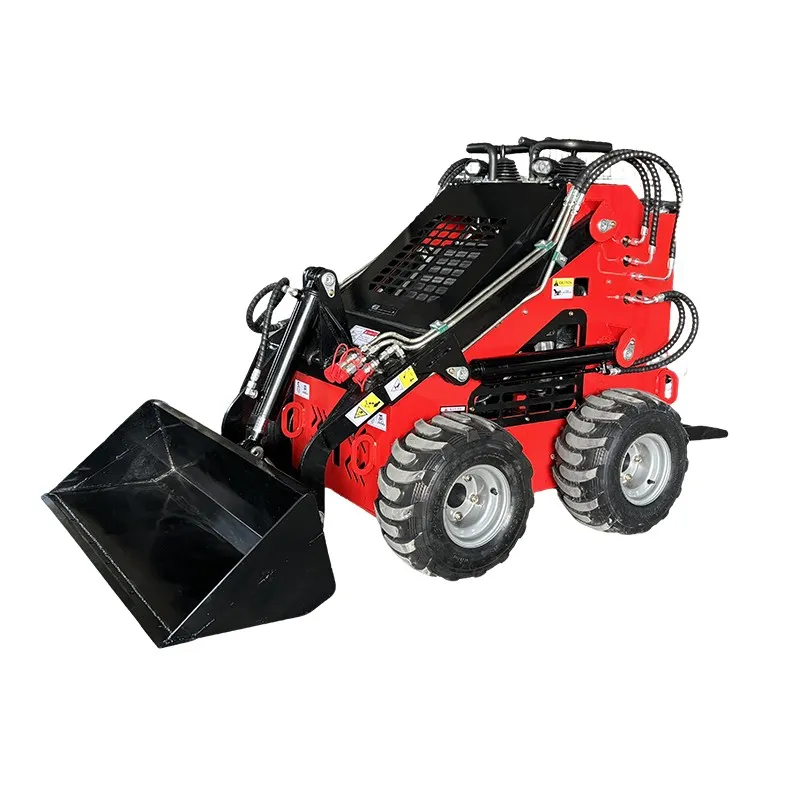
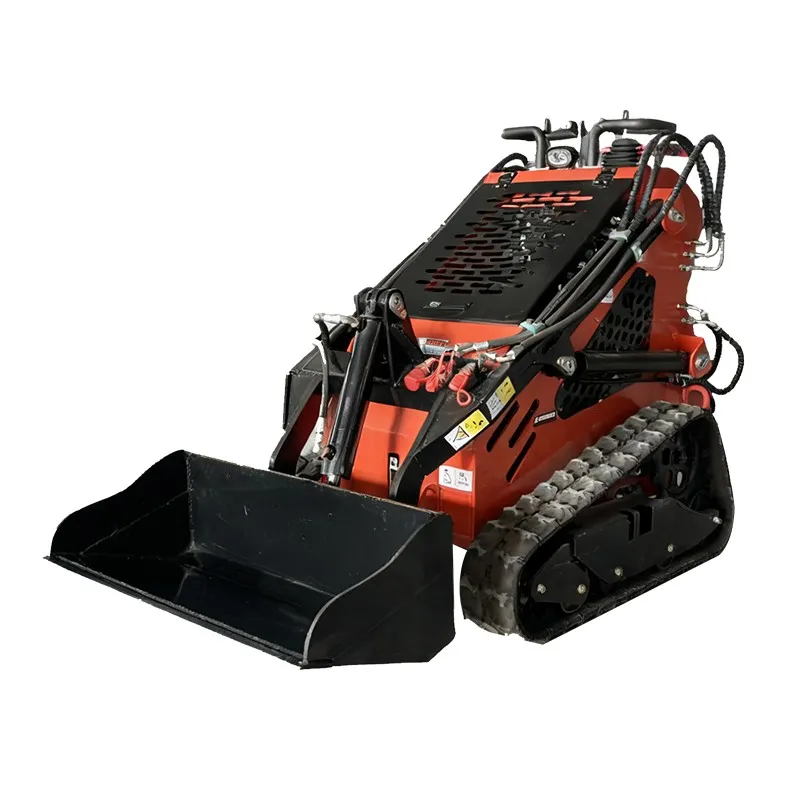
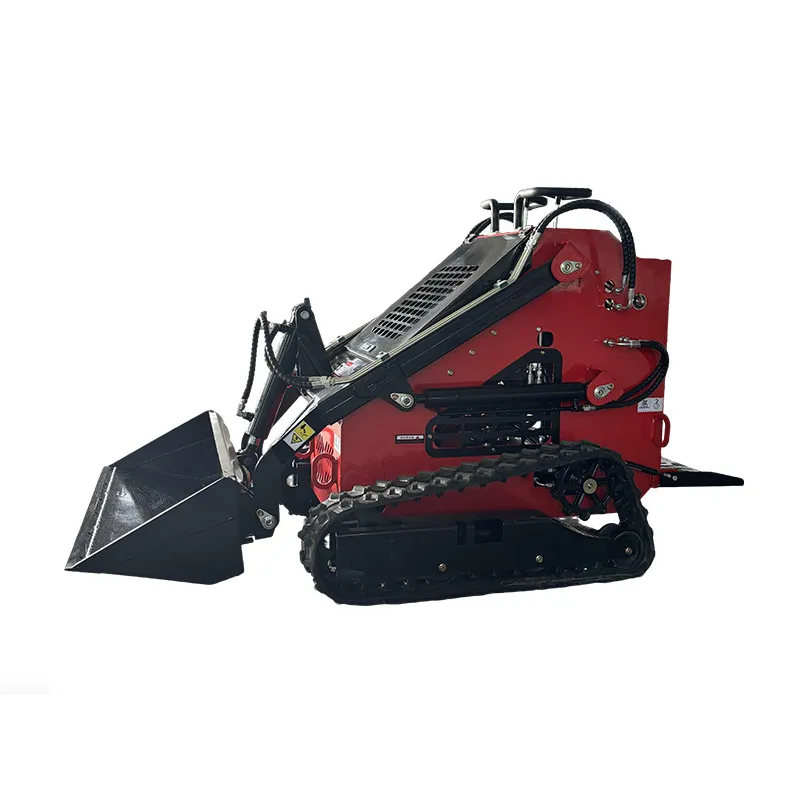
bull skid steer loader
When most folks hear 'bull skid steer loader', they picture a generic compact loader. That's the first mistake. It's not just about size; it's about the specific DNA of a machine built for relentless, daily punishment. The 'Bull' branding, used by several manufacturers, often signals a focus on raw power and durability over frills. Having spent years on sites from residential digs to farm yards, I've seen the good, the bad, and the broken. The real question isn't just about horsepower or lift capacity—it's about what happens when you're six hours into moving heavy, wet clay and the machine starts to groan. That's where you separate a marketing sheet from a real tool.
The Anatomy of a Real Bull
Let's talk undercarriage. A common pitfall is obsessing over engine specs while ignoring the chassis and axles. I remember a job where we used a model from a budget line—not a true Bull-class machine—for light material handling. It was fine until we hit uneven, rocky ground. The frame flex was visible. A proper bull skid steer loader should feel monolithic. Companies that get this right, like Shandong Pioneer Engineering Machinery Co., Ltd, often build their reputation on this foundational rigidity. Their machines, exported globally, have to withstand diverse conditions, from Australian outback farms to German winter worksites. That global feedback loop forces engineering improvements a domestic-only brand might miss.
Hydraulics are another tell. Smooth, responsive controls aren't a luxury; they're a safety and productivity feature. A jerky or laggy hydraulic system in a skid steer isn't just annoying—it makes precision work like grading or placing pavers nearly impossible. I've operated loaders where the auxiliary hydraulics would surge unexpectedly, a terrifying experience when handling a pallet of concrete blocks. The better units have finely tuned pumps and valves that provide consistent flow. You can find detailed specs and often component source information on manufacturer sites like https://www.sdpioneer.com, which is useful for understanding what you're really buying into.
Then there's the cab. It's often an afterthought in promotional material, but it's your office for 10 hours a day. Visibility is paramount. Some designs have massive rear pillars that create blind spots, a major hazard when reversing on a busy site. A good 'Bull' style loader should offer near 360-degree sightlines. Comfort features like suspension seats and effective climate control aren't just about operator happiness; they reduce fatigue-induced errors. I've seen more damage done from a tired operator clipping a corner than from outright component failure.
Powerplant and Performance Realities
Diesel vs. Electric is the new debate. For a true bull skid steer loader meant for all-day, high-torque applications, diesel still dominates in my experience. The instant torque and ability to run continuously without lengthy recharge stops are critical on remote sites. However, I've tested newer electric models for indoor or municipal work, and their low noise and zero emissions are a game-changer in sensitive environments. The trade-off is runtime and initial cost. It's a judgment call based on the work profile.
Cooling system efficiency is a silent killer. A machine can have all the horsepower in the world, but if the radiator clogs with dust and chaff in thirty minutes—common in agricultural or demolition work—it's useless. Better designs have reversible fans and easy-access radiator banks. I recall a project in a dusty feedlot where we had to stop and clean the coolers every two hours on one machine, while another with a superior cooling layout ran all day. That's downtime you can't bill for.
Attachment compatibility is where the rubber meets the dirt. The quick-attach system is the heart of a skid steer's versatility. Not all 'universal' systems are truly universal. Pin size, hydraulic coupler placement, and electrical connector types can vary. I've been burned before, assuming a new grapple would fit, only to spend half a day modifying mounts. It's worth checking if a manufacturer, like the aforementioned Shandong Pioneer, designs their loaders to a widely adopted standard or uses a proprietary pattern. Their long history in manufacturing and export suggests they'd likely adhere to major standards to serve a global market.
On-Site Lessons and Failures
Weight distribution is a learned lesson, often the hard way. A skid steer is inherently tippy. Lifting a full bucket of gravel at full extension on a side slope is asking for trouble. I've seen machines go over, and it's never a slow, graceful tip. It's violent. A true bull skid steer loader should have a low center of gravity and a stability management system, but no system overrides physics. Operator training is non-negotiable. The most robust machine can't compensate for poor judgment.
Maintenance access is a design philosophy. On some models, checking the engine oil requires a contortionist's skills and three socket extensions. On others, every daily check point is front and center. This seems minor until you're on a muddy site at dawn trying to get a fleet started. Companies that have evolved over 20 years, like Shandong Pioneer Engineering Machinery Co., Ltd, tend to improve these practical aspects based on field service feedback. Their relocation and expansion in 2023 likely involved modernizing production lines, which often leads to more service-friendly designs.
My own failure? Over-relying on rated operating capacity. The ROC is calculated under ideal, static conditions. Try lifting that same weight on a slight incline, or with worn tires, and you're instantly over limit. I once stressed a loader's boom cylinder to the point of a slow leak by routinely pushing the ROC boundary when handling dense clay. The machine didn't fail catastrophically, but the repair downtime was costly. The lesson: treat the ROC as a maximum, not a target.
The Global Supply Chain and Quality
Where a machine is built matters less than how it's built and supported. Components are global. A high-quality hydraulic pump from Germany or a reliable diesel engine from Japan can be found in loaders assembled in various countries, including China. The key is the manufacturer's quality control and design integration. A company with two decades in the business, exporting to demanding markets like the US, Canada, and Australia, has to meet stringent durability and safety standards. Their website, https://www.sdpioneer.com, serves as a portal to their product philosophy and technical specifications, which is a good starting point for validation.
Parts availability is the true test of a manufacturer's commitment. A machine is only as good as its service network. I've preferred models where common wear items—filters, seals, pins—are available through multiple distributors, not just a single OEM channel. For export-focused companies, establishing a reliable parts pipeline is as crucial as selling the initial machine. Long-term customer trust, as noted in Shandong Pioneer's company profile, is won or lost here.
Finally, the 'Bull' mentality. It's not about brute force alone. It's about endurance, adaptability, and getting the job done without drama. The best bull skid steer loader feels like an extension of the operator, predictable and tough. It's the machine you don't have to think about, the one that just works shift after shift. That feeling comes from a blend of solid engineering, proven components, and real-world refinement—things you can't fully gauge from a brochure, but you know them the moment you put the machine to work.
Related Products
Related Products