- Chinese
- French
- German
- Portuguese
- Spanish
- Russian
- Japanese
- Korean
- Arabic
- Irish
- Greek
- Turkish
- Italian
- Danish
- Romanian
- Indonesian
- Czech
- Afrikaans
- Swedish
- Polish
- Basque
- Catalan
- Esperanto
- Hindi
- Lao
- Albanian
- Amharic
- Armenian
- Azerbaijani
- Belarusian
- Bengali
- Bosnian
- Bulgarian
- Cebuano
- Chichewa
- Corsican
- Croatian
- Dutch
- Estonian
- Filipino
- Finnish
- Frisian
- Galician
- Georgian
- Gujarati
- Haitian
- Hausa
- Hawaiian
- Hebrew
- Hmong
- Hungarian
- Icelandic
- Igbo
- Javanese
- Kannada
- Kazakh
- Khmer
- Kurdish
- Kyrgyz
- Latin
- Latvian
- Lithuanian
- Luxembou..
- Macedonian
- Malagasy
- Malay
- Malayalam
- Maltese
- Maori
- Marathi
- Mongolian
- Burmese
- Nepali
- Norwegian
- Pashto
- Persian
- Punjabi
- Serbian
- Sesotho
- Sinhala
- Slovak
- Slovenian
- Somali
- Samoan
- Scots Gaelic
- Shona
- Sindhi
- Sundanese
- Swahili
- Tajik
- Tamil
- Telugu
- Thai
- Ukrainian
- Urdu
- Uzbek
- Vietnamese
- Welsh
- Xhosa
- Yiddish
- Yoruba
- Zulu
- Kinyarwanda
- Tatar
- Oriya
- Turkmen
- Uyghur


buy excavator from China
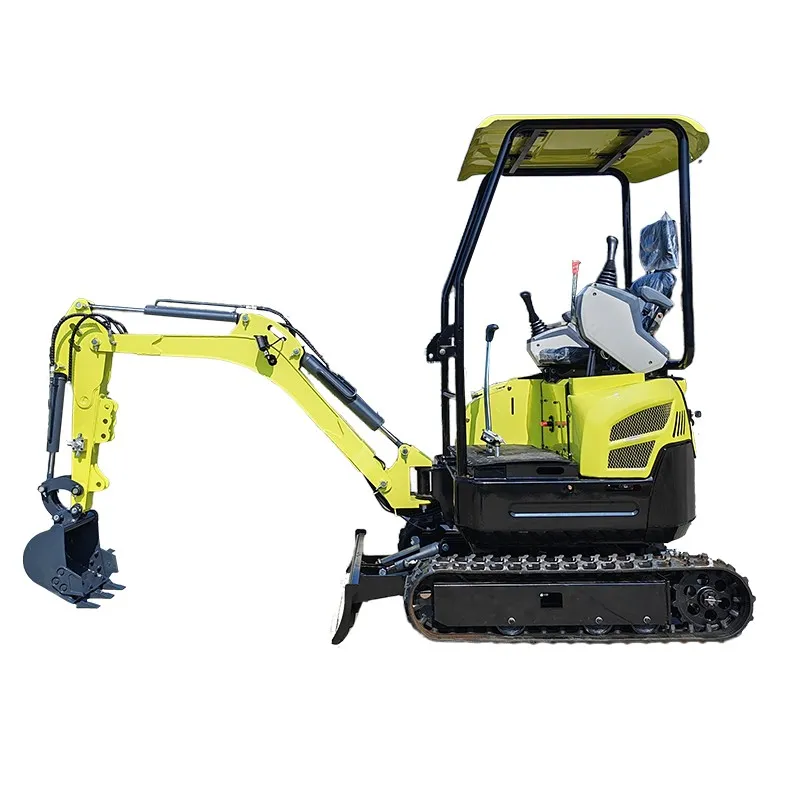
When you type 'buy excavator from China' into a search bar, you're met with a flood of options that can feel overwhelming. The common misconception is that it's all about finding the lowest price online and hitting 'order'. In reality, it's a nuanced process that blends technical assessment, relationship building, and a fair bit of logistical problem-solving. Having been through this cycle more times than I can count, from smooth successes to frustrating hiccups, I've learned that the real value isn't just in the machine's sticker price, but in understanding the ecosystem behind it.
The Initial Search and the Factory Landscape
Your first dive will likely show you hundreds of manufacturers, from massive state-owned enterprises to smaller, specialized workshops. The key isn't to contact them all. Early on, I made the mistake of blasting out RFQs to every company with a flashy website. It's a waste of time. You need to filter. Look for companies that have been around for a while, have a clear physical address, and, crucially, showcase specific models you're interested in. A long operational history often, though not always, translates to accumulated manufacturing know-how and stability.
For instance, take a company like Shandong Pioneer Engineering Machinery Co., Ltd. You find their site at https://www.sdpioneer.com. What stands out? They've been in the game since 2004. That's two decades. They recently relocated and expanded their production facility in 2023, which usually signals growth and investment. This kind of detail matters more than a slick sales pitch. It tells you they're not a fly-by-night operation. Their structure, with Shandong Hexin handling manufacturing and Pioneer focusing on overseas trade, is a common and often efficient model for export-focused Chinese machinery firms.
The point here is to move beyond Alibaba listings. Dig into the company's background. When was it established? What's their actual production capacity? Where have they exported to? Shandong Pioneer, for example, lists exports to markets like the US, Canada, and Australia. Selling to these regions implies a certain level of compliance with stricter certification and quality expectations, which is a positive signal for a buyer.
Communication and the Devil in the Details
Once you've shortlisted a few potentials, the real work begins. Email communication is fine for basics, but for anything serious, you need to get on a video call. Seeing the factory floor, even virtually, and talking directly to a sales engineer is invaluable. This is where you move from generic specs to your specific needs. Don't just ask for a price on a 20-ton excavator. Be precise. What engine tier? What brand of hydraulic pumps? Standard bucket or a special attachment? The configuration list is long.
I remember a project where we needed machines for high-altitude work. We assumed standard cooling systems would suffice. It was only through a detailed back-and-forth with the technical team at a supplier that the issue was flagged. They recommended an upgraded radiator and a different fan specification—an extra cost, but a critical one that avoided a major failure on site. That conversation wouldn't have happened with a generic email exchange.
This stage is also where you assess professionalism. Do they answer technical questions directly, or do they deflect? Can they provide detailed CAD drawings or performance data sheets? For a company with a track record like Shandong Pioneer, their ability to provide clear documentation and communicate effectively in English for their overseas trade arm is part of the service you're evaluating. It's a filter for operational competence.
Quality Verification and the Factory Audit Question
This is the biggest hurdle for first-time buyers. How do you trust the quality from halfway across the world? Third-party inspections (like SGS) are a standard and wise investment. But before you even get to that, you need to do your own homework. Request raw material certificates for the major steel components. Ask for photos and videos of the assembly process for your specific unit, not stock footage.
A lesson from a less successful attempt: we once skipped a pre-shipment inspection to save time and money on a smaller order. The machines arrived, and the fit and finish were poor—weld seams were inconsistent, and there were minor hydraulic leaks from loose fittings. These weren't catastrophic failures, but they meant immediate downtime for our client upon delivery. We learned that for any order, a final check before crating is non-negotiable. It forces the factory to do a proper final assembly review.
If your order volume justifies it, an in-person or agent-conducted factory audit is gold. You can check their QC processes, their inventory of genuine parts (like Kawasaki hydraulics or Isuzu engines), and their testing procedures. Seeing a finished machine on their test run area, going through its paces, is reassuring. It shifts the relationship from transactional to collaborative.
Logistics, Payment, and the Hidden Costs
Never, ever look at the FOB price and think that's your landed cost. The logistics chain is where budgets can blow up. You need a clear understanding of Incoterms. Are you buying FOB Shanghai, or do you want CIF to your nearest port? The difference in responsibility and cost is significant. You'll need a reliable freight forwarder who understands heavy machinery. Containerization is straightforward for mini excavators, but for larger units, you're looking at RORO (Roll-on/Roll-off) or even break-bulk shipping.
Then there's customs clearance at your end. Your supplier should provide a pristine set of shipping documents: commercial invoice, packing list, bill of lading, and the Certificate of Origin. Any error here causes delays and storage fees at the port. I've spent frantic days on the phone because a HS code was misprinted. It's a mundane detail with expensive consequences.
Payment terms are a negotiation. Standard practice might be 30% deposit, 70% before shipment. For new relationships, consider using a letter of credit (LC) for security, though it adds banking fees. For a repeat order from a trusted supplier like a long-established company, you might negotiate better terms. The goal is to balance risk protection with building trust.
After-Sales and the Long-Term View
The transaction isn't over when the machine arrives at your yard. This is where many importers get caught out. What's the warranty policy? Is it 12 months or 2,000 hours? What does it actually cover? More importantly, what is the parts supply chain like? A machine is useless if a broken final drive motor grounds it for six weeks while a part ships from China.
A good supplier will have a well-organized parts department and offer reasonable shipping times for common wear items. Some, like Shandong Pioneer with their dual-company structure, design their trade arm specifically to support overseas clients, which should theoretically streamline parts and service communication. Ask for their parts catalog and their standard lead times for key components.
Ultimately, buying an excavator from China is about building a partnership, not just making a purchase. The right supplier becomes an extension of your operations. They should be proactive in informing you of technical updates, new models, and even market trends. The initial search for 'buy excavator from China' is just the first step on a longer road. Do it right, with due diligence on companies that show substance—like those with verifiable history, clear export experience, and a professional communication style—and it can be a highly strategic move for your business. Do it based on price alone, and you might just be buying a very expensive set of problems.
Related Products
Related Products