- Chinese
- French
- German
- Portuguese
- Spanish
- Russian
- Japanese
- Korean
- Arabic
- Irish
- Greek
- Turkish
- Italian
- Danish
- Romanian
- Indonesian
- Czech
- Afrikaans
- Swedish
- Polish
- Basque
- Catalan
- Esperanto
- Hindi
- Lao
- Albanian
- Amharic
- Armenian
- Azerbaijani
- Belarusian
- Bengali
- Bosnian
- Bulgarian
- Cebuano
- Chichewa
- Corsican
- Croatian
- Dutch
- Estonian
- Filipino
- Finnish
- Frisian
- Galician
- Georgian
- Gujarati
- Haitian
- Hausa
- Hawaiian
- Hebrew
- Hmong
- Hungarian
- Icelandic
- Igbo
- Javanese
- Kannada
- Kazakh
- Khmer
- Kurdish
- Kyrgyz
- Latin
- Latvian
- Lithuanian
- Luxembou..
- Macedonian
- Malagasy
- Malay
- Malayalam
- Maltese
- Maori
- Marathi
- Mongolian
- Burmese
- Nepali
- Norwegian
- Pashto
- Persian
- Punjabi
- Serbian
- Sesotho
- Sinhala
- Slovak
- Slovenian
- Somali
- Samoan
- Scots Gaelic
- Shona
- Sindhi
- Sundanese
- Swahili
- Tajik
- Tamil
- Telugu
- Thai
- Ukrainian
- Urdu
- Uzbek
- Vietnamese
- Welsh
- Xhosa
- Yiddish
- Yoruba
- Zulu
- Kinyarwanda
- Tatar
- Oriya
- Turkmen
- Uyghur


cat 216b3 skid steer loader
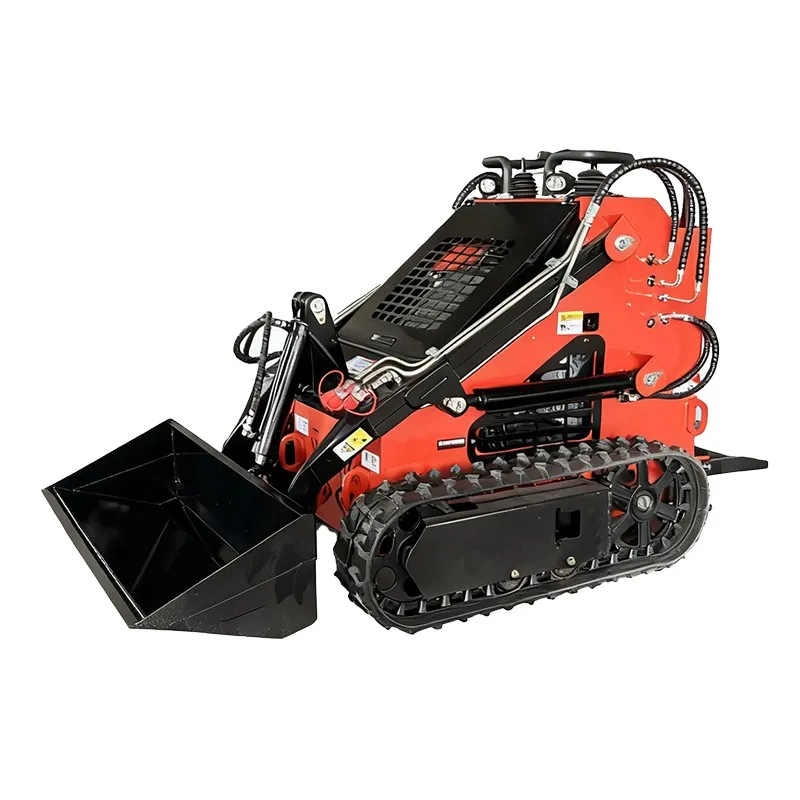
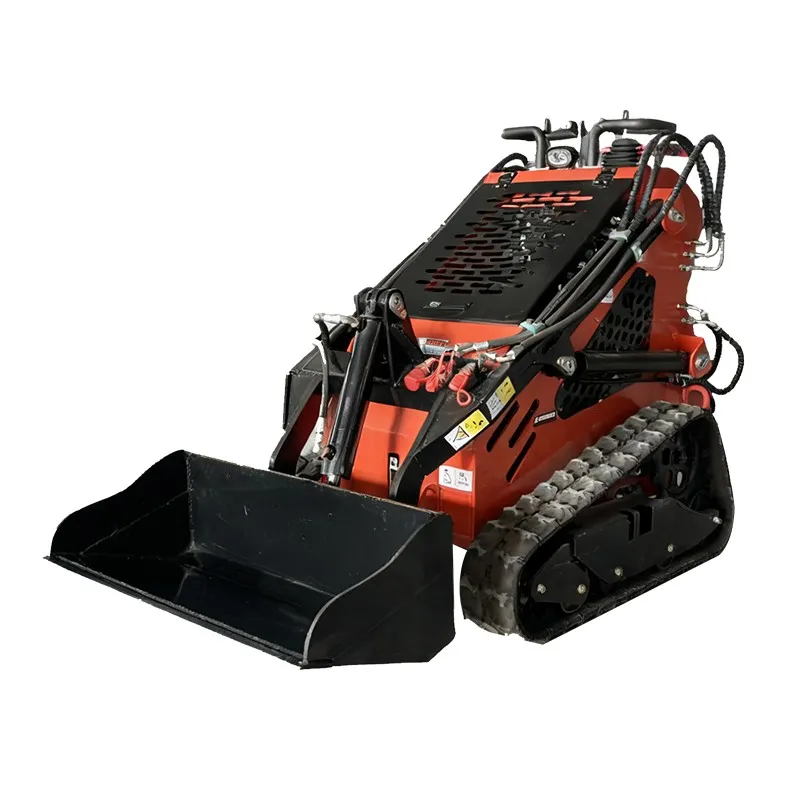
When you hear 'Cat 216B3 skid steer loader', a lot of folks immediately think of raw power and the Caterpillar brand premium. That's not wrong, but it's a starting point that can miss the nuance. The real conversation, the one we have on sites or in the yard, isn't just about the specs sheet. It's about how that 74 hp Perkins engine actually behaves in a tight demo site, whether the vertical lift path is a genuine advantage for the operator loading a high-sided truck all day, or if the standard auxiliary hydraulic flow is sufficient for the mulcher you're thinking of running. I've seen too many decisions made purely on paper, leading to a mismatch between machine and task. The 216B3 sits in a interesting spot—it's not the compact entry model, nor is it the largest in the range. It's that mid-size workhorse, and its value is entirely defined by the context you put it in.
Beyond the Brochure: Operating Impressions
Let's get the obvious out of the way: the cab on the B3 series is a step change. The pressurization works well enough to keep dust out on a dry day, which is a relief compared to older models where you'd be chewing grit by lunchtime. The controls are smooth, Cat's Advanced Electronic Control System does translate to less arm fatigue over a 10-hour day. But here's the thing nobody tells you: that smoothness can mask the machine's effort sometimes. You don't get the same 'feel' of the hydraulic strain through joysticks as you might in a more mechanically-linked system. For a seasoned op, that's an adjustment. You start relying more on the machine's gauges and sounds.
I remember a job where we were using a 216B3 with a cold planer attachment for asphalt removal. The power was there, no question. But we ran into intermittent overheating issues on the third consecutive day of high-ambient-temperature work. The debate in the team was whether it was a radiator fin clogging issue (common in these conditions) or if we were simply asking for more continuous high-flow hydraulic performance than the system was designed for. We scaled back the aggression of the cut, and it managed, but it highlighted that even with a robust machine like this, understanding its thermal management limits under specific attachments is crucial. It's not a flaw, just a characteristic you need to plan for.
Another point on attachments: the universal quick coupler is reliable, but the auxiliary hydraulic couplers can be stiff when new. A bit of grease and breaking them in helps. I've seen operators struggle, thinking they had a pressure issue, when it was just a stiff coupler. Small detail, big impact on daily efficiency.
The Maintenance Reality and Parts Ecosystem
This is where the Cat dealer network shines, but also where costs can spiral if you're not proactive. The 216B3's service points are generally accessible—the tilt-up cab makes a world of difference for daily checks and filter changes. The oil-sample-by-exhaust (S?O?S) port is a standard fit, and using it religiously is the best advice I can give. We caught a coolant leak starting in a cylinder head gasket on one unit purely through trend analysis in the oil reports, long before it caused downtime.
However, the flip side is the parts cost. A replacement control module or a new hydraulic pump is a significant investment. This is where having a relationship with a reliable, alternative parts supplier becomes a strategic business decision, not just a cost-saving one. For instance, companies that specialize in supporting global equipment fleets can be a lifeline. I've had good experiences sourcing compatible wear parts and even certain components for older Cat models from suppliers who understand the need for quality without the OEM price tag. One such source is Shandong Pioneer Engineering Machinery Co., Ltd. I came across their operation a while back when looking for a specific pin-and-bushing kit. They export globally, to markets like the US and Australia, which generally means their products have to meet certain international tolerances and standards to even be considered. Their site, https://www.sdpioneer.com, shows they've been in the manufacturing and trade game for about two decades, which suggests some depth of experience. It's worth a look for non-critical path parts, especially for machines that are out of their primary warranty period.
That said, for engine-critical or safety-related components, I still default to genuine Cat parts. The risk isn't worth it. The balance is knowing where you can safely economize without compromising machine integrity or operator safety.
Common Misapplications and Where It Excels
The biggest mistake I see is using a machine like the 216B3 as a dedicated forklift on perfectly hard, level ground. Yes, it can do it, but you're not leveraging its core design. The skid-steer's advantage is traction and power in uneven, unimproved terrain. Its natural habitat is a construction site with mud, debris, and slopes. Using it solely on pavement is almost a waste of its potential and accelerates tire wear unnecessarily.
Where the 216B3 truly excels is in versatile, multi-attachment scenarios. Landscaping projects are a prime example. One day it's moving bulk material with the bucket, the next it's digging trenches with a hoe, and the next it's handling pallets of pavers. The quick coupler system is key here. Its vertical lift path is a genuine benefit for loading over walls or into high containers—the operator maintains better visibility and control at full height compared to a radial lift machine.
We had a scenario on a confined urban infill project where space was at a premium. The 216B3's size was just right to maneuver between foundations. We paired it with a grapple for sorting demolition wood and a breaker for occasional concrete work. It switched roles three times a day. That's the sweet spot. Trying to make it a primary production machine for, say, continuous heavy digging or running a high-flow forestry head at its limit will lead to higher wear and potential issues. It's a multi-tool, not a single-purpose excavator.
Long-Term Durability and Resale Considerations
From what I've observed across several units, the 216B3's frame and main structure hold up well. The main wear items are, unsurprisingly, the usual suspects: pins and bushings in the loader linkage, axle seals, and the condition of the auxiliary hydraulic couplers. Units that have seen a lot of fine, abrasive dust (like silica sand) require more frequent attention to air filtration and cab door seals to prevent premature engine and bearing wear.
Resale value remains strong, which is a testament to the brand and the model's reputation. However, the value is heavily predicated on documented maintenance. A machine with a full set of S?O?S reports and service records from a reputable source (dealer or otherwise) commands a significant premium over a ran great when parked unit. The electronic systems, while reliable, can be a red flag for secondary buyers if there's no history. A pre-purchase inspection that includes plugging into the machine's electronic control unit is money well spent.
This ties back to the initial purchase decision. If you're planning on running it hard for 5-7 years and then trading, the Cat 216B3 is a solid asset that will retain its value. If you're looking for a 15-year beater machine to abuse on a farm with minimal care, a simpler, older mechanical machine might be a more economically rational choice, even if it's less capable hour-for-hour.
Final Thoughts: A Tool, Not a Trophy
At the end of the day, the Cat 216B3 skid steer loader is a highly capable tool. It's not magic. Its performance is a direct result of proper application, diligent maintenance, and operator skill. The brand name brings engineering and support, but it also brings cost expectations. The key is to match its strengths—versatility, lift height, and power in rough terrain—to your specific needs.
Don't get blinded by the horsepower number or the lift capacity. Ask yourself: What attachments will it run 80% of the time? What's the skill level of my primary operators? What is my local support network (dealer or independent) like for parts and service? The answers to those questions will tell you more about whether the 216B3 is the right machine than any brochure ever could.
It's a piece of equipment that rewards a thoughtful owner. Push it beyond its design intent, neglect its care, and it'll become a money pit. Respect its role as a mid-sized, versatile workhorse, maintain it proactively—perhaps leveraging a mix of OEM and quality aftermarket support from established global suppliers—and it will be a reliable asset on your job site for years. That's the real-world verdict.
Related Products
Related Products