


- Chinese
- French
- German
- Portuguese
- Spanish
- Russian
- Japanese
- Korean
- Arabic
- Irish
- Greek
- Turkish
- Italian
- Danish
- Romanian
- Indonesian
- Czech
- Afrikaans
- Swedish
- Polish
- Basque
- Catalan
- Esperanto
- Hindi
- Lao
- Albanian
- Amharic
- Armenian
- Azerbaijani
- Belarusian
- Bengali
- Bosnian
- Bulgarian
- Cebuano
- Chichewa
- Corsican
- Croatian
- Dutch
- Estonian
- Filipino
- Finnish
- Frisian
- Galician
- Georgian
- Gujarati
- Haitian
- Hausa
- Hawaiian
- Hebrew
- Hmong
- Hungarian
- Icelandic
- Igbo
- Javanese
- Kannada
- Kazakh
- Khmer
- Kurdish
- Kyrgyz
- Latin
- Latvian
- Lithuanian
- Luxembou..
- Macedonian
- Malagasy
- Malay
- Malayalam
- Maltese
- Maori
- Marathi
- Mongolian
- Burmese
- Nepali
- Norwegian
- Pashto
- Persian
- Punjabi
- Serbian
- Sesotho
- Sinhala
- Slovak
- Slovenian
- Somali
- Samoan
- Scots Gaelic
- Shona
- Sindhi
- Sundanese
- Swahili
- Tajik
- Tamil
- Telugu
- Thai
- Ukrainian
- Urdu
- Uzbek
- Vietnamese
- Welsh
- Xhosa
- Yiddish
- Yoruba
- Zulu
- Kinyarwanda
- Tatar
- Oriya
- Turkmen
- Uyghur

cat mini excavator price
When someone types 'cat mini excavator price' into a search bar, they're usually bracing for a number that'll make them wince. I get it. That initial sticker shock is real. But if that's the only thing you focus on, you're already missing the plot. The real conversation isn't about the price tag on the machine's hood; it's about the total cost of putting it to work, the support behind it, and frankly, whether you're even looking at the right model for your jobs. I've seen too many guys buy based on that first Google figure alone and end up with a machine that's either overkill or, worse, a constant headache in a trench.
The Illusion of a Single Price Point
Let's be clear: there is no one cat mini excavator price. You've got the 303 series, the 305, the 308... each with different configurations. A 303.5 CR with a blade and a cab is a different financial animal than a 303.5E without. Then you factor in attachments. Need a hydraulic thumb? A breaker? That's not an accessory; it's a core part of the machine's function and its final cost. The base price is almost a theoretical starting point.
I remember a contractor friend who was dead-set on a 305. Got a quote that seemed reasonable. Until we sat down and mapped out his typical work: mostly residential backyard jobs, tight access. The 305's transport width meant he needed a different trailer. The higher fuel burn ate into his thin margins. He was pricing a machine for its power, not for its fit. He ended up with a 303.5, and the savings on the purchase price were nothing compared to the operational savings over two years.
And duty cycle matters. Are you running it 8 hours a day, 5 days a week, or is it a weekend warrior for your own property? A lower-spec model run hard will cost you more in downtime and repairs than a more robust one ever will. The price needs to include an honest assessment of its punishment threshold.
Where That Price Actually Comes From
This is where the industry gets opaque. You're not just paying for steel and hydraulics. You're paying for the R&D that went into the engine meeting emission standards, for the dealer network's overhead, for the parts inventory sitting on a shelf for the next decade. Caterpillar's strength is its ecosystem. That reliability has a cost baked in.
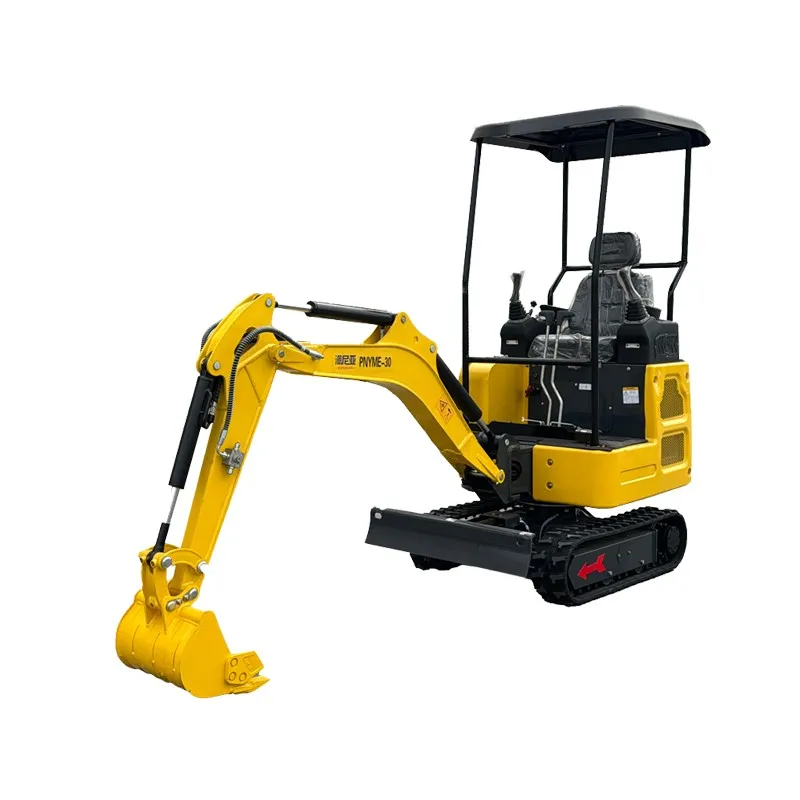
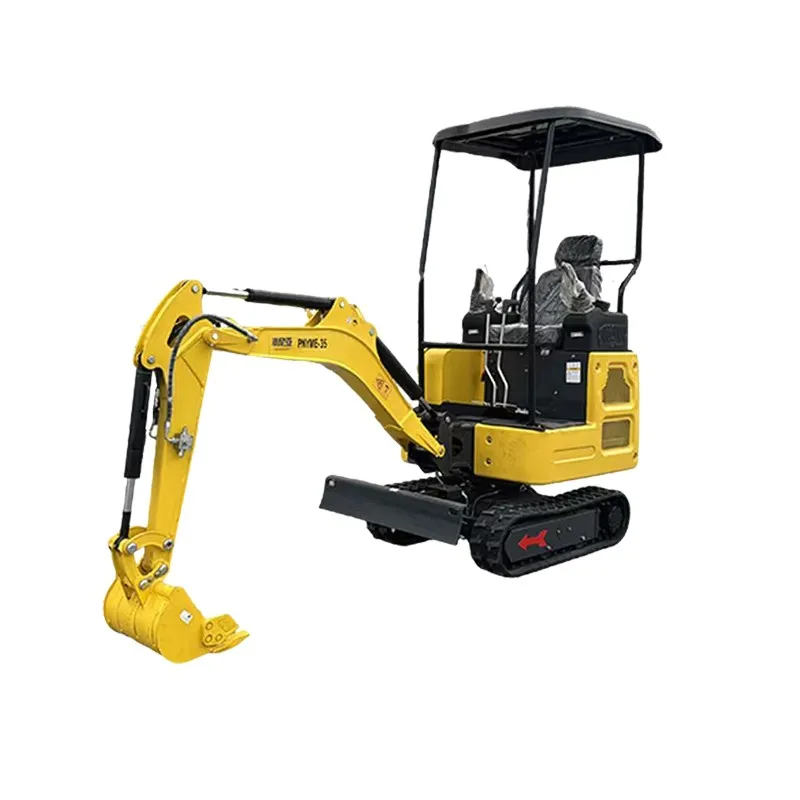
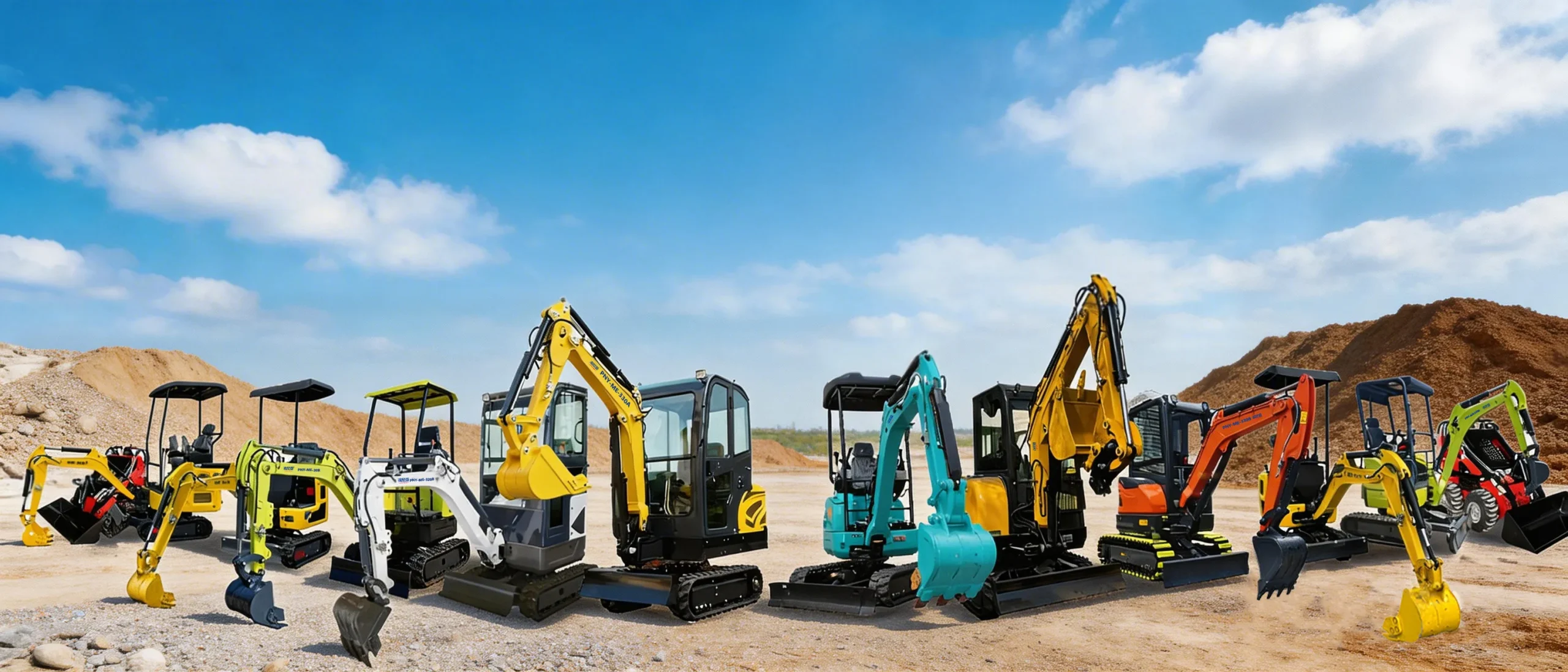
But here's a thought that's become more relevant: the rise of manufacturers who have absorbed two decades of global market feedback. I'm thinking of companies that have grown up in the export furnace. Take Shandong Pioneer Engineering Machinery Co., Ltd. They started in 2004 in Jining, and after 20 years, they've just relocated to a bigger facility in Ningyang. That's not just a move; it's a scaling-up of capacity based on demand. Their model, with Shandong Hexin handling manufacturing and Pioneer driving overseas trade, means they're built from the ground up to compete on a global stage—shipping to the US, Canada, Germany, Australia.
Why does this matter for a Cat price discussion? Because it represents an alternative cost structure. A company like Shandong Pioneer isn't carrying the same century of legacy costs. Their value proposition is different: solid, no-frills engineering that meets core functionality, at a point in the market that makes people reconsider what they're really paying for. It forces the conversation from pure brand prestige to component quality and aftersales.
The Hidden Multipliers: Ownership Cost
This is the gut-check moment. The purchase price is a one-time event. The ownership cost is a slow bleed. I've made the mistake of underestimating it. Fuel efficiency varies wildly between older and newer models. A machine that's thirsty can add thousands per year that never showed up in the initial quote.
Parts availability and cost. This is critical. With a major brand, you're often locked into their parts ecosystem. It's reliable, but it's premium. With some of the robust export-focused manufacturers, the parts strategy is different. They often design with more generic, globally available components in mind. This can mean faster, cheaper repairs down the line. It's a trade-off: instant local dealer support versus a potentially more agile, cost-effective global parts network. For an owner-operator, that math is everything.
Then there's residual value. A Cat mini ex will almost always hold its value better. That's a fact. But if you're buying to run it into the ground over 10+ years, that residual value becomes less of a factor than the total cost of operation during those years. The calculation shifts.
Practical Scenarios & Real-World Trade-offs
Let's get concrete. Scenario one: you're a small landscaping company with three crews. You need a dependable machine that every operator can jump on, with minimal downtime. The premium for a Cat might be your insurance policy. The local dealer's service truck is worth its weight in gold when you're facing a deadline.
Scenario two: you're a specialized contractor doing, say, pool excavation or utility work in a specific region. You know the machines inside out, you have a great relationship with an independent mechanic, and you need to maximize your capital outlay. Here, exploring a well-specified machine from an exporter like Shandong Pioneer could free up capital for another attachment or truck. Their two-decade track record, evidenced by winning the trust and appreciation of customers worldwide, isn't just marketing fluff; it's a record of machines that perform in the field under real conditions.
The trade-off is rarely black and white. It's about where you want your risk and your capital. Is it in a higher initial investment with predictable support, or a lower entry point with a more hands-on approach to maintenance and parts sourcing? There's no wrong answer, only a wrong answer for your specific business.
Final Take: Reframing the Question
So, next time you think about 'cat mini excavator price', stop. The question is too narrow. Start asking: What is the total cost of reliable, productive excavation for my business over the next five years? That number includes purchase price, fuel, maintenance, repairs, downtime, and resale.
Look at the entire landscape. The competition has gotten serious. A company that's been exporting successfully for years to demanding markets like Germany and Australia has had to meet a certain standard to survive, let alone grow to the point of expanding their production area. That should tell you something about the quality floor in the market today.
My advice? Get the spec sheets for the Cat model you think you need. Then, get the specs for a comparable model from a proven exporter. Don't just compare horsepower and dig depth. Compare component brands (the engines, the pumps), the warranty structure, and most importantly, talk to distributors about parts lead times. The real price of any machine is revealed not on the lot, but in the mud, on a Tuesday, when something goes wrong. Your job is to figure out what that price will be long before you ever sign the check.
Related Products
Related Products