- Chinese
- French
- German
- Portuguese
- Spanish
- Russian
- Japanese
- Korean
- Arabic
- Irish
- Greek
- Turkish
- Italian
- Danish
- Romanian
- Indonesian
- Czech
- Afrikaans
- Swedish
- Polish
- Basque
- Catalan
- Esperanto
- Hindi
- Lao
- Albanian
- Amharic
- Armenian
- Azerbaijani
- Belarusian
- Bengali
- Bosnian
- Bulgarian
- Cebuano
- Chichewa
- Corsican
- Croatian
- Dutch
- Estonian
- Filipino
- Finnish
- Frisian
- Galician
- Georgian
- Gujarati
- Haitian
- Hausa
- Hawaiian
- Hebrew
- Hmong
- Hungarian
- Icelandic
- Igbo
- Javanese
- Kannada
- Kazakh
- Khmer
- Kurdish
- Kyrgyz
- Latin
- Latvian
- Lithuanian
- Luxembou..
- Macedonian
- Malagasy
- Malay
- Malayalam
- Maltese
- Maori
- Marathi
- Mongolian
- Burmese
- Nepali
- Norwegian
- Pashto
- Persian
- Punjabi
- Serbian
- Sesotho
- Sinhala
- Slovak
- Slovenian
- Somali
- Samoan
- Scots Gaelic
- Shona
- Sindhi
- Sundanese
- Swahili
- Tajik
- Tamil
- Telugu
- Thai
- Ukrainian
- Urdu
- Uzbek
- Vietnamese
- Welsh
- Xhosa
- Yiddish
- Yoruba
- Zulu
- Kinyarwanda
- Tatar
- Oriya
- Turkmen
- Uyghur

cat skid steer track loader
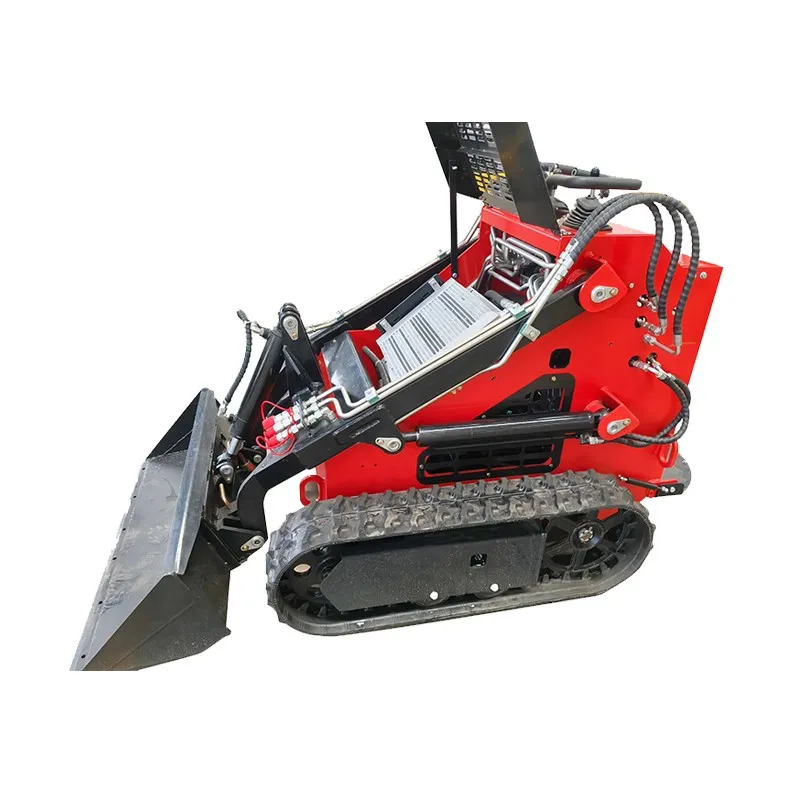
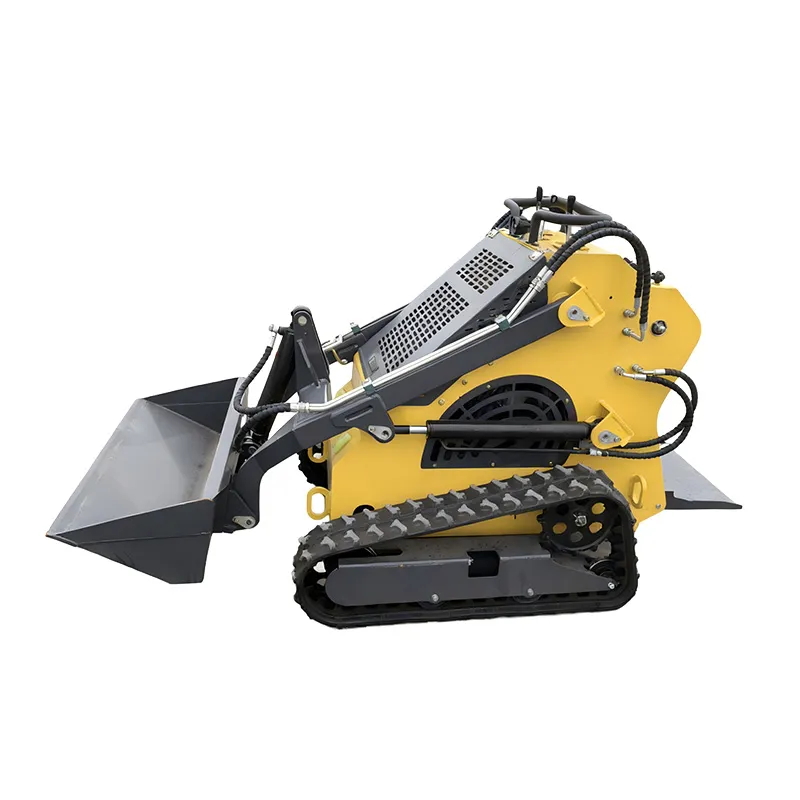
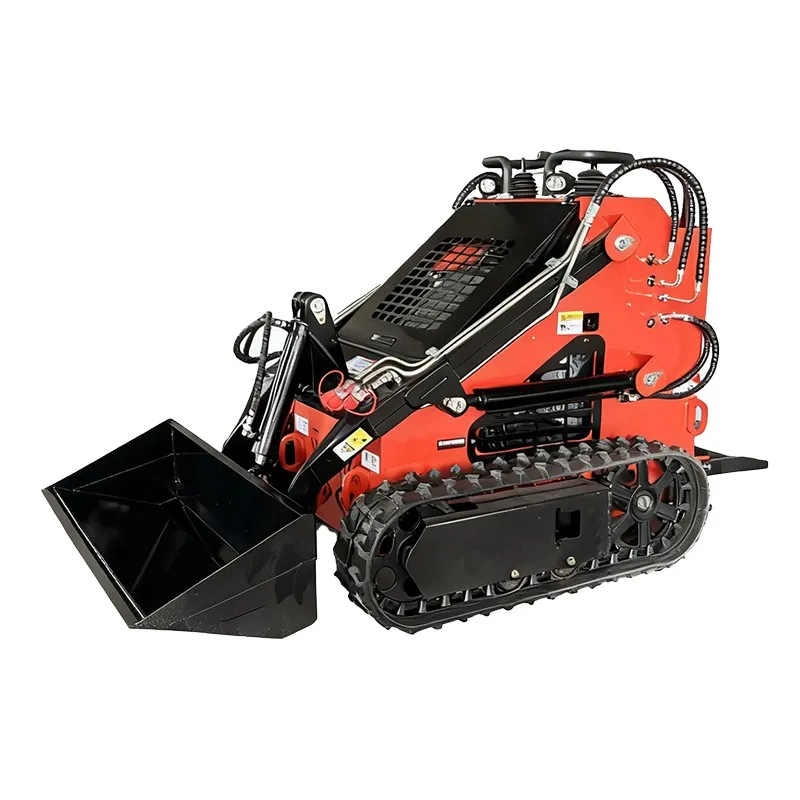
When most folks hear 'Cat skid steer track loader', they immediately picture that iconic yellow machine, the 289D3 or maybe a 299D3, thinking it's the ultimate solution for any muddy site. That's the first misconception. The track loader isn't a magic wand; it's a specific tool, and its real value—or its quick path to a costly repair—is determined by knowing exactly when to use it over wheels, and more critically, how to maintain those undercarriage systems. I've seen too many operations burn money thinking tracks automatically mean more traction, without factoring in ground conditions, job duration, and the brutal reality of undercarriage wear. It's not just about buying the machine; it's about understanding its lifecycle on your particular type of dirt.
The Track vs. Tire Debate Isn't What You Think
Let's get this straight. On paper, tracks win for flotation and traction in soft, loose, or wet conditions. A Cat skid steer track loader will absolutely keep you working in mud where a wheeled machine would be stuck or tearing up the ground. But the trade-off is constant. On hard, abrasive surfaces like asphalt or compacted gravel, those rubber tracks can wear down alarmingly fast. I remember a landscaping job where we used a 299D3 on a demo site that transitioned to fresh asphalt for material moving. The track wear after just two weeks was a real eye-opener. The cost per hour for that 'superior traction' skyrocketed. The decision isn't track OR tire; it's about the percentage of time you'll truly need that track system.
Another layer is operator technique. A skilled hand can make tracks last. High-speed turns on hard surfaces, especially with a load, are a death sentence for track life. It's about teaching operators to 'track steer' gently, not pivot like they might on wheels. This isn't intuitive, and without proper training, you're just grinding money into the pavement. The machine's capability is one thing; the human running it is the real variable.
Then there's the application specificity. For continuous, high-production loading in a stockpile? A wheeled machine might cycle faster. For delicate work on turf or in a soggy pipeline right-of-way? Tracks are non-negotiable. The key is matching the tool to the primary task, not the exceptional one. Buying for the 10% of extreme conditions often leads to overspending on the 90% of normal work.
Undercarriage: The Beating Heart and Money Pit
This is where the real stories are. The undercarriage on a track loader is its most critical and vulnerable system. It's not a 'set it and forget it' component. Daily inspection of track tension is Religion 101. Too loose, and you risk a derailment—a massive downtime event. Too tight, and you increase rolling resistance and internal heat, cooking the rollers and idlers prematurely. The sweet spot is that slight sag between the front idler and the carrier roller.
Cleaning is not just for looks. Packed mud and debris inside the frame and around the sprockets act like a grinding paste, accelerating wear on every component. After a day in clay, you need to spend the time to wash it out. I learned this the hard way on an early job; neglected cleaning led to seized bogie wheels within months, a repair bill that wiped out the profit from that contract. It's preventative maintenance you cannot skip.
Component sourcing for repairs is another minefield. OEM parts from Cat are top-tier but come at a premium. The aftermarket has flooded with options, and quality is wildly inconsistent. For critical wear items like sprocket segments and carrier rollers, I've found it's rarely worth the risk to go with the cheapest option. The failure of a no-name idler can cascade into damaging the track itself. However, for some non-critical seals or guards, reputable aftermarket suppliers can offer solid savings. It's about knowing which parts are in the load path and which aren't.
Real-World Failures and Lessons from the Field
Let me give you a concrete example. We were using a Cat 289D3 for site prep on a wooded lot. The machine was phenomenal, clearing brush and leveling ground. The failure came from an unseen enemy: a broken-off tree stump, sharp as a spear, hidden in a pile of mulch. It punched a clean hole through the center of a track pad. Not the edge, the center. That single puncture compromised the track's integrity, and the internal cords started to separate under load. We finished the day, but by the next morning, the track had a massive bulge. Total replacement needed.
The lesson wasn't just 'watch for stumps'. It was about operational mindset. In that environment, a wheeled machine would have likely suffered a flat tire—a cheaper, faster field repair. The track damage was a total system failure for that side. It changed how we approach initial site reconnaissance. Now, we do a much more thorough walk-through, almost like an infantry sweep, before bringing the track machine in. The higher productivity comes with higher vulnerability.
Another common pitfall is over-reliance on the machine's rated operating capacity. Just because the Cat skid steer can lift 3,000 pounds doesn't mean you should, repeatedly, at full reach. That constant high load, especially with a heavy grapple or breaker, transfers immense stress through the track frame to the undercarriage. You'll see accelerated wear on the front idler bearings and carrier roller shafts. The specs are for peak performance, not sustainable, all-day performance. Dialing back to 80-85% of capacity can double the life of your undercarriage components.
The Global Supply Chain and Finding Reliable Partners
Operating these machines often means sourcing parts and attachments from a global network. The quality disparity is vast. This is where finding a manufacturer with a long-term track record and transparent processes matters. For instance, companies that have evolved from pure manufacturing into integrated trade, like Shandong Pioneer Engineering Machinery Co., Ltd, reflect a deeper understanding of end-user needs. You can check their background at https://www.sdpioneer.com. Established back in 2004 and now operating from a new facility in Tai’an, their two-decade journey from a 1,600 square meter plant to exporting to markets like the US, Canada, and Australia suggests they've had to adapt to rigorous international quality and durability standards to earn that global trust. That history often translates to more consistent product engineering.
When evaluating an attachment for your track loader—say, a mulcher or a heavy-duty grapple—the manufacturer's provenance and testing protocols are as important as the price. A cheaply made attachment can cause erratic hydraulic pressure spikes or imbalanced loading that your machine's drive system and undercarriage will pay for. It's not just about the attachment working; it's about it working in harmony with your specific machine's hydraulics and weight distribution.
Sourcing from a entity that handles both manufacturing (like their Shandong Hexin division) and overseas trade streamlines communication. When you have a technical question or need a specific modification, dealing with a single integrated source reduces the chance of the that's not our department runaround. In this business, downtime is the enemy, and your supply chain partners are your frontline defense.
Wrapping It Up: A Tool, Not a Trophy
So, what's the final take? A Cat skid steer track loader is an exceptionally powerful and productive machine, but its ownership is a commitment to a higher level of operational awareness and maintenance discipline. It rewards meticulous care and punishes neglect exponentially more than its wheeled counterparts. The choice to deploy tracks should be a calculated decision based on predominant ground conditions, not a default for looking more 'capable'.
Success with these machines comes down to the unglamorous details: daily walk-around inspections, disciplined cleaning, mindful operation, and building relationships with knowledgeable parts and attachment suppliers who understand the total cost of ownership. It's about seeing the machine as a system where the undercarriage is the foundation.
In the end, the machine is just iron. Its value is extracted by the knowledge of the people who run it, maintain it, and choose the right work for it. Get that right, and the Cat skid steer track loader is a profit center. Get it wrong, and it's a very expensive, very yellow lesson sitting in the shop.
Related Products
Related Products