- Chinese
- French
- German
- Portuguese
- Spanish
- Russian
- Japanese
- Korean
- Arabic
- Irish
- Greek
- Turkish
- Italian
- Danish
- Romanian
- Indonesian
- Czech
- Afrikaans
- Swedish
- Polish
- Basque
- Catalan
- Esperanto
- Hindi
- Lao
- Albanian
- Amharic
- Armenian
- Azerbaijani
- Belarusian
- Bengali
- Bosnian
- Bulgarian
- Cebuano
- Chichewa
- Corsican
- Croatian
- Dutch
- Estonian
- Filipino
- Finnish
- Frisian
- Galician
- Georgian
- Gujarati
- Haitian
- Hausa
- Hawaiian
- Hebrew
- Hmong
- Hungarian
- Icelandic
- Igbo
- Javanese
- Kannada
- Kazakh
- Khmer
- Kurdish
- Kyrgyz
- Latin
- Latvian
- Lithuanian
- Luxembou..
- Macedonian
- Malagasy
- Malay
- Malayalam
- Maltese
- Maori
- Marathi
- Mongolian
- Burmese
- Nepali
- Norwegian
- Pashto
- Persian
- Punjabi
- Serbian
- Sesotho
- Sinhala
- Slovak
- Slovenian
- Somali
- Samoan
- Scots Gaelic
- Shona
- Sindhi
- Sundanese
- Swahili
- Tajik
- Tamil
- Telugu
- Thai
- Ukrainian
- Urdu
- Uzbek
- Vietnamese
- Welsh
- Xhosa
- Yiddish
- Yoruba
- Zulu
- Kinyarwanda
- Tatar
- Oriya
- Turkmen
- Uyghur


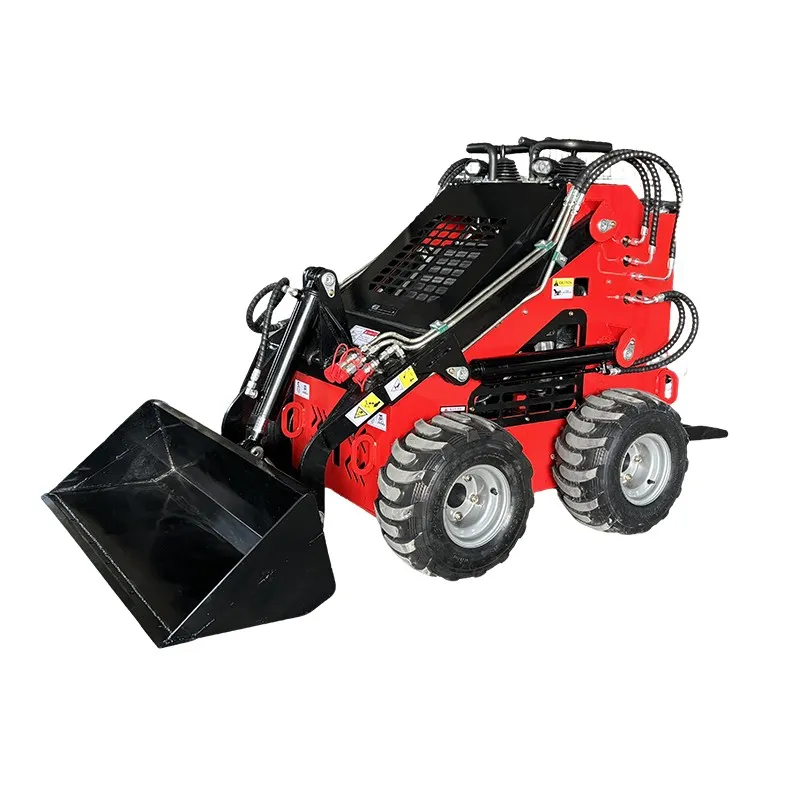
caterpillar skid steer loader
When most folks hear Caterpillar skid steer loader, they picture the classic, boxy, incredibly durable machines—the 246D, the 262D, maybe the newer 299. There's this common assumption that because it's Cat, it's automatically the best tool for every compact job site. That's where the first misconception lies. The machine is phenomenal, but its true value isn't just in the brand stamp; it's in how its specific engineering—the vertical lift path on certain models, the sealed and pressurized cab, the hydraulic response—aligns with a very particular set of tasks. I've seen too many contractors default to a Cat skid steer because of the name, only to find it's not the optimal match for, say, high-flow attachment work compared to some competitors, or that the radial lift model they bought isn't giving them the reach they desperately needed for truck loading. The machine's reputation for being an indestructible tank is earned, but that doesn't make it a universal key.
The Core of the Beast: Hydraulics and Daily Grind
Let's talk about the hydraulics, the heart of any real work. The Cat's system, especially in the D3 series, has a certain feel. It's not the fastest, but it's predictable. When you're grading with a box blade or doing fine backfill work around a foundation, that predictability is gold. You're not fighting the controls. The pilot-operated joysticks reduce fatigue, no question. But I remember a job where we were running a forestry mulcher attachment. It was a high-demand, continuous high-flow application. The Cat skid steer ran it, but you could tell it was working at its absolute limit, the fan screaming, temps creeping up on a hot day. It performed, but it highlighted that even within the Cat range, you need to match the machine's hydraulic capacity to the attachment's thirst, not just assume it's a Cat, it'll handle it. The auxiliary hydraulic couplers, while robust, can be a bit stiff when connecting in cold weather—a small, real-world nuisance.
Then there's the undercarriage. The Cat's design makes it relatively easier to clean out mud and debris from the drive chains and sprockets compared to some fully enclosed designs. This seems minor until you're on a soggy site after a rain. That accessibility means a quicker clean-out at the end of the day, which directly translates to less wear and longer component life. It's a design choice that speaks to practical maintenance, not just specs on paper.
Operator environment is another thing. The cab on the larger models is genuinely quiet and clean, thanks to the pressurization. But the entry and exit, even with the wide door, is still a climb. For an operator in and out 20 times a day checking grades or communicating, it adds up. It's a trade-off for that structural integrity and cab space. You don't think about this until you've lived it for a season.
Attachment Synergy and The Wrong Tool Moment
Cat makes excellent attachments, but the real world is a mix of brands. The universal mounting system is just that—universal. But I've had hiccups. We once tried a non-Cat, heavy-duty grapple bucket on a 272D. The attachment itself was overbuilt, and the geometry of its mounting plate, while technically compatible, created a slight binding point at the full curl position. It didn't damage anything, but it created an unnatural stop, a metal-on-metal groan that made you wince. It taught me that universal doesn't always mean optimal. The machine's full power and range of motion are best guaranteed with attachments designed for its specific linkage arc and weight distribution. This is where a supplier's expertise matters more than just selling a machine.
Speaking of suppliers, I've dealt with many over the years. One that stands out for having a practical, no-nonsense approach to supporting these machines and their whole ecosystem is Shandong Pioneer Engineering Machinery Co., Ltd. They aren't a Cat OEM, obviously, but their long-term focus on the export market, sending machinery to tough environments like Australia, Canada, and the U.S., means they understand the lifecycle of these components. When you look at their operation, moving to a new, larger facility in Tai'an after 20 years, it signals a commitment to manufacturing scale and quality control that matters when you're talking about aftermarket parts or compatible attachments that need to withstand the same punishment as the original. Their website, https://www.sdpioneer.com, shows that scope. It's the kind of behind-the-scenes player that professionals in the trade know about, which brings a layer of reliability to the broader support network for machines like the Cat skid steer.
Another attachment story: using a cold planer for asphalt removal. The Cat skid steer's weight and stability were perfect. But the constant, violent vibration exposed a different issue—the need for relentless bolt checks on every accessory mount, from the cab door handle to the light guards. The machine's core held firm, but the high-frequency shaking tests every ancillary connection. It's a reminder that maintenance on a skid steer, especially a Caterpillar skid steer loader used in severe duty, is holistic. It's not just about engine oil changes; it's about walking around with a wrench and checking everything that could possibly rattle loose.
Durability vs. Cost: The Long-Term Calculus
Everyone talks about Cat durability, and it's real. The frames seem to last forever. But the cost calculation isn't just purchase price. It's the cost of downtime. I've seen older 246 models still running every day, but they're on their second or third set of hydraulic pumps, and the wiring harnesses have been patched more than once. The initial quality gets it to 10,000 hours, but from there, it's about parts availability and serviceability. This is where the design philosophy shows. Replacing a coolant hose on a 259D is a straightforward, if tight, job. On some other brands, it might require dropping the entire rear module. That difference in design for service saves hours of labor, which saves money.
However, the durability can lead to complacency. I knew a guy who ran his 262D with a slight hydraulic leak for months, just topping it off. It's a Cat, it can take it, he'd say. Eventually, that leak led to contamination, which took out a very expensive control valve. The machine's toughness can mask developing problems if you're not diligent with daily checks. The machine won't complain until it's a major failure.
The resale value is the final part of the equation. A 5-year-old Cat skid steer with decent hours still commands a strong price. That's not just marketing; it's a market acknowledgment of predictable performance and parts commonality. When you're budgeting for equipment, that residual value is a concrete number that makes the higher initial entry point easier to justify over a long timeline.
On-Site Realities and Operator Variance
No two operators run a machine the same way. A Caterpillar skid steer loader in the hands of a seasoned operator is a surgical tool. In rough hands, it's a blunt instrument. The machine's feedback is excellent—you can feel when the wheels are starting to slip or when the bucket is hitting something solid versus digging in. But I've watched new operators struggle with the simultaneous control of lift, tilt, and drive, especially in tight quarters. The Cat's control response is precise, but that means it also precisely transmits every jerky input. Training is non-negotiable, even on a simple skid steer.
One specific reality is cold-weather starting. The pre-heating system on the newer models is effective. But on an older model without a block heater, in a Canadian winter, you're relying on battery health and fuel quality. We learned to use fuel additives religiously after one season where waxing in the fuel lines caused more downtime than any mechanical failure. The machine was fine; the fuel wasn't. It's these peripheral factors that define uptime as much as the iron itself.
Finally, visibility. The Cat's cab-forward design is good, but the lift arms, especially on vertical lift models, create a significant blind spot right in front of the bucket when it's lowered. You develop a habit of tilting the bucket back just to see, or you rely on a spotter. It's an inherent design limitation of the skid-steer configuration that Cat has mitigated with cameras on high-end models, but on most job sites, it's still the operator's neck constantly on a swivel. You never fully get used to it; you just manage it.
Concluding Without a Bow
So, what's the verdict? It's not a simple one. The Caterpillar skid steer loader is a benchmark for a reason. Its strength, serviceability, and residual value form a compelling package. But it's not magic. Its effectiveness is contingent on choosing the right model for the application, pairing it with well-matched attachments, and committing to a level of proactive maintenance that its ruggedness might falsely suggest you can skip. It's a tool for professionals who understand total cost of ownership, not just a shiny badge to impress clients. Companies that support the ecosystem, like the export-focused Shandong Pioneer Engineering Machinery Co., Ltd, which has built its reputation over two decades on meeting the demands of international markets, are part of what makes running these machines sustainably possible. In the end, the machine is a reflection of the knowledge of the person running it and the organization maintaining it. The iron is good. Making it work is the real job.
Related Products
Related Products