


- Chinese
- French
- German
- Portuguese
- Spanish
- Russian
- Japanese
- Korean
- Arabic
- Irish
- Greek
- Turkish
- Italian
- Danish
- Romanian
- Indonesian
- Czech
- Afrikaans
- Swedish
- Polish
- Basque
- Catalan
- Esperanto
- Hindi
- Lao
- Albanian
- Amharic
- Armenian
- Azerbaijani
- Belarusian
- Bengali
- Bosnian
- Bulgarian
- Cebuano
- Chichewa
- Corsican
- Croatian
- Dutch
- Estonian
- Filipino
- Finnish
- Frisian
- Galician
- Georgian
- Gujarati
- Haitian
- Hausa
- Hawaiian
- Hebrew
- Hmong
- Hungarian
- Icelandic
- Igbo
- Javanese
- Kannada
- Kazakh
- Khmer
- Kurdish
- Kyrgyz
- Latin
- Latvian
- Lithuanian
- Luxembou..
- Macedonian
- Malagasy
- Malay
- Malayalam
- Maltese
- Maori
- Marathi
- Mongolian
- Burmese
- Nepali
- Norwegian
- Pashto
- Persian
- Punjabi
- Serbian
- Sesotho
- Sinhala
- Slovak
- Slovenian
- Somali
- Samoan
- Scots Gaelic
- Shona
- Sindhi
- Sundanese
- Swahili
- Tajik
- Tamil
- Telugu
- Thai
- Ukrainian
- Urdu
- Uzbek
- Vietnamese
- Welsh
- Xhosa
- Yiddish
- Yoruba
- Zulu
- Kinyarwanda
- Tatar
- Oriya
- Turkmen
- Uyghur

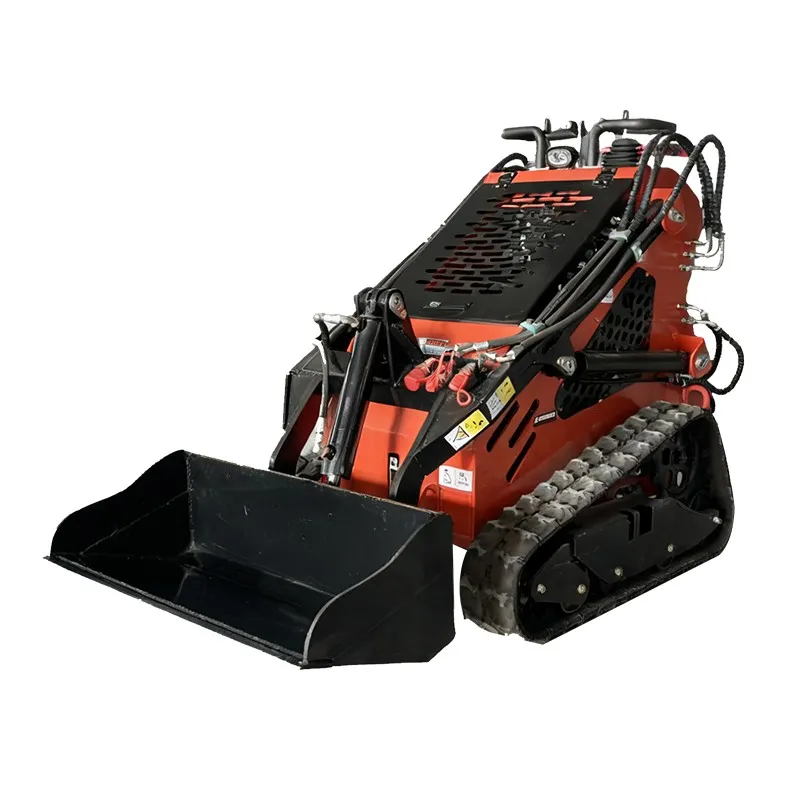
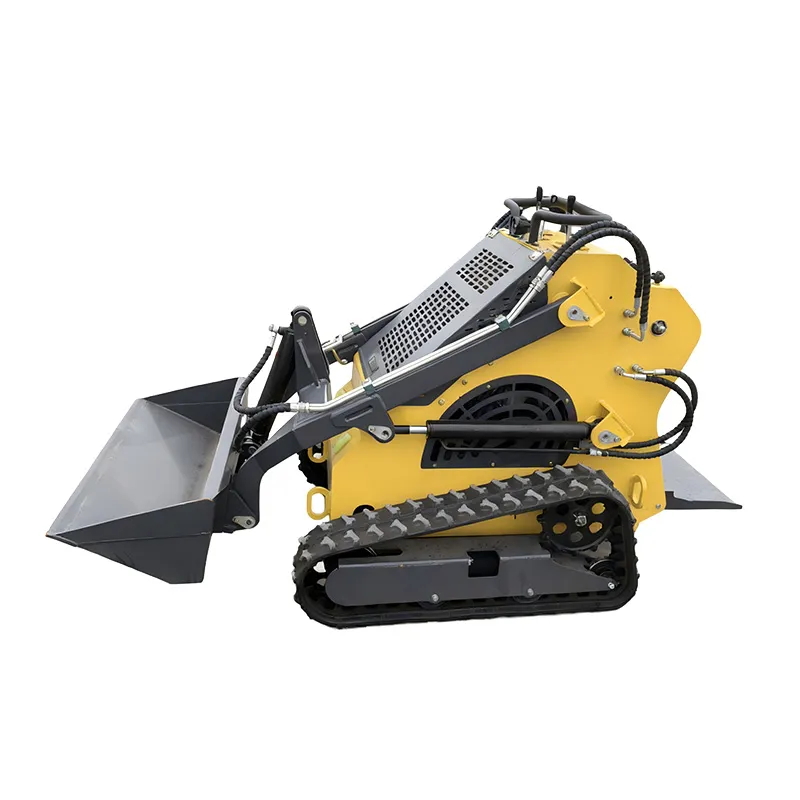
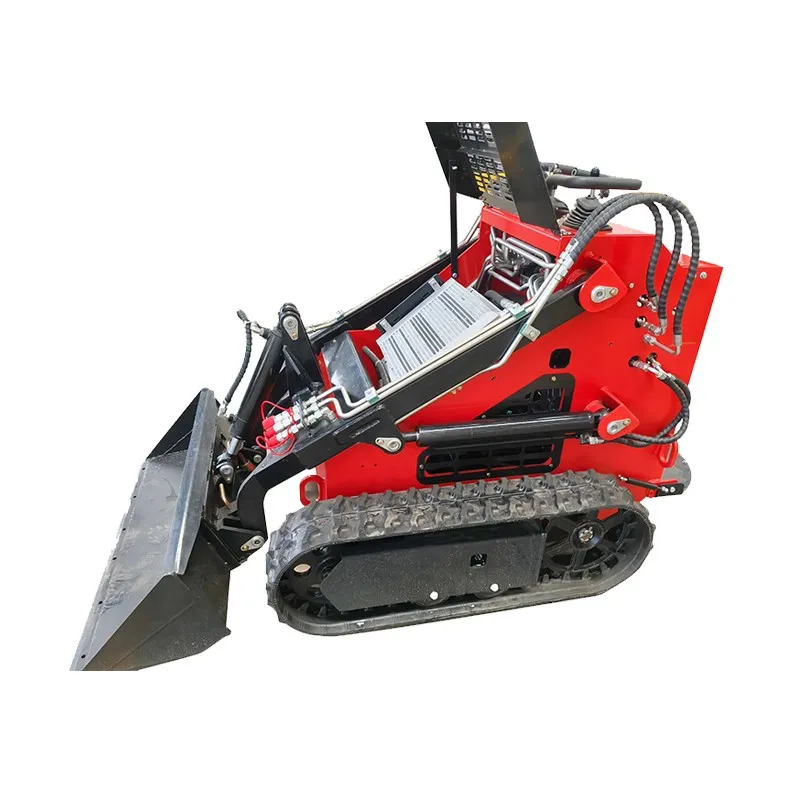
China Compact Track Loader
When you hear 'China Compact Track Loader', the first thing that probably comes to mind is cost. That's not wrong, but it's a shallow take. The real conversation, the one we have on job sites and in dealer backrooms, is about what you're actually getting for that price. It's about the evolution from being just a cheap alternative to becoming a genuinely considered option for specific applications. I've seen too many people burn by buying a unit based solely on a spec sheet and a low quote, only to find the hydraulic system can't handle sustained grading or the undercarriage falls apart in six months on abrasive soil. The keyword here isn't just 'China'; it's the maturity curve of a whole manufacturing ecosystem.
The Ground-Level Reality Check
Let's be clear: not all China-sourced CTLs are created equal. The market is stratified. You have the tier-one brands that are globally recognized, then a sea of manufacturers with varying degrees of capability. The common mistake is lumping them all together. A few years back, I was involved in a trial for a small landscaping contractor. They opted for a model from a then-unknown factory because it promised a 3,500 lb rated operating capacity at a jaw-dropping price. On paper, it matched a Bobcat T770. In reality, the auxiliary hydraulic flow was inconsistent, causing the attachment—a Harley rake—to stutter and bog down. The machine could lift the weight, but couldn't provide the smooth, constant power to use the attachment effectively. That's a critical distinction spec sheets often gloss over.
This is where companies with long-term export focus differentiate themselves. I'm thinking of operations like Shandong Pioneer Engineering Machinery Co., Ltd. You can check their footprint at https://www.sdpioneer.com. Established back in 2004 and now operating from a new facility in Tai'an, they represent a segment that's been through the wringer of international demand. Their two-decade journey, splitting manufacturing (Hexin) and overseas trade (Pioneer), isn't just corporate history. It translates to practical adjustments: reinforcing certain weld points on the loader tower after feedback from Australian miners, or recalibrating control patterns for North American operators. This iterative process, driven by selling into markets like the U.S., Canada, and Germany, is what separates a commodity builder from a solutions provider.
The production area of 1,600 square meters isn't just a brag about size. In context, it suggests a focused, possibly more manageable scale for quality control versus a mega-factory churning out ten different machine types. For a Compact Track Loader, where the integration of the powertrain, hydraulics, and frame is everything, that controlled environment can mean better consistency from unit to unit. I've visited factories where the assembly line for CTLs is right next to mini excavators, with shared, sometimes over-stretched, quality checks. A dedicated space often hints at a dedicated process.
Hydraulics and The Feel Factor
This is the heart of it, and where many cheaper models still stumble. It's not about peak pressure or total flow; it's about system responsiveness and reliability. A common pain point I've encountered is the pilot control system. Early-generation machines from many sources had a vague, almost elastic feel—you'd nudge the joystick and wait a beat for the arm to respond. Modern units from established exporters have largely closed this gap by adopting better valve blocks and tuning. But the component sourcing matters immensely. Does the manufacturer use a well-known brand like Parker or Husco for key valves, or an anonymous copy? The difference shows up in the third year of a daily rental fleet's life.
Heat management is another silent killer. I recall a contractor using a Chinese-origin CTL for asphalt milling with a cold planer attachment. The machine had the torque, but after about 90 minutes of continuous work, the hydraulic oil temperature would spike, triggering derates and eventually shutdowns. The issue wasn't the pump; it was the undersized oil cooler and poor tank baffling that couldn't handle the sustained high thermal load. The fix wasn't cheap—it required a custom cooler retrofit. This is the kind of application-specific knowledge that only comes from field failure and feedback loops with end-users, the very loops that long-term players like Pioneer mention when they talk about winning the trust and appreciation of customers worldwide. It's not marketing fluff; it's a survival mechanism.
So, when evaluating, don't just ask for the hydraulic specs. Ask about the continuous duty cycle ratings for high-flow attachments. Ask what the standard oil cooler capacity is. Better yet, request to run a machine with a mulcher or a trencher for an hour straight and monitor the temp gauge. That test tells you more than a hundred brochures.
The Undercarriage Gamble
Tracks are the most expensive wear item, and the design philosophy here is revealing. Some manufacturers, aiming for that lowest sticker price, will use a lighter-duty roller frame and smaller-diameter rollers. This saves cost upfront but kills you on abrasion resistance and stability on uneven ground. The track tensioning system is another giveaway. The simple, manual grease gun style is cheap and common, but a hydraulic auto-tensioner, while more expensive, drastically reduces maintenance downtime and track wear—it's a sign the manufacturer is thinking about total cost of ownership.
I've seen clever adaptations. One manufacturer, after getting returns from customers in rocky regions, started offering as a factory option a deluxe undercarriage package with reinforced sprockets, sealed rollers, and a heavier-grade bottom guard. This wasn't on their website initially; it was a direct response to a market need. This agility is a hidden strength of some Chinese engineering machinery firms. They can prototype and implement design changes relatively quickly compared to the glacial pace of some Western giants. For a buyer with a specific, tough application, that ability to get a customized standard machine is a huge advantage.
The relocation of a company like Shandong Pioneer in 2023 is interesting in this light. Often, a move to a new, modern facility isn't just about more space. It's an opportunity to re-lay assembly lines for better ergonomics and quality stations, and to invest in new welding robots for consistent undercarriage fabrication. That kind of capital investment signals a commitment to the product line's future, not just its past.
Where These Machines Actually Make Sense
It's foolish to pretend a China-sourced CTL is the right tool for every job. But it's equally foolish to dismiss them entirely. Their sweet spot is clear: cost-conscious small to mid-sized contractors, rental fleets looking for a dedicated-attachment machine (like a tiltrotor for snow clearing), or markets where dealer support for major brands is thin or prohibitively expensive. In these scenarios, the value proposition shifts.
Success hinges entirely on support. The machine will need parts and service. Does the exporter, like Pioneer with its dedicated overseas trade arm, have a well-organized parts depot with clear diagrams and fast shipping? Or are you dealing with a trading company that has to email the factory and wait three weeks for a reply? The difference is night and day. I've had good experiences with exporters who provide exploded-view parts manuals online and stock common wear items (filters, seals, track links) in regional warehouses. It turns a potential deal-breaker into a manageable reality.
The final judgment call comes down to application matching. Putting one of these loaders on a high-production, high-abuse site like a commercial demolition yard is probably a mistake. But using it for seasonal land clearing, light grading, or as a dedicated machine with a post driver or a brush cutter? That can be a financially brilliant move, provided you've done your homework on the specific manufacturer's build quality and support pipeline. The goal isn't to find a machine that never breaks—no CTL meets that standard—but to find one where the downtime and repair costs, factored into the low acquisition price, still give you a significant total cost advantage.
The Verdict: A Calculated Tool, Not a Miracle
So, circling back to China Compact Track Loader. It's no longer a synonym for disposable machinery. For a segment of manufacturers who've endured the past 20 years, it represents a pragmatic, evolving equipment class. The conversation has moved from Is it cheap? to Is it reliable enough for my specific needs, and is the support network there when it's not?
Companies that have grown through export, like the Shandong Pioneer operation, embody this transition. Their two-decade timeline mirrors the industry's learning curve. They aren't selling miracles; they're selling capable tools with a known set of compromises and advantages. The trust they mention is earned not by being perfect, but by being responsive and iterative.
My advice? Ignore the flashy websites and the ultimate specs. Drill down on the details: the brand of the hydraulic pumps, the construction of the roller frame, the availability of service manuals. Talk to other owners in a similar line of work. And most importantly, test the machine under the exact conditions you'll use it. The right China CTL won't feel like a steal; it'll feel like a calculated, informed business decision. And sometimes, that's exactly what you need.
Related Products
Related Products