- Chinese
- French
- German
- Portuguese
- Spanish
- Russian
- Japanese
- Korean
- Arabic
- Irish
- Greek
- Turkish
- Italian
- Danish
- Romanian
- Indonesian
- Czech
- Afrikaans
- Swedish
- Polish
- Basque
- Catalan
- Esperanto
- Hindi
- Lao
- Albanian
- Amharic
- Armenian
- Azerbaijani
- Belarusian
- Bengali
- Bosnian
- Bulgarian
- Cebuano
- Chichewa
- Corsican
- Croatian
- Dutch
- Estonian
- Filipino
- Finnish
- Frisian
- Galician
- Georgian
- Gujarati
- Haitian
- Hausa
- Hawaiian
- Hebrew
- Hmong
- Hungarian
- Icelandic
- Igbo
- Javanese
- Kannada
- Kazakh
- Khmer
- Kurdish
- Kyrgyz
- Latin
- Latvian
- Lithuanian
- Luxembou..
- Macedonian
- Malagasy
- Malay
- Malayalam
- Maltese
- Maori
- Marathi
- Mongolian
- Burmese
- Nepali
- Norwegian
- Pashto
- Persian
- Punjabi
- Serbian
- Sesotho
- Sinhala
- Slovak
- Slovenian
- Somali
- Samoan
- Scots Gaelic
- Shona
- Sindhi
- Sundanese
- Swahili
- Tajik
- Tamil
- Telugu
- Thai
- Ukrainian
- Urdu
- Uzbek
- Vietnamese
- Welsh
- Xhosa
- Yiddish
- Yoruba
- Zulu
- Kinyarwanda
- Tatar
- Oriya
- Turkmen
- Uyghur


China excavator quality
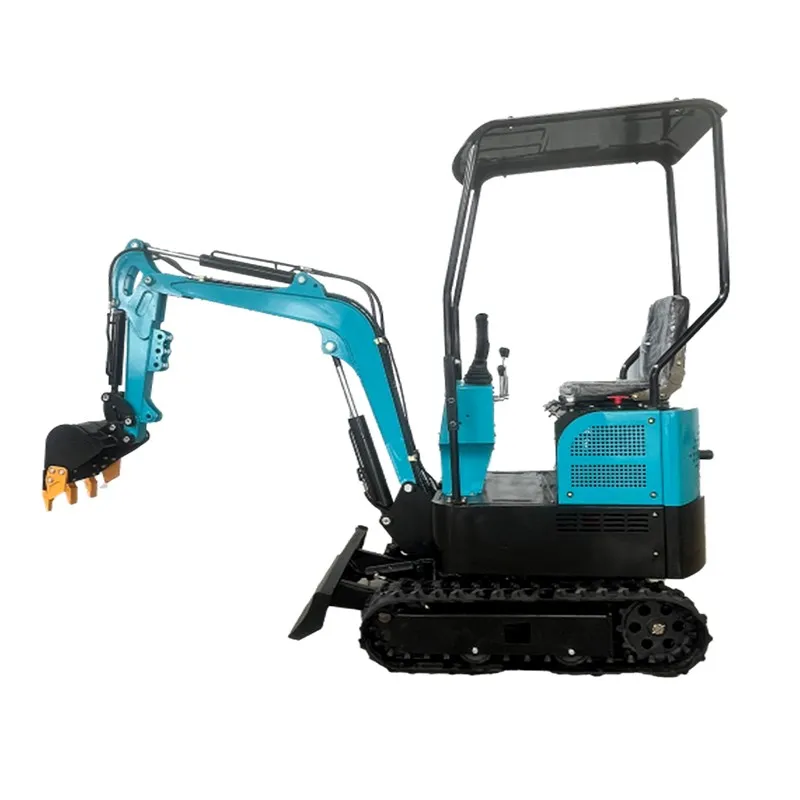
When you hear 'China excavator quality,' what comes to mind? For many, it's still that old dichotomy: cheap price versus questionable durability. Having been in this machinery trade for over a decade, I can tell you that's a lazy, outdated frame. The reality is far more nuanced. The quality spectrum is incredibly wide now, and the real conversation isn't about 'good' or 'bad,' but about understanding which tier of manufacturing you're dealing with, and what 'quality' actually means for your specific job site. It's about matching the machine's DNA to the task, not just its spec sheet.
The Manufacturing Tiers: It's Not One Monolith
Let's break it down. You've essentially got three broad tiers. At the top, you have the joint-ventures and the major domestic brands with fully integrated production. Their China excavator quality is benchmarked against global standards—think Sany, XCMG, or Zoomlion for certain lines. Their hydraulic systems are often from Rexroth or Kawasaki, and the assembly process is heavily automated. The price reflects this.
The middle tier is where things get interesting, and where a lot of the export volume lives. These are companies that have evolved from pure parts assemblers to having their own design and testing capabilities. They might use a mix of imported core components (like pumps and motors from well-known Korean or Japanese suppliers) and domestically produced structural parts. The excavator quality here is defined by the supply chain manager's rigor. I've visited factories where the welding process for the boom and arm is as meticulous as any I've seen, with post-weld stress-relieving and full NDT inspection. The fit and finish might not be as polished as a CAT, but the underlying structure is sound.
Then there's the lower tier. These are the machines that gave Chinese machinery its early reputation. Thin plate, basic hydraulics, assembly that can be inconsistent. They have a place—for extremely light, intermittent duty or where the capital outlay is the only factor. But calling their build 'quality' is a stretch; it's more about basic functionality.
The Core of Durability: It's in the Details
Forget the engine horsepower for a second. The real test of an excavator's mettle is in the undercarriage, the swing bearing, and the hydraulic line routing. I've seen machines where the failure point wasn't the major component, but a cheaply sourced hose clamp that failed and took out an entire hydraulic circuit. That's where the tier differentiation becomes painfully clear.
A practical example: pin-and-bush wear. On a well-made machine, the pins are hardened, the bushings are bronze alloy, and the lubrication channels are clear. You get thousands of hours. On a poorly executed one, the pins are just plain carbon steel, the bushings wear into oval shapes within a few hundred hours, and you get that characteristic 'knock' in the linkage. That's not an engine problem; that's a quality problem in material science and design tolerance.
This is where companies that have stuck around and invested show their worth. They've learned from field failures. I recall a specific instance with a mid-tier manufacturer—they had recurring issues with cab mounts cracking on their 20-ton model. Instead of just welding a reinforcement plate, they went back, did FEA analysis, and redesigned the entire mounting bracket. The next model year, the issue was gone. That's a quality journey.
The Export Reality: Adaptation is Key
Selling to Germany or Australia is a completely different ball game compared to a domestic or emerging market sale. The regulations are stricter, the operator expectations are higher, and the environmental conditions can be extreme. A manufacturer that succeeds here has to build in that adaptability from the design phase.
Take cold-start packages. A standard machine might start at -10°C. For Canada? You need a block heater, upgraded battery, maybe different hydraulic fluid recommendations. It sounds simple, but integrating these options cleanly into the electrical system and engine bay requires forethought. I've worked with exporters who had to retrofit these packages, and it was always a messy, less reliable solution than building it in from the start.
This is a strength I've seen in dedicated export-focused firms. They don't just sell a domestic spec machine abroad; they have product lines configured for specific regions. Their China excavator for the North American market will have ROPS/FOPS cabs certified to ISO standards, emissions documentation for the engine, and often a network of parts depots or aggressive air-freight policies for critical components. The website for Shandong Pioneer Engineering Machinery Co., Ltd (https://www.sdpioneer.com) highlights this model well. Established in 2004 and now operating from a new facility in Tai'an, their structure—with Shandong Hexin handling manufacturing and Pioneer managing overseas trade—is built for this. Exporting to markets like the U.S., Canada, and Germany isn't an afterthought; it's their core business, which forces a certain level of product and support quality from the outset.
Where the Gaps Still Exist (And Why)
Let's be honest, the gap isn't always in the iron. It's in the software and the integrated control systems. The premium brands have decades of algorithm tuning for their hydraulic systems, making the machine feel intuitive, efficient, and smooth. Many Chinese manufacturers are catching up fast, but there's still a noticeable difference in the fine control, especially in multi-function operations like simultaneous boom raise, arm curl, and swing.
Another gap, though closing, is in the global service and support ecosystem. If a hydraulic pump fails on a job site in rural Texas, how quickly can a technician get there with the right part? The major global players have this down to a science. For a Chinese exporter, it's a huge challenge. The successful ones are solving it through strategic partnerships with large regional dealers and stocking critical parts in continental warehouses. Without that, the perceived machine quality plummets, regardless of its actual reliability.
The Verdict: A Calculated Choice
So, is a Chinese excavator a quality machine? It's the wrong question. The right question is: Is this specific model from this specific manufacturer, with this specific component suite and support package, the right quality for my operational and financial parameters?
For a contractor doing steady, heavy work in a remote area with low dealer support, the safe bet might still be the premium brand, despite the cost. For a fleet owner doing municipal work with good maintenance facilities and access to parts, a top or mid-tier Chinese machine can offer phenomenal value and more than adequate durability. The excavator quality is there.
The landscape has shifted. The conversation is no longer about if China can build a decent excavator, but about which of the many capable builders is the right partner for your business. It requires due diligence—factory visits, talking to other buyers in similar climates, scrutinizing the component list, and most importantly, understanding the true support structure behind the sale. The sticker price is just the beginning of the story.
Related Products
Related Products