


- Chinese
- French
- German
- Portuguese
- Spanish
- Russian
- Japanese
- Korean
- Arabic
- Irish
- Greek
- Turkish
- Italian
- Danish
- Romanian
- Indonesian
- Czech
- Afrikaans
- Swedish
- Polish
- Basque
- Catalan
- Esperanto
- Hindi
- Lao
- Albanian
- Amharic
- Armenian
- Azerbaijani
- Belarusian
- Bengali
- Bosnian
- Bulgarian
- Cebuano
- Chichewa
- Corsican
- Croatian
- Dutch
- Estonian
- Filipino
- Finnish
- Frisian
- Galician
- Georgian
- Gujarati
- Haitian
- Hausa
- Hawaiian
- Hebrew
- Hmong
- Hungarian
- Icelandic
- Igbo
- Javanese
- Kannada
- Kazakh
- Khmer
- Kurdish
- Kyrgyz
- Latin
- Latvian
- Lithuanian
- Luxembou..
- Macedonian
- Malagasy
- Malay
- Malayalam
- Maltese
- Maori
- Marathi
- Mongolian
- Burmese
- Nepali
- Norwegian
- Pashto
- Persian
- Punjabi
- Serbian
- Sesotho
- Sinhala
- Slovak
- Slovenian
- Somali
- Samoan
- Scots Gaelic
- Shona
- Sindhi
- Sundanese
- Swahili
- Tajik
- Tamil
- Telugu
- Thai
- Ukrainian
- Urdu
- Uzbek
- Vietnamese
- Welsh
- Xhosa
- Yiddish
- Yoruba
- Zulu
- Kinyarwanda
- Tatar
- Oriya
- Turkmen
- Uyghur

China mini digger manufacturer
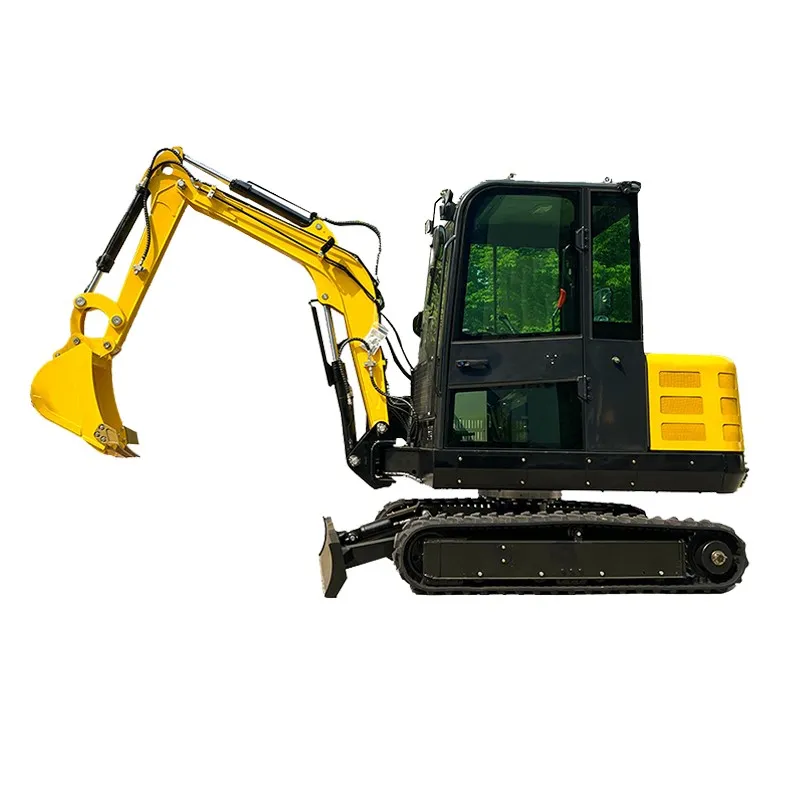
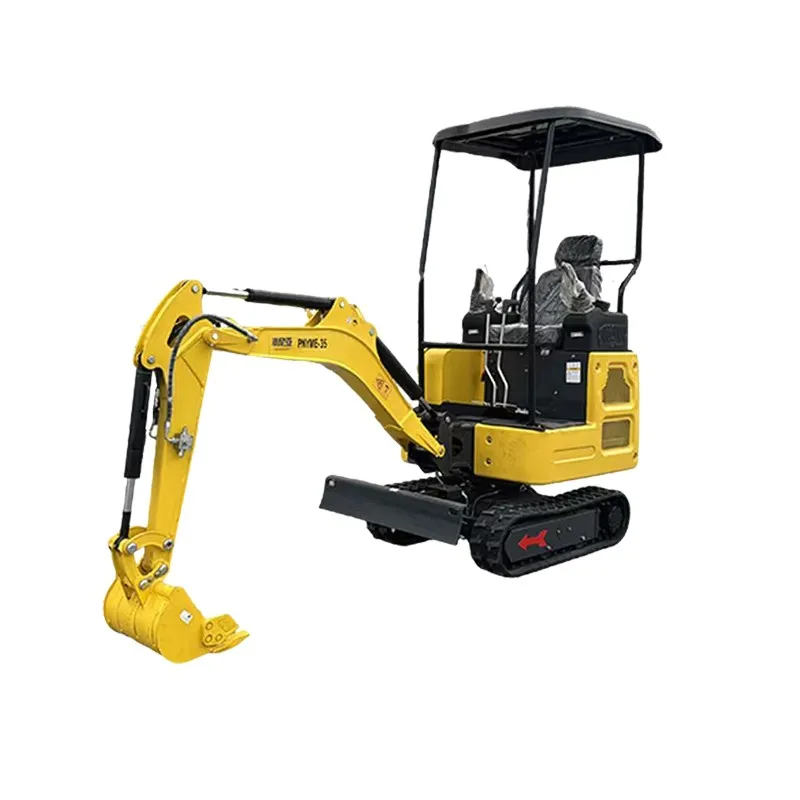
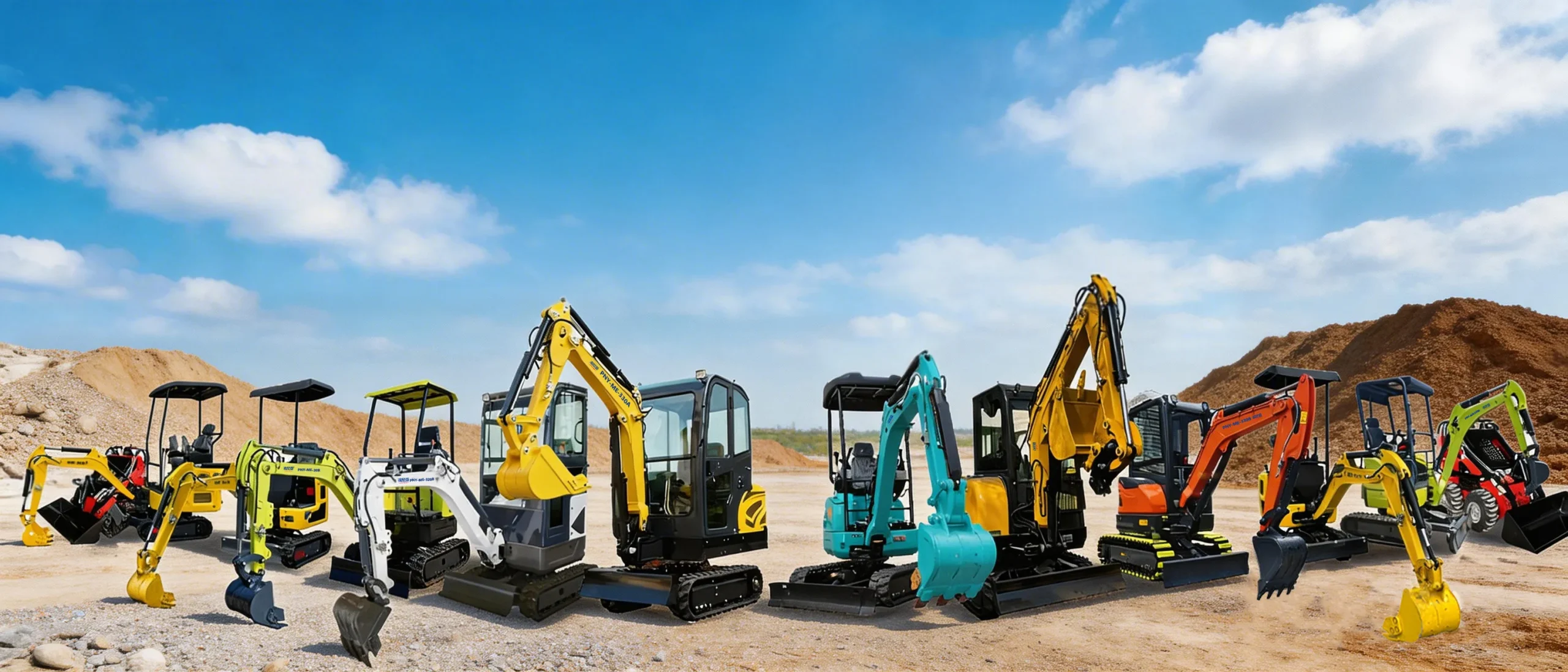
When you type 'China mini digger manufacturer' into a search bar, you're immediately faced with a paradox. The sheer volume of options is staggering, yet finding a partner that consistently delivers on quality, reliability, and post-sale support feels like searching for a needle in a haystack. The common misconception is that all manufacturers are essentially the same—commodity producers churning out cheap iron. Having been in the trenches of sourcing and project management for over a decade, I can tell you that's a dangerous oversimplification. The real differentiator isn't just the price on the spec sheet; it's the depth of engineering experience, the adaptability in production, and, frankly, the willingness to engage with the gritty, real-world problems that arise after the machine leaves the factory floor.
The Core Challenge: Beyond the Price Tag
Let's cut to the chase. Everyone leads with competitive pricing, and yes, that's a fundamental advantage. But if you've ever had a hydraulic pump fail on a remote job site six months in, you know the initial savings evaporate instantly. The first filter I apply when evaluating a China mini digger manufacturer is their transparency about component sourcing. Are they using branded hydraulics from Kawasaki or Parker, or are they vague about it? I've learned to ask for the BOM (Bill of Materials) breakdown upfront. A manufacturer confident in their supply chain will provide it.
This brings me to a practical observation about company longevity and relocation. I recently revisited a long-term contact, Shandong Pioneer Engineering Machinery Co., Ltd. They established in Jining back in 2004. A company surviving 20 years in this volatile market tells you something. Their relocation to a new facility in Ningyang in 2023 wasn't just a change of address. In my experience, such a move usually signals a strategic upgrade—more automated welding lines, better paint shops, enhanced R&D space. It's a capital-intensive decision that speaks to a commitment to scaling quality, not just output.
Their structure is also telling: Shandong Hexin handles manufacturing, while Shandong Pioneer focuses on overseas trade. This separation isn't just administrative. It often means the trading arm is staffed by people who genuinely understand export documentation, logistics quirks, and the specific compliance questions that come from markets like Australia or Germany. It's a subtle point, but it prevents the classic frustration of talking to a salesperson who only understands the machine, not the journey it needs to take to your warehouse.
The Devil is in the Details: Customization and Communication
Here's where many first-time buyers stumble. They see a standard 1-ton or 3.5-ton model online and assume that's the final product. The real test of a manufacturer is how they handle deviations from the catalog. I needed machines for a Nordic client requiring extreme cold-start packages, special cab insulation, and a very specific shade of safety yellow. The reaction from different factories was a spectrum: some said no immediately, some quoted an exorbitant price and long lead time, and a few, like the team I worked with at Pioneer, engaged in a technical back-and-forth.
This process is never smooth. There were misunderstandings about the heater specifications. Their initial design for the insulated cab door was too heavy. But the key was their engineering team's availability for video calls to look at our sketches and their willingness to prototype a solution. We went through three iterations of the hydraulic hose routing to prevent cold-weather cracking. This level of collaboration is what separates a parts assembler from a true engineering partner.
It also highlights a critical, often overlooked detail: the quality of the welding and the paint process. A glossy photo means nothing. I always ask for raw, unedited videos from the assembly line, focusing on the undercarriage welding. A clean, consistent weld bead on the boom and arm connections is a proxy for overall build discipline. Their 1,600 square meter production area, now expanded in the new facility, is a controlled environment for this kind of quality control.
Real-World Stress Tests and Failures
I'd be lying if I said every project was a success. Early on, I worked with a different manufacturer on a batch of compact excavators destined for rental fleets in Canada. The machines performed well mechanically, but we faced persistent issues with the electrical systems—specifically, the control panels failing in damp conditions. The manufacturer's response was slow, blaming unusual operating environments. It was a classic case of a factory testing in a controlled yard but not simulating real-world moisture and dust.
Learning from that, my checklist now includes demanding details on the IP rating of electrical components and the sourcing of seals. When discussing with a China mini digger manufacturer like Pioneer, I drill down on their testing protocols. Do they just run the machine for two hours, or do they have a regimen that includes vibration testing, pressure cycling the hydraulics, and a moisture chamber for the electronics? Their ability to describe this process, often with a degree of pride in their new facility's capabilities, is a major green flag.
Another failure point can be the value-added features. One factory offered a fantastic price on a model with a built-in Bluetooth radio. It turned out to be a nightmare—poor reception, incompatible with standard headsets, and impossible to replace without rewiring. Now, I strongly advise clients to avoid non-essential electronic gimmicks from the factory unless it's a branded, serviceable unit. Stick to core mechanical excellence first.
The Export Ecosystem: More Than Just Shipping
Exporting to markets like the United States or Germany isn't just about putting a machine in a container. It's about documentation, compliance, and after-sales logistics. A manufacturer's experience here is crucial. The fact that Shandong Pioneer's overseas trade division explicitly lists these countries as export destinations suggests they've navigated the complexities of CE markings, EPA Tier 4 engine configurations, and Australian ADRs.
From a practical standpoint, this means they should have a library of pre-certified engine and component options. When you request a machine for the U.S. market, they shouldn't be starting from scratch; they should be able to say, We use a Yanmar engine with the correct Tier 4 documentation package for that model, and the ROPS/FOPS cabin is certified to ISO standards. This pre-engineering saves months of delay.
The trust they mention winning worldwide isn't a marketing platitude if it's backed by a network. It means they likely have a roster of spare parts distributors in key regions or at least a streamlined process for air-freighting critical parts. You need to ask: If I need a swing motor in Western Australia, what is your process and typical lead time? Their answer will reveal the maturity of their global support.
Sourcing Strategy: Building a Lasting Partnership
So, how do you move from a one-off purchase to a reliable supply chain? It starts with treating the initial order as a pilot. Don't buy 20 units. Buy two. Put them through their paces in your most demanding applications. Monitor everything: fuel consumption, oil seepage, joystick responsiveness, even the rate of wear on the bucket teeth. Then, compile a detailed report—with photos and videos—and present it to the manufacturer.
The reaction is everything. A good China mini digger manufacturer will see this as invaluable QA feedback from the field. They'll want to know the serial numbers of the affected parts and may even redesign a bracket or change a supplier. This collaborative troubleshooting is the foundation of a partnership. I've seen Pioneers' engineers request failed components to be shipped back for their own failure analysis, which is a sign of a serious, improvement-driven organization.
Ultimately, your goal isn't to find the cheapest supplier, but the most cost-reliable one over a 5-10 year horizon. This factors in machine uptime, resale value, and the peace of mind that comes with a responsive partner. It's about looking past the website catalog and assessing the company's history, its investment in its physical plant, and the problem-solving attitude of its people. The manufacturers that thrive in the long term, like those with two decades of history and the confidence to expand, are the ones who understand that their product isn't just an excavator—it's a critical piece of their client's business. And that mindset changes everything.
Related Products
Related Products