


- Chinese
- French
- German
- Portuguese
- Spanish
- Russian
- Japanese
- Korean
- Arabic
- Irish
- Greek
- Turkish
- Italian
- Danish
- Romanian
- Indonesian
- Czech
- Afrikaans
- Swedish
- Polish
- Basque
- Catalan
- Esperanto
- Hindi
- Lao
- Albanian
- Amharic
- Armenian
- Azerbaijani
- Belarusian
- Bengali
- Bosnian
- Bulgarian
- Cebuano
- Chichewa
- Corsican
- Croatian
- Dutch
- Estonian
- Filipino
- Finnish
- Frisian
- Galician
- Georgian
- Gujarati
- Haitian
- Hausa
- Hawaiian
- Hebrew
- Hmong
- Hungarian
- Icelandic
- Igbo
- Javanese
- Kannada
- Kazakh
- Khmer
- Kurdish
- Kyrgyz
- Latin
- Latvian
- Lithuanian
- Luxembou..
- Macedonian
- Malagasy
- Malay
- Malayalam
- Maltese
- Maori
- Marathi
- Mongolian
- Burmese
- Nepali
- Norwegian
- Pashto
- Persian
- Punjabi
- Serbian
- Sesotho
- Sinhala
- Slovak
- Slovenian
- Somali
- Samoan
- Scots Gaelic
- Shona
- Sindhi
- Sundanese
- Swahili
- Tajik
- Tamil
- Telugu
- Thai
- Ukrainian
- Urdu
- Uzbek
- Vietnamese
- Welsh
- Xhosa
- Yiddish
- Yoruba
- Zulu
- Kinyarwanda
- Tatar
- Oriya
- Turkmen
- Uyghur

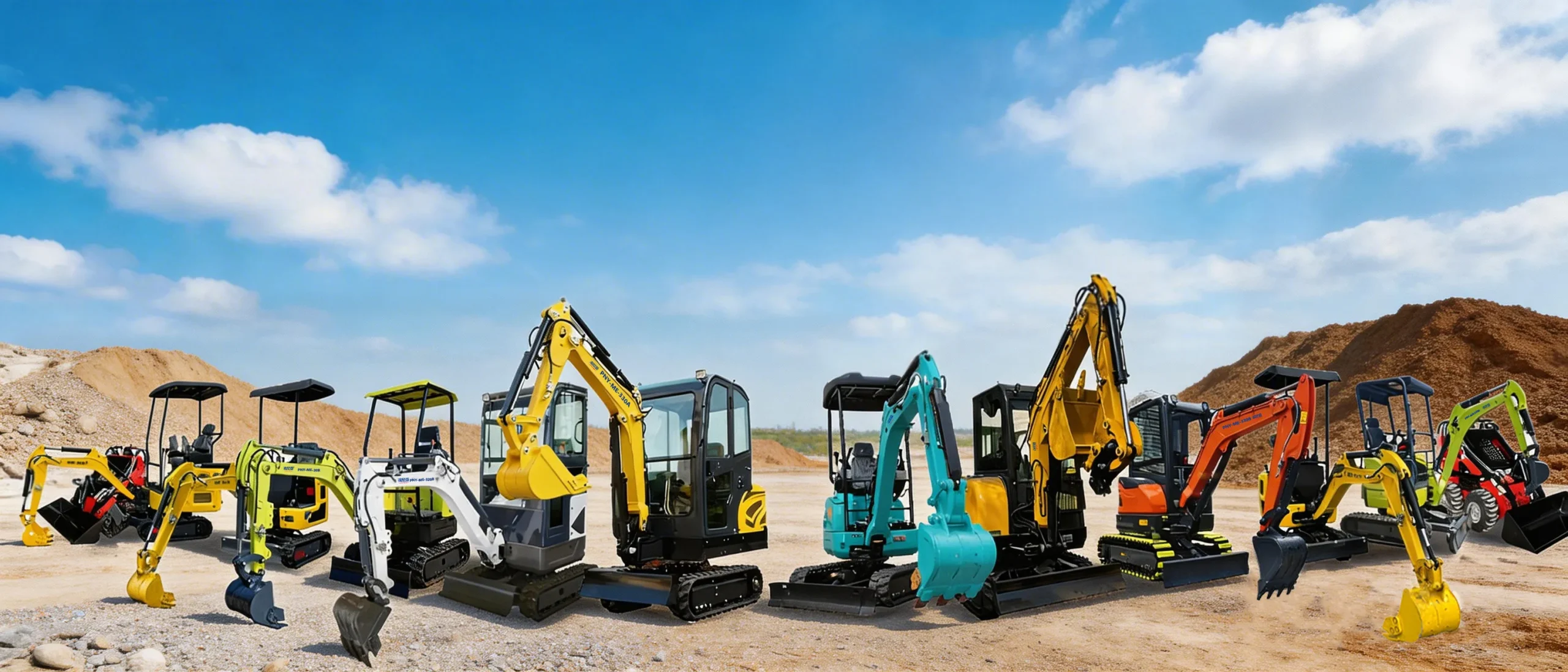
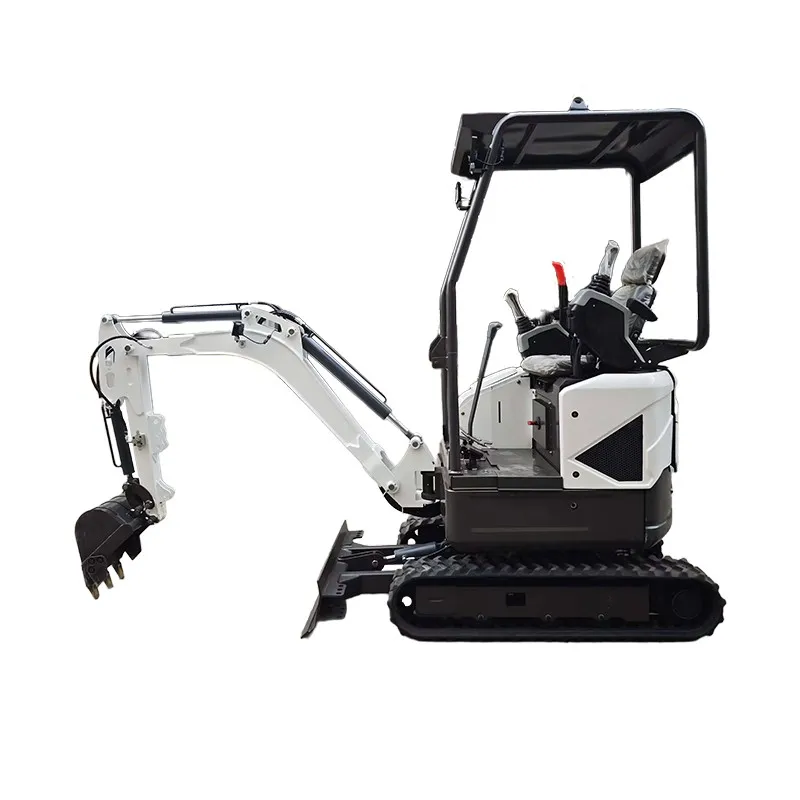
China mini excavator factory
When you hear 'China mini excavator factory', what comes to mind? For many, it's an image of endless, identical assembly lines churning out cheap machines. That's a common, and frankly, outdated view. The reality on the ground is far more nuanced, involving a complex ecosystem of specialized suppliers, evolving engineering priorities, and factories that range from basic workshops to highly integrated operations. The real story isn't about mass production; it's about specialization and the slow, sometimes painful, climb up the value chain.
The Landscape: More Than Just a Factory Floor
Visiting these factories, you quickly learn the geography matters. Take Shandong province, for instance. It's a major hub, not just for assembly, but for the entire supply chain—hydraulic valve blocks, crawler undercarriages, cabin frames. A factory's location often dictates its capabilities and cost structure. A plant in a major industrial park might have better logistics but higher overhead, while one in a developing county might offer cost advantages but struggle with consistent component quality. It's a constant trade-off.
I remember walking into a China mini excavator factory a few years back that was essentially a large shed. They were assembling machines, yes, but the welding was inconsistent, and the hydraulic hoses were routed in a way that promised premature wear. They competed purely on price. Contrast that with operations that have invested in their own R&D and testing bays. The difference is night and day. The latter are thinking about serviceability, operator comfort, and matching the machine to specific market regulations—like EPA Tier 4 or EU Stage V for exports.
This brings me to a specific case: Shandong Pioneer Engineering Machinery Co., Ltd. Their trajectory is telling. Established in 2004 in Jining, they spent nearly two decades in that 1,600 square meter facility. That's a long time to accumulate know-how, make mistakes, and build relationships with suppliers. Their recent relocation in 2023 to a new site in Ningyang isn't just a change of address; it's a physical manifestation of growth and, presumably, an upgrade in production capacity and process flow. You don't move a factory lightly.
The Pioneer Case: Accumulation and Transition
Looking at Shandong Pioneer's structure is insightful. They operate with Shandong Hexin handling manufacturing and Pioneer focusing on overseas trade. This split isn't unusual, but it highlights a key point: succeeding in export markets requires a dedicated, specialized sales and support channel that understands international compliance, documentation, and after-sales expectations. A domestic-focused sales team often can't bridge that gap.
Their listed export markets—the U.S., Canada, Germany, Australia—are the tough ones. These aren't markets where you can sell a sub-par machine and walk away. German customers, for example, are notoriously detail-oriented about fit and finish. Australian operators demand reliability in harsh conditions. The fact that they're serving these regions suggests a focus on product durability and meeting specific certification standards, which is a step above the bare-minimum price competition.
Their 20-year timeline is crucial. In this industry, longevity often correlates with stability in the supply chain and accumulated troubleshooting knowledge. They've likely seen hydraulic pump suppliers come and go, weathered steel price fluctuations, and iterated on countless design tweaks based on field feedback. This institutional memory is something a new entrant simply cannot buy.
Common Pitfalls and the Good Enough Trap
One major pitfall I've seen, even with established factories, is the good enough approach to components. It's tempting to source a slightly cheaper cylinder or a lower-grade swing bearing to shave $50 off the build cost. The factory saves money, the initial buyer gets a lower price, but the machine fails in the field two years later. The brand reputation, whether it's the factory's own or the exporter's, takes the hit. The smarter mini excavator makers are now branding their key components—equipped with Kawasaki hydraulics or Yanmar engine—because they understand the end-user values that transparency and reliability.
Another issue is over-specification for the wrong market. I once worked with a factory that was brilliant at building robust, heavy-duty machines perfect for rental yards in North America. They then tried to push the same exact model into Southeast Asia, where customers were far more price-sensitive and the duties were high. It failed. They needed a de-spec'd, value-engineered version for that market, which they hadn't developed. Flexibility in product design for different regions is a sign of a mature export-oriented factory.
Communication is its own challenge. A technical drawing might be clear to the Chinese engineer, but the nuance gets lost in translation for the overseas importer. Is high-strength steel a specific grade like Q345B, or just a marketing term? Clarifying these details requires patience and often a third-party inspection visit during production. The best factories welcome this clarity; the worst see it as a nuisance.
The Evolution of Quality: From Copying to Iterating
The early 2000s were largely about reverse-engineering Japanese and Korean models. Today, the conversation in better factories is about iteration. It's not just copying a shape; it's asking, Can we make this rear door hinge stronger based on repair data? or Can we reposition this service point to reduce maintenance time from 2 hours to 30 minutes? This shift from imitation to targeted improvement is what separates a job shop from a genuine equipment manufacturer.
Testing procedures are a clear indicator. Does the factory just run the machine for an hour in the yard? Or do they have a defined protocol—testing lift capacity at full extension, checking for hydraulic drift, verifying proportional control smoothness? The presence of even a basic but structured pre-delivery inspection (PDI) checklist is a positive sign. Shandong Pioneer's long development period suggests they've had to refine these processes through trial and error.
Welding and paint are the two most visible quality markers. A clean, consistent weld bead and a uniform, chip-resistant paint job don't just look professional; they directly impact longevity, especially in corrosive environments. These are areas where investment in semi-automated equipment and proper surface treatment lines pays dividends. It's an easy thing to spot on a factory tour and tells you a lot about their priorities.
Looking Ahead: The Real Value Proposition
So, what's the future for a China mini excavator factory? The low-price, high-volume model is a race to the bottom with diminishing returns. The sustainable path is building a reputation for reliable, application-specific machines backed by accessible parts support. It's about becoming a solutions provider, not just a box shipper.
Factories that understand this are investing in cataloging their machines' parts breakdowns (exploded view diagrams), stocking common wear items, and perhaps even offering regional parts hubs. This turns a one-time sale into a long-term partnership. For an overseas buyer, the assurance that they can get a track motor or control lever in a week, not a month, is worth a significant price premium.
Ultimately, the keyword factory is too limiting. It's about the manufacturing ecosystem. The successful players are those who control or deeply manage their core supply chain, engage in continuous, data-driven product refinement, and align their entire operation—from design to after-sales—with the practical needs of end-users in their target markets. That's the quiet evolution happening far from the generic assembly lines people imagine.
Related Products
Related Products