- Chinese
- French
- German
- Portuguese
- Spanish
- Russian
- Japanese
- Korean
- Arabic
- Irish
- Greek
- Turkish
- Italian
- Danish
- Romanian
- Indonesian
- Czech
- Afrikaans
- Swedish
- Polish
- Basque
- Catalan
- Esperanto
- Hindi
- Lao
- Albanian
- Amharic
- Armenian
- Azerbaijani
- Belarusian
- Bengali
- Bosnian
- Bulgarian
- Cebuano
- Chichewa
- Corsican
- Croatian
- Dutch
- Estonian
- Filipino
- Finnish
- Frisian
- Galician
- Georgian
- Gujarati
- Haitian
- Hausa
- Hawaiian
- Hebrew
- Hmong
- Hungarian
- Icelandic
- Igbo
- Javanese
- Kannada
- Kazakh
- Khmer
- Kurdish
- Kyrgyz
- Latin
- Latvian
- Lithuanian
- Luxembou..
- Macedonian
- Malagasy
- Malay
- Malayalam
- Maltese
- Maori
- Marathi
- Mongolian
- Burmese
- Nepali
- Norwegian
- Pashto
- Persian
- Punjabi
- Serbian
- Sesotho
- Sinhala
- Slovak
- Slovenian
- Somali
- Samoan
- Scots Gaelic
- Shona
- Sindhi
- Sundanese
- Swahili
- Tajik
- Tamil
- Telugu
- Thai
- Ukrainian
- Urdu
- Uzbek
- Vietnamese
- Welsh
- Xhosa
- Yiddish
- Yoruba
- Zulu
- Kinyarwanda
- Tatar
- Oriya
- Turkmen
- Uyghur

China mini excavator supplier
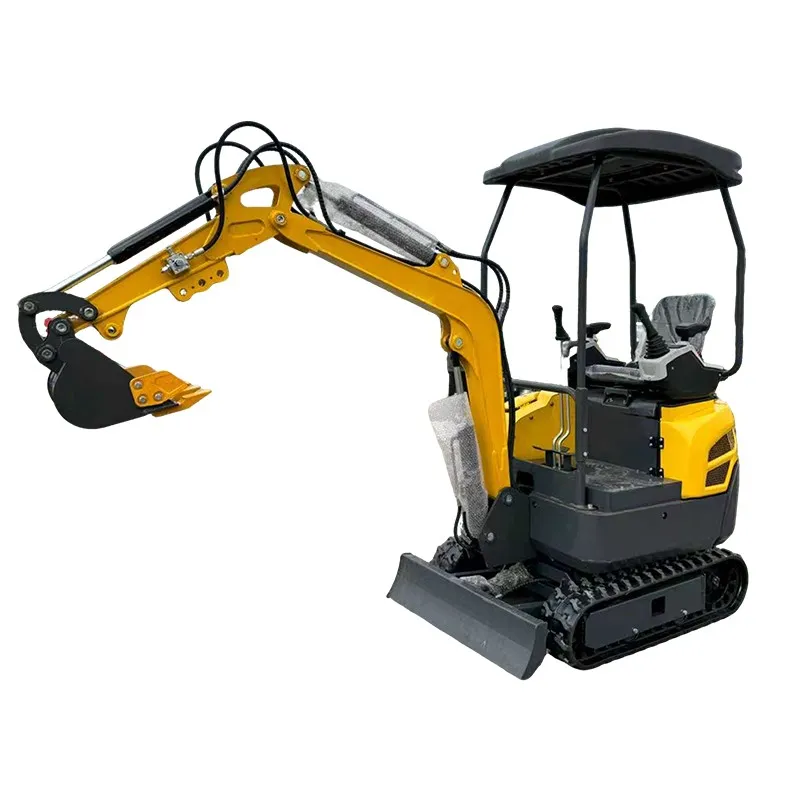
When you type 'China mini excavator supplier' into a search bar, you're instantly met with a flood of options that all look strikingly similar. The common trap is believing that the lowest price from any Alibaba listing equates to the best value. Having been in this space for over a decade, I can tell you it's rarely that simple. The real challenge isn't finding a supplier; it's identifying one that balances cost, consistent quality, and, crucially, the operational capacity to support you long after the container leaves Qingdao. Many buyers focus solely on the machine's specs on paper, overlooking the supplier's backbone—their manufacturing philosophy, quality control on the shop floor, and their approach to after-sales. That's where the real separation happens.
The Factory Floor Tells the Real Story
I've walked through countless factories, and you learn to read the signs quickly. A clean, organized assembly line isn't just for show; it's a direct indicator of process control. I remember visiting a facility a few years back where the hydraulic hoses were routed differently on every third machine coming off the line. That's a red flag for consistency. The reliable China mini excavator supplier invests in jigs and fixtures. They have dedicated stations for the ROPS frame welding, the main valve block assembly, and the final electrical harness installation. This structured approach prevents the Friday afternoon machine syndrome—where quality dips unpredictably.
Take the company Shandong Pioneer Engineering Machinery Co., Ltd as an example. I've followed their trajectory for a while. They established themselves back in 2004 in Jining, which is deep in the traditional manufacturing belt for construction machinery components. Their recent relocation in 2023 to a new facility in Ningyang, Tai’an, isn't just a change of address. In my experience, such a move often signals a strategic upgrade—more space for a streamlined production flow, potentially newer equipment, and a conscious effort to scale operations systematically. You can see this for yourself on their website at https://www.sdpioneer.com. For a buyer, this kind of investment in physical infrastructure is a tangible, positive signal about a supplier's commitment and stability.
It's these operational details that matter more than a glossy brochure. The choice of a standard Yanmar or Kubota engine versus an obscure brand, the supplier of the main hydraulic pump (say, Kawasaki or Linde), and even the paint process (electrostatic spraying versus standard) are what determine a machine's lifespan in the field. A good supplier will be transparent about these components and may even offer tiered options, rather than hiding behind a generic high-quality description.
Beyond the Price Tag: The Export Ecosystem
Exporting machinery isn't just about building it and shipping it. The logistical and compliance maze is where many first-time importers get burned. A seasoned China mini excavator supplier doesn't just sell you a unit; they manage a pipeline. This includes proper export documentation, correct HS code classification, ensuring the machine meets basic CE markings or other destination-specific requirements (even if it's a self-declaration), and secure loading at the port. I've seen containers held up for weeks because of incorrect paperwork on the supplier's end, turning a good deal into a logistical and financial nightmare.
This is where a company's long-term trade experience becomes invaluable. The profile for Shandong Pioneer mentions their export footprint across the US, Canada, Germany, and Australia. Now, exporting to Germany and Australia is particularly telling. These markets have stringent, albeit different, expectations. Germany leans heavily on the CE machinery directive with a focus on safety documentation, while Australia has its own design rules and a competitive landscape used to Japanese brands. A supplier consistently serving these regions has likely developed robust internal processes for documentation, packaging for long sea voyages, and a basic understanding of diverse market needs. It's a proxy for operational competence.
However, it's critical to dig deeper. Exporting to can mean a few containers a year or a steady flow. Ask for references in your specific target country. The real test is how they handle a problem when a machine arrives with a minor defect—a leaking fitting or a faulty sensor. Will they just send a part and a manual, or will they have a network to dispatch a local technician? Most Chinese suppliers operate on the former model, which is fair, but the best ones will have established partnerships with service agents in key markets to bridge that final gap for the customer.
The Nuances of Product Development and Customization
Many buyers come with a list of specific asks: I need a 1.8-ton machine with a blade, but the arm must be 20cm longer, and I want auxiliary hydraulics with a specific flow rate. The reaction from the supplier is a great litmus test. The low-end suppliers will say yes to everything immediately, often leading to Frankenstein machines with compatibility issues. The experienced ones will pause, consult their engineers, and discuss feasibility, potential impacts on stability or hydraulic performance, and lead time.
True customization capability stems from in-house engineering strength, not just assembly. It means having the CAD files for the main frame, the ability to design and test a new bracket for a different hydraulic hammer, and the willingness to run a pre-shipment test with the actual attachment. I recall working with a supplier on a custom cab for a cold climate market. The back-and-forth wasn't just about price; it was about seal specifications, heater placement, and wiring loom modifications. That project succeeded because the supplier had a dedicated engineering team that engaged in the problem-solving process, not just the order-taking process.
This ties back to the manufacturing and trade structure mentioned for companies like Shandong Pioneer, where Shandong Hexin handles manufacturing and Pioneer focuses on overseas trade. In an ideal setup, this allows the trade arm to deeply understand market feedback and relay it directly to the manufacturing entity, fostering a product evolution loop. For instance, feedback from Australian customers on dust protection might lead to improved air filter housings on subsequent production runs. This closed-loop feedback is a hallmark of a supplier moving beyond being just a factory to being a partner.
Navigating Pitfalls and Building a Realistic Timeline
One of the biggest mistakes is rushing. The timeline from order to delivery is often underestimated. A standard machine might be 30-45 days for production, but factor in Chinese holidays (Golden Week, Lunar New Year), sea freight (another 30-45 days to most Western ports), and customs clearance. Realistically, you're looking at a 90-120 day cycle for a smooth transaction. Any promise of shipment in 15 days for a non-stock item should be scrutinized heavily—it often means quality checks are being shortcut.
Another pitfall is the sample order. It's essential, but it's not a guarantee. I've had samples that were perfect, but the bulk order had inconsistencies in welding or wiring. The key is to use the sample process to audit the supplier's systems. Visit for the pre-shipment inspection of the sample if possible. Check their testing procedures: Do they run a full hydraulic cycle test? Do they check for leaks under pressure? The sample is as much about testing the machine as it is about testing the supplier's reliability.
Payment terms are another negotiation point. The standard 30% deposit, 70% before shipment is common. Be wary of suppliers demanding 100% upfront. Conversely, some may offer more flexible terms for established relationships. Always use secure payment methods like a letter of credit for large orders, especially with a new partner. It adds cost and complexity but provides protection. The trust and appreciation from global customers that suppliers like Pioneer mention is earned through thousands of these transactions executed smoothly over years.
The Unspoken Factor: Longevity and Industry Cycles
The construction machinery industry is cyclical. A supplier that has been around for 20 years, like the aforementioned company established in 2004, has navigated multiple booms and busts. This longevity is an asset. It means they've likely maintained relationships with key component suppliers (engine, hydraulics), giving them better pricing and priority during parts shortages, which we've seen dramatically post-2020. A new factory might offer a flashy price, but can they secure 100 Kubota D902 engines when global supply is tight? Probably not.
This experience also translates into product maturity. Their 1-ton or 5-ton model has probably gone through several iterative improvements—a stronger pivot point here, a more accessible service door there. These refinements, born from field feedback, are what make a machine robust. You're not buying a version 1.0 product. When evaluating a China mini excavator supplier, don't just look at their current catalog. Ask about the history of their flagship models. How long have they been in production? What major changes have been made? Their answers will reveal their commitment to product development.
Finally, the human element matters. The consistency of your sales and project management contact is huge. High turnover is a red flag. You want to build a relationship with someone who understands your business, remembers your past orders, and can be your advocate inside the factory. That relationship is the glue that holds everything together when a problem inevitably arises. It turns a transactional supplier into a genuine supply chain partner, which is the ultimate goal when you sift through those hundreds of search results for a reliable partner in this complex, but rewarding, market.
Related Products
Related Products