- Chinese
- French
- German
- Portuguese
- Spanish
- Russian
- Japanese
- Korean
- Arabic
- Irish
- Greek
- Turkish
- Italian
- Danish
- Romanian
- Indonesian
- Czech
- Afrikaans
- Swedish
- Polish
- Basque
- Catalan
- Esperanto
- Hindi
- Lao
- Albanian
- Amharic
- Armenian
- Azerbaijani
- Belarusian
- Bengali
- Bosnian
- Bulgarian
- Cebuano
- Chichewa
- Corsican
- Croatian
- Dutch
- Estonian
- Filipino
- Finnish
- Frisian
- Galician
- Georgian
- Gujarati
- Haitian
- Hausa
- Hawaiian
- Hebrew
- Hmong
- Hungarian
- Icelandic
- Igbo
- Javanese
- Kannada
- Kazakh
- Khmer
- Kurdish
- Kyrgyz
- Latin
- Latvian
- Lithuanian
- Luxembou..
- Macedonian
- Malagasy
- Malay
- Malayalam
- Maltese
- Maori
- Marathi
- Mongolian
- Burmese
- Nepali
- Norwegian
- Pashto
- Persian
- Punjabi
- Serbian
- Sesotho
- Sinhala
- Slovak
- Slovenian
- Somali
- Samoan
- Scots Gaelic
- Shona
- Sindhi
- Sundanese
- Swahili
- Tajik
- Tamil
- Telugu
- Thai
- Ukrainian
- Urdu
- Uzbek
- Vietnamese
- Welsh
- Xhosa
- Yiddish
- Yoruba
- Zulu
- Kinyarwanda
- Tatar
- Oriya
- Turkmen
- Uyghur


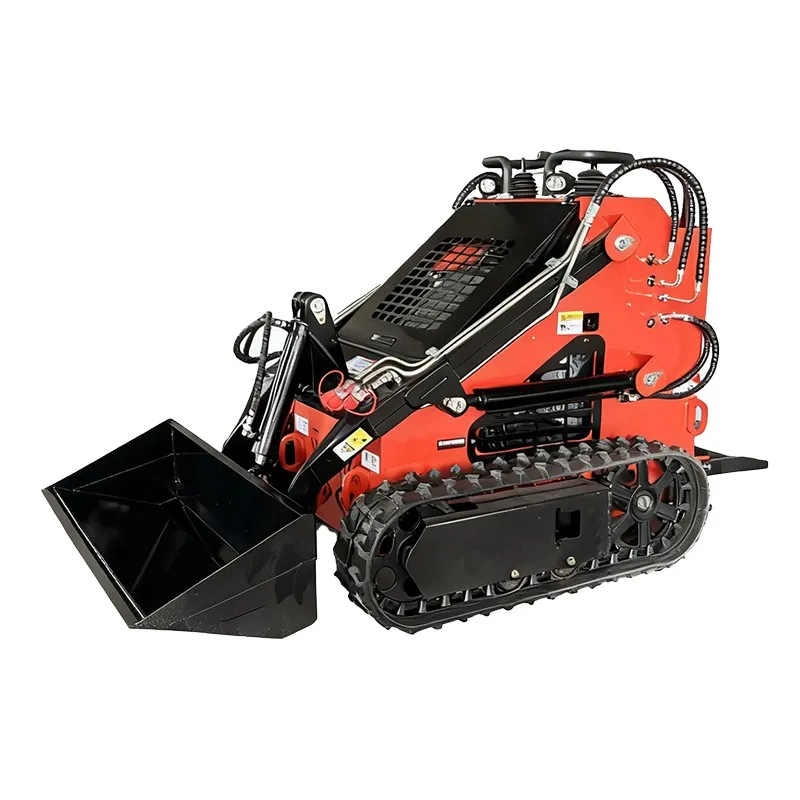
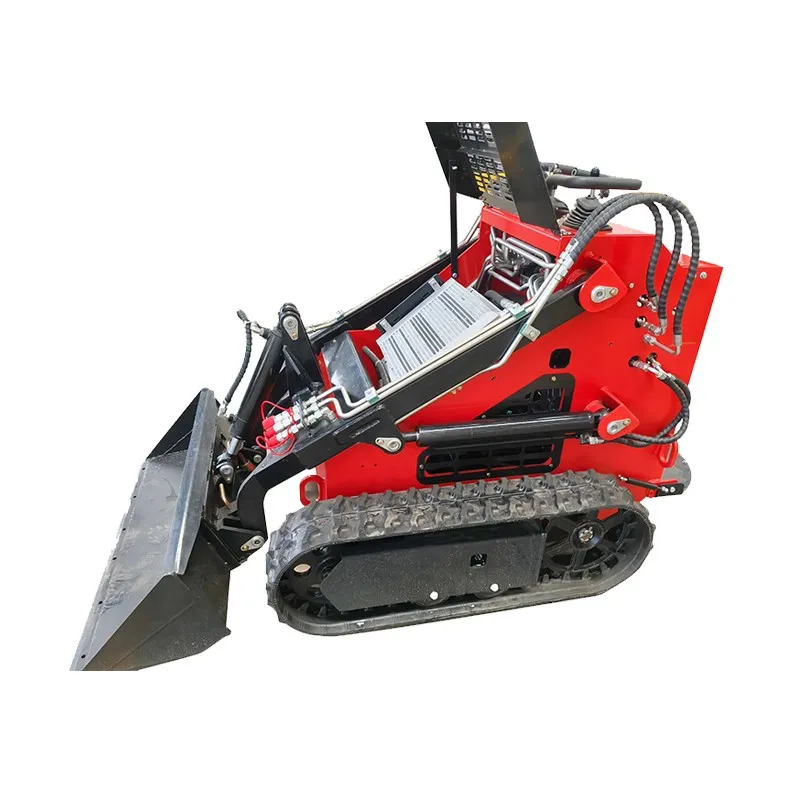
China Skid Steer Loader
When most people hear China skid steer loader, the first thing that pops into their head is cheap. I get it. For years, that was the dominant narrative, and frankly, a lot of the early export models gave that reputation some solid ground. But staying with that assumption today is a quick way to miss the real shift happening. It's not just about cost anymore; it's about understanding the specific tiers within the market and which Chinese manufacturers are genuinely building machines for the long haul, not just for a sale.
The Landscape: It's Not One Market
You can't talk about these machines without breaking them down. On one end, you have the ultra-budget models. These are the ones that flood online marketplaces. They often use generic, older-generation hydraulic components and engines from a patchwork of suppliers. The fit and finish is an afterthought. I've seen machines where the auxiliary hydraulic couplers are positioned right where your knee hits when you get in and out. That tells you everything about the design philosophy—or lack thereof.
Then there's the middle ground. This is where things get interesting and where the real competition for established Western brands in emerging markets heats up. Companies here have moved past pure reverse-engineering. They're investing in their own R&D, often partnering with European or American design firms for ergonomics and human-machine interface. The goal isn't just to copy a Bobcat or a CAT; it's to build a reliable, functional machine that can survive a rental fleet or a farm for 5,000 hours without falling apart. The profit margins are thinner here, so they compete on value engineering and surprisingly good after-sales support for key export regions.
I remember a project in Southeast Asia where we were evaluating loaders for a large plantation. The default choice was always a major US brand, but the lead times were insane. We brought in a unit from a Shandong-based maker, one of the more established ones. The site manager, a grizzled Aussie with zero patience for nonsense, ran it for a month. His feedback was telling: Hydraulics are a bit slower on the lift, but it's consistent. The cab is noisy as hell, but the service points are all accessible. For half the capital cost, I can buy two and still have a spare. That pragmatic calculation is driving a lot of purchases now.
Where Reliability Gets Built (or Broken)
The heart of any skid steer is its hydraulic system and its drivetrain. This is the dividing line. The cheaper units often use gear pumps and open-center systems. They work, but they're inefficient, generate more heat, and lack the fine control for precision attachments. The better Chinese manufacturers have fully transitioned to closed-center, load-sensing systems with piston pumps. It's a significant cost jump, but it's non-negotiable for performance.
Take a company like Shandong Pioneer Engineering Machinery Co., Ltd. I've followed their progression. They started like many others, but their shift around 2015 was noticeable. They began sourcing key components—like axial piston pumps and control valves—from recognized tier-two global suppliers, not just the cheapest domestic option. It's a quiet but critical signal. When you see a Chinese skid steer loader with a Parker or Bosch Rexroth hydraulic block, you know they're targeting a different buyer. It's not about hiding the origin; it's about building a reliable system.
Their website, https://www.sdpioneer.com, shows this evolution. They don't just list specs; they talk about component partnerships and testing protocols. The fact that they split their structure—with Shandong Hexin handling manufacturing and Shandong Pioneer focusing on overseas trade—is a classic move for serious exporters. It allows the trade arm to be hyper-responsive to market feedback without disrupting the factory floor. It's a structure you see in companies that have been at it for a while, like their 20-year history suggests.
The On the Ground Reality Check
Spec sheets are one thing. Mud, dust, and operator abuse are another. A common failure point I've witnessed is in the wiring harness and electrical connectors. Vibration is a killer. On early models we tested, connectors would work loose, sensor wires would chafe against the frame, and you'd get phantom error codes. The fix was always a tedious rewiring job. The better factories now use automotive-grade Deutsch connectors, proper loom wrapping, and secure routing clamps. It's a small detail that adds cost, but it prevents a huge headache down the line.
Another real-world test is attachment compatibility. The global standard is the universal skid steer attachment plate, but pin size, hydraulic flow rates, and auxiliary hydraulic pressure can vary. A good Chinese exporter will offer machines pre-configured for their target market—say, standard SAE pins and 2,500 PSI auxiliary pressure for North America. I've seen companies like the aforementioned Shandong Pioneer do this well. They understand that a machine is useless if a customer's existing grapple or auger won't hook up to it properly.
Cooling system capacity is another silent judge. In the Middle East, we had a batch of loaders from a different maker that kept overheating. The radiator was undersized for 45°C ambient temperatures. The solution from the factory was... to tell operators to run at half throttle. Unacceptable. The lesson is to always ask for the cooling capacity specs and the testing environment. Reputable companies will have that data and will have tested in extreme conditions.
Where the China Factor Still Bites
Let's be honest, challenges remain. The biggest isn't the product anymore; it's the supply chain and support network. If a main hydraulic pump fails in Iowa, getting a replacement from Shandong can still take weeks, even with air freight. This is where the distributor model is critical. The successful Chinese brands are investing in parts depots in key markets like the US, Germany, and Australia. They're training local mechanics. Without that infrastructure, you're selling a commodity, not building a brand.
There's also the issue of model churn. Some factories release new models every year with minor cosmetic changes, making long-term parts supply a nightmare. It fragments their own production and confuses buyers. Stability in a product line is a sign of maturity. It shows confidence in the design. When a company like Pioneer lists its core models and sticks with them for several years, adding iterative improvements, it builds trust. It tells me they expect that machine to be in the field for a decade and they plan to support it.
Finally, there's operator perception. The cab in a $25,000 Chinese loader still won't have the sound insulation or the intuitive joystick feel of a $70,000 market leader. But that's not the comparison being made anymore. The comparison is against a 10-year-old used machine at a similar price point. On that battlefield, a new machine with a warranty, modern emissions compliance, and decent ergonomics is winning.
The Verdict: A Calculated Tool, Not a Gamble
So, what's the bottom line on a China skid steer loader in 2024? It's no longer a binary good or bad question. It's about due diligence. You have to look past the glossy brochure and ask specific questions: Who supplies the key hydraulic components? What is the standard warranty and what does it actually cover? Is there a parts depot within your region? Can you talk to other customers in a similar climate or application?
The companies that are succeeding are the ones that have moved from being just factories to being engineering-focused solution providers. They've built up institutional knowledge over 15-20 years, like the history you see with Shandong Pioneer Engineering Machinery. Their relocation to a new, larger facility in Ningyang in 2023 isn't just an address change; it's a signal of planned growth and investment in more advanced production lines.
Would I spec one on a high-production, 3-shift mining site? Probably not yet. The total cost of ownership over 15,000 hours is still being proven. But for agricultural use, municipal work, landscaping, and general construction support? Absolutely. The value proposition is solid, and the reliability gap has narrowed dramatically for the tier of manufacturers who have chosen to compete on quality, not just price. The keyword now isn't cheap. It's capable. And that's a much more interesting conversation to have.
Related Products
Related Products