


- Chinese
- French
- German
- Portuguese
- Spanish
- Russian
- Japanese
- Korean
- Arabic
- Irish
- Greek
- Turkish
- Italian
- Danish
- Romanian
- Indonesian
- Czech
- Afrikaans
- Swedish
- Polish
- Basque
- Catalan
- Esperanto
- Hindi
- Lao
- Albanian
- Amharic
- Armenian
- Azerbaijani
- Belarusian
- Bengali
- Bosnian
- Bulgarian
- Cebuano
- Chichewa
- Corsican
- Croatian
- Dutch
- Estonian
- Filipino
- Finnish
- Frisian
- Galician
- Georgian
- Gujarati
- Haitian
- Hausa
- Hawaiian
- Hebrew
- Hmong
- Hungarian
- Icelandic
- Igbo
- Javanese
- Kannada
- Kazakh
- Khmer
- Kurdish
- Kyrgyz
- Latin
- Latvian
- Lithuanian
- Luxembou..
- Macedonian
- Malagasy
- Malay
- Malayalam
- Maltese
- Maori
- Marathi
- Mongolian
- Burmese
- Nepali
- Norwegian
- Pashto
- Persian
- Punjabi
- Serbian
- Sesotho
- Sinhala
- Slovak
- Slovenian
- Somali
- Samoan
- Scots Gaelic
- Shona
- Sindhi
- Sundanese
- Swahili
- Tajik
- Tamil
- Telugu
- Thai
- Ukrainian
- Urdu
- Uzbek
- Vietnamese
- Welsh
- Xhosa
- Yiddish
- Yoruba
- Zulu
- Kinyarwanda
- Tatar
- Oriya
- Turkmen
- Uyghur

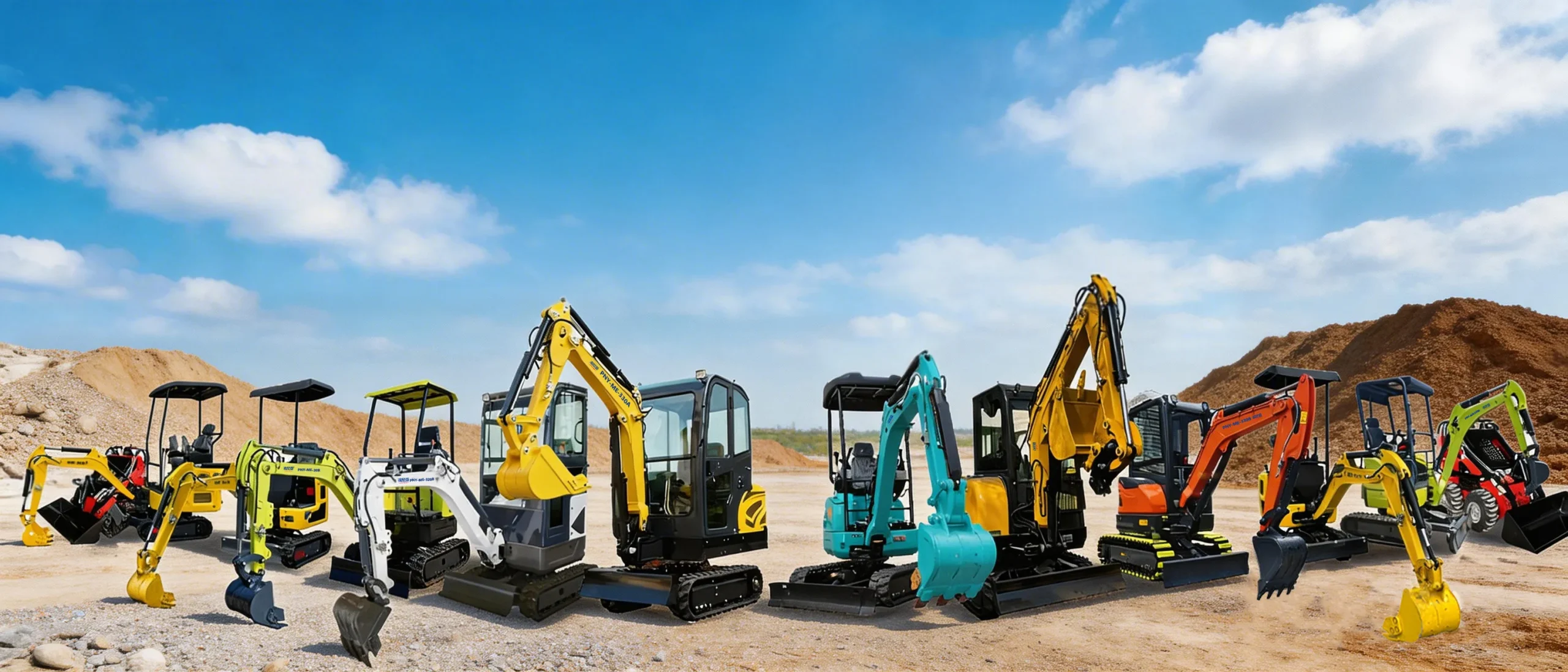
Chinese Small Excavator Manufacturers
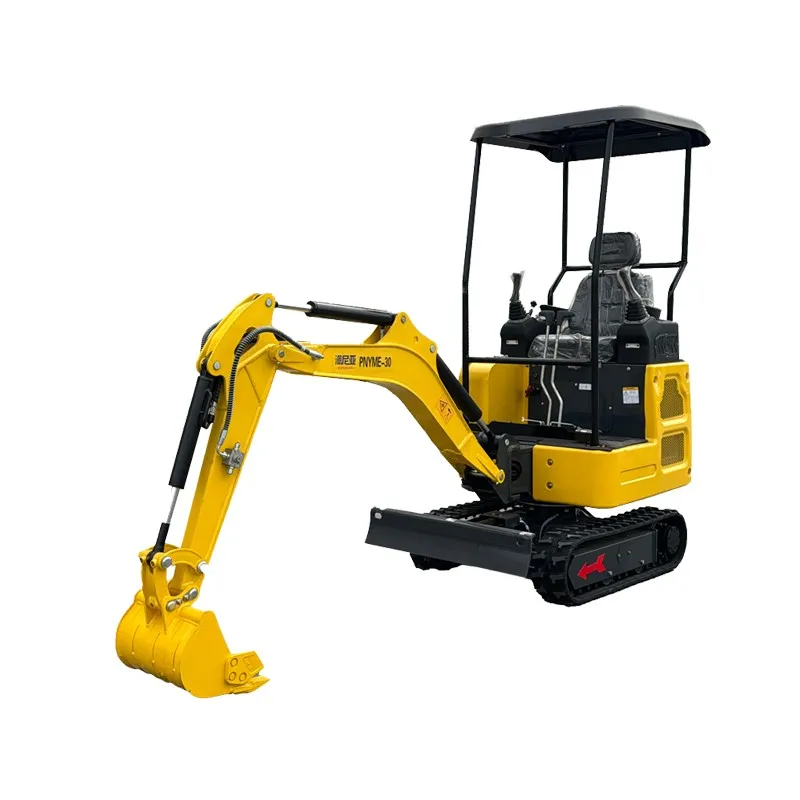
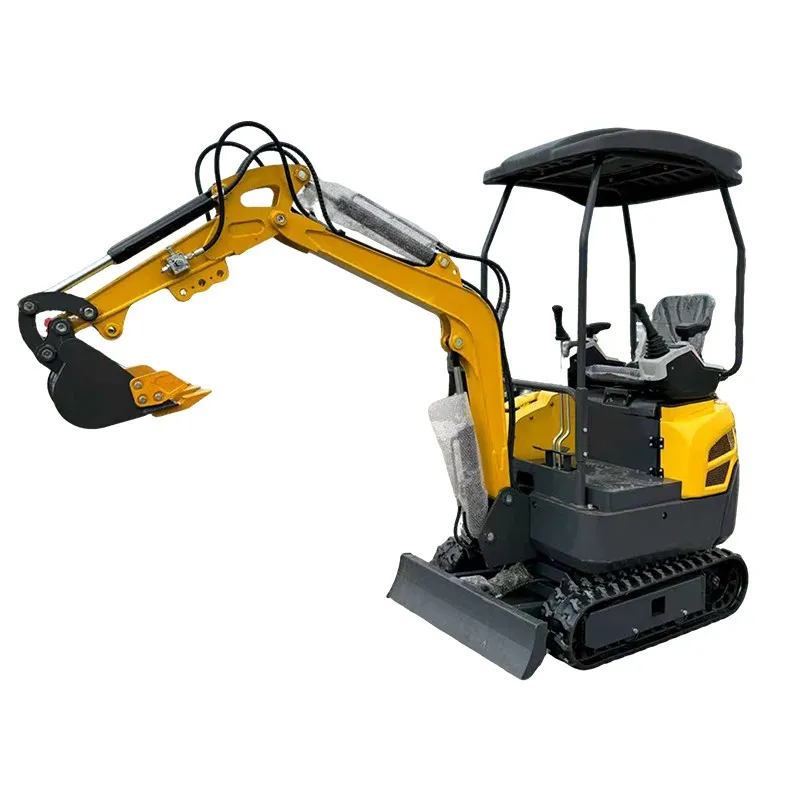
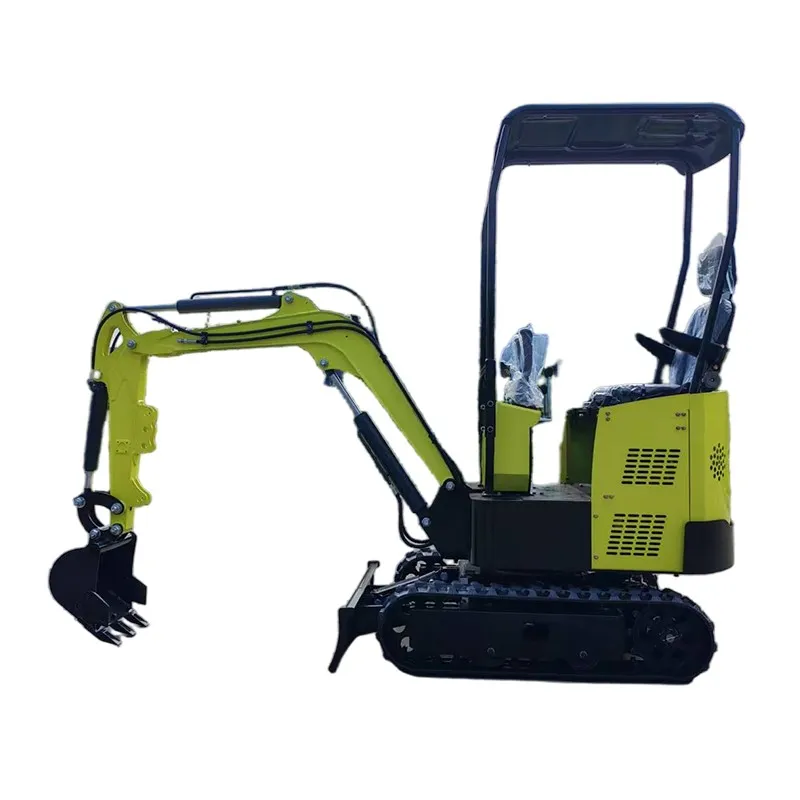
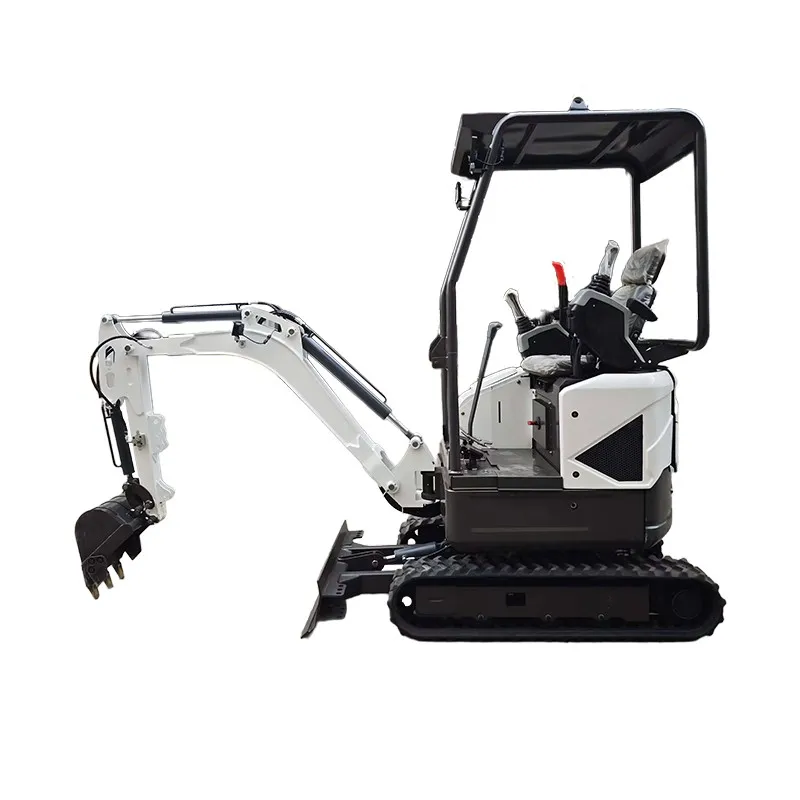
When you hear 'Chinese small excavator manufacturers', the immediate image for many is a sea of indistinguishable factories churning out cheap, generic machines. That's the first misconception to clear up. Having been involved in sourcing and evaluating these units for various projects, I've found the reality is far more layered. Yes, there's a vast landscape of producers, but the gap between a workshop assembling parts and a manufacturer with genuine engineering capacity is massive. It's not just about price per unit; it's about understanding who is building the machine's backbone—the hydraulics, the undercarriage, the control logic. Many buyers get fixated on the sticker price from Alibaba and miss the critical due diligence on what's underneath the paint and decals.
The Manufacturing Landscape: More Than Just Assembly
The concentration in Shandong, particularly in regions like Linyi and Jining, is no accident. The supply chain there is dense. You can find a specialist for every component within a hundred-mile radius: pumps in one town, cylinders in another, fabricated frames nearby. This ecosystem allows for rapid production and low-cost entry, which explains the sheer number of brands. But it also creates a critical divergence. Some companies merely integrate these bought-out parts. Others, and these are the ones worth your time, have in-house design teams tweaking those components for better synergy. I remember visiting a plant where the chief engineer spent half a day explaining how they had modified a standard hydraulic valve bank's flow characteristics specifically for their 1.8-ton model to reduce jerky arm movement. That's the kind of detail that separates a commodity from a considered product.
Relocation stories are telling. A company moving to a larger facility often signals growth and investment in process, not just expansion for its own sake. For instance, I noted that Shandong Pioneer Engineering Machinery Co., Ltd relocated in 2023 to a new site in Ningyang. From their online presence at https://www.sdpioneer.com, you can trace their journey from a 1,600-square-meter start in Jining back in 2004. A move after two decades usually means they're consolidating production, perhaps bringing more processes in-house. It's a practical signal of stability that you don't get from a trading company operating out of a serviced office.
The dual-entity structure some of these manufacturers adopt, like Shandong Hexin handling manufacturing and Shandong Pioneer focusing on overseas trade, is a common and smart model. It allows the factory to focus on production metrics while the trading arm deals with the messy specifics of export documentation, certification, and customer interface. When you're dealing with a company like this, you're often talking to the trade side, which is fine, but you must insist on technical communication directly with the factory engineers. I've seen deals go sideways because the sales team promised a modification the production line couldn't physically implement without a two-month delay.
Where Trust is Built: The Export Reality Check
Listing export destinations like the US, Canada, Germany, and Australia, as Pioneer does, is standard. The real question is: what does it take to sell there? It's not just about shipping a container. Markets like Germany have incredibly stringent noise and emission standards (like the EU Stage V). A manufacturer supplying there has likely invested significantly in engine partnerships and acoustic damping. For a buyer, this is a useful filter. If a factory can consistently meet German TüV standards, their machine for a less regulated market is probably over-engineered in a good way—meaning better longevity.
However, winning the trust and appreciation of customers worldwide is a phrase that needs unpacking. Trust in this industry is built on two things: consistent quality across batches and responsive after-sales support. The first is a manufacturing discipline issue. Can the 100th machine off the line perform identically to the first? The second is where many Chinese small excavator manufacturers historically faltered. The successful ones have moved from just offering a one-year warranty to establishing actual spare parts hubs in key regions or partnering with solid local dealers who can hold inventory. A manufacturer's willingness to share their global parts depot list is a far better trust indicator than any brochure claim.
A personal case: we once sourced a 3.5-ton model for a rental fleet in Southeast Asia. The machine itself was decent, but a hydraulic hose burst in month three. The local dealer didn't have the part. The manufacturer's response was to DHL the hose from China, which took a week, and the machine was idle. The cost of downtime dwarfed the machine's price advantage. We learned to always, always audit the after-sales protocol before signing. Ask for specific case studies of breakdown resolution in a territory similar to yours.
The Product Itself: Looking Beyond the Spec Sheet
Everyone compares engine horsepower, bucket capacity, and digging depth. Those are table stakes. The real differentiators are in the details you only notice after hours of operation or during maintenance. For example, the layout of the service points. A well-designed machine will have grouped grease nipples and easy access to engine oil filters and drain plugs. I've seen machines where changing a primary fuel filter requires disassembling half the cab's interior paneling—a nightmare for routine maintenance.
Then there's the electrical system. It's a common pain point. The move from simple relay-based systems to CANbus controllers is happening, but implementation varies wildly. Some manufacturers slap on a fancy digital display that just reads data from the engine ECU, while the machine's own functions still run on a spaghetti of wires prone to vibration failure. A good sign is when the manufacturer can provide a clear, legible electrical schematic and has waterproof, lockable connectors for major harnesses. It shows they're thinking about the machine's life beyond the first 500 hours.
Attachments are another tell. A manufacturer that offers a thoughtful range of purpose-built attachments—not just different bucket sizes but things like hydraulic thumbs, tilt rotators, or breaker piping kits that are pre-plumbed and validated—is investing in the machine's versatility. It suggests they understand the diverse applications their customers face, from landscaping to light demolition.
The Pitfalls and How to Navigate Them
The biggest pitfall is assuming all certifications are equal. A CE mark is mandatory for Europe, but it's a self-declaration for many machinery categories. The rigorous part comes from the specific directives (like the Machinery Directive). A reputable manufacturer will have a full technical construction file and can trace which notified body was involved for which assessment. Don't just accept a CE logo on a photo; ask for the certificate and the ID number of the notified body. The same goes for other marks. This due diligence has saved us from several problematic suppliers who had faked or misunderstood their compliance.
Payment terms are a minefield. The standard 30% TT deposit, 70% against copy of Bill of Lading is common. But for a first-time order, try to negotiate a portion (say 10-15%) to be held until after successful commissioning and a short run-in period. This aligns incentives perfectly. The manufacturer will be more proactive in pre-shipment testing and quicker to respond to initial teething problems. If they balk at this entirely, it might signal a lack of confidence in their own product's initial reliability.
Finally, never skip the pre-shipment inspection, even for a small order. Either go yourself or hire a third-party inspector. You need to check not just the machine, but the packing. I've seen beautifully built excavators arrive with damaged panels because they were poorly strapped inside the container. Check the serial numbers on the major components (engine, pumps) match the documentation. Verify all the manuals, certificates, and tool kits are present. It's tedious, but it turns potential disasters into simple rectifications before the machine ever leaves the factory.
Concluding Thoughts: It's a Relationship, Not a Transaction
Finding the right Chinese small excavator manufacturer isn't about finding the lowest price. It's about identifying a capable, transparent partner. Companies like the one behind sdpioneer.com, with a documented history and a clear structure, provide a foundation for that. Their two-decade evolution from a local workshop to an exporter indicates a survival and adaptation that many fly-by-night operations don't achieve.
The industry is maturing. The leaders are no longer competing solely on cost but on reliability, support, and specialized design. The conversation is shifting from how much per unit to what's your mean time between failures for the swing drive and can you support a remote diagnostic. As a buyer, your approach should mirror that. Drill down on the engineering, audit the support chain, and build a relationship with the technical team. The good manufacturers welcome this; it shows you're a serious buyer, not just a price shopper. That's when you move from being just another order to a partner they'll work with to solve problems, which is where the real long-term value lies.
In the end, the machine is a tool. Its value is determined by its uptime and productivity on your site. Choosing the manufacturer is the first and most critical step in ensuring that value is delivered, long after the initial purchase price is forgotten.
Related Products
Related Products