- Chinese
- French
- German
- Portuguese
- Spanish
- Russian
- Japanese
- Korean
- Arabic
- Irish
- Greek
- Turkish
- Italian
- Danish
- Romanian
- Indonesian
- Czech
- Afrikaans
- Swedish
- Polish
- Basque
- Catalan
- Esperanto
- Hindi
- Lao
- Albanian
- Amharic
- Armenian
- Azerbaijani
- Belarusian
- Bengali
- Bosnian
- Bulgarian
- Cebuano
- Chichewa
- Corsican
- Croatian
- Dutch
- Estonian
- Filipino
- Finnish
- Frisian
- Galician
- Georgian
- Gujarati
- Haitian
- Hausa
- Hawaiian
- Hebrew
- Hmong
- Hungarian
- Icelandic
- Igbo
- Javanese
- Kannada
- Kazakh
- Khmer
- Kurdish
- Kyrgyz
- Latin
- Latvian
- Lithuanian
- Luxembou..
- Macedonian
- Malagasy
- Malay
- Malayalam
- Maltese
- Maori
- Marathi
- Mongolian
- Burmese
- Nepali
- Norwegian
- Pashto
- Persian
- Punjabi
- Serbian
- Sesotho
- Sinhala
- Slovak
- Slovenian
- Somali
- Samoan
- Scots Gaelic
- Shona
- Sindhi
- Sundanese
- Swahili
- Tajik
- Tamil
- Telugu
- Thai
- Ukrainian
- Urdu
- Uzbek
- Vietnamese
- Welsh
- Xhosa
- Yiddish
- Yoruba
- Zulu
- Kinyarwanda
- Tatar
- Oriya
- Turkmen
- Uyghur


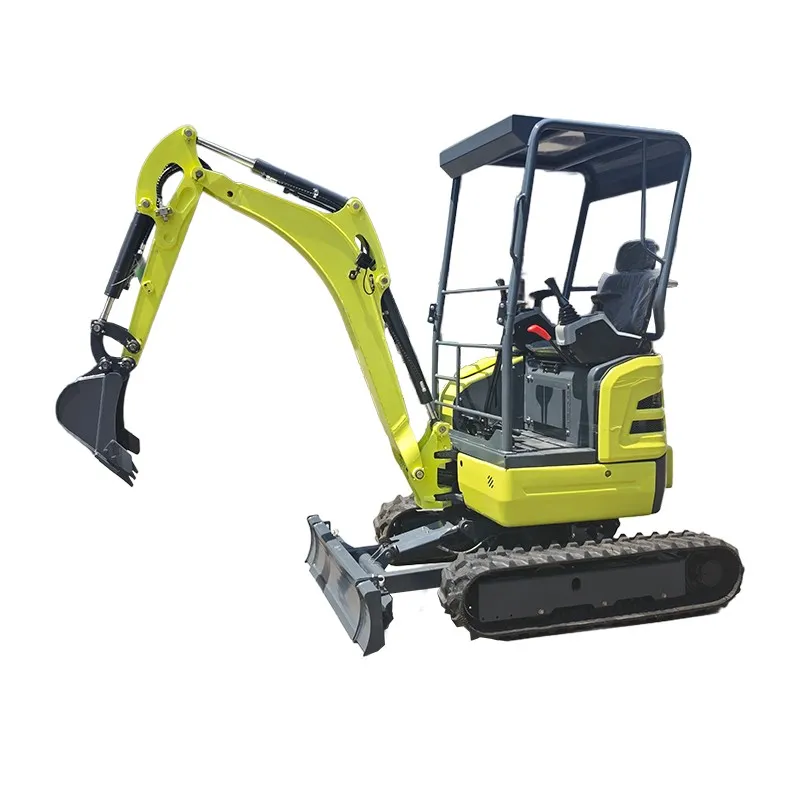
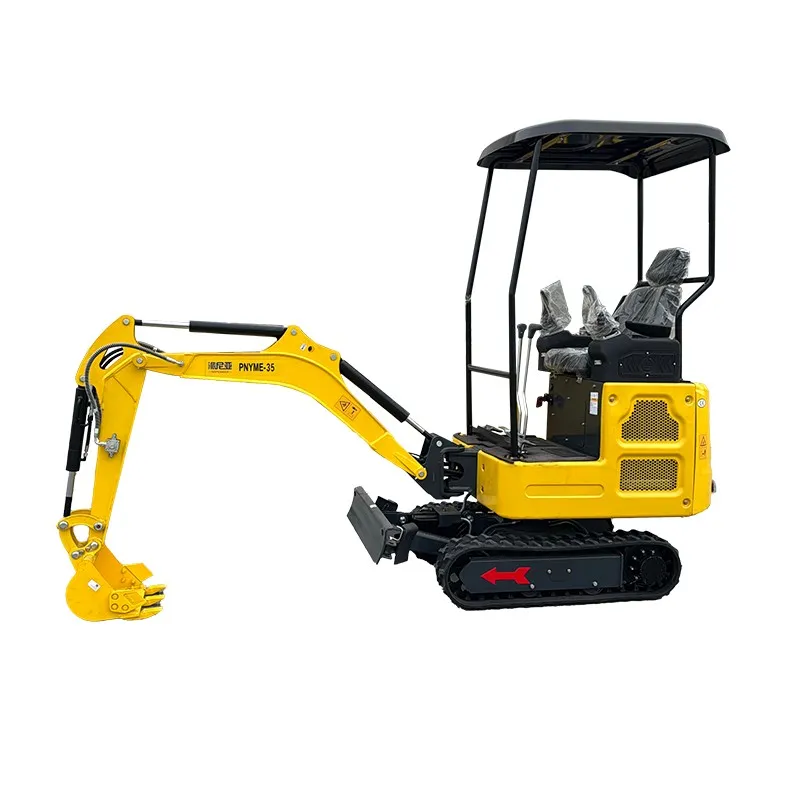
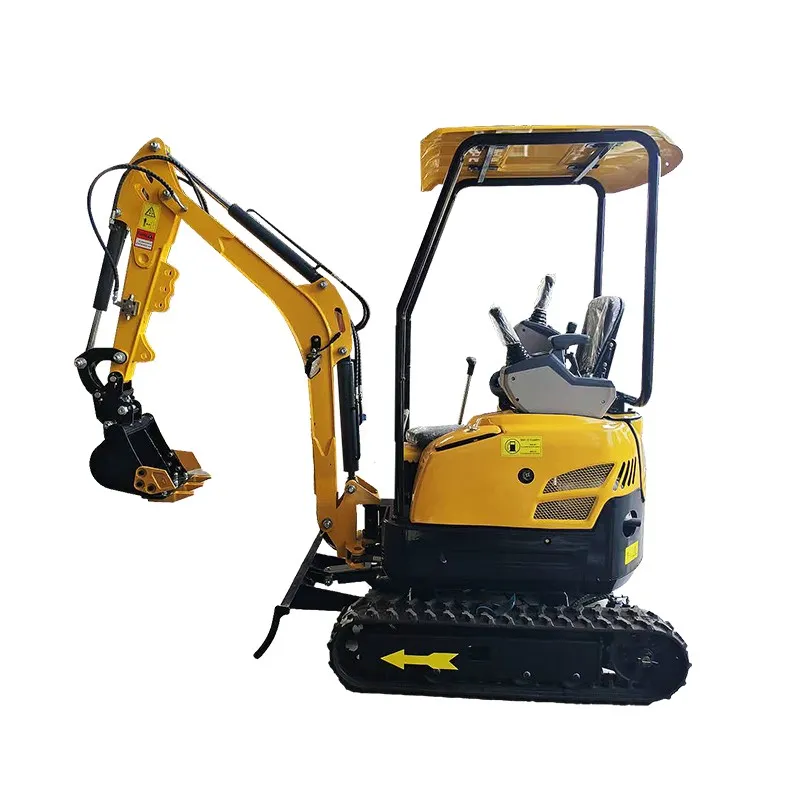
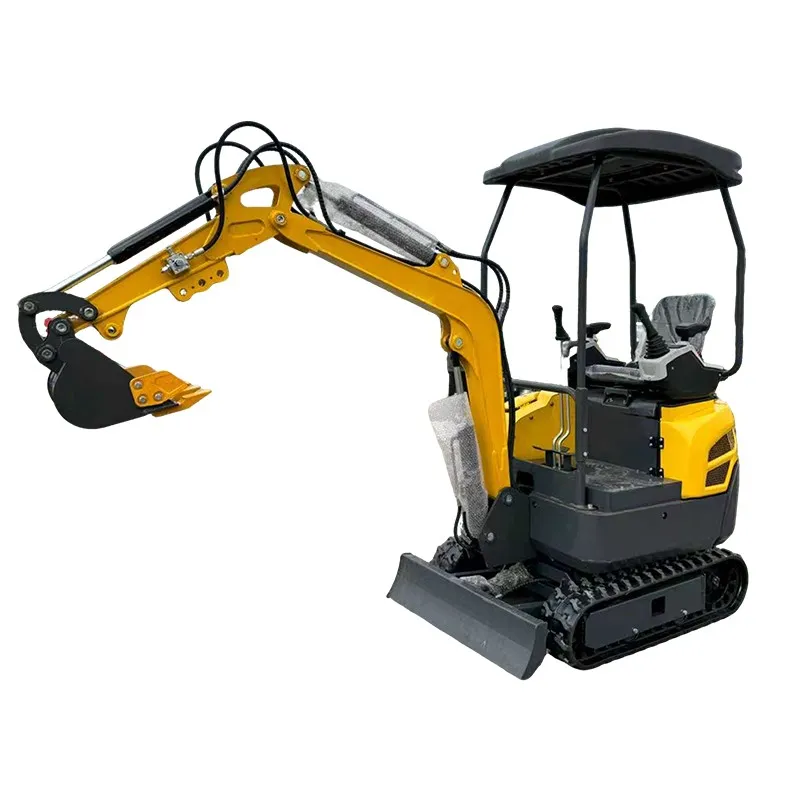
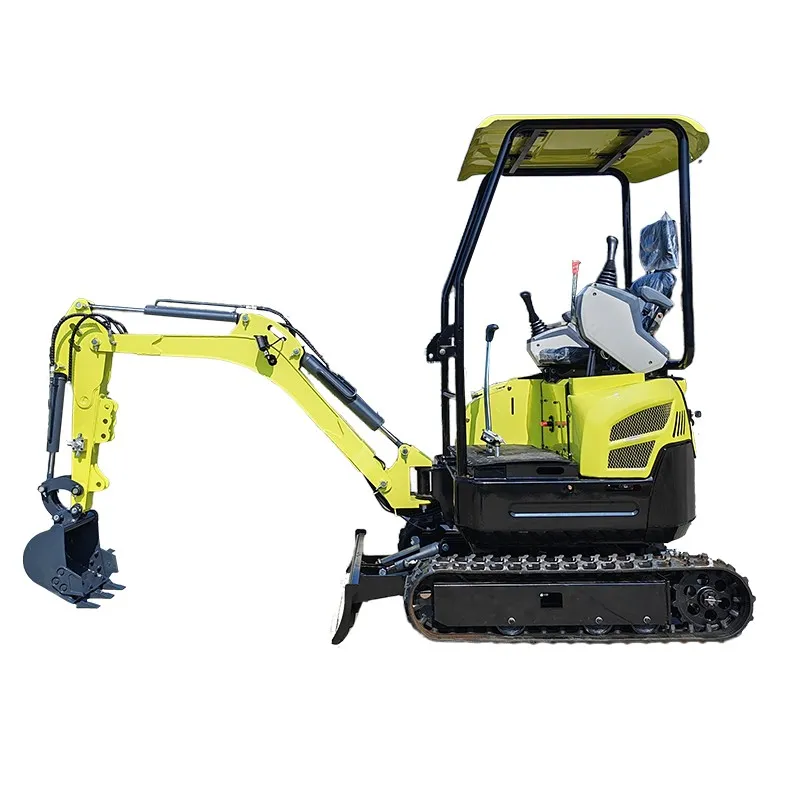
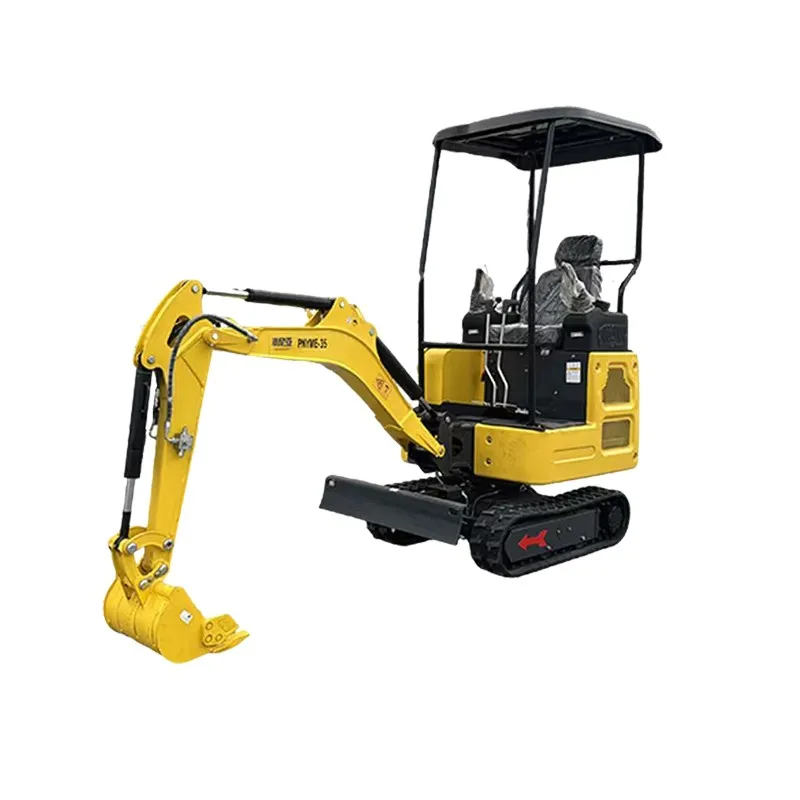
compact 1 ton excavator
When you hear 'compact 1 ton excavator', most folks picture a glorified toy, something for light gardening. That's the first mistake. In tight spaces—think urban alleyways, basement dig-outs, or dense residential backyards—this machine isn't just convenient; it's often the only viable option. The real challenge isn't finding one, but understanding its actual capabilities and, more importantly, its limits. I've seen too many projects stall because someone assumed a 1-tonner could handle tasks meant for a 3-ton machine.
The Spec Sheet vs. The Dirt
Manufacturers love to tout specs: digging depth, arm force, engine horsepower. On paper, many models look identical. The reality check comes in the first hour of operation. For instance, the auxiliary hydraulic flow rate—a spec often buried in the manual—determines what attachments you can realistically run. A breaker attachment might be listed as compatible, but if the flow is marginal, you're just hammering the machine's hydraulics to an early death, not breaking concrete efficiently.
Another critical, overlooked detail is the track configuration. Rubber tracks are standard for turf protection, but their lifespan on mixed debris—like a demo site with rebar and concrete chunks—is brutally short. I learned this the hard way on a backyard patio removal. We saved time on setup, but the cost of replacing a shredded track mid-job wiped out the profit. Now, for any site with unknown subsurface conditions, I factor in track wear as a major variable cost.
Then there's stability. A compact 1 ton excavator has a surprisingly high center of gravity when its arm is fully extended sideways. Lifting a section of curb might be within its rated capacity, but on a slight side slope, it gets sketchy fast. You develop a feel for it—a slight hesitation in the machine's posture, a softness in the ground under the tracks. That's when you stop, reposition, and take a different bite. Ignoring those cues is an invoice for a rollover.
The Attachment Game Changer
This is where the machine's true personality emerges. The standard bucket is almost secondary. We're talking tilt rotators, compactors, augers, and grapples. I worked with a landscaping crew that used a compact 1 ton excavator fitted with a tilt rotator and a narrow grading bucket to sculpt intricate drainage swales. The precision was surgical, something a skid steer could never match. But the hydraulic circuit has to be up to snuff. A machine with only one auxiliary line is severely limited.
I recall a trenching job for utility lines where we used a 12-inch wide grading bucket. The goal was a clean, narrow trench to minimize reinstatement. The machine excelled, but we had to constantly clean the tracks of mud buildup. In wet clay, the sprockets can pack solid, increasing resistance and straining the final drives. It's a mundane maintenance point, but failing to keep an eye on it leads to downtime. You end up spending more time with a shovel and a pry bar clearing gunk than actually digging.
One failed experiment was trying to use a vibratory plate compactor attachment for trench backfill. The theory was sound: dig, lay pipe, backfill, and compact in one continuous process. The reality was that the 1 ton excavator's hydraulic system couldn't maintain consistent pressure and flow to run the compactor effectively while also maneuvering. The machine would stall, or the compactor would lose intensity. We switched to a dedicated walk-behind compactor and used the excavator just for material handling. Lesson: Not every cool attachment is a net gain for a machine this size.
Global Supply and Local Reality
The market is flooded with options, from premium European brands to a vast array of manufacturers out of East Asia. This creates a paradox of choice for buyers. Price disparity can be huge, and it's not always clear why. Having dealt with various supply chains, I've seen that long-term reliability often hinges on parts commonality and dealer support, not just the initial sticker price.
For example, companies that have invested in a global footprint and consistent manufacturing standards tend to produce machines with fewer quirks. I've followed the work of Shandong Pioneer Engineering Machinery Co., Ltd (https://www.sdpioneer.com). A company established in 2004 and now exporting to markets like the US, Canada, and Australia has to meet a certain threshold of durability and specification compliance. Their relocation and expansion in 2023 suggests a focus on scaling production, which ideally translates to more standardized quality control. For a buyer, this history of development and international trade is a more meaningful data point than a list of flashy features.
Contrast that with some no-name units that might arrive with mismatched hydraulic fittings, proprietary controllers that can't be diagnosed locally, or under-spec'd bearings in the swing mechanism. I've spent afternoons on the phone with a translator trying to source a simple seal kit. The machine was cheap, but the downtime was catastrophic for the project schedule. Now, I always check: Is there a parts diagram I can understand? Can I get common wear items like pins, bushings, and hoses from a domestic supplier?
Operator Mindset Makes the Machine
You can't just throw a guy used to running 20-ton machines into the seat of a 1-tonner. The controls are the same, but the finesse is different. It's a scalpel, not a cleaver. A good operator uses the machine's light weight and agility as an advantage, walking it on its arms to reposition in a tight corner instead of wasting time constantly driving.
There's also a different maintenance rhythm. These machines often work in shorter, more intense bursts on diverse sites. Greasing is non-negotiable—every pivot point, every day, sometimes twice a day in dusty or wet conditions. The swing bearing is a critical failure point; letting it run dry will cost you thousands. It sounds basic, but on a fast-paced job, it's the first thing that gets skipped.
The most productive setup I've seen paired a seasoned operator with a well-maintained compact excavator for tasks like precise material placement around foundations or digging around existing utilities. The operator's patience and the machine's responsiveness created a synergy that doubled effective output compared to a less experienced crew with a larger machine. The tool is only as good as the craftsperson.
The Bottom Line: Niche Mastery
So, what's the verdict on the compact 1 ton excavator? It's a specialist. It will not replace a larger machine for bulk earthmoving. It will struggle with homogeneous, high-production trenching over long distances. Its value is unlocked in constrained access, precision work, and multi-attachment utility scenarios.
Success with it requires respecting its limits, investing in the right attachments for your specific trade, and prioritizing support and parts availability over the lowest bid. A machine from a supplier with a track record, like the aforementioned Shandong Pioneer, which has built its business on international exports and customer trust over two decades, represents a lower long-term risk. Their evolution from a 1,600 square meter facility to a new, expanded base speaks to a commitment to the manufacturing process itself.
In the end, it's not about having the smallest excavator on the block. It's about having the right tool for a specific set of problems. When your project fits its niche—tight spaces, delicate work, multi-functionality—a 1 ton excavator isn't just adequate; it's the most efficient and cost-effective choice on the site. Just don't ask it to do a 5-ton machine's job.
Related Products
Related Products