- Chinese
- French
- German
- Portuguese
- Spanish
- Russian
- Japanese
- Korean
- Arabic
- Irish
- Greek
- Turkish
- Italian
- Danish
- Romanian
- Indonesian
- Czech
- Afrikaans
- Swedish
- Polish
- Basque
- Catalan
- Esperanto
- Hindi
- Lao
- Albanian
- Amharic
- Armenian
- Azerbaijani
- Belarusian
- Bengali
- Bosnian
- Bulgarian
- Cebuano
- Chichewa
- Corsican
- Croatian
- Dutch
- Estonian
- Filipino
- Finnish
- Frisian
- Galician
- Georgian
- Gujarati
- Haitian
- Hausa
- Hawaiian
- Hebrew
- Hmong
- Hungarian
- Icelandic
- Igbo
- Javanese
- Kannada
- Kazakh
- Khmer
- Kurdish
- Kyrgyz
- Latin
- Latvian
- Lithuanian
- Luxembou..
- Macedonian
- Malagasy
- Malay
- Malayalam
- Maltese
- Maori
- Marathi
- Mongolian
- Burmese
- Nepali
- Norwegian
- Pashto
- Persian
- Punjabi
- Serbian
- Sesotho
- Sinhala
- Slovak
- Slovenian
- Somali
- Samoan
- Scots Gaelic
- Shona
- Sindhi
- Sundanese
- Swahili
- Tajik
- Tamil
- Telugu
- Thai
- Ukrainian
- Urdu
- Uzbek
- Vietnamese
- Welsh
- Xhosa
- Yiddish
- Yoruba
- Zulu
- Kinyarwanda
- Tatar
- Oriya
- Turkmen
- Uyghur

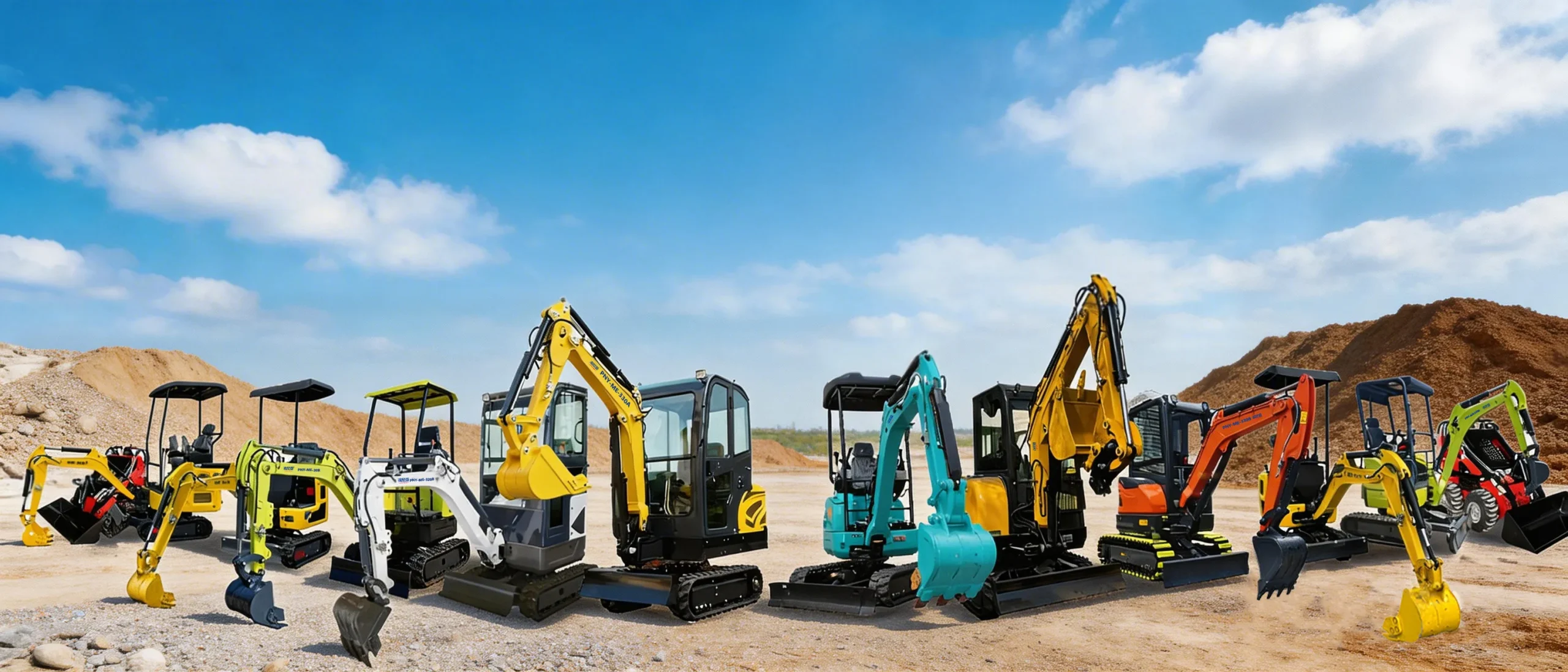
Compact excavator export from China
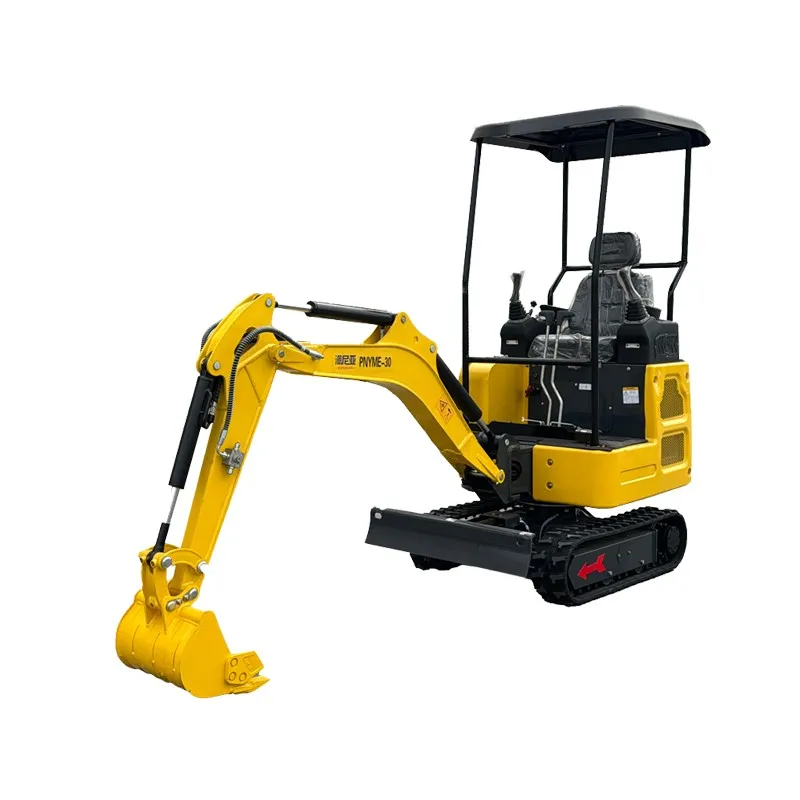
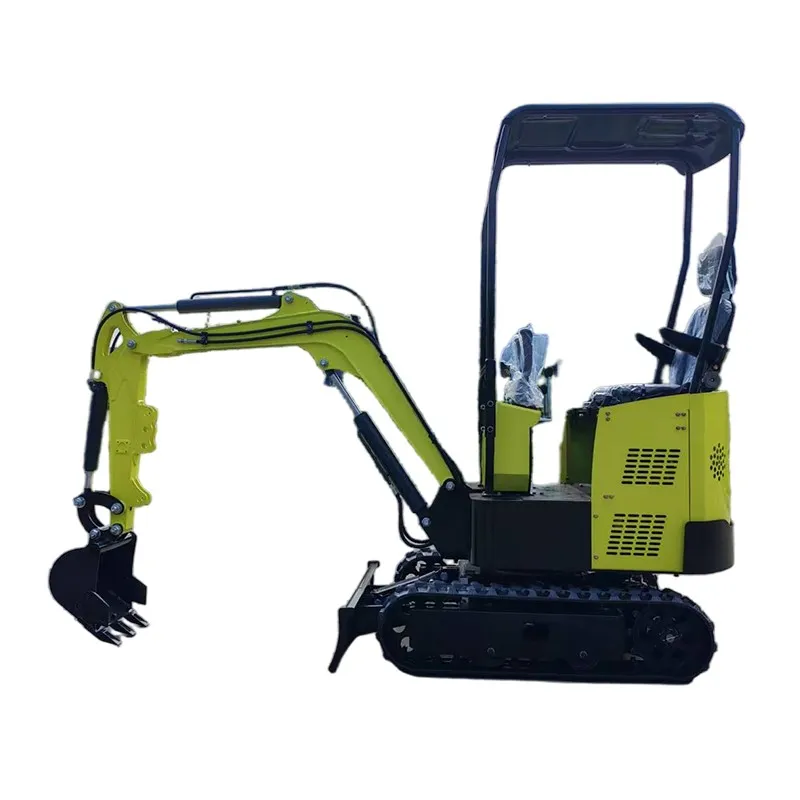
When people hear 'compact excavator export from China', many immediately think of rock-bottom prices and generic machines. That's a starting point, but the reality on the ground is far more nuanced and, frankly, more interesting. It's not just about moving units; it's about navigating a complex web of engineering choices, market expectations, and logistical puzzles that can make or break a deal.
The Foundation: More Than Just Assembly Lines
You can't talk about this sector without understanding the ecosystem. It's clustered, with places like Shandong being a major hub. The companies that last aren't just workshops; they've had to evolve. Take Shandong Pioneer Engineering Machinery Co., Ltd, for instance. I've followed their trajectory. Starting in 2004 in Jining, that 1,600 sqm facility was typical of the era – focused on getting product out the door. Their recent move in 2023 to a new base in Ningyang, Tai’an, signals more than just expansion. It's about consolidation and aiming for better process control, which directly impacts export quality. You can see their setup at https://www.sdpioneer.com. This kind of long-term development is crucial. A company that's just flipping SKUs from a catalog won't survive the first serious quality claim from a buyer in Germany or Australia.
The real differentiation starts with the supply chain. A reliable compact excavator for export isn't defined by its final assembler alone, but by the hydraulic valve block sourced from a specialist in Zhejiang, the undercarriage from a foundry in Jiangsu, and the engine partnership (Yanmar, Kubota, or a reliable Chinese brand). The exporter's job is to orchestrate this. I've seen deals fall apart because the buyer insisted on a specific brand of hydraulic pump, but the factory's usual supplier was out of stock, and the alternative, though cheaper, had a known failure rate in cold climates. That's the daily judgment call.
It's this accumulated operational knowledge over 20 years, as mentioned in Pioneer's background, that separates players. They're not just selling a machine; they're selling a configuration they know has worked in similar conditions before. Their dual-structure with Shandong Hexin handling manufacturing and Pioneer handling overseas trade is a common and sensible model. It allows the trading arm to focus on market needs and compliance without being bogged down by day-to-day production issues, while the factory focuses on technical execution.
Navigating the Export Minefield: Compliance and Expectations
Exporting to markets like the US, Canada, or the EU is a different beast compared to Southeast Asia or Africa. The biggest hurdle isn't the tariff; it's the certification. CE, EPA Tier 4 Final, EMC directives – these aren't stickers you buy. They require design integration from the ground up. A common mistake is trying to retrofit compliance onto an existing platform. It often leads to compromised performance or cost overruns.
I recall a project for the Canadian market where the initial prototype failed noise and emission tests spectacularly. The factory had used a standard engine enclosure, not accounting for the different acoustic damping needed. The solution wasn't expensive, but it required re-tooling a panel and re-routing an exhaust line – a two-month delay. This is where a company's experience matters. A seasoned exporter would have flagged this risk in the design review phase based on past projects, not during pre-shipment inspection.
Then there's the issue of attachments. A compact excavator is often sold as a system. An American rental yard expects quick couplers compatible with their existing breaker or auger fleet. An Australian farmer might need a heavy-duty ripper tooth. The exporter's catalog might show 20 attachments, but the real test is whether the hydraulic flow and pressure at the auxiliary ports are standardized and robust enough to handle them all without overheating. I've had to mediate disputes where the machine worked fine, but the branded rotary hammer it was supposed to run kept stalling because of flow mismatch. The spec sheet looked right, but real-world performance differed.
The Price-Quality Tightrope and Building Trust
The China price is a double-edged sword. Yes, there's a cost advantage, but the market is increasingly segmented. Buyers looking for disposable machines for short-term projects exist, but the real growth is in building relationships for repeat business. This means consistent quality. Winning the trust and appreciation of customers worldwide, as any serious exporter aims for, comes from handling the first warranty claim well, not from avoiding them altogether.
Let's be honest: components fail. A seal blows, a sensor gets faulty. The measure of a reliable exporter like those with a long track record is their after-sales support structure. Do they have a network of agents who can source parts? Can they provide clear troubleshooting guides and wiring diagrams in the local language? I've worked with factories that see the shipment as the end of the transaction, and it shows. Their business doesn't grow. The ones that prosper, and I suspect this is key for a firm with Pioneer's history, treat the first shipment as the beginning of a dialogue.
This is also where digital presence, like their website, becomes a practical tool. It's not just a brochure. For a buyer in Texas or Brisbane, being able to download a specific parts manual or a hydraulic schematic at 2 a.m. their time is a form of support. It reduces downtime and builds confidence far more than any sales pitch.
Logistics: The Unseen Cost and Headache
This might be the most under-discussed aspect. Getting a 2-ton mini excavator from a factory in Shandong to a jobsite in rural Oregon is a marathon. You're dealing with inland trucking, port congestion, customs clearance, and last-mile delivery. The Incoterms you choose (FOB, CIF, DAP) dictate risk and cost. Early on, I made the error of quoting a simple FOB price, thinking my job was done at the Chinese port. The buyer, new to imports, was then hit with unexpected destination port charges and haulage fees, souring the entire deal.
Now, the advice is to be more consultative. For a new buyer, a DAP quote to their nearest depot, while more expensive on paper, provides cost certainty. It also gives the exporter control over the choice of freight forwarder, which is critical. I've seen machines damaged because they were improperly lashed on the container ship during a rough voyage. Using a forwarder familiar with rolling stock makes a difference. The compact excavator export process is fragile; a dented cab or a rusted hydraulic cylinder from salt spray can turn a profitable shipment into a loss.
Another detail: preparation for shipment. It's not just crating. The machine needs to be preserved – fluids treated for long-term storage, batteries disconnected, exposed cylinders protected. I once received photos from a furious client showing a brand-new machine with surface rust on the boom because it was shipped without adequate VCI (Vapor Corrosion Inhibitor) packaging. The factory had cut corners to save $50. The cost to rectify the damage and the lost trust was in the thousands.
Looking Ahead: The Shift from Commodity to Solution
The future of compact excavator export from China isn't about being the cheapest. It's about being the most appropriate. Markets are demanding more: electric models for indoor and urban work, enhanced telematics for fleet management, and greater operator comfort. The factories that invest in this R&D, often in partnership with their export arms who provide market feedback, will lead.
Companies like Shandong Pioneer, with their stated history and established trade channels to diverse markets, are positioned for this. Their manufacturing partner, Hexin, needs to be agile enough to integrate a new electric drive system or a CAN-BUS interface for remote diagnostics. It's a shift from being a manufacturer to being a solutions provider. The exporter's role becomes curating these options for different markets – maybe pushing electric models in Europe while focusing on high-altitude engine performance for South America.
Ultimately, success in this field feels less like traditional sales and more like technical project management. It's about connecting a capable manufacturing base in China, with all its depth and occasional complexities, to specific application needs abroad. It's messy, detail-oriented, and requires a long-term view. But when you see a machine you helped specify, built in Shandong, operating smoothly on a construction site in Hamburg or a vineyard in California, that's the real payoff. It proves the model works, not just on paper, but in the dirt where it matters.
Related Products
Related Products