- Chinese
- French
- German
- Portuguese
- Spanish
- Russian
- Japanese
- Korean
- Arabic
- Irish
- Greek
- Turkish
- Italian
- Danish
- Romanian
- Indonesian
- Czech
- Afrikaans
- Swedish
- Polish
- Basque
- Catalan
- Esperanto
- Hindi
- Lao
- Albanian
- Amharic
- Armenian
- Azerbaijani
- Belarusian
- Bengali
- Bosnian
- Bulgarian
- Cebuano
- Chichewa
- Corsican
- Croatian
- Dutch
- Estonian
- Filipino
- Finnish
- Frisian
- Galician
- Georgian
- Gujarati
- Haitian
- Hausa
- Hawaiian
- Hebrew
- Hmong
- Hungarian
- Icelandic
- Igbo
- Javanese
- Kannada
- Kazakh
- Khmer
- Kurdish
- Kyrgyz
- Latin
- Latvian
- Lithuanian
- Luxembou..
- Macedonian
- Malagasy
- Malay
- Malayalam
- Maltese
- Maori
- Marathi
- Mongolian
- Burmese
- Nepali
- Norwegian
- Pashto
- Persian
- Punjabi
- Serbian
- Sesotho
- Sinhala
- Slovak
- Slovenian
- Somali
- Samoan
- Scots Gaelic
- Shona
- Sindhi
- Sundanese
- Swahili
- Tajik
- Tamil
- Telugu
- Thai
- Ukrainian
- Urdu
- Uzbek
- Vietnamese
- Welsh
- Xhosa
- Yiddish
- Yoruba
- Zulu
- Kinyarwanda
- Tatar
- Oriya
- Turkmen
- Uyghur


compact excavator price list
You search for a 'compact excavator price list' and expect clarity? Good luck. That single PDF or webpage promising definitive numbers is often the starting point for confusion, not the end of it. The first lesson I learned, the hard way, was that a listed price is barely an opening bid in a conversation filled with variables most buyers don't initially consider. It's not just about the machine's sticker price; it's about the story behind that number—configuration, logistics, support, and the credibility of the hand offering it.
The Illusion of a Standard Price Tag
Early on, I made the classic mistake of sourcing purely based on the lowest figure on a compact excavator price list. Found a supplier with a 1.8-ton model priced 15% below everyone else. Seemed like a win. The machines arrived, and the problems started within weeks: hydraulic fittings that didn't match local standards, under-spec'd pumps, and a complete lack of accessible service documentation. The price suddenly ballooned with adaptation costs and downtime. That list was a fantasy, detached from the machine's real-world application and total cost of ownership.
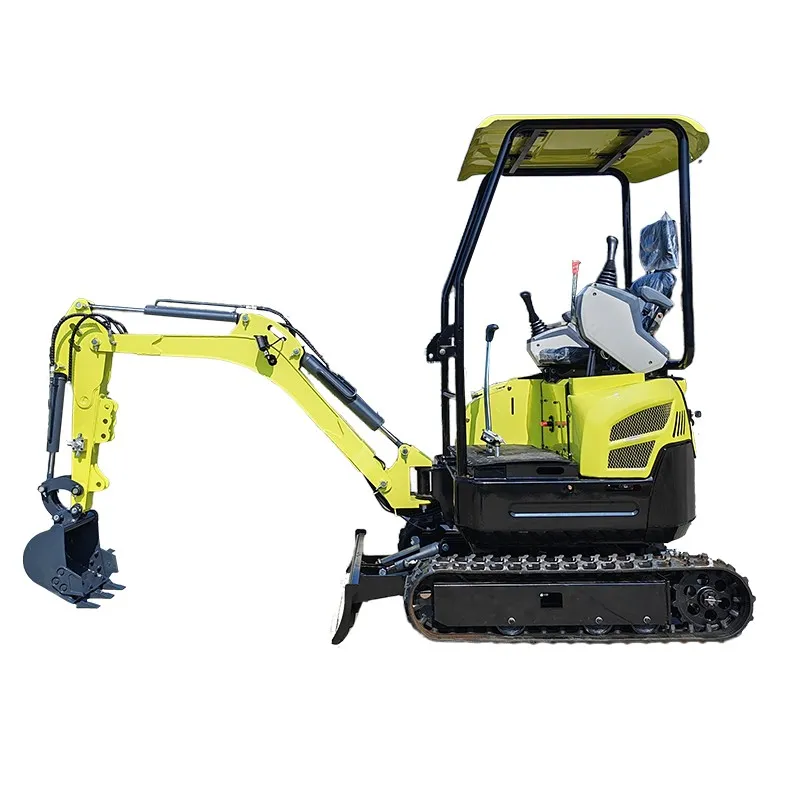
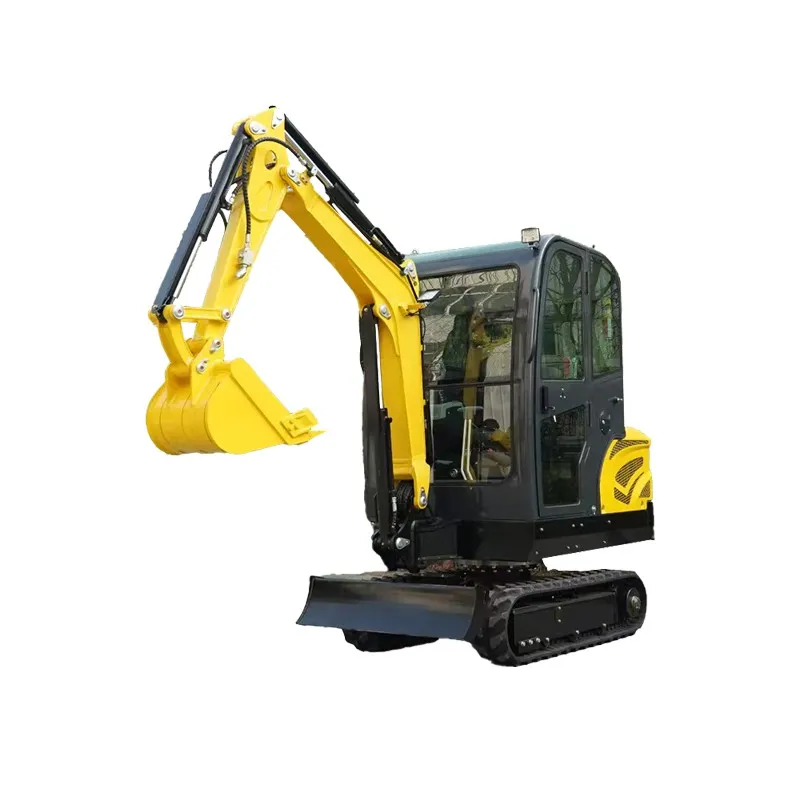
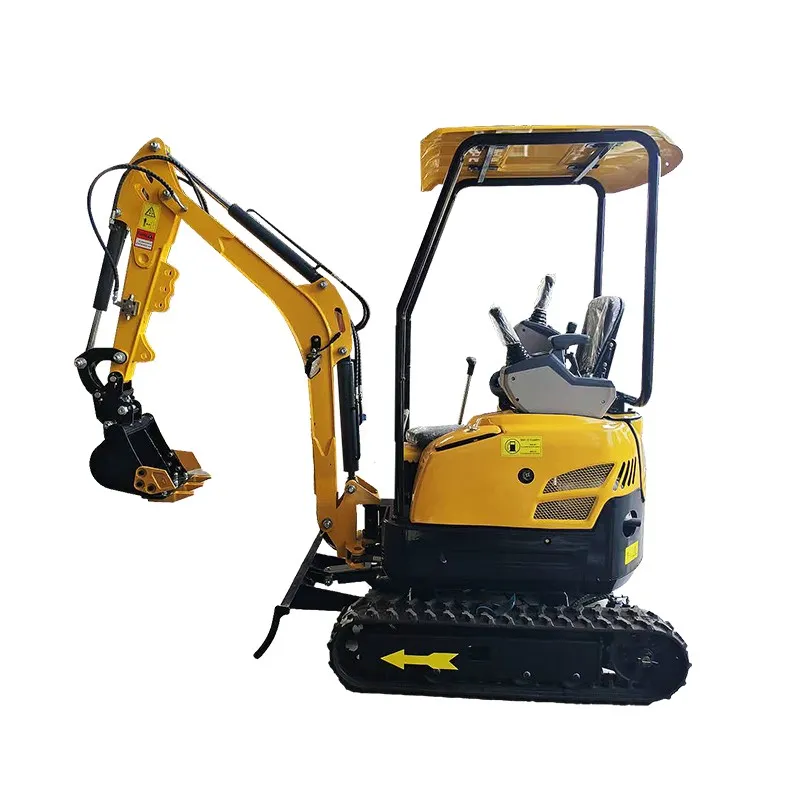
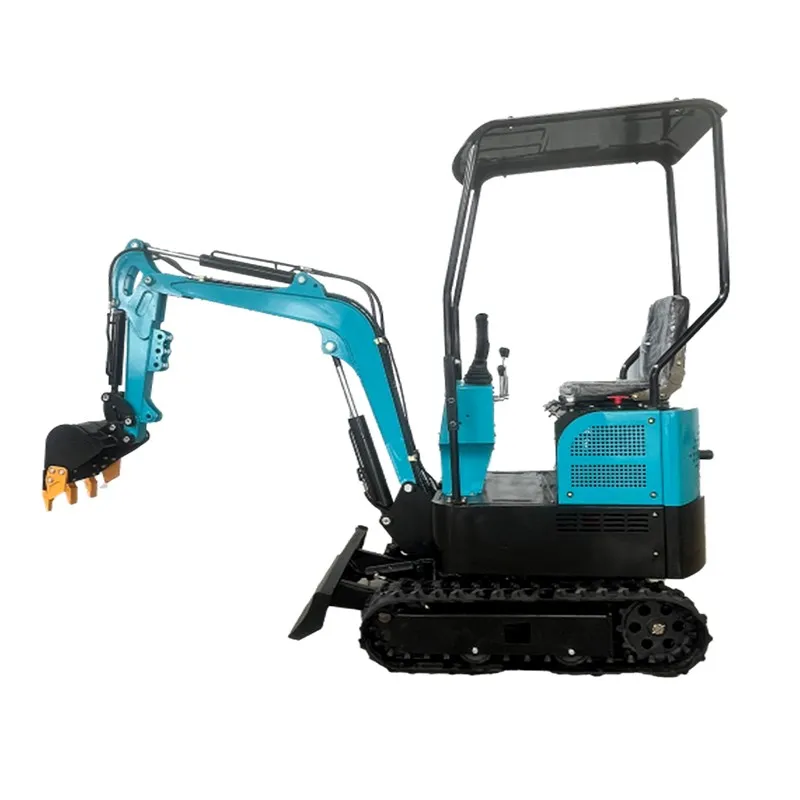
This is where you have to read between the lines. A serious manufacturer's price sheet isn't just a column of numbers. It should implicitly account for the build. Are we talking about a standard Japanese-style hydraulic system, or a proprietary one? Is the cab a basic canopy or a certified ROPS/FOPS structure with air conditioning? Each choice, often buried in fine-print model codes, shifts the base price significantly. I've seen two machines listed as 1.8-ton compact excavators with a price variance of over $8,000 because one had a full grading blade and piped auxiliary hydraulics, and the other didn't.
Take a company like Shandong Pioneer Engineering Machinery Co., Ltd (you can find them at https://www.sdpioneer.com). They've been around since 2004, which in this industry, suggests they've navigated a few market cycles. When I look at their offerings, I'm not just looking at the price. I'm considering that their manufacturing arm, Shandong Hexin, has been producing for two decades, and their trade arm handles export logistics to places like the U.S. and Germany. That history is often baked into their pricing structure—it might not be the absolute cheapest, but it likely includes a level of export compliance and configuration commonality that a brand-new factory might overlook to hit a lower list price.
Configuration is King, Logistics is the Kingdom
This is the real meat of the discussion. A compact excavator price list is meaningless without the spec sheet attached. Bucket type and width? Standard. But what about hydraulic quick couplers? Are they included or a $1,200 add-on? The choice of tracks—rubber vs. steel, and the number of rollers—can alter the price and the machine's suitability for, say, municipal work versus rocky terrain. I recall a project in Australia where we needed machines with specific emission compliance plates (Stage V equivalent). The base price was one thing; the Australia-spec configuration, which included different fluid types and documentation, added a solid 7%.
Then comes the killer: logistics and Incoterms. FOB Shanghai? CFR Los Angeles? DDP jobsite in Texas? The difference on a single 5-ton machine can be several thousand dollars. A price list that quotes only EXW (Ex-Works) prices is shifting all the freight, insurance, and customs risk to you. A more comprehensive supplier, one experienced in overseas trade, will often provide clearer landed cost estimates. Their move to a new, larger facility in Ningyang County in 2023 probably wasn't just for production; it likely streamlined their loading and containerization processes, which can reduce hidden port handling fees.
I've dealt with suppliers who have beautiful price lists but then hit you with agent fees or documentation charges at the last minute. Transparency in the breakdown is crucial. Does the price include a basic tool kit, an operator's manual in English, and a set of spare filters? Or is it a bare machine? These are the questions you ask after you see the list.
The Hidden Line Items: Parts and Support
This is where the men are separated from the boys. Anyone can sell you a machine. Supporting it for the next 5,000 hours is the real challenge. A low price on the initial list can be a red flag for future parts availability and cost. I always dig into the parts commonality. Does the excavator use a mainstream brand of hydraulic pump (like Kawasaki or Parker) or a completely proprietary one? Are wear items (pins, bushings, track links) interchangeable with other models or uniquely sized?
A manufacturer with a long track record, like the 20-year history mentioned for Shandong Pioneer, typically has a more mature parts catalog and distribution network. They've had time to see what breaks and stock accordingly. When evaluating their compact excavator price list, I'm mentally adding a parts accessibility premium or discount. A machine that's $2,000 more upfront but uses all standard-brand, globally available bearings and seals might save $10,000 in downtime and expedited shipping costs over its life.
Ask for a sample parts price list for common wear items. If they hesitate or can't provide one quickly, walk away. The true cost of the machine is its purchase price plus the sum of its parts and service costs over its operational life. A good price list is the first chapter of a very long manual.
Case in Point: The North American Spec Gamble
A few years back, we were bringing in a batch of 3-tonners for a rental fleet in Canada. The price list from a new vendor was incredibly attractive. We pushed for what North American Spec meant to them. Their answer was vague: meets all requirements. We pressed for details: lighting, sound levels, safety decals, cold-weather starting aids, hydraulic hose ratings. It turned out their spec was minimal. We had to work with a local dealer to retrofit almost every machine, erasing the initial price advantage.
Contrast that with dealing with exporters who explicitly list these configurations. They might have a separate column on their price list for CE vs. NA specs, with a clear price differential. This shows experience. It shows they've been through the pain of customs rejections or job site compliance issues and have baked those costs into their model. A company exporting to diverse markets like the U.S., Canada, and Germany, as Shandong Pioneer does, has presumably navigated these regulatory mazes. That experience has a value that should be reflected in—and can be inferred from—a professional and detailed pricing structure.
The lesson? The price list is a test. A detailed, layered list that accounts for different markets and configurations is a sign of a sophisticated supplier. A single, glossy page with one price per model is often a warning.
Beyond the PDF: The Human Verification
Finally, no digital compact excavator price list is the final word. It's an invitation to talk. The real price is negotiated on factors like order volume, payment terms, and long-term partnership potential. I always use the list as a baseline to start a technical conversation. I see your price for the PC30 model. Can you walk me through the standard hydraulic pump flow on that? And what's the lead time if we need it with a thumb and a dozer blade?
The response tells you everything. If they can answer technically and adjust the price dynamically in a quote based on your add-ons, they know their product. If they just refer you back to the PDF, they're likely just order-takers. The relocation and expansion of a manufacturing base, like the move to the new facility in Tai'an, is the kind of thing you bring up. It signals investment and stability, which are factors you can negotiate on for better long-term pricing or support agreements.
In the end, the only price list that matters is the final, itemized proforma invoice that lands in your inbox after all the specs, terms, and logistics have been hammered out. That document, not the first one you download, is the true reflection of cost. Everything before that is just a estimate, a starting point in a complex dance of value, risk, and total cost. Treat it as such, and you'll stop looking for a simple list and start building a procurement strategy.
Related Products
Related Products