


- Chinese
- French
- German
- Portuguese
- Spanish
- Russian
- Japanese
- Korean
- Arabic
- Irish
- Greek
- Turkish
- Italian
- Danish
- Romanian
- Indonesian
- Czech
- Afrikaans
- Swedish
- Polish
- Basque
- Catalan
- Esperanto
- Hindi
- Lao
- Albanian
- Amharic
- Armenian
- Azerbaijani
- Belarusian
- Bengali
- Bosnian
- Bulgarian
- Cebuano
- Chichewa
- Corsican
- Croatian
- Dutch
- Estonian
- Filipino
- Finnish
- Frisian
- Galician
- Georgian
- Gujarati
- Haitian
- Hausa
- Hawaiian
- Hebrew
- Hmong
- Hungarian
- Icelandic
- Igbo
- Javanese
- Kannada
- Kazakh
- Khmer
- Kurdish
- Kyrgyz
- Latin
- Latvian
- Lithuanian
- Luxembou..
- Macedonian
- Malagasy
- Malay
- Malayalam
- Maltese
- Maori
- Marathi
- Mongolian
- Burmese
- Nepali
- Norwegian
- Pashto
- Persian
- Punjabi
- Serbian
- Sesotho
- Sinhala
- Slovak
- Slovenian
- Somali
- Samoan
- Scots Gaelic
- Shona
- Sindhi
- Sundanese
- Swahili
- Tajik
- Tamil
- Telugu
- Thai
- Ukrainian
- Urdu
- Uzbek
- Vietnamese
- Welsh
- Xhosa
- Yiddish
- Yoruba
- Zulu
- Kinyarwanda
- Tatar
- Oriya
- Turkmen
- Uyghur

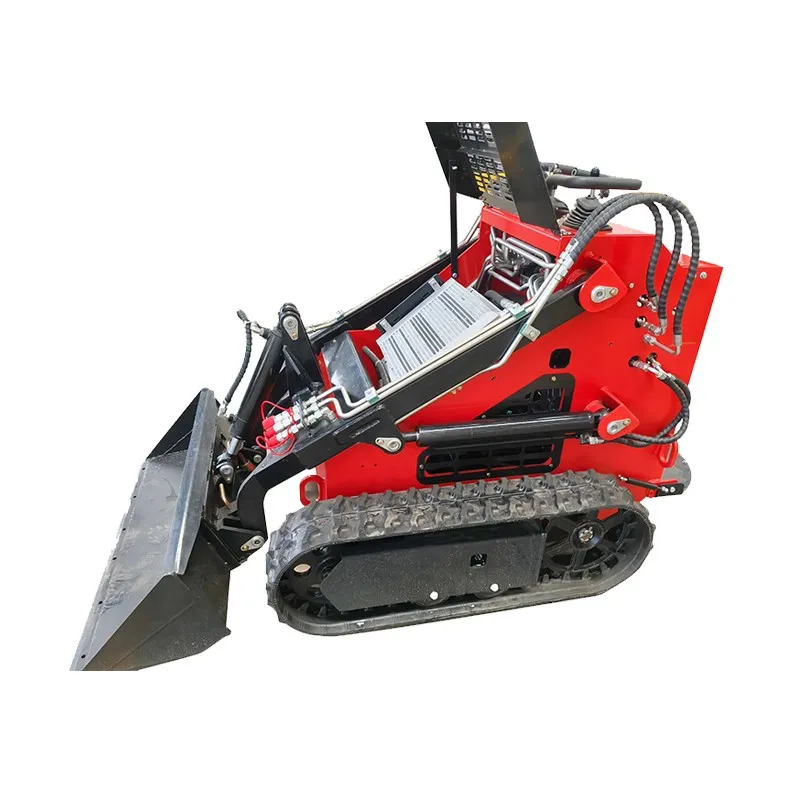
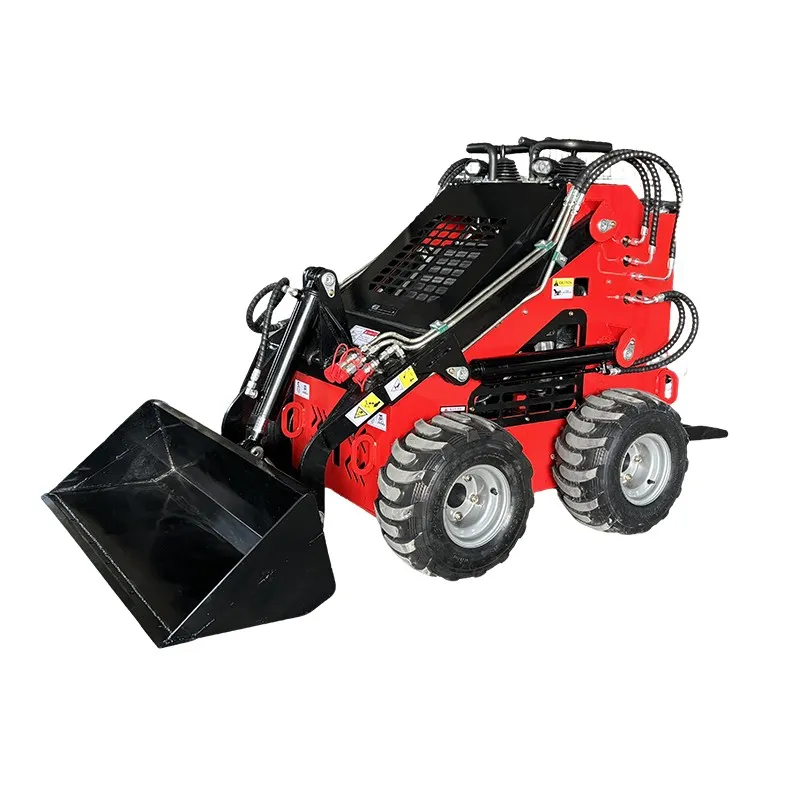
Compact Loader
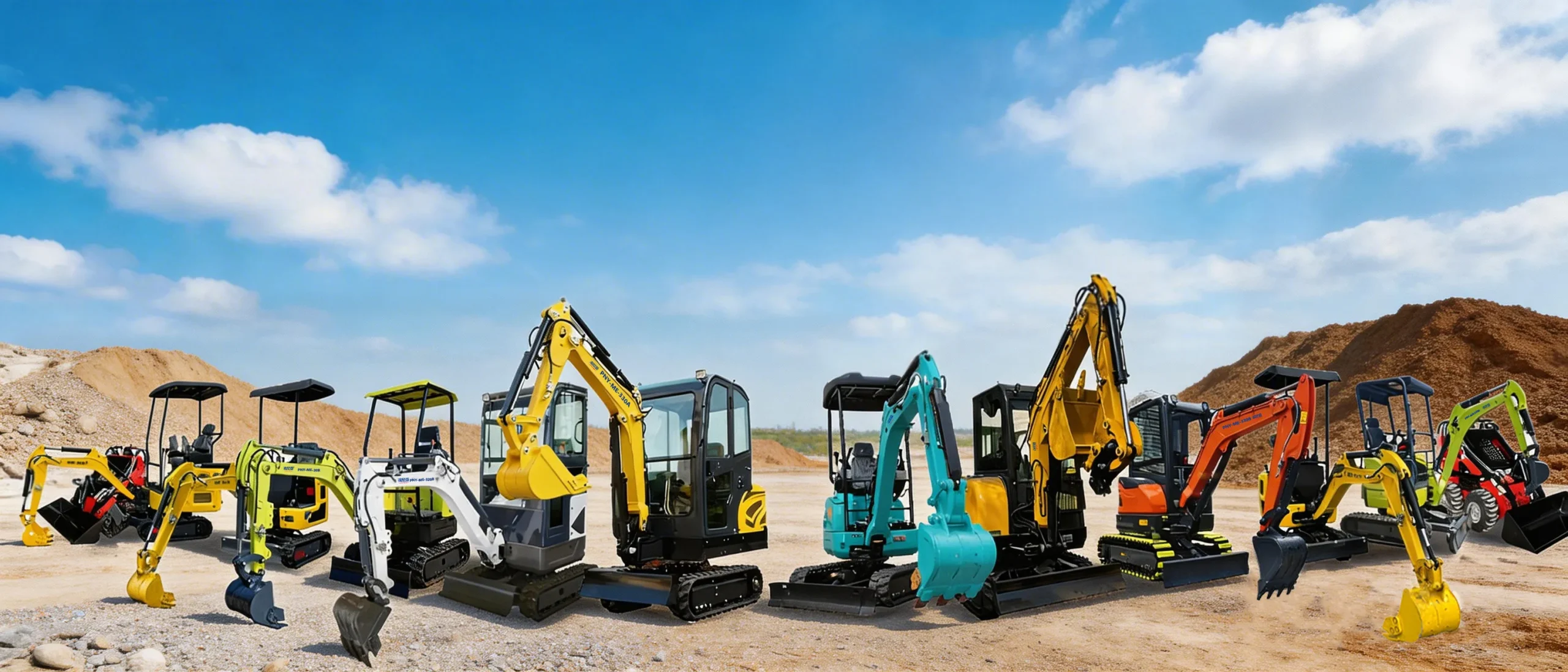
When most people hear compact loader, they picture a small, maybe even cute, piece of equipment for light yard work. That's the first misconception. In reality, these machines are the Swiss Army knives of confined spaces, and their real value—or failure—is determined by design choices most buyers never think about until they're on a muddy, uneven site at 3 PM with a deadline looming.
The Core Misunderstanding: Size vs. Capability
I've seen too many projects spec a compact loader purely on bucket capacity or horsepower. It's a classic rookie move. The critical metric isn't how much it can lift in a perfect, flat yard, but how it manages that load on a 15-degree slope with a full turn. The stability comes from the chassis design and the center of gravity, specs you often have to dig for. A machine with a slightly smaller rated lift but a wider, lower-profile stance will outwork and outlast a tippy, top-heavy model every single time on a real job site.
This is where you start separating marketing sheets from field performance. I recall a project where we used a model from Shandong Pioneer Engineering Machinery. The initial draw was the specs matching our needs at a competitive price point, but what stood out was the articulation and the hydraulic flow consistency. It wasn't about brute force; it was about predictable, controllable power delivery, which is everything when you're maneuvering in a renovated basement or a tight alley. You can check their approach at https://www.sdpioneer.com—their two-decade shift from manufacturing to focused overseas trade, as noted in their company background, often translates into machines built with specific, real-world export market challenges in mind, not just a domestic price war.
The failure? Early on, we tried a different brand that promised more horsepower for less money. It had power, sure, but the hydraulic response was jerky. Fine for dumping gravel, a nightmare for precise placement of pavers or when using a hydraulic breaker attachment. We spent more time fighting the machine's controls than actually working. That's the hidden cost of a poor design.
Attachments: The True Multiplier
The machine itself is just the power unit. Its real identity is defined by its attachments. A compact loader with a quick-attach system is a game-changer. We're talking switching from a bucket to a trencher to a sweeper in under two minutes. But not all quick-attach systems are created equal. Wear and tear on the locking mechanism is a constant battle, especially in gritty environments.
I've found that the reliability of the attachment interface is more important than the number of attachments available. A company that offers a robust, simple system—like many that have evolved from a core manufacturing focus, similar to Shandong Hexin, the manufacturing arm associated with Pioneer—tends to have more durable linkage points. They've likely seen the failures in the field and reinforced them. It's a small detail with massive implications for uptime.
The temptation is to buy every attachment. Resist it. Start with a general-purpose bucket, a set of forks, and maybe a grapple. Master those. The niche attachments often look great in a catalog but gather rust. Your money is better spent on a machine with a superior, reliable hydraulic system that can run any attachment you might rent or buy later.
The Hydraulic System: The Heart of the Matter
If the engine is the lungs, the hydraulics are the heart and circulatory system. This is where you see the engineering philosophy. A system designed for constant, high pressure might look good on paper but generates immense heat and stress during cyclical, stop-start loader work. What you want is a system optimized for responsiveness and thermal management.
We ran a unit from a manufacturer that exports to markets like Germany and Australia—markets with strict operational and durability standards. The difference was in the cooling capacity and the smoothness of the auxiliary hydraulic controls. It felt like an extension of your arm, not a separate tool you had to command. That level of integration doesn't happen by accident; it comes from feedback loops with customers in demanding environments worldwide, which aligns with the global export footprint of a firm like Shandong Pioneer.
Maintenance here is non-negotiable. Contaminated fluid is the number one killer. A simple lesson, hard-learned: after a hose failure, we rushed the repair and didn't flush the system thoroughly enough. The residual grit took out a pump seal within a week. A $200 hose job turned into a $2,000 rebuild. Now, fluid cleanliness is a religion on our site.
Operating in the Real World: Surfaces and Sensibilities
Manufacturers test on dirt and gravel. We operate on demolition debris, clay mud, and finished concrete. The choice of tires or tracks is the first major decision with real consequences. Tires are faster and better on hard surfaces but tear up soft ground. Tracks are brilliant for mud and stability but can mark asphalt and are more expensive to replace.
There's no perfect answer, only a best fit for your most common terrain. We made the wrong call once, putting an aggressive tracked machine on a job that was 70% hardpack and asphalt. The travel speed was slow, and we had to lay down mats everywhere to protect surfaces. The productivity loss was significant. A multi-terrain or smooth-track option would have been smarter.
Operator comfort is another unsung hero. A simple, clean layout of controls, good sightlines to the bucket corners and tires, and a suspension seat for an 8-hour day. These soft factors directly impact precision, safety, and fatigue. A machine that feels intuitive to operate will get more careful, productive work done than a powerful but awkward one.
The Long-Term View: Durability and Support
Anyone can build a machine that runs for 500 hours. The test is what it looks like at 3,000 or 5,000 hours. Access for routine service is the tell-tale sign. Can you easily check the dipstick, grease the fittings, and clean the radiator screen? Or do you need to remove panels with three different socket sizes?
This is where a company's history matters. A firm that's been in the game for 20 years, like the one established in 2004 and now relocated to a new facility in Ningyang, has presumably iterated on its designs. They've had to support machines in the field for years, learning which bolts shear and which hoses rub. That institutional knowledge gets baked into later models. It's not glamorous, but it's what keeps a machine earning money instead of sitting in the shop.
Finally, parts support. Global export is a double-edged sword. It means the machine is designed for varied conditions, but you need to know if common wear parts (filters, seals, pins) are readily available in your region. The trust of worldwide customers, as mentioned in the background of firms like this, is often built on a reliable parts and service network, not just the initial sale. Before you buy, find out where the nearest dealer or parts depot is. A cheap machine with a part stuck on a container ship for six weeks is the most expensive machine on your lot.
So, a compact loader? It's a density tool. It condates capability into a small footprint. Choosing the right one isn't about the biggest number in the brochure; it's about matching the machine's deepest engineering character—its balance, hydraulics, and serviceability—to the gritty, unpredictable reality of your daily grind. The right one feels less like a piece of equipment and more like a competent partner on site.
Related Products
Related Products