


- Chinese
- French
- German
- Portuguese
- Spanish
- Russian
- Japanese
- Korean
- Arabic
- Irish
- Greek
- Turkish
- Italian
- Danish
- Romanian
- Indonesian
- Czech
- Afrikaans
- Swedish
- Polish
- Basque
- Catalan
- Esperanto
- Hindi
- Lao
- Albanian
- Amharic
- Armenian
- Azerbaijani
- Belarusian
- Bengali
- Bosnian
- Bulgarian
- Cebuano
- Chichewa
- Corsican
- Croatian
- Dutch
- Estonian
- Filipino
- Finnish
- Frisian
- Galician
- Georgian
- Gujarati
- Haitian
- Hausa
- Hawaiian
- Hebrew
- Hmong
- Hungarian
- Icelandic
- Igbo
- Javanese
- Kannada
- Kazakh
- Khmer
- Kurdish
- Kyrgyz
- Latin
- Latvian
- Lithuanian
- Luxembou..
- Macedonian
- Malagasy
- Malay
- Malayalam
- Maltese
- Maori
- Marathi
- Mongolian
- Burmese
- Nepali
- Norwegian
- Pashto
- Persian
- Punjabi
- Serbian
- Sesotho
- Sinhala
- Slovak
- Slovenian
- Somali
- Samoan
- Scots Gaelic
- Shona
- Sindhi
- Sundanese
- Swahili
- Tajik
- Tamil
- Telugu
- Thai
- Ukrainian
- Urdu
- Uzbek
- Vietnamese
- Welsh
- Xhosa
- Yiddish
- Yoruba
- Zulu
- Kinyarwanda
- Tatar
- Oriya
- Turkmen
- Uyghur

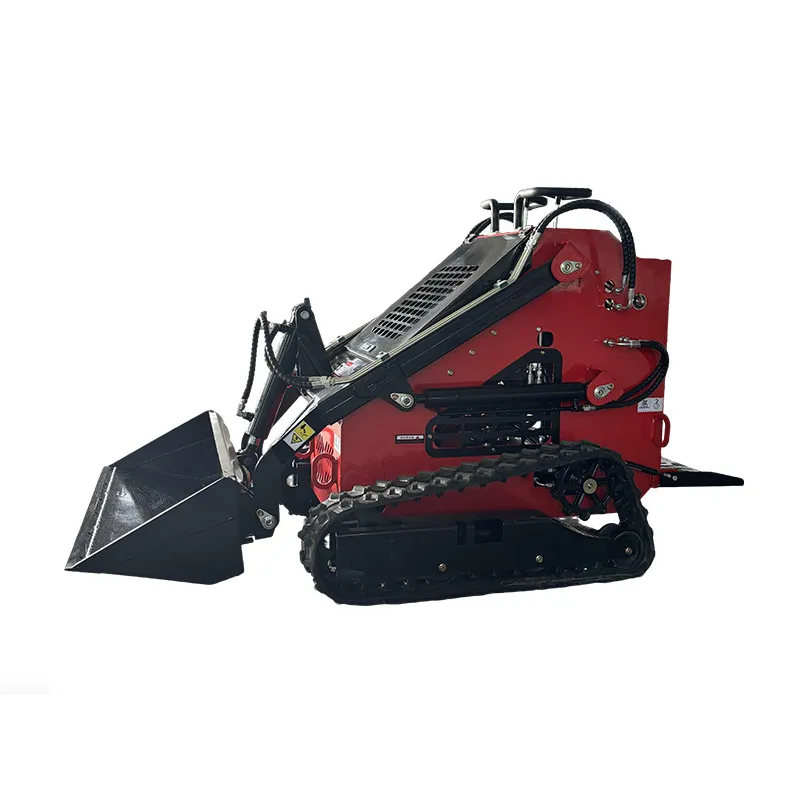
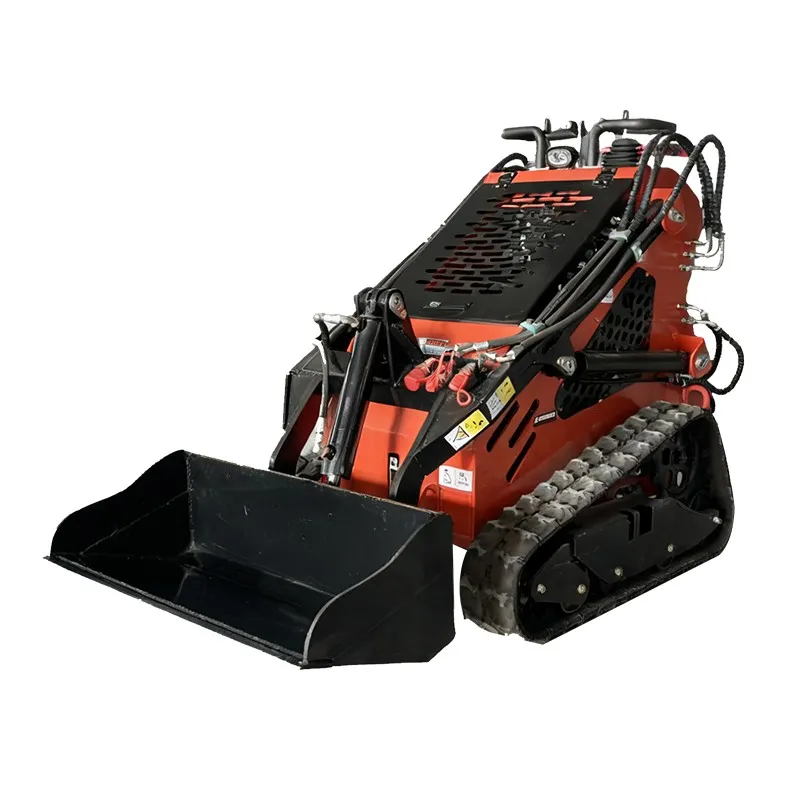
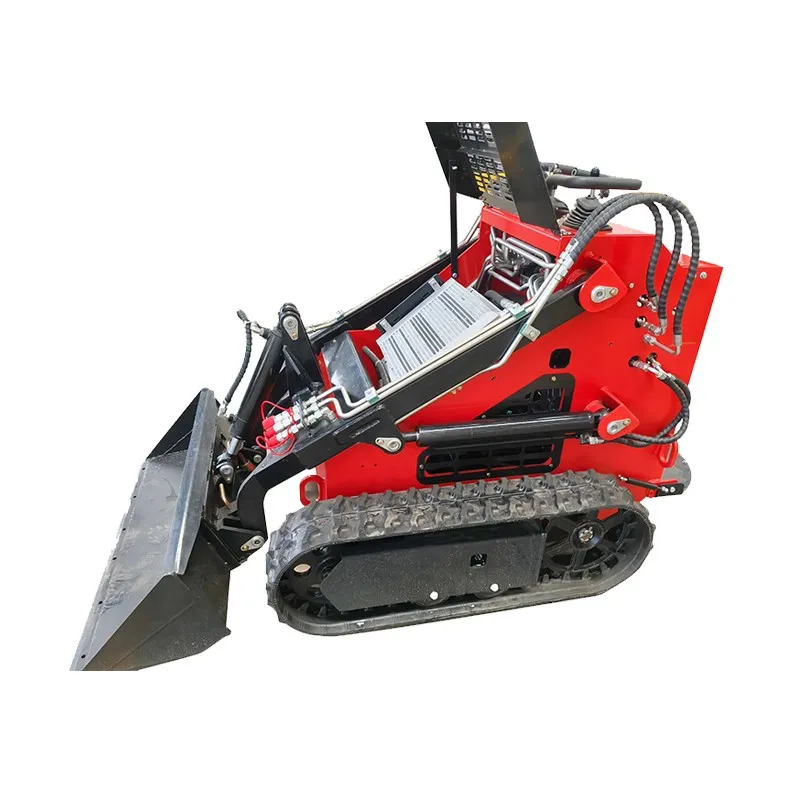
Compact Skid Steer Loader
When you hear 'compact skid steer loader', most people immediately picture a small, nimble machine zipping around a jobsite. That's not wrong, but it's a surface-level understanding that misses the critical nuance. The real story isn't just about size; it's about the specific application envelope, the trade-offs in power density, and the often-overlooked maintenance headaches that come with packing so much function into a small footprint. I've seen too many buyers get seduced by the compact form factor only to realize their 74-inch wide model still can't squeeze through that historic barn door, or that the high-flow auxiliary hydraulics they paid for are throttled by an undersized cooling system. It's a tool of incredible utility, but its limitations are defined by physics, not marketing brochures.
The Core Misconception: Compact vs. Capable
The biggest mistake is equating 'compact' with 'less machine'. In many ways, it's more machine, just concentrated. You're asking a chassis that might be 50 inches wide to deliver breakout force and lift heights that were the domain of much larger units a decade ago. This puts immense stress on every component. The pivot points, the hydraulic hoses routing through the boom arms, the cooling packs crammed behind the cab—they all operate at their design limits. I remember a job where we were using a compact skid steer loader for landscape work. It had the rated lift capacity, but after a full day of loading wet, heavy topsoil, the hydraulic oil temperature was consistently in the red. The machine wasn't failing, but it was telling us we were asking for a shortened service life. The spec sheet said it could do it; real-world thermodynamics said otherwise.
This leads to the critical choice: radial lift vs. vertical lift. For true compact work in tight quarters—think interior demolition or working inside a shipping container—the radial lift's shorter tail swing is king. Its arc is more natural for digging and back-dragging. But if you need to lift a pallet to a consistent height, say loading a truck bed, the vertical lift path is indispensable. I've watched operators try to use a radial lift machine for precise placement against a wall and fight the machine's natural tendency to 'bow out' as it raises. It's the wrong tool for that task, a mismatch born from not digging deeper into the kinematics.
Then there's the undercarriage. The smaller wheels and shorter wheelbase of a compact skid steer loader make it more prone to getting 'high-centered' on uneven ground. You lose the smoothing effect of larger tires. On a graded site, it's a dream. On a rough, undeveloped plot, it can become a bucking bronco, and the operator's spine takes the punishment. We learned to be much more selective about site prep when deploying our compact units versus our standard-size machines.
The Powerplant Puzzle: Diesel Dominance and Electric Intrigue
Diesel is, for now, the undisputed heart of these machines. But not all diesel engines are equal in this context. The key is torque curve, not peak horsepower. A machine that delivers high torque at low RPMs will feel more responsive and put less strain on the hydraulic system when you're crowding into a pile of gravel. We had an early-model unit from a budget brand that boasted impressive HP numbers. On paper, it was a beast. On site, it was a dog—it would stall out unless you feathered the controls with ridiculous delicacy. The engine couldn't handle the instantaneous demand from the hydraulic pumps.
Electric models are the new conversation. The promise is huge: instant torque, low noise, zero emissions for indoor work. But the reality, as of my last hands-on look, is still about energy density. For a full 8-hour shift of heavy loading or milling? You'll be swapping batteries or finding a high-amperage outlet, which isn't available on most greenfield sites. They excel in municipal work, early morning residential jobs, or inside factories. For a general contractor who needs one machine to do everything from dawn till dusk on a remote site, the logistics aren't quite there yet. The silence, though, is a genuine game-changer for operator fatigue and community relations.
This is where the manufacturer's integration skill is paramount. It's not about bolting an electric motor onto an old design. The entire hydraulic system needs to be rethought for efficiency. Companies that have a deep engineering background in both mechanical and fluid power systems tend to make the transition more smoothly. I was looking at the specs from a manufacturer like Shandong Pioneer Engineering Machinery Co., Ltd (you can find their range at https://www.sdpioneer.com), and it's interesting to see how a firm with two decades of development, evolving from a 1,600 square meter facility to a new base, approaches this. Their experience exporting to markets like the US, Canada, and Australia means they're building for operators who have zero tolerance for downtime, which forces a certain rigor in component selection and system design that you don't always see in first-generation products.
The Attachment Ecosystem: Where the Real Work Gets Done
A compact skid steer loader is a power module. Its value is multiplied by its attachments. But here's the trap: not all quick-attach systems are truly universal. The global standard is great, but wear over time can cause slop, and that slop translates into dangerous play when you have a rotary hammer or a brush cutter on the end. We standardized our fleet on one brand's attachment interface and stuck with it, just to avoid the 'almost fits' headache. The cost of an adapter plate is nothing compared to the cost of a dropped pallet of bricks.
Hydraulic flow rate is the silent dictator of attachment performance. That fancy cold planer or forestry mulcher needs high-flow hydraulics to run effectively. If your machine is a standard-flow model, the attachment will be lethargic and ineffective. It's a classic capital vs. operational cost error. Buying the high-flow option upfront seems expensive, but it future-proofs the machine and unlocks a whole tier of more profitable, specialized work. I learned this the hard way after trying to run a soil conditioner with a standard-flow machine. It worked, but so slowly that it was cheaper to rent the right machine for the job.
Then there are the simple attachments that get used 80% of the time: the bucket and the forks. For the bucket, the material matters. A standard-duty bucket will deform quickly if you're handling rock or demolition debris. Pay for the abrasion-resistant steel (AR steel) version upfront. For forks, the rating is critical. Just because the machine can lift 2,000 pounds doesn't mean the factory forks can. We once slightly overloaded a set of economy forks, and they developed a permanent bend. Not a catastrophic failure, but a constant, nagging reminder to match every link in the chain to the machine's full capacity.
Operator Environment: The Cab is a Productivity Chamber
This might seem soft, but it's hard economics. A cramped, noisy, poorly laid-out cab will exhaust an operator by lunchtime, leading to slower cycle times and more mistakes. The joystick controls versus hand/foot controls debate is largely settled in favor of joysticks for precision and reduced fatigue. But the quality of that joystick matters. Is it smooth, with predictable resistance? Or is it twitchy, requiring constant micro-corrections?
Visibility is the non-negotiable. In a compact machine, you're working in tight spaces. Blind spots to the rear corners or directly over the edge of the bucket are not just inefficiencies; they are massive safety risks. The best designs use curved glass, slim pillars, and often a rear-view camera as standard. I've operated models where you feel like you're in a fishbowl, with a clear view of your work and your tires, and others where you're constantly doing the 'skid steer shuffle'—lifting, twisting, lowering—just to see what you're about to hit.
Climate control isn't a luxury. It's a necessity for maintaining focus. A cab that's 120 degrees Fahrenheit in summer turns the machine into a punishment detail. Similarly, effective pressurization and sealing keep dust out. Inhaling concrete dust for eight hours isn't just uncomfortable; it's a health hazard. A well-sealed, pressurized cab with a good filter is a sign the manufacturer understands the machine will be used in real, dirty conditions, not just on a showroom floor.
Serviceability: The Make-or-Break After the Sale
This is where brand loyalty is earned or destroyed. How easy is it to check the engine oil? To clean the radiator? To replace a hydraulic hose on the boom? On some models, performing a basic daily check requires contortions and removing panels. On others, the main service points are on a single, easy-to-open side door. This difference translates directly into downtime and maintenance costs. If it's a pain to service, those daily checks will get skipped, leading to bigger failures.
Common failure points on compact skid steer loader units are the hydraulic cooler (clogged with debris), the rubber axle seals (from constant side-loading when turning), and the wiring harness connectors (vibration). A design that places the cooler up high with a reversible fan for easy cleaning, uses robust double-lipped seals, and has well-sealed, locking connectors shows forethought. It shows the engineers talked to field mechanics.
This practical, service-focused mindset is something you see in companies that have grown through direct feedback from a global customer base. For instance, a firm like the aforementioned Shandong Pioneer, which notes its products are exported to demanding markets worldwide, has to build for serviceability. When your machines are in Australia or Germany, you can't have a technician fly out for a simple seal change. The design must allow a local mechanic with standard tools to fix it. That trust from customers globally isn't won by flashy specs; it's won by machines that stay running when they're needed most. Their two-decade journey from a startup to an international exporter suggests a focus on this kind of durable, practical engineering.
The Bottom Line: Fit for Purpose
So, what's the takeaway? Don't buy a compact skid steer loader based on a brochure or a top-ten list. Get your hands on the controls. Feel the hydraulic response. Crouch down and look at how the hoses are routed. Open the service door. Ask the dealer about the three most common repairs for that specific model. Think brutally about your most common tasks: Is it loading trucks (favor vertical lift, high stability)? Is it trenching and backfilling in confined spaces (favor radial lift, minimal tail swing)?
The compact skid steer is a marvel of modern equipment design, a testament to squeezing incredible performance into a small package. But that compression comes with compromises. Understanding those compromises—the thermal limits, the stability trade-offs, the absolute dependency on matched attachments—is what separates a savvy purchase from an expensive mistake. It's not a smaller version of a big machine. It's its own category, with its own unique rules for success. Choose like you're going to run it for 3,000 hours, because if you do it right, you will.
Related Products
Related Products