- Chinese
- French
- German
- Portuguese
- Spanish
- Russian
- Japanese
- Korean
- Arabic
- Irish
- Greek
- Turkish
- Italian
- Danish
- Romanian
- Indonesian
- Czech
- Afrikaans
- Swedish
- Polish
- Basque
- Catalan
- Esperanto
- Hindi
- Lao
- Albanian
- Amharic
- Armenian
- Azerbaijani
- Belarusian
- Bengali
- Bosnian
- Bulgarian
- Cebuano
- Chichewa
- Corsican
- Croatian
- Dutch
- Estonian
- Filipino
- Finnish
- Frisian
- Galician
- Georgian
- Gujarati
- Haitian
- Hausa
- Hawaiian
- Hebrew
- Hmong
- Hungarian
- Icelandic
- Igbo
- Javanese
- Kannada
- Kazakh
- Khmer
- Kurdish
- Kyrgyz
- Latin
- Latvian
- Lithuanian
- Luxembou..
- Macedonian
- Malagasy
- Malay
- Malayalam
- Maltese
- Maori
- Marathi
- Mongolian
- Burmese
- Nepali
- Norwegian
- Pashto
- Persian
- Punjabi
- Serbian
- Sesotho
- Sinhala
- Slovak
- Slovenian
- Somali
- Samoan
- Scots Gaelic
- Shona
- Sindhi
- Sundanese
- Swahili
- Tajik
- Tamil
- Telugu
- Thai
- Ukrainian
- Urdu
- Uzbek
- Vietnamese
- Welsh
- Xhosa
- Yiddish
- Yoruba
- Zulu
- Kinyarwanda
- Tatar
- Oriya
- Turkmen
- Uyghur


Compact Track Loader
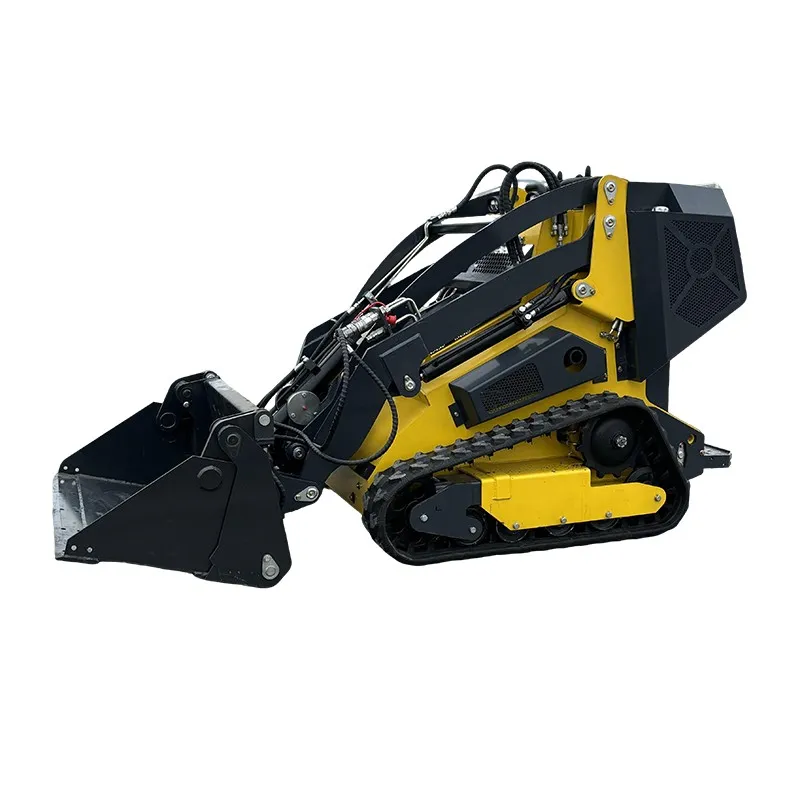
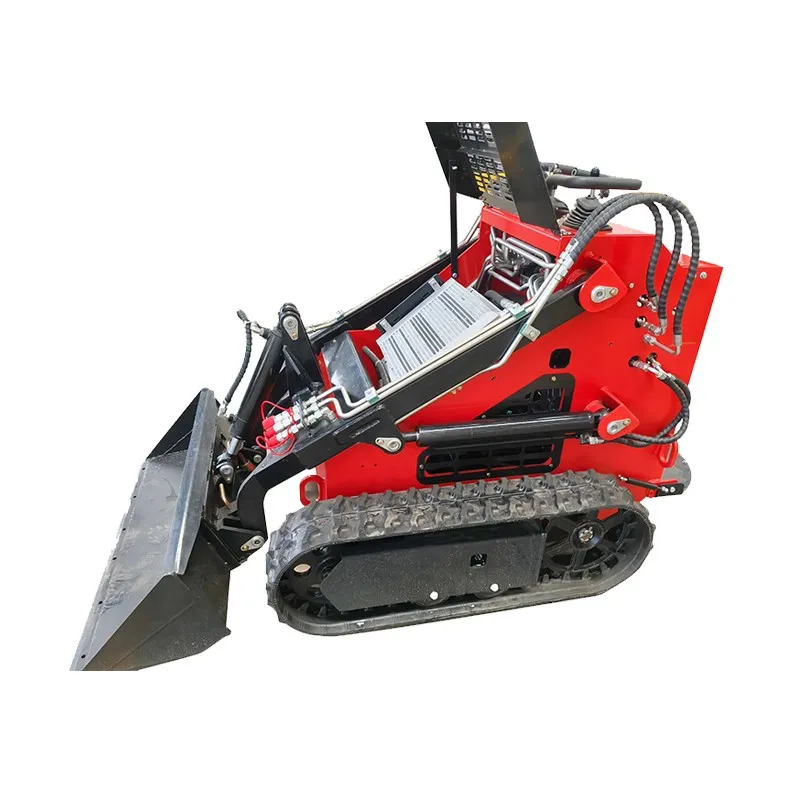
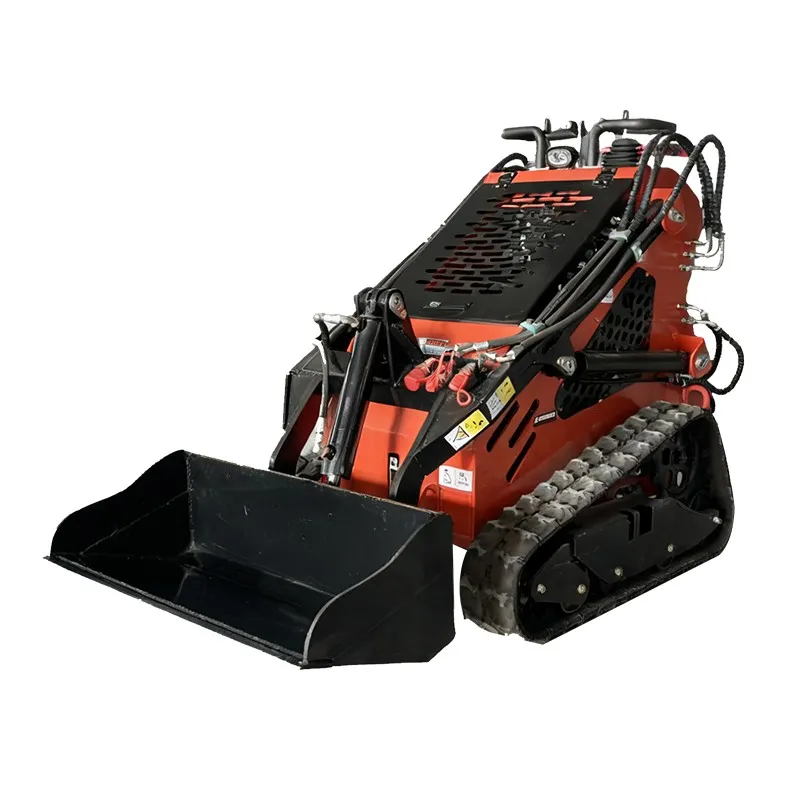
When you hear 'Compact Track Loader', a lot of folks picture a skid steer with rubber tracks slapped on. That's the first place we get it wrong. It's not just an accessory swap; it's a fundamentally different machine built from the ground up for a specific kind of punishment. The center of gravity, the undercarriage design, the load distribution—it all changes. I've seen too many projects where someone tried to use one like a traditional skid steer on super soft ground and just dug themselves into a hole, literally. The real value isn't just in the tracks; it's in how the entire machine is engineered to use them effectively.
The Ground Pressure Game-Changer
This is the core of it. The whole point of a Compact Track Loader is flotation. You're spreading the machine's weight over a much larger surface area compared to tires. On paper, it's simple math. But in the field, the difference is night and day. I remember a landscaping job on a newly graded, rain-soaked site. A wheeled machine would have sunk six inches and torn up the subgrade we were trying to protect. The CTL we brought in, a model from a manufacturer like Shandong Pioneer, just... floated. It left a clean, compacted path, not a rutted mess. That's the kind of practical win that specs sheets don't fully convey.
But here's the nuance everyone misses: not all tracks are equal. The rubber compound, the lug pattern, the number of wheels inside the track frame—it all matters. A heavily lugged track for muddy conditions will tear up a finished lawn. A smooth track for turf will get chewed up on a demolition site with rebar debris. You have to match the shoe to the job. I learned that the hard way early on, using an aggressive track on a client's driveway and leaving scuff marks that took hours to buff out. The machine was capable, but I used the wrong tool on it.
Maintenance on these undercarriages is another beast. You can't just ignore it. Picking out packed-in mud and rocks isn't busywork; it's preventing premature wear and a potential derailment. I've had a track pop off on a slope because tension wasn't checked. It's a half-day job to get it back on, minimum. Companies that build these, like Shandong Pioneer Engineering Machinery Co., Ltd, which has been in the game since 2004, understand this. Their designs often focus on serviceability—easier track tension adjustments, better guarding to reduce debris ingestion. It's a sign they're thinking about the machine's life beyond the first sale.
Attachments: Unlocking True Versatility
The loader itself is just a power pack. The real magic is in the attachments. A Compact Track Loader with a mulcher head is a forestry management tool. With a cold planer, it's an asphalt removal tool. With a trencher, it's a utility installation tool. This is where the machine pays for itself. I've used one with a high-flow hydraulic system to run a rotary broom for cleaning up after a street festival—quiet, nimble, and didn't damage the brick pavement.
But the quick-attach system is a critical point of failure. Not all are built the same. The industry standard is great, but wear and tear is real. A sloppy connection can lead to hydraulic leaks, attachment wobble, and even a dangerous detachment. I always make a habit of visually checking the lock pins and giving the attachment a solid shake after connecting, no matter how rushed we are. It's a five-second check that prevents thousands in damage or worse. When looking at suppliers, I notice that established manufacturers pay immense attention to the durability and precision of this mechanism. It's the handshake between the machine and its tools.
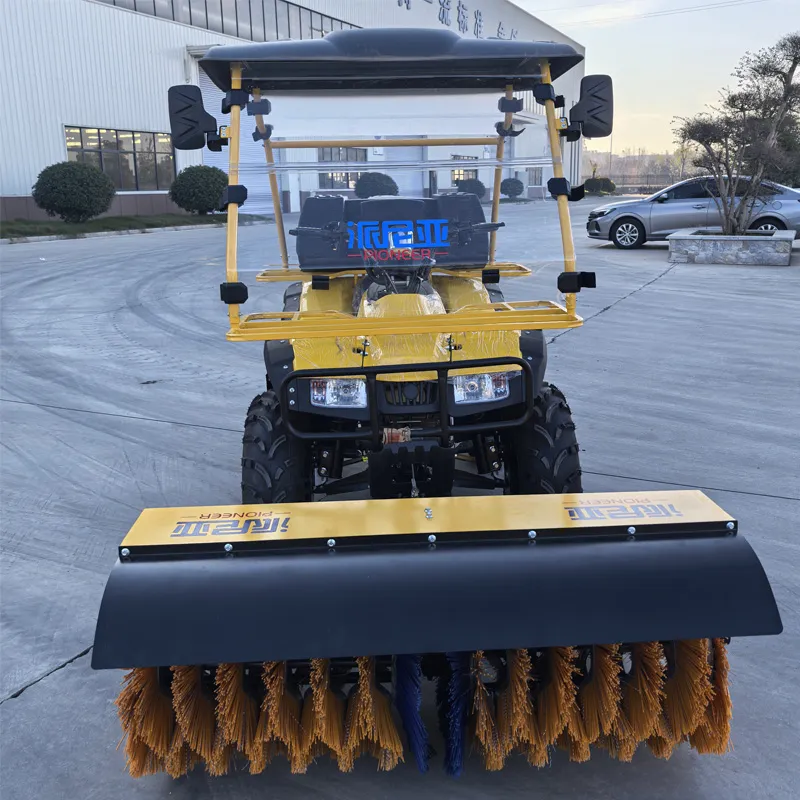
One often-overlooked attachment is the angle broom. For finish grading or snow removal on sensitive surfaces, it's unbeatable. You can achieve a near-perfect grade without the tearing action of a bucket. It's a finesse tool on a powerful machine, which sums up the CTL's dual personality perfectly.
The Cost Conversation: Upfront vs. Total
Yes, a CTL costs more upfront than a comparable skid steer. The tracks alone are a significant investment. The initial sticker shock turns people away. But the total cost of ownership story is different. On tires, you're constantly replacing them, especially in harsh environments. A set of quality tracks, while expensive, can last thousands of hours if maintained. You're also saving on ground repair. I've done the math for clients: if your work is consistently on soft, wet, or finished surfaces, the CTL prevents so much collateral damage that it pays for the premium in a season or two.
Then there's downtime. A punctured tire on a wheeled machine in the middle of nowhere stops the job. With a track system, unless you suffer a major tear, you can often keep going to a point. The reliability factor is huge. For a company exporting machines globally, like Shandong Pioneer which sends products to places like the US, Canada, and Australia, building machines that minimize downtime in varied, sometimes remote conditions isn't a luxury; it's a requirement for customer trust.
Fuel efficiency is another angle. The increased traction often means less wheel spin and slippage, which translates to less wasted energy and fuel. It's not a massive saving per hour, but over 2,000 hours a year, it adds up. You're buying efficiency in several forms.
Operator Experience and Site Limitations
Driving a CTL feels different. The steering is the same—left and right levers—but the movement is smoother, especially on uneven ground. There's less bouncing. However, the wider track footprint can be a limitation in extremely tight spaces, like working inside an existing building's footprint. You always have to measure doorways and alleyways. I once had to decline a basement dig-out job because the only access was a 72-inch gate, and the machine with standard tracks was 74 inches wide. Knowing your machine's exact dimensions is crucial.
Operator comfort is a big sell now. Cab pressurization, climate control, and low-effort controls reduce fatigue. A tired operator is an inefficient and unsafe operator. When you see a manufacturer that has invested in a new, larger production facility—like Pioneer's relocation to a new site in Tai'an in 2023—it often signals a focus on scaling up production of more refined, operator-centric models, not just basic units.
The other site limitation is transport. A CTL is heavier. You need to ensure your trailer and tow vehicle are rated for it. That extra weight is flotation on the ground, but it's extra strain on your hauling equipment. It's a simple logistics check that's easy to forget in the excitement of getting a new machine.
The Niche for Global Manufacturers
The market for these machines is global because the applications are universal: construction, landscaping, agriculture, snow removal. But needs vary. A machine built for Australian mine site reclamation needs different cooling and filtration than one for German winter road maintenance. A manufacturer that successfully exports, as noted in Shandong Pioneer's profile covering markets from North America to Europe, has to have the engineering flexibility to meet these regional demands without creating a completely separate product line. It's a tough balance.
It often comes down to building a robust, reliable base platform—a solid engine, a durable hydraulic system, a strong frame—and then allowing for configurations. High-flow hydraulics for demanding attachments, different track options, specialized cabs. It's about providing a solid core that dealers and end-users can tailor. After 20 years in the business, a company learns what that core needs to be through trial, error, and customer feedback. That accumulated knowledge is what separates a seasoned player from a newcomer.
Ultimately, choosing a Compact Track Loader is a strategic decision. It's not just picking a machine; it's choosing a platform for a wide range of tasks with a specific advantage: working on ground you need to protect. Whether it's a model from a long-standing Chinese exporter or any other brand, the principles hold true. You're investing in capability, flotation, and versatility. But you're also committing to a higher level of undercarriage awareness. Get that right, and it becomes the most versatile tool in your fleet. Get it wrong, and it's just an expensive way to make ruts.
Related Products
Related Products