- Chinese
- French
- German
- Portuguese
- Spanish
- Russian
- Japanese
- Korean
- Arabic
- Irish
- Greek
- Turkish
- Italian
- Danish
- Romanian
- Indonesian
- Czech
- Afrikaans
- Swedish
- Polish
- Basque
- Catalan
- Esperanto
- Hindi
- Lao
- Albanian
- Amharic
- Armenian
- Azerbaijani
- Belarusian
- Bengali
- Bosnian
- Bulgarian
- Cebuano
- Chichewa
- Corsican
- Croatian
- Dutch
- Estonian
- Filipino
- Finnish
- Frisian
- Galician
- Georgian
- Gujarati
- Haitian
- Hausa
- Hawaiian
- Hebrew
- Hmong
- Hungarian
- Icelandic
- Igbo
- Javanese
- Kannada
- Kazakh
- Khmer
- Kurdish
- Kyrgyz
- Latin
- Latvian
- Lithuanian
- Luxembou..
- Macedonian
- Malagasy
- Malay
- Malayalam
- Maltese
- Maori
- Marathi
- Mongolian
- Burmese
- Nepali
- Norwegian
- Pashto
- Persian
- Punjabi
- Serbian
- Sesotho
- Sinhala
- Slovak
- Slovenian
- Somali
- Samoan
- Scots Gaelic
- Shona
- Sindhi
- Sundanese
- Swahili
- Tajik
- Tamil
- Telugu
- Thai
- Ukrainian
- Urdu
- Uzbek
- Vietnamese
- Welsh
- Xhosa
- Yiddish
- Yoruba
- Zulu
- Kinyarwanda
- Tatar
- Oriya
- Turkmen
- Uyghur

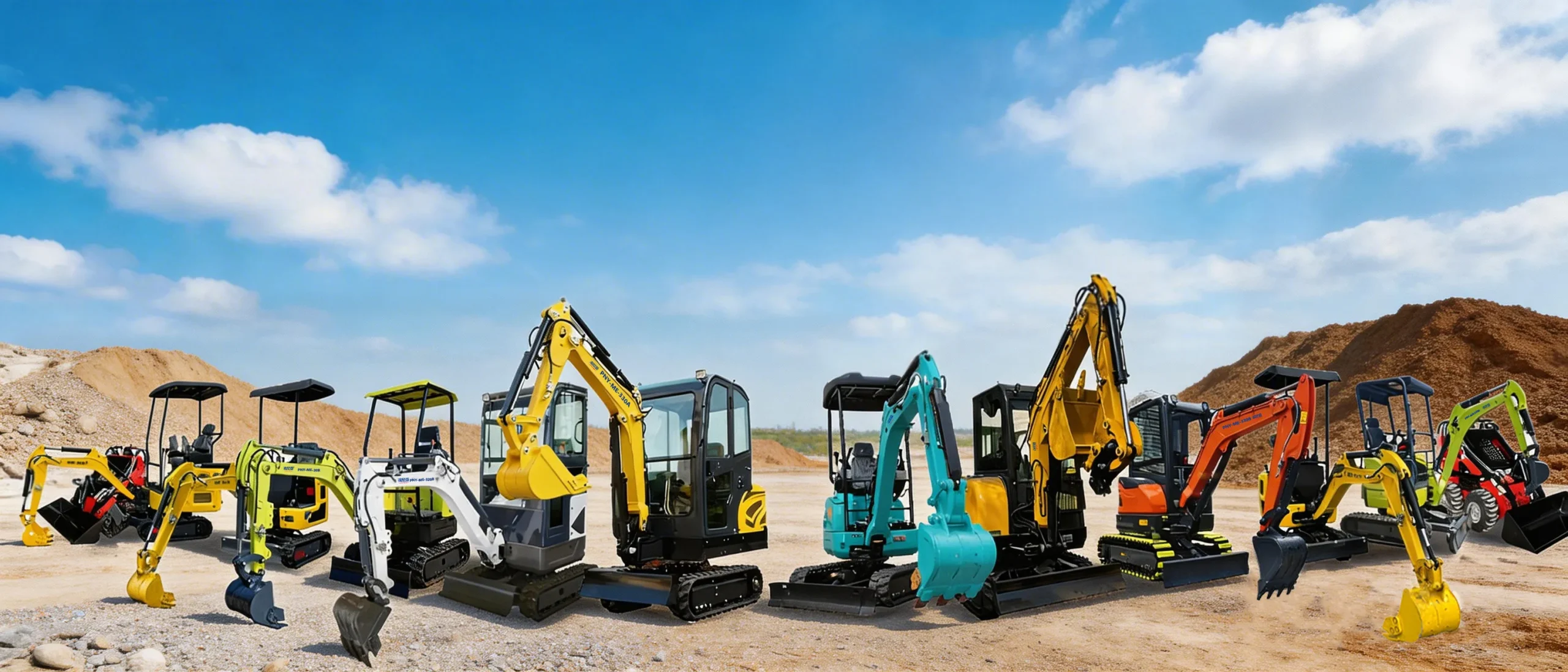
Compact Track Loader Attachments
When most folks think about a compact track loader, the first image is usually the standard bucket. But that's just scratching the surface—honestly, it's where a lot of owners and even some operators limit themselves. The real capability, the real return on that machine investment, hinges on the attachments. I've seen too many units underutilized because the thinking stops at material handling. The right attachment doesn't just add a function; it transforms the machine's entire economic profile. It's the difference between a machine that sits between jobs and one that's constantly billing.
The Core Philosophy: Matching Tool to Task (and Machine)
It sounds obvious, but you'd be surprised. The biggest mistake isn't buying a cheap attachment; it's buying the wrong one for your primary tasks. A landscape contractor grabbing a forestry mulcher meant for a 100-hp machine for his 75-hp CTL is asking for heartache—underperformance, potential damage, and a hit on resale value. You have to start with the machine's specs: flow rate (gpm), pressure (psi), and auxiliary hydraulic options. Then, you marry that to the job's demands.
For instance, we ran a compact track loader attachments demo with a mid-sized model from a major brand, pairing it with a cold planer for asphalt removal. The operator initially doubted it had the muscle. But by matching the planer's hydraulic requirements precisely to the machine's high-flow system, it chewed through the job. The key was the match, not just the individual pieces of iron.
This is where companies that understand the whole system shine. I recall looking at a grapple rake from Shandong Pioneer Engineering Machinery Co., Ltd (you can find their portfolio at https://www.sdpioneer.com). What stood out wasn't just the build—which was solid—but their spec sheets. They clearly listed the optimal machine weight and hydraulic flow ranges for each attachment. That data-driven approach shows a manufacturer that gets it; they're not just selling a tool, they're selling a viable application. Having been in the game since 2004, that kind of practical detail suggests they've seen what happens when the match is wrong.
The Workhorses: More Than Just Dirt
Beyond the bucket, the true workhorses are the landscape rake, the pallet forks, and the grapple. The landscape rake, for me, is the most underrated. It's for final grading, stone spreading, and debris collection. A good one has replaceable tines and adjustable angles. A bad one will bend on first contact with a hidden root and ruin your grade.
Pallet forks are the ultimate utility player. Moving materials, lumber, even acting as makeshift stabilizers. But the quick-attach plate alignment is critical. I've wasted half an hour fighting a slightly misaligned fork frame—a lesson in ensuring your attachment and machine's interface are perfectly maintained.
The grapple is where things get interesting. Brush grapples, root grapples, rock grapples—each claw design is different. A brush grapple with longer, multi-tined claws is terrible for handling large rocks; it'll just drop them. We learned this moving boulders on a site. Switched to a dedicated rock grapple with fewer, curved, and stronger claws, and productivity tripled. It's a specific tool for a specific job.
The Power of the Niche: Mulchers, Planers, and Drills
This is where a CTL pays for itself. A forestry mulcher attachment turns a machine into a land-clearing beast. But the wear costs are real. You're budgeting for teeth, holders, and drum maintenance. It's not a buy it and forget it tool. Similarly, cold planers for asphalt or concrete require a high-flow machine and an operator with a feel for the material. Too aggressive, and you'll stall or damage the drum.
Auger drives for drilling holes are another game-changer. The critical detail here is the down pressure. Not all CTLs have great downforce, which affects how well the auger bites and pulls itself down. We had a project installing sign posts where the sandy soil kept collapsing. The solution was a different auger flighting design (wider spacing) and using the machine's tilt function to apply steady pressure, not just brute force.
The Global Parts Reality: Sourcing and Support
This is the unglamorous side. An attachment is a long-term investment, and its value is tied to serviceability. Can you get replacement teeth, cylinders, or hoses in a week, or in six? The supply chain matters. Manufacturers that have established global logistics networks save huge downtime.
This is a point where a firm like Shandong Pioneer, with its explicit trade focus through Shandong Pioneer (overseas trade), has structured its model for this reality. Exporting to markets like the US, Canada, and Australia means they have to think about spare parts availability in those regions. For a site manager, knowing the attachment you're buying has a supported parts pipeline is as important as the purchase price. Their relocation and expansion in 2023 to a new facility in Tai’an likely speaks to scaling this very capability—more space often means better parts inventory.
I've been stuck waiting for a simple hydraulic fitting for a specialty attachment from a niche European maker for over a month. The job stalled. Now, we factor parts lead time into our attachment purchasing decisions. It's a hard-won lesson.
Failures and Lessons: The Quick-Attach Saga
Not every experiment works. Early on, we were enamored with the idea of universal compatibility. We tried an aftermarket quick-attach adapter to run a skid steer attachment on a slightly different CTL coupler system. It seemed to fit... until it didn't under load. A slight flex caused the attachment to dislodge partially, damaging the coupler arms. The repair bill outweighed any savings.
The lesson was absolute: stick with the manufacturer's specified coupler system or a certified-compatible one. The tolerances are too tight to gamble. This is another area where established manufacturers earn their keep—their attachments are engineered and tested for specific interface standards, reducing this risk.
The Bottom Line: It's a System, Not a Toy
So, what's the takeaway? Viewing compact track loader attachments as a casual add-on is a costly mistake. They are an integrated system. The machine is the power unit, the attachment is the specialized tool. Your choice must be driven by hydraulic specs, task specificity, structural integrity, and after-sales support.
The market has matured. It's no longer just about domestic brands. You have capable international players who've built their business on understanding these practical, on-the-ground needs. Whether it's a grapple for a demo site in Germany or a landscape rake for a farm in Australia, the principles are the same: durability, compatibility, and serviceability.
Ultimately, the most sophisticated attachment is useless without the right machine and operator. But when you get that triad right—machine, operator, tool—the compact track loader stops being just another piece of equipment. It becomes the most versatile and profitable asset on your lot. That's the real goal, isn't it?
Related Products
Related Products