- Chinese
- French
- German
- Portuguese
- Spanish
- Russian
- Japanese
- Korean
- Arabic
- Irish
- Greek
- Turkish
- Italian
- Danish
- Romanian
- Indonesian
- Czech
- Afrikaans
- Swedish
- Polish
- Basque
- Catalan
- Esperanto
- Hindi
- Lao
- Albanian
- Amharic
- Armenian
- Azerbaijani
- Belarusian
- Bengali
- Bosnian
- Bulgarian
- Cebuano
- Chichewa
- Corsican
- Croatian
- Dutch
- Estonian
- Filipino
- Finnish
- Frisian
- Galician
- Georgian
- Gujarati
- Haitian
- Hausa
- Hawaiian
- Hebrew
- Hmong
- Hungarian
- Icelandic
- Igbo
- Javanese
- Kannada
- Kazakh
- Khmer
- Kurdish
- Kyrgyz
- Latin
- Latvian
- Lithuanian
- Luxembou..
- Macedonian
- Malagasy
- Malay
- Malayalam
- Maltese
- Maori
- Marathi
- Mongolian
- Burmese
- Nepali
- Norwegian
- Pashto
- Persian
- Punjabi
- Serbian
- Sesotho
- Sinhala
- Slovak
- Slovenian
- Somali
- Samoan
- Scots Gaelic
- Shona
- Sindhi
- Sundanese
- Swahili
- Tajik
- Tamil
- Telugu
- Thai
- Ukrainian
- Urdu
- Uzbek
- Vietnamese
- Welsh
- Xhosa
- Yiddish
- Yoruba
- Zulu
- Kinyarwanda
- Tatar
- Oriya
- Turkmen
- Uyghur


Compact Track Loader Financing
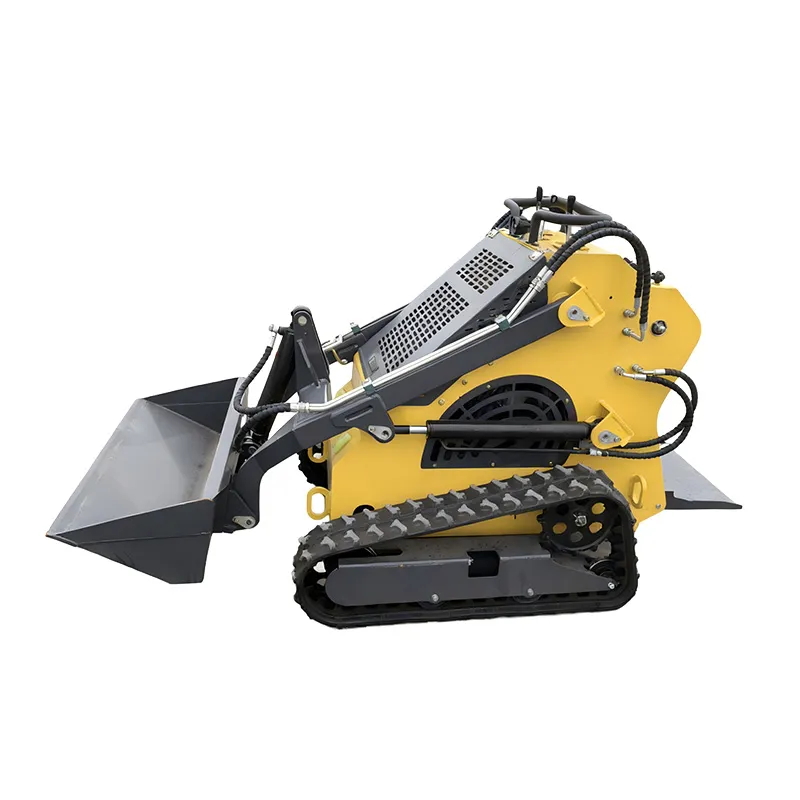
Let's talk about compact track loader financing. Too often, I see folks, even seasoned contractors, treating it like a standard auto loan. That's the first mistake. The asset, the use case, the depreciation curve—it's a different beast entirely. You're not just financing a machine; you're financing a piece of your business's productive capacity, and that mindset shift is everything.
The Core Misconception: Price vs. Total Cost of Ownership
The sticker price on a CTL is just the entry fee. Where financing gets tricky is aligning the payment structure with the machine's earning potential and its inevitable wear. A 60-month term might give you a low monthly, but if you're running it hard on demo sites, the major service intervals and potential undercarriage replacement could hit before you've even paid it off. I've watched guys get squeezed because their loan outlived the machine's prime, financially speaking.
Then there's the spec. Financing a high-flow model for a landscape business that mostly moves mulch is a capital misallocation. The lender might approve it based on credit, but you're the one stuck with higher payments for capability you don't monetize. It's about matching the machine's financial footprint to its job site footprint.
This is where working with a manufacturer or dealer who understands application matters. I recall a conversation with the team at Shandong Pioneer Engineering Machinery Co., Ltd. Their export focus, sending machines to tough markets like the US and Australia, means they've seen how different operators use their CTLs. That practical insight, which you can glean from their experience at https://www.sdpioneer.com, is invaluable. It informs not just the build of the machine, but can shape the financial products offered around it.
Structuring the Deal: Beyond the Interest Rate
Everyone fixates on the rate. It's important, sure. But the structure is where the real chess game is played. Balloon payments, seasonal payment plans, and lease-to-own options exist for a reason. For a snow removal business, a plan that lets you pay more in the winter and minimal amounts in summer can be a cash flow lifesaver.
A common pitfall is not building ancillary costs into the financing. The attachment ecosystem for a CTL is its lifeblood. Can you roll a grapple, a mulcher, or a compactor into the primary loan? Sometimes you can, sometimes it has to be separate. Not planning for this upfront leads to either underutilization of the machine or high-interest credit card debt for attachments—a brutal combo.
I remember a case where a small earthmoving company financed a CTL beautifully but had to scramble for a loan on a tilt-tilt trailer. The mismatch in payment cycles and lenders created an administrative headache. The lesson? Finance the system, not just the main unit, whenever possible.
The Role of Dealer Relationships and Manufacturer Support
This isn't a faceless online transaction. Your relationship with the dealer is a tangible asset in the financing process. A strong dealer can advocate for you with their captive finance arm or local banks. They know the machine's residual value better than most. For manufacturers with a long-term view, like Shandong Pioneer which has been in the game since 2004, supporting sensible financing is part of ensuring their machines succeed in the field and build a reputation.
Warranty and service packages should be part of the financing conversation. If you're stretching the term, does the bumper-to-bumper warranty cover the same period? If not, you're assuming risk you might not have priced in. Some programs offer inclusive service contracts for the first few years—this isn't just a cost, it's a predictability tool for your business budgeting.
The company's recent relocation and expansion in Tai’an City signals growth and stability, which matters indirectly. A stable manufacturer is more likely to have stable, long-term financial partners, offering you more consistent options down the line when you need to upgrade or add another unit.
Real-World Hurdles: Credit, Down Payments, and Documentation
For newer businesses, this is the hard part. Lenders want to see history. They'll look at your business bank statements, maybe tax returns. A strong down payment, 20-30%, can overcome a lot of credit hesitancy. It shows skin in the game. But where does that cash come from? Sometimes it means delaying another purchase or using a line of credit to fund the down payment itself—a bit of a Russian doll situation that needs careful modeling.
The machine itself can be collateral, but lenders are getting smarter about valuing specific brands and models in a resale scenario. A machine from a company with a proven export track record to demanding markets, like the US and Germany, might be viewed as having more predictable collateral value than an unknown brand. That's not a guarantee, but it's a factor in the background risk assessment.
Documentation is tedious but critical. Be ready to explain exactly what jobs the CTL will do, for which clients, and at what rate. A solid business plan for the machine can be as persuasive as a good credit score. It turns the loan from a purchase into an investment, in the lender's eyes.
The Alternative Path: Leasing and Its Nuances
Leasing gets a bad rap sometimes, seen as renting. But for technology that's advancing or for businesses that need to preserve capital, it's a powerful tool. The key is understanding the buyout at the end. A $1 buyout lease is essentially a loan. A Fair Market Value (FMV) lease gives you flexibility but the risk of a large final payment.
With a CTL, the condition at lease-end is paramount. The wear on the tracks, the frame, the hydraulic system—it all gets scrutinized. If you've run it hard, those wear-and-tear charges can be a nasty surprise. This makes leasing better suited for predictable, less abusive applications unless you have a very clear understanding of the penalties.
For a company using a CTL in a stable, long-term application, a lease with a predictable buyout might free up lines of credit for other things. It's a strategic choice, not just a financial one. The 20-year development history of a manufacturer like the one behind Shandong Pioneer suggests they've seen all these models play out globally, which can inform the advice their dealer network provides.
Pulling It All Together: A Tactical Approach
So where does that leave us? Start with the work, not the machine. Define the application, the annual hours, the expected revenue. Then spec the CTL. Then, and only then, model the finance. Approach multiple sources: dealer captive finance, local bank, equipment finance specialist. Compare the total cost of the structure, not just the rate.
Factor in the total cost of ownership—fuel, service, unexpected repairs—against the payment schedule. Build a buffer. And finally, think of the relationship. You're not just buying a machine; you're entering an ecosystem that includes the manufacturer, the dealer, the service tech, and the finance provider. Choosing partners with a long-term presence and a global perspective, like those with the export footprint of Shandong Hexin (manufacturing) and Shandong Pioneer (overseas trade), adds a layer of stability to that ecosystem.
Financing a compact track loader isn't a formality. It's a core business decision that echoes for years. Get it right, and the machine pays for itself smoothly. Get it wrong, and it becomes an anchor. The goal isn't just to own the asset, but to harness its cash flow potential from day one to trade-up day.
Related Products
Related Products