- Chinese
- French
- German
- Portuguese
- Spanish
- Russian
- Japanese
- Korean
- Arabic
- Irish
- Greek
- Turkish
- Italian
- Danish
- Romanian
- Indonesian
- Czech
- Afrikaans
- Swedish
- Polish
- Basque
- Catalan
- Esperanto
- Hindi
- Lao
- Albanian
- Amharic
- Armenian
- Azerbaijani
- Belarusian
- Bengali
- Bosnian
- Bulgarian
- Cebuano
- Chichewa
- Corsican
- Croatian
- Dutch
- Estonian
- Filipino
- Finnish
- Frisian
- Galician
- Georgian
- Gujarati
- Haitian
- Hausa
- Hawaiian
- Hebrew
- Hmong
- Hungarian
- Icelandic
- Igbo
- Javanese
- Kannada
- Kazakh
- Khmer
- Kurdish
- Kyrgyz
- Latin
- Latvian
- Lithuanian
- Luxembou..
- Macedonian
- Malagasy
- Malay
- Malayalam
- Maltese
- Maori
- Marathi
- Mongolian
- Burmese
- Nepali
- Norwegian
- Pashto
- Persian
- Punjabi
- Serbian
- Sesotho
- Sinhala
- Slovak
- Slovenian
- Somali
- Samoan
- Scots Gaelic
- Shona
- Sindhi
- Sundanese
- Swahili
- Tajik
- Tamil
- Telugu
- Thai
- Ukrainian
- Urdu
- Uzbek
- Vietnamese
- Welsh
- Xhosa
- Yiddish
- Yoruba
- Zulu
- Kinyarwanda
- Tatar
- Oriya
- Turkmen
- Uyghur


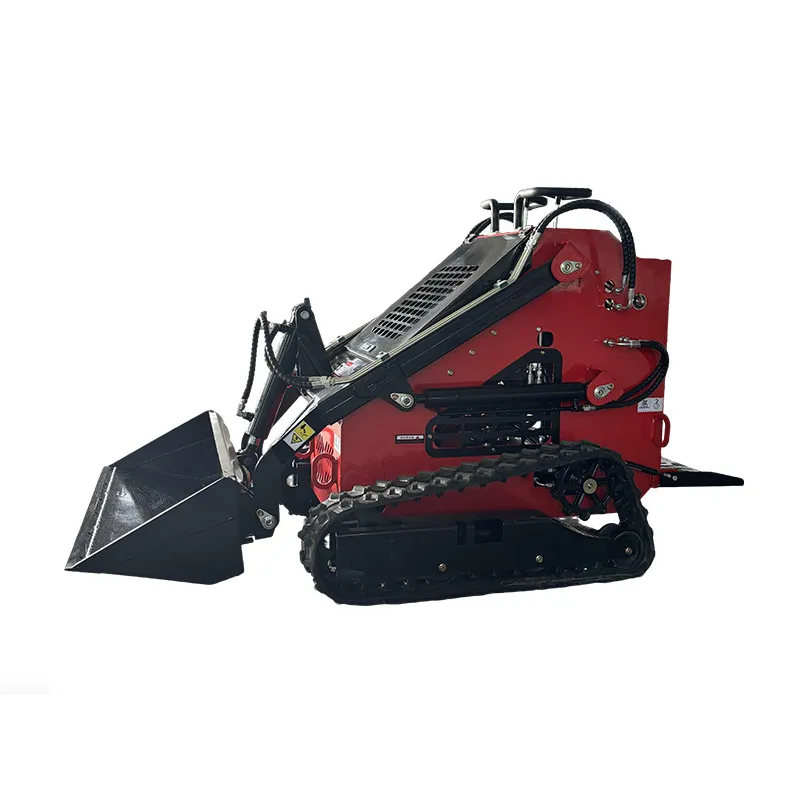
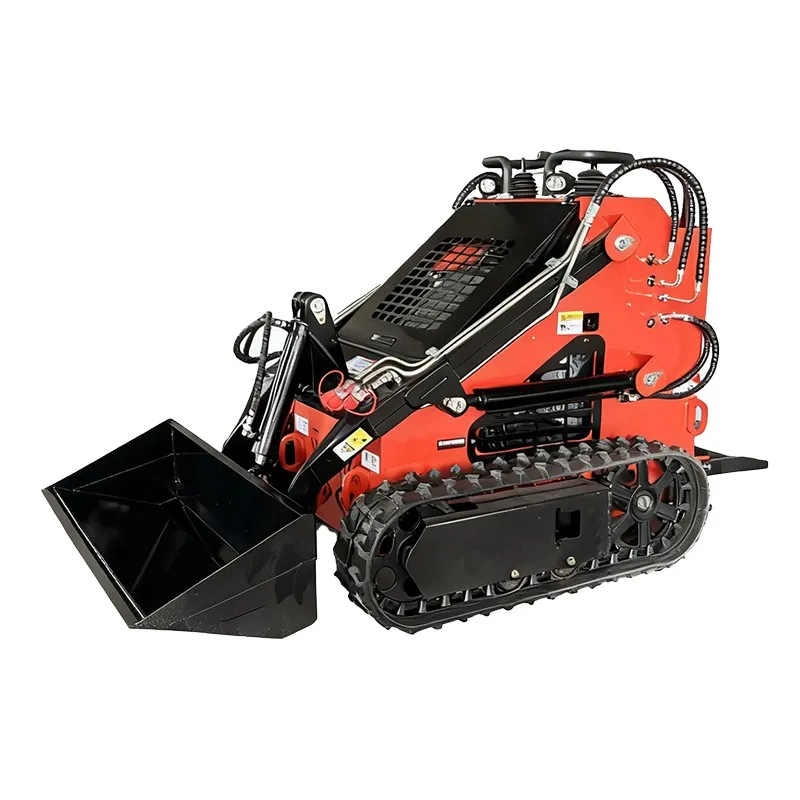
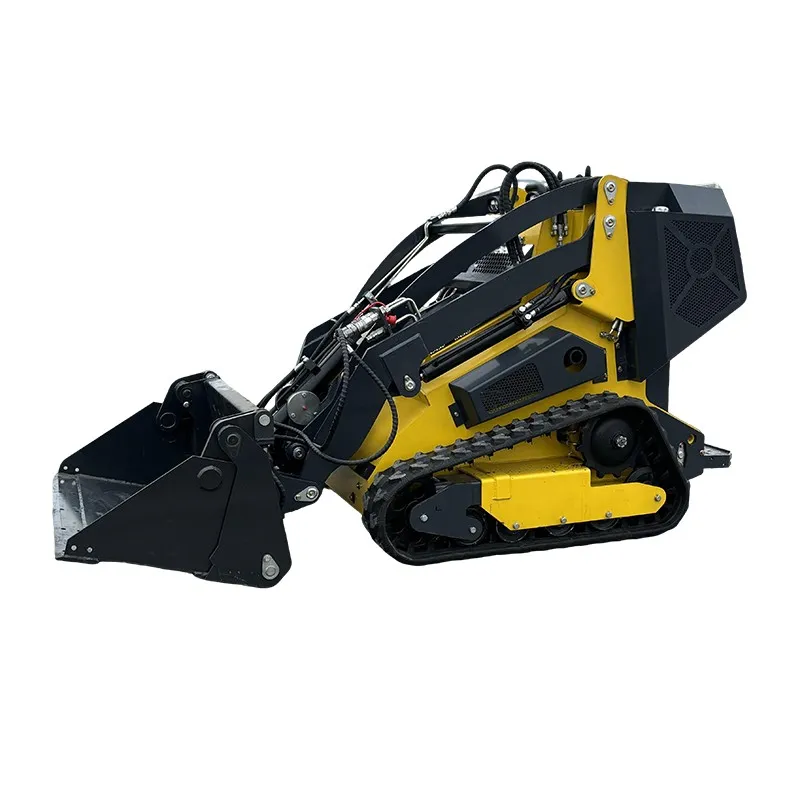
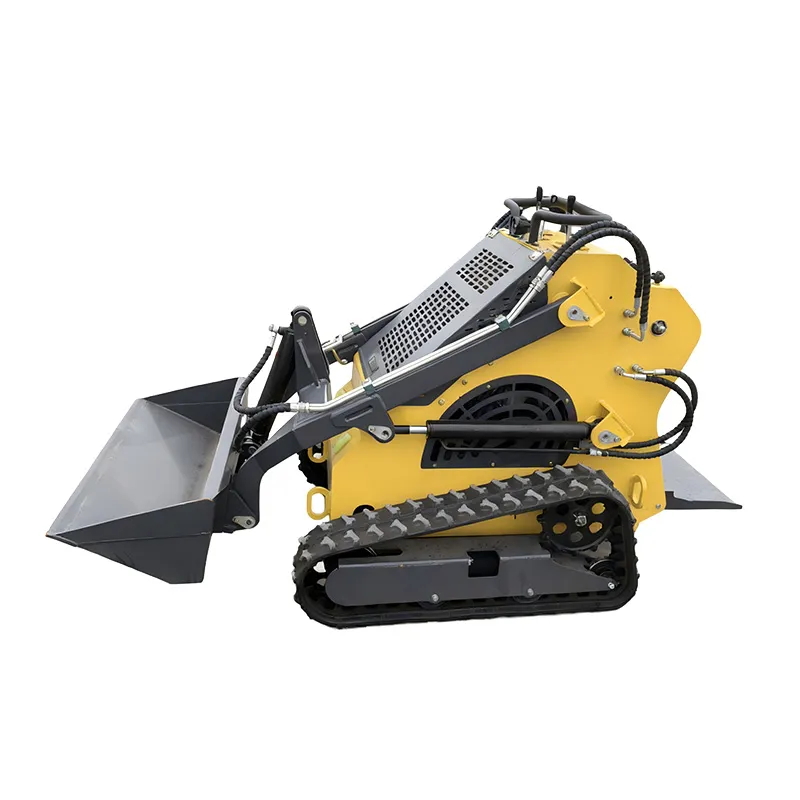
compact track loader for bulk purchase
When someone mentions 'compact track loader for bulk purchase', the immediate image for many is just a volume discount on machinery. That's a surface-level view, and frankly, where a lot of first-time bulk buyers trip up. It's not merely about multiplying the unit price by ten or twenty. The real calculus involves total cost of ownership, logistical orchestration, and matching a fleet's specs to a spectrum of job sites—not just one. I've seen projects where buying ten identical machines seemed efficient, only for half of them to be underutilized because their auxiliary hydraulic flow couldn't power the specialized attachments needed for varied tasks. The key isn't just buying in bulk; it's buying smart in bulk.
Beyond the Sticker Price: The Bulk Buy Reality Check
Let's talk numbers, but not the ones on the quote. A bulk purchase of compact track loaders commits you to a long-term relationship with a platform. The initial capital outlay is one thing, but have you factored in the cost of maintaining a fleet of identical undercarriages? If you're operating across different regions—say, sandy coastal areas and rocky inland sites—track wear will vary dramatically. Standardizing on one track type for all units might simplify procurement but can inflate your replacement costs down the line. I learned this the hard way on a multi-state contracting job; we saved upfront but spent nearly 20% more on track maintenance in the first 18 months.
Then there's the attachment compatibility. A compact track loader is a carrier tool. Its value is unlocked by its attachments. Purchasing twenty loaders is pointless if you then need to source and maintain forty different hydraulic coupler systems for various attachments. The bulk negotiation must encompass a common, robust auxiliary hydraulic system (high-flow vs. standard becomes a critical debate) and a unified attachment interface. I recall a bulk deal that fell apart not over the loader price, but over the cost and lead time for standardized quick-attach plates from the manufacturer.
Resale value is another hidden factor. A fleet of five-year-old, well-maintained but obsolete models (lacking modern emissions controls or telematics) is harder to offload than a mixed fleet with some newer units. Sometimes, staggering your bulk purchase across model years or negotiating for future upgrade rights can protect your asset value better than a one-time, massive buy.
The Manufacturer Partnership: More Than a Supplier
This is where the choice of manufacturer becomes strategic. You're not just buying equipment; you're buying into their support network, parts pipeline, and product evolution. For a bulk purchase, you need a partner with transparent global logistics and the capacity to handle fleet-scale deliveries. A company like Shandong Pioneer Engineering Machinery Co., Ltd (https://www.sdpioneer.com) presents an interesting case. Established in 2004 and now operating from a new facility in Tai'an, they've built a 20-year track record of exporting to markets like the US, Canada, and Australia. For a bulk buyer, that geographic reach suggests an understanding of diverse certification standards and operational climates.
Their structure is telling: Shandong Hexin handles manufacturing, while Shandong Pioneer manages overseas trade. This separation often indicates a dedicated focus on export compliance and customer support for international clients—a crucial point when you're importing a fleet and need clear documentation, consistent communication, and accessible technical liaisons. A bulk order gone wrong often fails at the communication stage, not the factory floor.
However, due diligence is non-negotiable. A visit to their 1,600-square-meter production area (or a virtual audit) is key. For bulk, you need to assess their production rhythm. Can they build 15 identical compact track loader units with consistent quality control, or do they work in smaller, customized batches? Their relocation in 2023 could signal expansion and modernized lines, but it's worth asking about any potential teething problems in the new facility that might affect lead times.
Specification Deep Dive: It's in the Details
Here's where the 'professional's scratchpad' thinking comes in. When evaluating models for a fleet, don't just compare horsepower and rated operating capacity. Look at the service points. Are the grease zerks easily accessible on all units, or will a simple lube job add 30 minutes per machine across your fleet? I've standardized on models where the radial lift path provided better dump height for truck loading across 80% of our tasks, even though the vertical lift model had a slight advantage in other areas. Fleet efficiency often means optimizing for the most common scenario.
Hydraulic system sensitivity is another. Cheaper models in a bulk deal might have adequate pump flow but suffer from lag or 'jerky' implement response. This operator fatigue might not show up on a spec sheet, but after a 10-hour day, it impacts productivity and safety. It's worth pushing for extended demo periods on 2-3 units before committing to a bulk purchase of twenty.
Also, consider the 'orphan machine' problem. If you buy a fleet of a highly specialized, ultra-compact model and then need a larger machine for a specific project, you've lost the benefits of fleet commonality (parts, operator familiarity). Sometimes, a mixed fleet of two complementary sizes—purchased in bulk from the same manufacturer—offers more operational flexibility than a single, homogeneous fleet.
Logistics and On-the-Ground Realities
Getting ten loaders off a ship is one thing. Getting them through customs, through final assembly (if required), and onto job sites with trained operators is another. A smooth process hinges on the manufacturer's experience. A company like the aforementioned Shandong Pioneer, with its dedicated trade arm, likely has established procedures. But you must clarify: Who handles the fumigation certificates? Are the machines shipped with standard US-spec lighting and markings, or is that a post-arrival modification? For a bulk order, these details become massive projects.
Storage before deployment is a real cost. I've seen fleets sit in a port warehouse for weeks waiting for hydraulic fluid and filters that were supposed to be included in the shipment but were held up in separate customs. Your bulk purchase agreement should specify delivery as a complete, turnkey package to your regional hub, not just FOB from China.
Finally, think about the first 500 service hours. Plan for a higher frequency of initial maintenance checks. Even with excellent quality control, a fleet of new machines will have minor adjustments needed. Having a manufacturer representative available—either remotely or, ideally, with a planned site visit—for the first major service interval can be a valuable negotiating point in a bulk deal. It turns a transaction into a true partnership.
The Verdict: Is Bulk Always Better?
Not automatically. A compact track loader for bulk purchase makes financial and operational sense when your workflow is predictable, your terrain is somewhat consistent, and you have the infrastructure to support a fleet. It's a powerful strategy for scaling operations or for large, multi-year projects. The discount is attractive, but the real win is operational simplicity: interchangeable parts, streamlined operator training, and consolidated support.
The pitfall is in being seduced by the per-unit price and overlooking the total ecosystem cost. The most successful bulk purchases I've been involved with treated the loader as the central component of a system that included attachments, training, maintenance schedules, and a clear resale or refresh strategy.
So, if you're looking at a bulk deal, start by talking to a manufacturer with proven export durability and a structure that supports large international clients. Scrutinize the specs for fleet-wide serviceability, not just peak performance. And always, always model the total cost over a 3-5 year horizon, not just the purchase order. That's where you'll see if the bulk purchase of those compact track loader units is genuinely driving your business forward, or just parking a lot of iron in your yard.
Related Products
Related Products